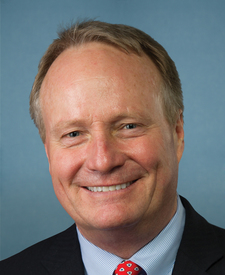
See how David P. Joyce's votes line up with your values.
DeepSyte scores David P. Joyce's record on the issues you care about — not party, not press releases. Take the 2-minute values quiz to see your personal alignment.
Sign in and take the values quiz to see how David P. Joyce's votes line up with your views.
Prediction track record
We haven't made any vote predictions for David P. Joyce yet. Predictions are generated for bills with tagged effects; they show up here as soon as the predict-votes job covers this rep's upcoming docket.
Consistency insights
No paired statements and votes yet for David P. Joyce
We haven't yet found statement/vote pairs on the same topic for David P. Joyce. This usually means either the rep hasn't taken public positions on bills that have come to a passage vote, or those bills haven't been tagged yet. The checker runs as new press releases and votes come in.
Pro analysis
AI rep analysis — Pro
Get an AI-narrated read on David P. Joyce's full voting record against your stated values — aligned themes, conflicts, notable votes, and what to watch for.
We haven't extracted campaign positions for David P. Joyce yet. Once their campaign website or position pages are processed, this card will track what they said vs how they voted.
Crossing the aisle
Passage votes where David P. Joyce broke ranks with ≥75% of Republicans. Threshold catches substantively partisan splits; unanimous-ish or close votes are excluded.
6
Cross-aisle votes
119-hres-1140·Jun 9, 2026·96% of R voted NO
Providing for consideration of the bill (H.R. 5408) to accelerate workplace time-to-contract under the National Labor Relations Act.
Joyce Leads Ohio Delegation in Urging Air Force to Base New Squadron in Youngstown
Position: The release states that Representative Joyce and other Ohio members of Congress urged the Air Force to consider Youngstown Air Reserve Station as the basing location for the new 33rd Combat Communications Squadron, citing its facilities, workforce, and economic benefits to the region.
WASHINGTON, D.C. – Today, Congressman Dave Joyce (OH-14) led the entire Ohio Congressional Delegation in sending a letter to Secretary of the Air Force Troy Meink, requesting that the Youngstown Air Reserve Station (YARS) receive full consideration as a basing location for the Air Force Reserve Command’s (AFRC) new 33rd Combat Communications Squadron (CBCS).
The squadron would bring 22 full-time and 128 part-time Air Reserve personnel to YARS, strengthening the regional economy and expanding the base’s operational capabilities.
The letter was signed by Senators Bernie Moreno (R-OH) and Jon Husted (R-OH), as well as Representatives Michael Rulli (OH-06), Dave Taylor (OH-02), Max Miller (OH-07), Warren Davidson (OH-08), Jim Jordan (OH-04), Mike Carey (OH-15), Greg Landsman (OH-01), Troy Balderson (OH-12), Marcy Kaptur (OH-09), Bob Latta (OH-05), Joyce Beatty (OH-03), Emilia Sykes (OH-13), Mike Turner (OH-10), and Shontel Brown (OH-11).
“The Youngstown Air Reserve Station is a vital national security asset and a major employer and economic driver in the Mahoning Valley,” said Congressman Joyce. “YARS is the right operational fit for this new squadron. It has the facilities and resources to stand up the unit quickly and strengthen the Air Force’s readiness.”
The letter highlights YARS’ strengths and capabilities, stating: “YARS offers AFRC a rare combination of a modernized C-130J tactical airlift fleet, deployment-ready infrastructure, available facilities, proven logistics capability, an easy-to-recruit, easy-to-retain workforce, and room to grow. Basing the 33rd CBCS at YARS would enable AFRC to build readiness quickly, deploy faster and more reliably, and expand the mission efficiently over time.”
WASHINGTON, D.C. – Last week, Congressional Croatian Caucus Co-Chairs Dave Joyce (OH-14) and Nanette Barragán (CA-44), along with Vice Chairs Claudia Tenney (NY-24) and Ted Lieu (CA-36), and Congressman Chris Deluzio (PA-17), sent a letter urging the Senate Foreign Relations Committee to swiftly approve the U.S.-Croatia tax treaty and send it to the full Senate […]
If you want to understand why the relationship between the United States and Croatia matters, you do not have to look across the Atlantic. You can look around Northeast Ohio. For more than 150 years, Croatian immigrants and their descendants have been part of the story of this region. They came to Cleveland in the […]
PAINESVILLE, OH – On Friday, Congressman Dave Joyce (OH-14) and Lake County Sheriff Frank Leonbruno toured the construction site for the new Lake County Public Safety Center. The project represents a key investment in local safety and security of the community. The three-and-a-half-story facility will have capacity for 504 individuals and span approximately 250,000 square feet. […]
Position: The release urges the Senate Foreign Relations Committee to swiftly approve and advance the U.S.-Croatia double taxation treaty to the full Senate for ratification, arguing it will reduce double taxation on cross-border investment and strengthen economic ties with Croatia.
WASHINGTON, D.C. – Last week, Congressional Croatian Caucus Co-Chairs Dave Joyce (OH-14) and Nanette Barragán (CA-44), along with Vice Chairs Claudia Tenney (NY-24) and Ted Lieu (CA-36), and Congressman Chris Deluzio (PA-17), sent a letter urging the Senate Foreign Relations Committee to swiftly approve the U.S.-Croatia tax treaty and send it to the full Senate for ratification.
The treaty, which reduces the burden of double taxation on cross-border investment, was initially signed in December 2022 and updated by a protocol signed on April 28, 2026, to align it with current U.S. law. President Trump transmitted the treaty to the Senate for ratification on September 14, 2026.
“The United States and Croatia are close allies, and this treaty will give taxpayers and businesses in both countries greater certainty when they invest across borders,” said Congressman Joyce. “Ohio’s 14th District is home to around 10,000 Croatian Americans, and as Co-Chair of the Congressional Croatian Caucus, I urge my Senate colleagues to act swiftly and ratify this treaty.”
“We must ratify the U.S.-Croatia tax treaty to strengthen our economic partnership and deepen the longstanding relationship between our two nations,” said Congresswoman Barragán. “By reducing the burden of double taxation and providing greater certainty for businesses and investors, this agreement will help expand trade, encourage investment, and create new opportunities on both sides of the Atlantic. As Co-Chair of the Congressional Croatian Caucus, I urge the Senate to advance this treaty and reaffirm our commitment to a strong U.S.-Croatia partnership.”
“The United States and Croatia have built a strong relationship, but our outdated tax policies continue to create unnecessary obstacles for businesses and investors in both countries,” said Congresswoman Tenney. “Americans should not face double taxation simply because they do business with one of our closest European allies. This treaty is long overdue and will help American businesses compete, encourage new investment, and strengthen our economic partnership with Croatia. As Vice Chair of the Congressional Croatian Caucus, I urge the Senate to ratify this agreement without further delay.”
“Croatia is an important economic partner and a valued NATO ally of the United States,” said Congressman Lieu. “As Vice Chair of the bipartisan Congressional Croatian Caucus, I am honored to work with my colleagues to advance our shared interests. The Avoidance of Double Taxation Treaty will benefit American and Croatian taxpayers, as well as strengthen the ties between our two countries. I respectfully urge Chairman Risch and Ranking Member Shaheen to approve this treaty.”
“Americans should not be punished for doing business with Croatia—one of our proud NATO allies,” said Congressman Deluzio. “Our tax system needs a lot of work to make it work well for hardworking people—this is one step we can make to bring some fairness into the system, grow new investment, help American businesses compete, and strengthen America’s economic partnership with Croatia.”
This letter builds on ongoing efforts by Congressman Joyce and the Congressional Croatian Caucus to strengthen U.S.-Croatia relations. These efforts include a 2024 letter urging the Senate to work with the Department of the Treasury to resolve outstanding issues with the tax treaty and a 2023 letter calling for the swift confirmation of a U.S. Ambassador to Croatia. Congressman Joyce has also met with Croatian Prime Minister Andrej Plenković, Members of the Croatian Parliament, and other Croatian leaders to discuss opportunities for continued cooperation between the two countries.
If you want to understand why the relationship between the United States and Croatia matters, you do not have to look across the Atlantic. You can look around Northeast Ohio. For more than 150 years, Croatian immigrants and their descendants have been part of the story of this region. They came to Cleveland in the […]
PAINESVILLE, OH – On Friday, Congressman Dave Joyce (OH-14) and Lake County Sheriff Frank Leonbruno toured the construction site for the new Lake County Public Safety Center. The project represents a key investment in local safety and security of the community. The three-and-a-half-story facility will have capacity for 504 individuals and span approximately 250,000 square feet. […]
WASHINGTON, D.C. – Today, Congressman Dave Joyce (OH-14) and Congresswoman Marilyn Strickland (WA-10) introduced the Multigenerational Housing Opportunities for Modifying Existing Structures (HOMES) Act. This legislation would provide a tax credit for homeowners who renovate their homes to accommodate an elderly family member, a family member with a disability, or a qualified family member who […]
Opinion: The Next Chapter in the U.S.-Croatia Partnership
Position: The release supports advancing the U.S.-Croatia Avoidance of Double Taxation Treaty to reduce double taxation for Americans and Croatians working, investing, or doing business across both countries, and highlights the strengthening of U.S.-Croatia partnership ties.
If you want to understand why the relationship between the United States and Croatia matters, you do not have to look across the Atlantic. You can look around Northeast Ohio.
For more than 150 years, Croatian immigrants and their descendants have been part of the story of this region. They came to Cleveland in the late 1860s looking for opportunity, worked in our factories, on our railroads and in construction, built businesses and neighborhoods, and established churches, schools, and cultural organizations that remain part of our communities today.
That history is especially important in Ohio’s 14th Congressional District, which is home to around 10,000 Americans of Croatian ancestry—the largest Croatian American population of any congressional district in Ohio.
I grew up here. I have had the privilege of working alongside members of our Croatian American community, listening to their stories and seeing firsthand the pride they have in both their Croatian heritage and their Northeast Ohio home. Those relationships have shaped how I view our relationship with Croatia.
Croatia is not simply a country that happens to be an American ally. I see it as a country connected to our district through thousands of families, businesses, churches, and generations of shared history.
Croatia has transformed its place in the world. It joined NATO in 2009 and the European Union in 2013 and has become an important American partner in Southeast Europe. Its role in European energy security, including through the LNG terminal on the island of Krk, demonstrates the strategic value of that partnership.
Our economic relationship presents another opportunity.
As Co-Chair of the bipartisan Congressional Croatian Caucus, one of my priorities has been advancing the U.S.-Croatia Avoidance of Double Taxation Treaty. For Americans and Croatians who work, invest, or do business across both countries, being subject to two tax systems can create unnecessary complexity and cost. The treaty would establish clearer rules for how certain types of income are taxed and reduce the burden of double taxation.
In 2024, I led a letter with my fellow Caucus Co-Chairs urging Senate leadership to move the treaty forward. After being signed in 2022, the treaty was updated by a protocol signed in Dubrovnik in April 2026. On September 14, the Trump Administration sent the treaty to the Senate for its advice and consent to ratification.
That progress matters beyond Washington. It matters to Croatian American families in our communities and to businesses and investors abroad.
That is also why I helped relaunch the bipartisan Congressional Croatian Caucus in both the 118th and 119th Congresses. Through the Caucus, I have met with Croatia’s Prime Minister Andrej Plenković, as well as with Members of the Croatian Parliament and other Croatian leaders to discuss how our countries can work together on economic, cultural, and strategic opportunities.
The U.S. and Croatia have strong ties between our governments and institutions, but our relationship is strongest because it is built on our people.
Northeast Ohio helped make that relationship possible. Now we have an opportunity to help make it stronger.
Our Croatian American community has spent generations building Northeast Ohio. Strengthening the ties between Ohio and Croatia is one way we can build on that legacy for the next generation, and I look forward to continuing to work with my colleagues in Congress and our partners in Croatia to do so for Americans and Croatians alike.
WASHINGTON, D.C. – Last week, Congressional Croatian Caucus Co-Chairs Dave Joyce (OH-14) and Nanette Barragán (CA-44), along with Vice Chairs Claudia Tenney (NY-24) and Ted Lieu (CA-36), and Congressman Chris Deluzio (PA-17), sent a letter urging the Senate Foreign Relations Committee to swiftly approve the U.S.-Croatia tax treaty and send it to the full Senate […]
PAINESVILLE, OH – On Friday, Congressman Dave Joyce (OH-14) and Lake County Sheriff Frank Leonbruno toured the construction site for the new Lake County Public Safety Center. The project represents a key investment in local safety and security of the community. The three-and-a-half-story facility will have capacity for 504 individuals and span approximately 250,000 square feet. […]
WASHINGTON, D.C. – Today, Congressman Dave Joyce (OH-14) and Congresswoman Marilyn Strickland (WA-10) introduced the Multigenerational Housing Opportunities for Modifying Existing Structures (HOMES) Act. This legislation would provide a tax credit for homeowners who renovate their homes to accommodate an elderly family member, a family member with a disability, or a qualified family member who […]
Joyce Introduces Bipartisan Legislation to Support Multigenerational Families
Position: Introduces bipartisan legislation providing a tax credit to homeowners who renovate homes to accommodate elderly or disabled family members or a family member providing in-home care. Supporters argue it would reduce caregiving costs and make better use of existing housing.
WASHINGTON, D.C. – Today, Congressman Dave Joyce (OH-14) and Congresswoman Marilyn Strickland (WA-10) introduced the Multigenerational Housing Opportunities for Modifying Existing Structures (HOMES) Act. This legislation would provide a tax credit for homeowners who renovate their homes to accommodate an elderly family member, a family member with a disability, or a qualified family member who lives with the homeowner to provide care.
The tax credit would help offset the cost of home modifications, such as installing handrails and stairlifts, widening doorways, and adding separate entrances, making in-home caregiving a more affordable option for families caring for aging relatives. The legislation would also expand the effective use of the existing housing stock and provide families with another option for caring for loved ones at home rather than requiring separate housing arrangements.
"As a member of the Congressional Assisting Caregivers Today Caucus, I know how important it is to give families the flexibility to provide care without leaving the homes and communities they know," said Congressman Joyce. "The Multigenerational HOMES Act would help families adapt their existing homes to meet their changing needs, making it easier for loved ones to live together while making better use of our existing housing stock. By giving families more options to share a home and care for one another, we can reduce the costs and pressures of finding additional housing while empowering families to make the decisions that work best for them."
“This bill helps keep families under one roof at all stages of life if they choose to care for their aging family members,” said Congresswoman Strickland. “The tax credit provides families with additional in-home care options.”
“AARP, which advocates on behalf of nearly 125 million Americans age 50 and older, strongly supports the Multigenerational Housing Opportunities to Modify Existing Structures (Multigenerational HOMES) Act,” said Bill Sweeney, Senior Vice President of Government Affairs, AARP. “By helping offset the cost of these upgrades, the Multigenerational HOMES Act would reduce financial strain on family caregivers, support safer and more accessible living environments, lessen reliance on costly institutional care, and enable more Americans to age with dignity, independence, and the support of loved ones.”
“The Multigenerational HOMES Act would provide a tax credit for homeowners to make renovations that accommodate family members with accessibility needs or disabilities. Caregivers face many challenges, and supporting their ability to keep loved ones together under one roof is both important and beneficial,” said Bill Owens, Chairman, National Association of Home Builders.
“Families live and care across generations, even when our homes and public systems are not designed that way. The Multigenerational HOMES Act would help families create safer, more accessible homes where older adults, people with disabilities, caregivers, and loved ones of every age can remain connected and supported. This is prevention through connection – and a practical investment in family stability, independence, and dignity,” said Kristen Kiefer, Executive Director, Generations United.
As the U.S. population ages, more families are seeking ways to safely accommodate older relatives and family members with disabilities while allowing them to remain in their homes and communities. The majority of older adults prefer to age in place, but much of the nation's housing stock is not equipped to meet changing mobility and accessibility needs. According to AARP's 2024 Home and Community Preferences Survey, 75 percent of adults age 50 and older want to remain in their current homes as they age, while 43 percent expect they will need to make modifications to their homes to do so. Among those anticipating modifications, the most commonly identified needs include bathroom improvements and improved access into and throughout the home.
The need for these improvements is particularly significant for older adults and individuals with disabilities. Analysis from the Department of Housing and Urban Development of the American Housing Survey found that 19 percent of U.S. households included an individual with an accessibility need, while 13 percent included someone who uses a mobility-assistive device. Yet accessible features remain uncommon across the existing housing stock. Only about 10 percent of homes are considered fully prepared for senior living, meaning they have features such as a step-free entrance, a bedroom and bathroom on the first floor, and basic bathroom safety features.
The Multigenerational HOMES Act would help families by reducing the cost of renovations needed to accommodate an older family member, an individual with a disability, or a family member providing care in the home. The legislation would establish a tax credit of up to $7,500 for qualifying modifications, helping offset the cost of improvements that allow families to safely share a home.
Read the full text of the bill here.
WASHINGTON, D.C. – Last week, Congressional Croatian Caucus Co-Chairs Dave Joyce (OH-14) and Nanette Barragán (CA-44), along with Vice Chairs Claudia Tenney (NY-24) and Ted Lieu (CA-36), and Congressman Chris Deluzio (PA-17), sent a letter urging the Senate Foreign Relations Committee to swiftly approve the U.S.-Croatia tax treaty and send it to the full Senate […]
If you want to understand why the relationship between the United States and Croatia matters, you do not have to look across the Atlantic. You can look around Northeast Ohio. For more than 150 years, Croatian immigrants and their descendants have been part of the story of this region. They came to Cleveland in the […]
PAINESVILLE, OH – On Friday, Congressman Dave Joyce (OH-14) and Lake County Sheriff Frank Leonbruno toured the construction site for the new Lake County Public Safety Center. The project represents a key investment in local safety and security of the community. The three-and-a-half-story facility will have capacity for 504 individuals and span approximately 250,000 square feet. […]
Joyce, Colleagues Introduce Legislation to Bolster Great Lakes Conservation Efforts
Position: The release supports the Regional Great Lakes Partnership Act, which would designate the Great Lakes Commission as a Regional Great Lakes Partnership within NOAA's Regional Ocean Partnerships Program to expand federal funding access for Great Lakes research and conservation.
WASHINGTON, D.C. – Yesterday, Representatives Dave Joyce (OH-14), Tim Walberg (R-MI), Marcy Kaptur (D-OH), Bill Huizenga (R-MI), Debbie Dingell (D-MI), Haley Stevens (D-MI), Tom Barrett (R-MI), and Hillary Scholten (D-MI) introduced the Regional Great Lakes Partnership Act, a bipartisan, bicameral bill to expand access to federal support for Great Lakes research and conservation. This legislation designates the Great Lakes Commission (GLC) as the official Regional Great Lakes Partnership within the National Oceanic and Atmospheric Administration’s (NOAA) Regional Ocean Partnerships Program.
The designation would expand opportunities for the Great Lakes region to access existing federal funding, supporting the Great Lakes Commission's longstanding work to coordinate research, conservation, and restoration efforts across the region.
“The Great Lakes are a critical resource for the economies and communities that surround them,” said Congressman Joyce. “As Co-Chair of the Congressional Great Lakes Task Force, I am proud to be an original co-sponsor of this bipartisan legislation, which will strengthen federal partnerships and expand funding opportunities to advance the research, coordination, and conservation efforts needed to protect the Great Lakes — ensuring they remain a resource our communities can rely on for generations to come.”
“As the largest freshwater system in the world, the Great Lakes are central to Michigan’s economy, identity, and long‑term prosperity,” said Congressman Walberg. “The bipartisan Regional Great Lakes Partnership Act ensures the region receives its fair share of federal support, strengthening the research and conservation work needed to protect this indispensable resource. We must equip our partners with the tools necessary to safeguard the waters and communities that rely on a healthy Great Lakes ecosystem.”
“As a Co-Chair of the bipartisan Congressional Great Lakes Task Force, I helped introduce this legislation to close a gap in a national program that benefits only coastal ocean states. The bill continues our work together to ensure the federal government levels the playing field to commit equivalent, well‑deserved resources to our Great Lakes region,” said Congresswoman Kaptur. “The Great Lakes are central and essential to Northwest Ohio’s livelihood and economic well-being, and enabling the Great Lakes Commission to participate in this NOAA program will strengthen data sharing, enhance information access, and improve management of our coastal and ecosystem resources. In Lake Erie’s Western Basin, home to the shallowest and southernmost shoreline in the Great Lakes system, we face these challenges in real ways and will continue to lead in advancing research and information exchange for the benefit of our entire region.”
“As Co-Chair of the bipartisan Congressional Great Lakes Task Force, I have made it my mission to have the federal government recognize the Great Lakes as a national priority,” said Congressman Huizenga. “The Regional Great Lakes Partnership Act furthers this objective by enhancing the Great Lakes Commission’s steadfast work to protect and conserve Michigan’s most valuable natural resource.”
“The Great Lakes and their connected waterways are invaluable resources for Michigan and the United States,” said Congresswoman Dingell. “As a Co-Chair of the Congressional Great Lakes Task Force, I am proud to help introduce this bipartisan bill to strengthen federal support for Great Lakes research and conservation for future generations to enjoy these national treasures.”
“Michigan is the Great Lakes state, period. Jobs, recreation, and tourism across the Midwest depend on a healthy and flourishing Great Lakes ecosystem,” said Congresswoman Stevens. “I’m proud to work alongside my colleagues of both parties to ensure that Michigan receives our fair share of federal investment that will protect and preserve our Lakes for generations to come.”
“Protecting the Great Lakes means protecting our water, wildlife, and communities throughout the region,” said Congressman Barrett. “This bipartisan legislation will help bring federal resources to the table and strengthen the partnerships already working to preserve our state’s natural resources. I’m proud to work with colleagues from across the region to ensure our Great Lakes remain healthy for generations to come.”
“As the largest freshwater system in the world, the Great Lakes are one of Michigan’s greatest assets,” said Congresswoman Scholten. “I’m proud to join my colleagues on both sides of the aisle in supporting the Regional Great Lakes Partnership Act. This commonsense bill will strengthen the research and coordination that keeps the Great Lakes region healthy. Investing in our Great Lakes is investing in our future, and it’s crucial that we conserve this resource for the next generation.”
The Great Lakes Commission (GLC) brings together eight U.S. states and two Canadian provinces to protect the Great Lakes and promote economic growth in the Great Lakes basin. The GLC is composed of the states of Illinois, Indiana, Michigan, Minnesota, New York, Ohio, Pennsylvania, and Wisconsin.
NOAA’s Regional Ocean Partnerships (ROPs) coordinate interstate ocean and coastal resource management efforts and create opportunities for increased efficiency and cost-effectiveness. Although NOAA administers four Regional Ocean Partnerships (ROPs) across the Northeast, Mid-Atlantic, Gulf, and West Coast, the Great Lakes currently lack an ROP. Designating the GLC as the region’s ROP will ensure the Great Lakes region receives its fair share of program funding.
Companion legislation, introduced in the Senate by U.S. Senators Gary Peters (D-MI) and Bernie Moreno (R-OH), has been advanced by the Senate Commerce, Science, and Transportation Committee.
Read the full text of the bill here.
WASHINGTON, D.C. – Last week, Congressional Croatian Caucus Co-Chairs Dave Joyce (OH-14) and Nanette Barragán (CA-44), along with Vice Chairs Claudia Tenney (NY-24) and Ted Lieu (CA-36), and Congressman Chris Deluzio (PA-17), sent a letter urging the Senate Foreign Relations Committee to swiftly approve the U.S.-Croatia tax treaty and send it to the full Senate […]
If you want to understand why the relationship between the United States and Croatia matters, you do not have to look across the Atlantic. You can look around Northeast Ohio. For more than 150 years, Croatian immigrants and their descendants have been part of the story of this region. They came to Cleveland in the […]
PAINESVILLE, OH – On Friday, Congressman Dave Joyce (OH-14) and Lake County Sheriff Frank Leonbruno toured the construction site for the new Lake County Public Safety Center. The project represents a key investment in local safety and security of the community. The three-and-a-half-story facility will have capacity for 504 individuals and span approximately 250,000 square feet. […]
Joyce Providing Emotional Assistance with Relief and Love Act Passes House
Position: Supports passage of the PEARL Act, which would require U.S. Customs and Border Protection to establish a three-year pilot program adopting shelter dogs for training as support canines to address mental health among CBP personnel, and urges Senate passage.
WASHINGTON, D.C. – Yesterday, the U.S. House of Representatives passed Congressman Dave Joyce’s (OH-14) bill, the Providing Emotional Assistance with Relief and Love (PEARL) Act. This bipartisan bill would require U.S. Customs and Border Protection (CBP) to establish a pilot program to adopt dogs from local animal shelters to be trained as support dogs for CBP’s Support Canine Program.
This legislation was introduced in June alongside Representative Lou Correa (CA-46).
“For years, the men and women of Customs and Border Protection have faced mental health challenges. From confronting the scourge of illicit fentanyl crossing our borders to witnessing the heartbreaking toll of human trafficking, these officers deal with some of the most difficult emotional stressors that can be imagined – and they do it every single day,” said Congressman Joyce. “The PEARL Act supports the mental health of CBP personnel, while giving shelter dogs a new lease on life. I want to thank my colleagues in the House for supporting this legislation, and I urge the Senate to pass it swiftly.”
You can watch Congressman Joyce’s speech on the House floor here.
House Committee on Homeland Security Chairman Andrew Garbarino said, “CBP personnel work tirelessly every day to keep our communities safe, interdict deadly drugs, and disrupt dangerous human smuggling across our borders. This mission can take a real mental and emotional toll on the agents and officers who answer the call to serve. I’m proud to join my House colleagues in supporting Congressman Joyce’s ‘PEARL Act,’ expanding access to canine therapy support for these men and women and ensuring we protect their well-being while they protect the homeland.”
“Our nation's frontline workers put their lives on the line every day to protect our communities, and today the House recognized that we owe it to them to invest in proven mental health programs, so they have the support they need. With the passage of this bill, more frontline officers and agents will be able to receive support canines to help them cope with the many stresses they face while protecting our homeland. I'm grateful to my colleagues for their support, and I urge the Senate to act quickly so we can get this into law,” said Congressman Correa.
Border Patrol agents operate in high-stress environments that take a serious toll on mental health. In fiscal years 2016 through 2025, 81 CBP employees died by suicide.
In 2023, CBP launched the Support Canine Program to improve staff morale, assist in grief, aid in trauma recovery from critical incidents, and strengthen community outreach. The PEARL Act would enhance CBP’s Support Canine Program by establishing a 3-year pilot program to adopt dogs from local shelters and train them as support dogs. This bill was named after Pearl, the U.S. Border Patrol’s first therapy canine in the Support Canine Program.
WASHINGTON, D.C. – Last week, Congressional Croatian Caucus Co-Chairs Dave Joyce (OH-14) and Nanette Barragán (CA-44), along with Vice Chairs Claudia Tenney (NY-24) and Ted Lieu (CA-36), and Congressman Chris Deluzio (PA-17), sent a letter urging the Senate Foreign Relations Committee to swiftly approve the U.S.-Croatia tax treaty and send it to the full Senate […]
If you want to understand why the relationship between the United States and Croatia matters, you do not have to look across the Atlantic. You can look around Northeast Ohio. For more than 150 years, Croatian immigrants and their descendants have been part of the story of this region. They came to Cleveland in the […]
PAINESVILLE, OH – On Friday, Congressman Dave Joyce (OH-14) and Lake County Sheriff Frank Leonbruno toured the construction site for the new Lake County Public Safety Center. The project represents a key investment in local safety and security of the community. The three-and-a-half-story facility will have capacity for 504 individuals and span approximately 250,000 square feet. […]
Source: GDELT 2.0 GKG, filtered to a curated list of national outlets. Inclusion is not endorsement; opinion pieces and reported news are mixed.
Recent stock activity
Periodic transaction reports filed under the STOCK Act — disclosed by the rep, sourced from public filings.
No disclosed trades on record.
Source: open-data mirrors of the Senate eFD and House Clerk financial-disclosure systems. Disclosure within 30 days of trade is required by law (45 for spouse/dependent trades).
Top PAC donors · 2026 cycle
Political action committees that gave the most to this rep's principal campaign committee this cycle. PAC giving is direct organizational support — industry, ideological, or leadership.
1.SCIENCE APPLICATIONS INTERNATIONAL CORPORATION VOLUNTARY PAC2 contributions$10,000
2.NATIONAL BEER WHOLESALERS ASSOCIATION PACBusiness3 contributionsTrade association PAC for beer wholesalers and distributors — backs candidates supporting alcohol industry regulatory positions and distribution-network protections.AI$10,000
3.MGM RESORTS INTERNATIONAL PAC2 contributions$10,000
4.MARATHON PETROLEUM CORPORATION EMPLOYEES POLITICAL ACTION COMMITTEE (MPAC)3 contributions$10,000
5.EMPLOYEES OF NORTHROP GRUMMAN CORPORATION PAC2 contributions$10,000
6.AMERICAN ASSOCIATION OF NURSE ANESTHETISTS SEPARATE SEGREGATED FUND (CRNA-PAC)2 contributions$10,000
7.AIR LINE PILOTS ASSOCIATION2 contributions$10,000
8.POLITICAL EDUCATION PATTERNS, POLITICAL ARM INTL UNION OPERATING ENG LOCAL 182 contributions$10,000
9.NATIONAL AIR TRAFFIC CONTROLLERS ASSOCIATION PAC2 contributions$10,000
10.ERNST & YOUNG P. A. C.3 contributions$10,000
Source: OpenFEC (api.open.fec.gov) Schedule A receipts where contributor type is “committee.” Aggregated by contributing committee. Self-transfers from joint-fundraising / victory committees are excluded.
Top individual contributors · 2026 cycle
Itemized individual contributions over $200 to this rep's campaign committee, aggregated by donor employer. PAC giving is shown above; this section is people, not organizations.
1.SELF$24,630
2.K & D$14,000
3.HOLLAND KNIGHT$7,300
4.ARROW INTERNATIONAL$7,000
5.AUTONODYNE LLC$7,000
6.ANDURIL INDUSTRIES, INC.$7,000
7.CROSS POTOMAC CONSULTING$7,000
8.BLACKSTONE$7,000
9.APOLLO MANAGEMENT$7,000
10.INNOVATIVE FEDERAL STRATEGIES, LLC$7,000
Source: OpenFEC Schedule A receipts where contributor type is “individual,” aggregated by the donor's self-reported employer. This is a geographic / industry correlation, not a corporate endorsement.