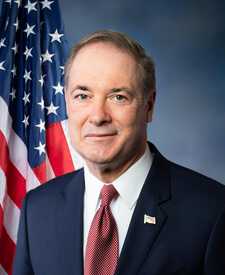
See how John Joyce's votes line up with your values.
DeepSyte scores John Joyce's record on the issues you care about — not party, not press releases. Take the 2-minute values quiz to see your personal alignment.
Sign in and take the values quiz to see how John Joyce's votes line up with your views.
Prediction track record
We haven't made any vote predictions for John Joyce yet. Predictions are generated for bills with tagged effects; they show up here as soon as the predict-votes job covers this rep's upcoming docket.
Consistency insights
No paired statements and votes yet for John Joyce
We haven't yet found statement/vote pairs on the same topic for John Joyce. This usually means either the rep hasn't taken public positions on bills that have come to a passage vote, or those bills haven't been tagged yet. The checker runs as new press releases and votes come in.
Pro analysis
AI rep analysis — Pro
Get an AI-narrated read on John Joyce's full voting record against your stated values — aligned themes, conflicts, notable votes, and what to watch for.
We haven't extracted campaign positions for John Joyce yet. Once their campaign website or position pages are processed, this card will track what they said vs how they voted.
Crossing the aisle
Passage votes where John Joyce broke ranks with ≥75% of Republicans. Threshold catches substantively partisan splits; unanimous-ish or close votes are excluded.
9
Cross-aisle votes
119-hr-3276·Sep 14, 2026·76% of R voted YES
Local Communities & Bird Habitat Stewardship Act of 2026
A bill to designate the facility of the United States Postal Service located at 180 Steuart Street in San Francisco, California, as the "Dianne Feinstein Post Office".
To designate the facility of the United States Postal Service located at 220 North Hatcher Avenue in Purcellville, Virginia, as the "Secretary of State Madeleine Albright Post Office Building".
Dr. Joyce Sends Letters Requesting Answers Following Multiple Train Derailments in Blair County
Position: The congressman sent letters to the Federal Railroad Administration and Norfolk Southern requesting information on recent train derailments in Blair County and on safety and response measures. He is also a cosponsor of the Railway Safety Act of 2026, which would update freight car safety regulations and improve coordination with local first responders.
Washington, D.C. – Today, Congressman John Joyce sent letters to the Federal Railroad Administration (FRA) and Norfolk Southern seeking answers after at least four train derailments occurred in Blair County since February of this year. The most recent incident occurred on October 23, 2026, in Altoona, where at least 11 train cars derailed including cars carrying hazardous materials.
Specifically, the letters request answers on the findings of completed investigations, what response protocols were carried out, what federal support is necessary to prevent future derailments, and what steps are being taken to ensure the safety of the community and personnel.
“As the grandson of two railroad workers, rail safety is part of my heritage, and now it’s part of my responsibility in Congress to get to the bottom of these glaring failures,” said Congressman John Joyce, M.D. “Our communities deserve answers, and the safety of residents and passengers must never be compromised. This oversight effort is an important step toward holding Norfolk Southern accountable for its lack of response to the increase in derailments and ensuring that Norfolk Southern steps up and meets the highest standards of safety for the community.”
Congressman John Joyce is a cosponsor of the Railway Safety Act of 2026, a bipartisan piece of legislation that would update safety regulations for freight cars and require improved coordination and support for local first responders.
Within the last week, Congressman John Joyce addressed these concerns with the Logan Township United Fire Department Chief Rusty Shoenfelt and 40 fire crew members who serve the area around the Horseshoe Curve.
Read the letter to the FRA here.
Read the letter to Norfolk Southern here.
What They're Saying: Support for the Patients First Act
Position: Expresses support for the Patients First Act of 2026 (H.R. 9693), which would reform Medicare physician payment and strengthen health care cybersecurity, and quotes health organizations endorsing the bill.
Washington, D.C. – Today, the House Committee on Energy and Commerce Subcommittee on Health will hold a legislative hearing titled Examining Legislative Proposals to Reform Medicare Provider Payment and Bolster Health Care Cybersecurity. The hearing will examine Congressman John Joyce, M.D.’s Patients First Act of 2026 (H.R. 9693).
Introduced in July alongside Reps. Kim Schrier, M.D. (WA-08) and Greg Murphy, M.D. (NC-03), the bipartisan legislation is necessary to keep patients healthy, preserve competition, and deliver affordability.
The comprehensive, solution-focused Patients First Act has received support from health care organizations across the country. Here’s what they’re saying about the legislation:
American College of Physicians: “ACP strongly supports this critical legislation, which would strengthen Medicare beneficiaries’ access to care and help independent physician practices remain financially viable. These objectives are especially important in rural and underserved communities, where the number of independent physician practices has declined significantly over the last several decades. The continued loss of independent physician practices can further limit access to care, requiring patients to travel longer distances or wait longer to see a physician.”
American Osteopathic Association: “The American Osteopathic Association, alongside the 62 undersigned osteopathic specialty colleges and divisional societies – collectively representing more than 207,000 osteopathic physicians and medical students across the United States – share an unwavering belief that everyone deserves access to quality, affordable health care. Our organizations strongly support the introduction of the Patients First Act, which would bring Medicare physician payment into the 21st century while strengthening access to care for patients across the country. We urge you to pass this bipartisan legislation to ensure your constituents have access to the care they need.”
American Society of Anesthesiology: "This legislation represents a serious and constructive effort to address longstanding weaknesses in the Medicare physician payment system. Most importantly, it would replace inadequate and unpredictable payment updates with annual updates tied to the Medicare Economic Index, helping physician practices keep pace with the rising costs of delivering high-quality care to Medicare patients."
American Urological Association: “These reforms will help preserve patient access to specialty care while providing physicians with the stability necessary to invest in their practices, workforce, and the delivery of high-quality care. The legislation also strengthens the long-term transition to value-based care by establishing a more sustainable foundation for physician participation in innovative payment models.”
National Association of Accountable Care Organizations: “These policies address long-standing challenges that have threatened access to high-quality care for America’s seniors. Clinicians cannot take a pay cut, and their pay must reflect the ongoing investment required to provide care.”
United States of Care: “The Patients First Act is the product of serious, sustained bipartisan collaboration, and is a critical first step in prioritizing whole-person, patient-first primary care. By advancing a demonstration program that supports independent primary care practices, moving us away from a broken payment model, and allowing participating primary care providers to prioritize keeping people healthy, this bill puts people at the center of care in a way that is long overdue. Critically, this bill also eliminates cost-sharing for patients for certain primary care services in the demonstration program, removing a major affordability barrier for people covered by Medicare. We thank Representatives Joyce, Schrier, Murphy, and the bipartisan coalition of cosponsors for their leadership, and we look forward to continued collaboration on these efforts as the legislative process moves forward."
Read the Section by Section HERE.
Read the full bill text HERE.
View the List of Support HERE.
Issues:Health
Position: The release describes Congressman Joyce's support for passing a continuing funding measure to keep the government open through December 11, 2026, and blames the prior shutdown on Democrats. It also references his cosponsorship of bills to bar pay during shutdowns and to require Congress to remain in session until funding is passed.
Washington, D.C. – Today, Congressman John Joyce, M.D., (PA-13) joined his colleagues to proactively pass legislation to keep the government open and funded through December 11, 2026.
"Nobody wants a repeat of last year, when Democrats deliberately dragged out the government shutdown to a record-breaking 43 days, the longest in American history,” said Congressman Joyce. “Republicans refused to let that happen again. We acted early and decisively to prevent another shutdown and spare the country of its entirely avoidable consequences. Today’s vote ensures the government stays open to serve the American people, while we continue our work in Congress to pass full-year appropriations legislation.”
Background
In the 119th Congress (2025-2026), Congressman Joyce helped introduce legislation (H.J. Res. 128) that would prohibit Members of Congress from receiving compensation, including retroactive pay once the government has reopened, during a government shutdown.
In addition, Congressman Joyce is a cosponsor of comprehensive bipartisan legislation (H.R. 5870) that would prevent future government shutdowns by requiring Congress to remain in Washington until funding legislation is passed while providing the necessary funding to keep government agencies open and serving the American taxpayers until Congress’ work is done.
Issues:Congress
Dr. Joyce Participates in Main Street Rx Roundtable Discussion
Position: Congressman Joyce describes healthcare as encompassing education, workforce development, research, and economic opportunity, and calls for communities to strategically use local assets to strengthen health outcomes and economic opportunity. The release frames life science investment as a driver of benefits for small businesses and healthcare workers.
ALTOONA, Pa. – Today, Congressman John Joyce, M.D., engaged in a dialogue with regional stakeholders that explored how growth in education and healthcare impacts the everyday economic life of Pennsylvania communities.
“Our communities benefit when we think about healthcare as more than just care delivery,” said Congressman Joyce. “Healthcare is also education, workforce development, research, innovation, and economic opportunity. Access to clinical research and clinical trial opportunities is another important part of a strong healthcare ecosystem, which starts with a strong workforce. The challenge and opportunity before us is ensuring that each community’s assets are used strategically to strengthen both health outcomes and economic opportunity for future generations.”
"Today's roundtable brought together higher education, healthcare, research, and small business, all of whom carry a deep sense of pride that drives the collaboration behind their thriving life science ecosystem,” said Marie Conley, In-State Advisor, Main Street Rx.“As a physician who practiced medicine in this region for decades, Congressman Joyce understands firsthand what innovation means for patients, and he has channeled that understanding into real support for the investments that make it possible. As he put it, life science investment doesn't create a ripple effect for small businesses. It creates a tsunami, one that reaches healthcare workers today and the therapies and cures they deliver tomorrow. This is why Main Street Rx exists: to amplify the small businesses that anchor life science ecosystems in communities like Altoona. We applaud Congressman Joyce's leadership and his commitment to the institutions, businesses, healthcare workers, and patients who came together today, and we stand ready to work alongside him to keep Pennsylvania, and all of America, at the forefront of innovation and economic growth.”
Background
The roundtable discussion at Penn State Altoona was organized by Main Street Rx, a new community and economic storytelling initiative that brings together small business owners, workforce leaders, healthcare professionals, and leaders in other sectors. Ultimately, the goal of the initiative is to gain an understanding of how business owners on Main Street U.S.A. are impacted by the growth and development in education and healthcare. As part of a pilot program, today’s roundtable will help shape how Main Street Rx engages with and learns from stakeholders in communities across the country that share a similar foundation in education and healthcare. From higher education and medical care to housing and small business interests, the roundtable emphasized the dynamic that exists between all sectors of society.
Main Street Rx Roundtable Participants
Sheilah Borne, Associate Vice President, Government Relations, Penn State Health
Lisa Claycomb, CRCP, Clinical Research Administrator, Altoona Clinical Research Center
Shelly Clinich, Dealer Relationship Manager, Santander Consumer USA; Councilwoman, City of Altoona
Bernadette Comfort, Novak Strategic Advisors
Marie Conley, Main Street Rx
Dr. Ron Darbeau, Chancellor, Penn State Altoona
Nikki Davis, PT, DPT, Ph.D, CCS, GCS, Clinical Associate Professor of Physical Therapy, Saint Francis University
Ashlyn Dugan, Owner, Coffee on 3rd
Brian Durbin, Partner, Durbin Companies
Kelly Fedeli, Constituent Outreach Specialist, Office of PA Senator Judy Ward
Richard Fiore JR., Executive Vice President, Secretary, Leonard S. Fiore, Inc.
Robin Fitzpatrick, President, Adams Economic Alliance Team
Jamie Foust, Main Street Director, City of Altoona
Matt Fox, CEcD, Director of Business Expansion, Altoona Blair County Development Corporation
John Hrivnak, Owner, JJ Hadleys Restaurant & Railroad City Brewing Co
Sarah Hurley, Main Street Rx
Congressman John Joyce, M.D., FACP, Member of Congress
Carrie Nace, Novak Strategic Advisors
Samantha Pope, Owner, The Academy Preschool
Travis Seymore, Owner, Alto Markets
Maria Strohm, Legislative Staffer, Office of PA Representative Andrea Verobish
Senator Judy Ward, PA Senate (R-30)
Ann Wedel, District Office Manager, Office of PA Representative Scott Barger
Kitty Zelnosky, Regional Chief Nursing Officer and Vice President of Patient Care Services, UPMC Altoona
Drs. Joyce, Murphy, and Schrier Introduce Bipartisan Patients First Act
Position: Reps. Joyce, Murphy, and Schrier introduced the bipartisan Patients First Act to reform Medicare physician payment, strengthen incentives for independent practice, and reduce consolidation that raises care costs, especially in rural and underserved areas.
WASHINGTON, DC - Today, Reps. John Joyce, M.D. (PA-13), Greg Murphy, M.D. (NC-03), and Kim Schrier, M.D. (WA-08), respective chairs of the GOP and Democratic Doctors Caucuses, introduced the bipartisan Patients First Act–comprehensive Medicare Access and CHIP Reauthorization Act (MACRA) reform legislation.
The Patients First Act is necessary to keep patients healthy, preserve competition, and deliver affordability. The legislation will reform the Medicare physician fee schedule, improving seniors’ access to care by strengthening the incentives for independent practice and reversing decades of consolidation that drives up the cost of care, especially in rural and underserved areas.
"The House of Medicine is at a crossroads. We can maintain the status quo that rewards more costly, less personalized care, or we can put our heads together to build a modern framework that addresses the challenges that impede physicians’ ability to care for their patients," said Congressman John Joyce, M.D. (PA-13). "We often talk about expanding access to high-quality care, but without meaningful Medicare reimbursement reform, that mission becomes nearly impossible to achieve. Putting patients ahead of politics, we worked together to develop this comprehensive legislation to address a system that has for far too long undermined patient access to affordable, physician driven care within their communities. We can and must do better. This proposal deserves serious consideration because the future of patient care, the strength of our physician workforce, and the survival of independent practice all hinge on whether we choose to act rather than accept inaction. "
"As a practicing urologist for more than 30 years, I've seen firsthand the challenges physicians face in keeping their doors open while providing the highest quality care for their patients," said Congressman Greg Murphy, M.D. (NC-03). "Our current Medicare physician payment system is unsustainable. It has fueled consolidation, increased administrative burdens, and made it harder for independent physicians in rural communities to continue serving the patients who rely on them. The bipartisan Patients First Act delivers long-overdue reforms that strengthen independent practices, invest in primary care, and ensure physicians can spend more time caring for patients instead of navigating bureaucracy. When physicians succeed, patients receive better care, and that's exactly what this legislation is designed to achieve."
"Our nation is in a primary care crisis, and if we don’t act swiftly to reform the system, patients will lose access to care, costs will rise, and physician practices will continue to close,” said Congresswoman Dr. Kim Schrier, M.D. (WA-08). “Consolidation in our healthcare system is forcing small, independent physicians to sell their practices to corporate entities, decreasing choice and competition, and increasing costs for patients without delivering better quality. This bill gives stability to independent practices, reduces red tape and burdensome paperwork, and invests in primary care. By introducing the Patients First Act, we are addressing the challenges physicians face with a commonsense, bipartisan solution. Patients deserve better, and this bill delivers on that promise."
KEY BACKGROUND:
The Medicare Access and CHIP Reauthorization Act of 2015 (MACRA) is bipartisan legislation signed into law on April 16, 2015.
MACRA:
Repealed the SGR methodology for determining updates to the Medicare physician fee schedule (MPFS)
Established a merit-based incentive payment system (MIPS) to consolidate and replace several existing incentive programs
Incentivized the development of, and participation in, alternative payment models (APMs)
In a rapidly consolidating health care landscape, nearly seventy percent of medical practices nationwide are owned by hospitals or other corporations. One in ten physicians works for UnitedHealth or an affiliate. Running an independent physician practice is costly, with physicians increasingly forced to either close their doors or sell their practices due to low reimbursement rates and increasing practice expenses. When physician practices are acquired, costs go up for patients.
Not only is care becoming more consolidated and costly, America is also facing a primary care crisis. Primary care providers foster a life-long relationship with patients and provide disease prevention, treatment and management. Today, less than five cents of every Medicare dollar go to primary care, even though it accounts for more than half of all physician visits. It’s no coincidence that more than 100 million Americans don’t have access to regular primary care.
THE PATIENTS FIRST ACT:
Ties physician reimbursement to an inflationary measure.
Establishes a primary care hybrid payment pilot program that pays PCPs a per-member-per-month payment along with regular services, better capturing the work PCPs do.
Establishes the POINTS program, which creates a physician and clinician-led task force at CMS to develop quality metrics that are streamlined and reduce administrative burden.
Freezes A-APM participation thresholds for three years and creates notice and comment periods for CMMI mandatory models.
Increases the budget neutrality threshold from $20 million to $54.3 million.
Click HERE for more information on the Patients First Act.
Dr. Joyce, Rep. Peters Lead Bipartisan Proposal to Restore Clarity to the 340B Program
Position: The release announces introduction of the SECURE 340B Act (H.R. 9599), which would update statutory language of the 340B Drug Pricing Program to clarify eligibility standards and add guardrails against misuse, and states that the sponsors believe the program should be preserved and made more transparent and accountable.
Washington, D.C. – Today, Congressman John Joyce, M.D. (PA-13) and Congressman Scott Peters (CA-50) introduced H.R. 9599, the SECURE 340B Act, the first-ever comprehensive, bipartisan proposal to modernize the 340B Drug Pricing Program since its creation in 1992.
The legislation would update statutory language to address misuse of the drug pricing program through clarified eligibility standards and guardrails to prevent further abuse.
“Since its establishment, the 340B program has served as a critical lifeline for low-income patients to access lifesaving medications,” said Congressman Joyce. “The statute has long needed additional clarity to reflect the way the program operates today and ensure that access to treatment remains available to patients most in need and the healthcare facilities that serve them. This bill, a bipartisan solution that I am proud to have worked on with my colleague Representative Scott Peters, seeks to close loopholes that have compromised the integrity of the program while ensuring a stable path forward for the many hospitals and patients in my district that rely on it.”
"For nearly a decade, I’ve fought to protect the 340B program for the safety-net providers and low-income patients in San Diego who depend on it to afford their prescription drugs. I’ve also pushed to make sure those savings actually reach the people for whom they’re intended. This bill does both,” said Congressman Peters. “The SECURE 340B Act closes the loopholes that have allowed the program to drift from its mission, stops the legal chaos that plagues the program today, and puts in place the kind of transparency and accountability that will keep 340B strong for decades to come."
The SECURE 340B Act is also cosponsored by Reps. Jake Auchincloss (MA-4), Nanette Barragán (CA-44), and Dan Crenshaw (TX-2).
Background
The 340B Program has greatly expanded since its creation over three decades ago.
Despite the expansion and changes in administration of the program, statutory language has not been meaningfully modernized.
Several recent lawsuits have highlighted the need to clarify the boundaries of the program.
Without Congressional action, the long-term stability of the program is in jeopardy.
Issues:CongressHealth
Washington, D.C. – This week, Congressman John Joyce, M.D. (PA-13), joined by Congressman Josh Riley (NY-19), introduced H.R. 8414, the Defending Against Imitations and Replacements of Yogurt, Milk, and Cheese to Promote Regular Intake of Dairy Everyday or DAIRY PRIDE Act, bipartisan legislation aimed at ensuring the accurate labeling of dairy products and protecting consumers from misleading marketing. This legislation is expected to be considered at the Energy and Commerce Subcommittee on Health Hearing on Wednesday, April 29, 2026.
Dr. Joyce’s RED Tape Act Passes the House, Advances to the Senate
Washington, D.C. – Last week, H.R.6398, the RED Tape Act, led by Congressman John Joyce, M.D. (PA-13), passed the U.S. House with bipartisan support and will now move to the Senate for consideration. The legislation would eliminate a duplicative environmental review process that imposes costly and unnecessary bureaucratic hurdles.
Dr. Joyce Introduces the Medicare Advantage Improvement Act (MAIA)
Position: The release advocates for legislation to strengthen Medicare Advantage oversight by reducing prior authorization barriers, limiting coverage denials, and increasing accountability for insurance companies to ensure seniors receive timely access to care.
Washington, D.C. – This week, Congressman John Joyce, MD (PA-13), introduced H.R.8375, the Medicare Advantage Improvement Act (MAIA), bipartisan legislation aimed at strengthening the Medicare Advantage program and ensuring seniors receive timely, reliable access to the care they have earned and deserve.
“Medicare is a promise to America’s seniors that they will have dependable access to quality healthcare in their later years. However, that promise has been undermined by unnecessary barriers to care—particularly through excessive use of prior authorization and inappropriate coverage denials in Medicare Advantage,” said Congressman John Joyce, MD (PA-13). “As a physician, I have seen firsthand how these delays harm patients and take valuable time away from the doctor-patient relationship. The Medicare Advantage Improvement Act will restore accountability, reduce unnecessary barriers, and ensure that seniors receive timely, high-quality care.”
“Health insurance companies have abused Medicare Advantage plans for too long, and they continue to skyrocket costs, deny coverage, and force taxpayers to pay the price. We need increased oversight into the Medicare Advantage program so that all seniors get the care they were promised,” said Congresswoman Kim Schrier, MD (WA-08). “I am extremely proud to have worked on these much-needed Medicare Advantage reforms, which will hold insurance companies accountable and get patients timely, quality care.”
"Medicare Advantage should work for seniors, not enable health insurers to deny life-saving care. The Medicare Advantage Improvement Act is a commonsense step to rein in excessive prior authorization abuse, ensure timely access to care, and restore accountability in a system that too often delays or denies needed treatment. I'm proud to help lead this effort to strengthen Medicare Advantage and uphold the promise we’ve made to America’s seniors," said Congressman Greg Murphy, MD (NC-03).
“For too long, cases of abuse have crept into Medicare Advantage, pulling it away from its core mission of serving America’s seniors,” said Congresswoman Mariannette Miller-Meeks, MD (IA-01). “As a physician, I’ve seen how these practices delay care, create unnecessary barriers, and increases the cost of healthcare. This bill restores accountability, cracks down on bad actors, and ensures Iowa seniors can access the care they need, without delay, without denial, and without interference from bureaucratic red tape.”
“Medicare Advantage can play an important role in helping seniors access quality, affordable care, but that only works if plans are holding up their end of the bargain,” said Congressman Ami Bera, MD (CA-06). “Right now, too many seniors are running into barriers that delay treatment and create confusion for patients and providers alike. This legislation is about bringing more accountability and oversight to Medicare Advantage so plans better serve the people they are supposed to serve. I’m proud to join this bipartisan effort to strengthen the program and protect our seniors.”
“Medicare Advantage plans too often leave seniors fighting their health insurance companies to obtain lifesaving care in a timely manner,” said Congressman Jimmy Panetta (CA-19). “Our bipartisan bill would make critical reforms to avoid lengthy prior authorization delays and opaque denials of coverage, while improving transparency, expediting payments for previously authorized services, and holding irresponsible actors accountable. I’ll always work with my colleagues across the aisle to make sure Congress does its part to get working families in the 19th Congressional District the affordable, accessible healthcare they need when they need it.”
“Seniors in North Texas who rely on Medicare Advantage did not sign up to navigate a maze of bureaucracy, fight inconsistent coverage standards, or wait for care their doctors already approved,” said Congresswoman Beth Van Duyne (TX-24). “The Medicare Advantage Improvement Act cuts through the red tape, holds insurance companies accountable, and ensures American seniors get the care they deserve.”
Support from Stakeholders:
“Medicare Advantage was intended to provide more options and improve outcomes for seniors, but in too many cases it is creating new barriers,” said Eduardo Conrado, President and CEO of Ascension. “Our physicians and care teams see it every day. Prior authorizations and inappropriate denials delay care and create confusion when patients need clarity and support most. We are committed to being part of the solution. This legislation is an important step toward strengthening the doctor-patient relationship, improving transparency, and helping Medicare Advantage better serve seniors and the clinicians who care for them."
“On behalf of our 800+ inpatient rehabilitation hospital members, the American Medical Rehabilitation Providers Association (AMRPA) applauds Dr. Joyce and his colleagues for introducing the Medicare Advantage Improvement Act (MAIA),” said Kate Beller, President of AMRPA. “AMRPA member hospitals help patients maximize their health, functional ability, and independence following serious illness or injury. This legislation will provide timely and essential reforms to ensure that Medicare beneficiaries enrolled in the Medicare Advantage program are able to access the critical services provided by inpatient rehabilitation providers and, in turn, return to their home or community at higher rates than any other post-acute care setting. As AMRPA’s recent member survey shows, far too many seniors currently face unnecessary delays and erroneous denials after getting a referral for medically necessary inpatient rehabilitation care. This bill takes a critical step forward in accelerating determination timeframes, increasing plan transparency and oversight, and reducing administrative burdens for patients, caregivers, and providers. This commonsense legislation will strengthen Medicare Advantage and provide immediate protections to the patients served by the program, particularly those in need of inpatient rehabilitation. We look forward to working with our Congressional champions and allied organizations to get this vital bill signed into law.”
“I want to commend Dr. Joyce and his colleagues for introducing the Medicare Advantage Improvement Act. Dr. Joyce, along with many of his physician colleagues in Congress, understand the daily challenges our patients face. While Medicare Advantage promises many benefits, its current form presents significant obstacles to care, causes confusion and delays, and limits provider choice. It is not the optimal solution for everyone,” said Anthony Misitano, President and CEO of PAM Health. “However, with more than half of all Medicare beneficiaries enrolled in a Medicare Advantage plan, we recognize the program’s importance and strongly support legislation to improve it so it can fulfill its goal of providing seniors with timely, efficient access to high-quality medical care and services. On behalf of our patients nationwide, I thank Dr. Joyce and his colleagues for safeguarding patient care and working to strengthen this critical program.”
“Across the communities we serve, we see too many seniors enrolled in Medicare Advantage struggling to get the care they need -- facing delays, unexpected denials, and confusion at moments when they should be focused on their health,” said Kevin Hammons, CEO of Community Health Systems. “When care becomes unpredictable, it creates stress and uncertainty for patients and their families and can stand in the way of timely treatment. We thank Dr. Joyce and his colleagues for their leadership in introducing the Medicare Advantage Improvement Act. By improving prior authorization processes, reducing unnecessary administrative barriers, and increasing transparency, this legislation will help create a more consistent, dependable experience for seniors and strengthen Medicare Advantage for the long term.”
“Medicare Advantage has grown rapidly, and we are proud of our ability to meet the needs of many patients who are covered by the program,” said Mark Tarr, President and Chief Executive Officer of Encompass Health. “However, Medicare Advantage prior authorization and patient access issues persist. With the introduction of the Medicare Advantage Improvement Act, we are excited that policymakers in Congress are now closer to making much-needed changes to strengthen oversight for plans that fail to meet compliance standards, and expand access to Inpatient Rehabilitation Facilities, ensuring patients can receive the care they need without unnecessary barriers.”
Full text of the Medicare Advantage Improvement Act (MAIA):
Document
maia-full-text.pdf
(140.4 KB)
Dr. Joyce Meets with the Galliker Dairy Company to Discuss Issues Impacting the Dairy Industry
Position: Congressman Joyce supports the Whole Milk for Healthy Kids Act of 2025, which restored whole milk as an option in school lunches, and expresses commitment to policies supporting the dairy industry.
Washington, D.C. – Earlier this week, Congressman John Joyce, M.D. (PA-13), met with members of the International Dairy Foods Association (IDFA) as part of their annual Women’s Summit, welcoming a delegation of rising and established women leaders from across the dairy industry. The delegation included several Pennsylvania-based leaders, among them a constituent, Julia Galliker, Executive Vice President of Galliker Dairy Company in Johnstown.
“As always, I appreciated the opportunity to hear directly from leaders in the dairy industry. The Pennsylvania dairy industry plays a vital role in our economy, and I remain committed to advancing policies that support its success,” said Congressman Joyce.
“Recently in Congress, I was proud to support the Whole Milk for Healthy Kids Act of 2025. This legislation restored the option of whole milk in school lunches and ensured that students have access to the nutrition they need. Ms. Galliker and I both agreed that whole milk provides essential nutrients that are critical to children’s bone, muscle, and brain development. We must give our children access to high-quality dairy products throughout their daily diet. Thank you to Julia Galliker and the IDFA members for their leadership and engagement."
###
Source: GDELT 2.0 GKG, filtered to a curated list of national outlets. Inclusion is not endorsement; opinion pieces and reported news are mixed.
Recent stock activity
Periodic transaction reports filed under the STOCK Act — disclosed by the rep, sourced from public filings.
No disclosed trades on record.
Source: open-data mirrors of the Senate eFD and House Clerk financial-disclosure systems. Disclosure within 30 days of trade is required by law (45 for spouse/dependent trades).
Top PAC donors · 2026 cycle
Political action committees that gave the most to this rep's principal campaign committee this cycle. PAC giving is direct organizational support — industry, ideological, or leadership.
1.RADIOLOGY PARTNERS, INC. PAC3 contributions$12,000
2.ROTHMAN INSTITUTE PAC2 contributions$10,000
3.OSHKOSH CORPORATION EMPLOYEES PAC (OCEPAC)Defense2 contributionsDefense contractor employee PAC — Oshkosh Corporation manufactures military vehicles, tactical trucks, and defense systems; the PAC backs candidates supporting defense spending and procurement.AI$10,000
4.DAVITA INC. PAC (DAPAC)2 contributions$10,000
5.AMERICAN BANKERS ASSOCIATION PAC (BANKPAC)Finance2 contributionsBanking-industry trade association PAC — backs candidates supporting deregulation, consumer-credit expansion, and reduced compliance costs for financial institutions.AI$10,000
6.AMERICAN BAKERS ASSOCIATION AMERICAN BAKERS PAC2 contributions$10,000
7.AMERICAN ACADEMY OF NEUROLOGY BRAINPAC2 contributions$10,000
8.FRIENDS OF COMMUNITY ONCOLOGY PAC2 contributions$10,000
9.COMCAST CORPORATION & NBCUNIVERSAL POLITICAL ACTION COMMITTEE - FEDERAL2 contributions$10,000
10.GE HEALTHCARE TECHNOLOGIES INC. PAC2 contributions$10,000
Source: OpenFEC (api.open.fec.gov) Schedule A receipts where contributor type is “committee.” Aggregated by contributing committee. Self-transfers from joint-fundraising / victory committees are excluded.
Top individual contributors · 2026 cycle
Itemized individual contributions over $200 to this rep's campaign committee, aggregated by donor employer. PAC giving is shown above; this section is people, not organizations.
1.DEGOL INDUSTRIES$19,000
2.JWF INDUSTRIES$14,761
3.CONSTELLATION$14,604
4.ROBINDALE ENERGY$14,000
5.AEY GLOBAL$13,600
6.COMCAST$11,644
7.BGR GROUP$11,625
8.MOUNTAIN GATE PROPERTIES$11,563
9.ALSTON BIRD LLP$11,500
10.MIDLANTIC UROLOGY$11,100
Source: OpenFEC Schedule A receipts where contributor type is “individual,” aggregated by the donor's self-reported employer. This is a geographic / industry correlation, not a corporate endorsement.