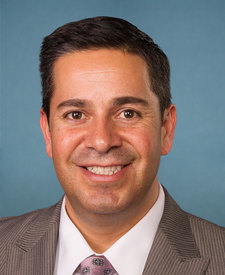
See how Ben Ray Luján actually votes — against your values.
DeepSyte scores Ben Ray Luján's record on the issues you care about — not party, not press releases. Take the 2-minute values quiz to see your personal alignment.
Sign in and take the values quiz to see how Ben Ray Luján's votes line up with your views.
Prediction track record
We haven't made any vote predictions for Ben Ray Luján yet. Predictions are generated for bills with tagged effects; they show up here as soon as the predict-votes job covers this rep's upcoming docket.
Consistency insights
No paired statements and votes yet for Ben Ray Luján
We haven't yet found statement/vote pairs on the same topic for Ben Ray Luján. This usually means either the rep hasn't taken public positions on bills that have come to a passage vote, or those bills haven't been tagged yet. The checker runs as new press releases and votes come in.
Pro analysis
AI rep analysis — Pro
Get an AI-narrated read on Ben Ray Luján's full voting record against your stated values — aligned themes, conflicts, notable votes, and what to watch for.
We haven't extracted campaign positions for Ben Ray Luján yet. Once their campaign website or position pages are processed, this card will track what they said vs how they voted.
Crossing the aisle
No party-break passage votes recorded for Ben Ray Luján. Either they've voted with Democrats on every substantive passage vote in the corpus, or their tenure overlaps few high-threshold party-line votes so far.
Recent votes
No recorded votes yet.
Recent statements
May 21, 2026press_release_senate
Luján, Boozman Champion Greater Access to Radiology Services - Senator Ben Ray Luján
Position: Senators Luján and Boozman support legislation to allow Medicare reimbursement for non-diagnostic medical imaging services performed by radiologic assistants under direct radiologist supervision in hospital settings, citing improved access to care and reduced provider shortages.
Senators Seek Medicare Reimbursement Eligibility for Hospital Radiologist Assistant-Performed Medical Imaging
WASHINGTON – U.S. Senators Ben Ray Luján (D-NM) and John Boozman (R-AR) introduced legislation to improve Medicare beneficiaries’ access to medical imaging services and address the provider shortage that exists nationwide, particularly in rural America. The Medicare Access to Radiology Care Act (MARCA) would allow radiologists to submit claims to Medicare for non-diagnostic services performed by radiologic assistants (RAs) they directly supervise in both the hospital and office settings.
While RAs are recognized under Medicare to perform services under direct supervision, the radiology practices that employ them are unable to submit claims to Medicare for RA-performed services in hospitals, where they most frequently work.
“Too many Medicare patients, especially in rural communities across New Mexico, are struggling to access timely care because of health care workforce shortages and unnecessary barriers,” said Luján. “Qualified RAs are already playing an important role in delivering care, and Medicare policy should reflect that. This legislation will help expand access to quality care, reduce strain on providers, and ensure more seniors get the care they need closer to home.”
“Medicare patients need timely access to medical imaging, but current guidelines continue to limit providers’ ability to utilize this important diagnostic tool. We can remedy that by ensuring radiologist assistants, who are well qualified to assist on diagnostic and therapeutic radiology procedures, have the same opportunity whether in a hospital or doctor’s office. Updating the regulations to allow reimbursement in either setting is a commonsense solution that I am pleased has bipartisan support,” Boozman said.
In 2019, the Centers for Medicare & Medicaid Services adjusted RA supervision requirements, which allowed providers to be reimbursed by Medicare for services performed by RAs in the office setting. However, the adjustment did not include reimbursement by Medicare for RA services performed in the hospital setting, creating a disparity that negatively impacts the radiology care available in hospitals. The bipartisanMARCA bill addresses that gap to restore access for patients in either setting and removes disincentives that jeopardize the ability of radiologists to meet demand for diagnosis and treatment.
Supporters of the legislation include the Arkansas Society of Radiologic Technologists, Arkansas Radiological Society, American College of Radiology, American Registry of Radiologic Technologists, American Society of Radiologic Technologists, Society of Radiology Physician Extenders, Association for Medical Imaging Management and RAYUS Radiology.
Pursuant to Senate Policy, petitions, opinion polls and unsolicited mass electronic communications cannot be initiated by this office for the 60-day period immediately before the date of a primary or general election. Subscribers currently receiving electronic communications from this office who wish to unsubscribe should click here.
Luján, Cantwell, Colleagues Raise Major Alarms Over Foreign Government Influence in American News Media if FCC Greenlights Paramount-Warner Brothers Investment Deal - Senator Ben Ray Luján
Position: Senators oppose FCC approval of the Paramount-Warner Bros. merger financing structure that would allow Saudi Arabia, UAE, Qatar, and potentially Chinese entities to own significant stakes in major U.S. media outlets, citing national security and foreign government influence concerns.
Paramount’s financing scheme needs FCC approval so Saudi Arabia, UAE & Qatar can own significant stakes in its television stations
Foreign governments hostile to a free press could exert extraordinary influence over CNN, CBS News, 60 Minutes & local Paramount-owned TV stations in major media markets including NYC, LA, Chicago, Dallas, Boston, Seattle-Tacoma, Detroit, Minneapolis, Miami, Denver & Pittsburgh
Washington, D.C. – U.S. Senator Ben Ray Luján (D-N.M.), Ranking Member of the Subcommittee on Telecommunications and Media, joined U.S. Senator Maria Cantwell (D-Wash.), Ranking Member of the Senate Committee on Commerce, Science and Transportation, and Senators Edward J. Markey (D-Mass.), John Hickenlooper (D-Colo.), Andy Kim (D-N.J.) and Elizabeth Warren (D-Mass.) in writing to Federal Communications Commission (FCC) Chairman Brendan Carr, raising serious concerns over Paramount’s unprecedented request to allow the sovereign wealth funds of Saudi Arabia, the United Arab Emirates (UAE) and Qatar to own 49.5% and potentially up to 100% of Paramount’s equity to finance Paramount $111 billion takeover of Warner Bros. Discovery. This is despite the fact that Congress set a 25% cap on foreign ownership of American TV and radio stations to ensure powerful media companies are ultimately controlled by American citizens.
“The scale, concentration, and scope of this proposal raise serious questions,” the Senators wrote. “Foreign governments hostile to a free and independent press could exert unprecedented influence over a media conglomerate vital to American journalism and culture.”
“If the filing is approved, Saudi, UAE, and Qatari sovereign investment funds would have significant influence over a number of the most significant and impactful news reporting and investigative journalism outlets in the United States, including CNN, CBS News, 60 Minutes, and 28 local Paramount-owned television stations in 17 of the country’s largest media markets,” they continued.
The FCC has never before allowed a sovereign wealth fund to hold a significant ownership stake of an American broadcaster. Chairman Carr, who had previously expressed concerns about foreign ownership of TikTok and opposed a transfer of radio stations because of a lack of plans to “wall off the unvetted foreign interests,” appears to have no such concerns about this deal. Instead, he said the FCC review will “get through pretty quickly,” and called its financing a “good deal.” These statements, which raise questions about Chairman Carr’s impartiality, were made despite the fact that the proposed merger raises national security alarms.
“Media reports indicate that Tencent, a Chinese company on the Department of Defense’s list of companies connected to the Chinese military, will also take an equity stake in the combined company,” continued the Senators. “Allowing our most significant global adversary to partly own Paramount or a combined new entity that will own CNN and CBS News would risk our national security.”
“Paramount’s petition asks for an unprecedented degree of foreign control of U.S. broadcasting,” they wrote. “[W]e have serious doubts that paving the way for these anti-democratic governments to own between 49.5% and 100% of an American media empire serves the “public interest.”
The full text of the letter to Chairman Carr is below and HERE.
We write to express serious concerns about Paramount Global’s request for the Federal Communications Commission (FCC) to authorize foreign investors to own between 49.5% and 100% of the equity in its FCC-licensed broadcast television stations. This would include significant equity stakes held by the sovereign wealth funds of Saudi Arabia, the United Arab Emirates (UAE), and Qatar to finance the $111 billion merger of Paramount Skydance and Warner Bros. Discovery and could also include ownership by a company with links to the Chinese government. Such a media giant would include the 28 television stations owned by CBS, the movies and television shows of Paramount Pictures, and soon CNN, HBO, and other iconic media properties. The scale, concentration, and scope of this proposal raise serious questions. Foreign governments hostile to a free and independent press could exert unprecedented influence over a media conglomerate vital to American journalism and culture.
Section 310 of the Communications Act prohibits companies with more than 25% foreign ownership from indirectly owning TV or radio broadcast stations. This provision was meant to ensure powerful media companies are ultimately controlled by American citizens. Paramount, however, seeks an exception far exceeding the 25% statutory cap. Congress enacted these restrictions on foreign ownership of broadcasters because of concerns about the “foreign dominance of the cables and the dangers from espionage and propaganda disseminated through foreign-owned radio stations in the United States” during the First World War.
The foreign governments behind this investment systematically suppress press freedom in their own countries and have made a series of investments and gifts to entities controlled by the President and his family, raising serious concerns about their influence over the independent American media and the potential for corruption.
Reporters Without Borders ranked Saudi Arabia among the world’s five worst countries in the 2026 Press Freedom Index above only Iran, China, North Korea, and Eritrea.” The Press Freedom Index also found that the UAE and Qatar suppress independent media. In 2021, the Office of the Director of National Intelligence concluded that Saudi Crown Prince Mohammed bin Salman ordered the torture, execution, and dismemberment of Saudi journalist and Washington Post columnist Jamal Khashoggi as part of the “Crown Prince’s support for using violent measures to silence dissidents abroad.” And these countries have engaged in influence peddling in the United States. In 2025, Emirati companies close to the government invested in the Trump family’s cryptocurrency, shortly before the Trump administration authorized the sale of advanced AI chips to the UAE, and Qatar’s government gifted President Trump a luxury jet being turned into the new Air Force One.
If the filing is approved, Saudi, UAE, and Qatari sovereign investment funds would have significant influence over a number of the most significant and impactful news reporting and investigative journalism outlets in the United States, including CNN, CBS News, 60 Minutes, and 28 local Paramount-owned television stations in 17 of the country’s largest media markets, including New York, Los Angeles, Chicago, Dallas, Boston, Seattle, Detroit, Minneapolis, Miami, Denver, and Pittsburgh. And the Trump Administration appears to believe that the transaction will reduce media independence. Indeed, in complaining about CNN’s coverage of the Iran War, Secretary of Defense Pete Hegseth has said “the sooner” that Paramount takes over CNN, “the better.”
And what’s not in the petition is just as concerning. Media reports indicate that Tencent, a Chinese company on the Department of Defense’s list of companies connected to the Chinese military, will also take an equity stake in the combined company. Allowing our most significant global adversary to partly own Paramount or a combined new entity that will own CNN and CBS News would risk our national security.
Paramount’s petition asks for an unprecedented degree of foreign control of U.S. broadcasting. The FCC has never approved a significant ownership stake of an American broadcaster by a sovereign wealth fund—that is, an investment entity controlled by a foreign government. And the FCC’s prior approval of foreign ownership of equity in broadcasters has been limited to entities based in allied NATO, Five Eyes, or friendly neighboring countries.
In the past, you have raised serious questions about foreign ownership of U.S. media entities. In 2024, you said Chinese ownership of TikTok presented “a clear and present danger to U.S. national security” and supported forcing divestiture. You also objected that the Commission approved the transfer of radio stations in 2024 without “plans to wall off the unvetted foreign interests.” But in the case of Paramount, even before the application was filed, you claimed that the FCC had a “very minimal” role in reviewing Paramount’s foreign ownership, the review would “get through pretty quickly,” and that the Paramount-Warner Bros. transaction was a “good deal.” These comments raise questions about your impartiality and the rigor of the Commission’s review of this unprecedented foreign investment.
Given the well-documented hostility against a free press in their own countries, we have serious doubts that paving the way for these anti-democratic governments to own between 49.5% and 100% of an American media empire serves the “public interest.” At a minimum, we urge you to conduct a rigorous and thorough review of the foreign investment in Paramount, its impact on editorial independence, and its implications for U.S. national security. We also demand that this investment be considered by the full Commission rather than by staff behind closed doors.
Please provide answers to the following questions and document requests by June 5.
1. Will you commit to a comprehensive review by Team Telecom, especially given the unprecedented risks to press freedom posed by the proposed equity investors?
2. Will the Commission and Team Telecom specifically review Tencent’s role in the transaction and equity stake in Paramount?
3. Will you commit to voting on Paramount’s request to raise its foreign ownership at the Commission level? If not, why?
4. Do you believe that foreign ownership of between 49.5% and 100% of Paramount, contemplated by the filing, would mean that the Middle Eastern sovereign wealth investment funds would have effective control or influence over decision making?
5. What specific assurances have the Saudi, Emirati, and Qatari sovereign wealth funds, and Tencent, provided the Commission that they will not attempt to influence the editorial, journalistic, or content decisions at Paramount, either by suppressing reporting and creative content unfavorable to their governments or by promoting content that runs contrary to American interests or values? Please provide all related documents.
Pursuant to Senate Policy, petitions, opinion polls and unsolicited mass electronic communications cannot be initiated by this office for the 60-day period immediately before the date of a primary or general election. Subscribers currently receiving electronic communications from this office who wish to unsubscribe should click here.
Luján, Matsui Introduce Legislation to Expand Digital Opportunity, Inclusion, and Literacy - Senator Ben Ray Luján
Position: Senators Luján and Markey and Representative Matsui introduced legislation to establish a nonprofit foundation that would expand digital opportunity, broadband access, and digital literacy nationwide through grants, training, research, and stakeholder engagement.
Washington, D.C. – Today, U.S. Senator Ben Ray Luján (D-N.M.), Ranking Member of the Senate Commerce Committee’s Subcommittee on Telecommunications and Media, and U.S. Representative Doris Matsui (D-Calif.) introduced the bicameral Digital Opportunity Foundation Act of 2026. This legislation would establish a nonprofit foundation that would leverage public and private investments to expand digital opportunity nationwide, ensuring that people can access, adopt, and effectively use modern digital tools, broadband, and other emerging technologies. The bill is co-sponsored by U.S. Senator Edward J. Markey (D-Mass.).
The Foundation for Digital Opportunity will supplement the work of the National Telecommunications and Information Administration (NTIA) and the Federal Communications Commission (FCC) to award grants, support research, provide training and education, engage with stakeholders, collect data, and promote policies that improve digital opportunities. The Foundation will be governed by a Board of experts specializing in digital opportunity, technology, and telecommunications, representing diverse communities across the United States.
“In today’s world, digital skills are vital for success for students, entrepreneurs, and all Americans,” said Senator Luján. “To expand digital opportunity in New Mexico and nationwide, my Digital Opportunity Foundation Act would establish a nonprofit foundation to help close the divide on digital opportunity, inclusion, and literacy. As digital tools become more embedded in everyday life, we must ensure that we keep pace. That’s why I’m pushing this legislation to expand digital opportunities for all Americans and ensure they have full access to the tools and resources they need.”
“Access to the internet is not optional. It is how Americans learn, apply for jobs, access healthcare, and stay connected to one another. Yet too many families are being left behind, unable to fully plug into opportunity because of where they live, how much they make, or whether they have the tools to get online,” said Congresswoman Matsui. “The Digital Opportunity Foundation Act recognizes that closing the digital divide takes more than building broadband networks. It requires sustained investment in digital skills, devices, and trusted community partnerships that help people fully participate in our economy and society. I am proud to support this legislation to help make lasting digital equity a reality for communities across the country.”
“In the digital age, a reliable internet connection is the gateway to a good job, a quality education, and timely health care,” said Senator Markey. “When communities are left without the internet connections or digital tools they need to thrive, they're left out of the modern economy entirely. The Digital Opportunity Foundation Act will help close the digital divide and build a future where every person – regardless of their zip code or income level – can participate fully in modern life.”
Congressionally established nonprofit foundations have had great success in supporting the missions of various government agencies, including the National Institutes of Health (NIH), the U.S. Food and Drug Administration (FDA), and the National Park Service (NPS), and provide a mechanism to leverage public-private partnerships and support innovation. As the National Telecommunications and Information Administration (NTIA) works to implement broadband programs to better connect the country, the Foundation for Digital Opportunity will be vital to ensure that the most vulnerable communities have the knowledge and skills to fully take advantage of these new connections.
“Sustained investments in digital literacy and adoption efforts at the community level are the missing component of our nation’s ongoing efforts to close the digital divide. The need for this investment is more urgent than ever as the nation prepares to incorporate AI into nearly everything we do online and on digital devices. AI will rely first and foremost on local broadband adoption and baseline digital literacy programs that currently lack federal support. We commend Senator Luján and Representative Matsui for proposing this innovative Foundation to promote digital opportunity for all Americans,” said Michael Calabrese, Director of Wireless Future at New America’s Open Technology Institute.
“To keep our seniors safe online, teach veterans how to navigate telehealth, and guide workers in how to use AI to advance their careers the U.S. needs sustained investment in digital opportunity programs. While NDIA's community of 2000+ Affiliates has the expertise and the trust of their neighbors, they simply cannot meet the ever-increasing demand for digital inclusion support without a federal strategy and funding. And yet the greatest strength in our country has always been its people. To value our people in the 21st century’s digital world, we cannot treat consistent access to the internet, appropriate devices, and digital skill-building as luxuries—they are essential to a healthy and economically thriving democracy and most importantly, our people. The National Digital Inclusion Alliance enthusiastically endorses the Digital Opportunity Act because it puts people first and is the sustainable investment in digital opportunity that all U.S. residents need to thrive,” said Angela Siefer, Executive Director, National Digital Inclusion Alliance.
This Digital Opportunity Foundation Act of 2026 is endorsed by the American Civil Liberties Union; American Library Association; Benton Institute for Broadband & Society; Center for Rural Strategies; Common Cause; Common Sense Media; Communications Workers of America; Consumer Reports; CoSN; Leadership Conference on Civil and Human Rights; National Consumer Law Center; National Hispanic Media Coalition; National Urban League; National Digital Inclusion Alliance; Open Technology Institute at New America; Public Knowledge; Schools Health & Libraries Broadband Coalition; UnidosUS; United Church of Christ Media Justice Ministry.
Additional quotes from endorsing organizations are available HERE.
Full text of the bill is available HERE.
Pursuant to Senate Policy, petitions, opinion polls and unsolicited mass electronic communications cannot be initiated by this office for the 60-day period immediately before the date of a primary or general election. Subscribers currently receiving electronic communications from this office who wish to unsubscribe should click here.
Heinrich, Luján Introduce Legislation to Improve New Mexicans’ Access to Healthcare & Keep Rural Hospitals Open - Senator Ben Ray Luján
Position: Senators Heinrich and Luján support extending the Rural Community Hospital Demonstration program for five additional years to help rural hospitals remain financially viable and maintain healthcare access in underserved communities.
WASHINGTON — U.S. Senators Martin Heinrich (D-N.M.) and Ben Ray Luján (D-N.M.) introduced the Rural Community Hospital Demonstration Reauthorization Act, bipartisan legislation to improve New Mexicans’ access to healthcare and keep rural hospitals open by extending the Rural Community Hospital Demonstration (RCHD) program for another five years.
Many small rural hospitals are too large to qualify for Critical Access Hospital status, but still struggle to stay open under Medicare’s current payment system. The Rural Community Hospital Demonstration program helps address this gap by allowing certain hospitals to receive payments that better reflect the cost of care. Since 2005, the program has supported 55 rural hospitals across the country, helping keep their doors open and providing valuable insight into how to strengthen rural healthcare.
New Mexico hospitals currently participating in the RCHD program include Roosevelt General Hospital and Artesia General Hospital. This legislation would provide these New Mexico hospitals with the opportunity to extend their participation, should they choose to remain in the RCHD program.
“Access to a nearby hospital in a rural community can make a life-or-death difference for folks needing emergency care in minutes, not hours. But that requires keeping rural hospitals open. Extending the Rural Community Hospital Demonstration Program is an important step toward making that happen,” said Heinrich. “No one in New Mexico should have to travel hours to receive the care they need, whether they’re in a moment of crisis, getting routine treatment, or welcoming the newest member of their family.”
“Access to a nearby hospital is critical for people living in our rural communities throughout New Mexico. When emergencies happen, care close to home saves lives,” said Luján. “Right now, many rural hospitals in New Mexico are at risk of closing. Extending the Rural Community Hospital Demonstration program is essential to helping keep those doors open and ensuring families can get the care they need. I’ll keep fighting to protect health care access for every New Mexican and make sure it’s never out of reach.”
“I am so grateful to Senator Heinrich and Senator Luján for supporting the continuation of CMS’s Rural Hospital Demonstration program. This program is vital for rural community hospitals who don’t qualify for Critical Access Hospital designation, which allows for higher, cost-based reimbursement for inpatient and swing bed care. These services are typically sources of financial loss for small hospitals due to low volume, but they are necessary to support our community. This program helps to ensure long term sustainability and availability of vital healthcare in rural communities, and we are very thankful for their support,” said Kaye Green, CEO of Roosevelt General Hospital in Portales, N.M.
The legislation is led by U.S. Senators Chuck Grassley (R-Iowa) and Michael Bennet (D-Colo.). Alongside Heinrich and Luján, the bill is cosponsored by U.S. Senators Mike Crapo (R-Idaho), Ron Wyden (D-Ore.), Dan Sullivan (R-Alaska), Cindy Hyde-Smith (R-Miss.), Peter Welch (D-Vt.), Jerry Moran (R-Kan.), Angus King (I-Maine), Lisa Murkowski (R-Alaska), Jeff Merkley (D-Ore.), Pete Ricketts (R-Neb.), James Lankford (R-Okla.) and John Hickenlooper (D-Colo.).
The full text of the legislation is here.
Pursuant to Senate Policy, petitions, opinion polls and unsolicited mass electronic communications cannot be initiated by this office for the 60-day period immediately before the date of a primary or general election. Subscribers currently receiving electronic communications from this office who wish to unsubscribe should click here.
Luján, Leger Fernández, Hayes Reintroduce Legislation to Address Educator Shortages and Expand Federal Loan Forgiveness for Educators - Senator Ben Ray Luján
Position: The legislators support expanding the federal Teacher Loan Forgiveness Program to have the government make monthly loan payments for educators in early childhood and high-need schools, with complete debt forgiveness after five years of service, to address educator shortages and increase workforce diversity.
Washington, D.C. – Today, U.S. Senator Ben Ray Luján (D-N.M.), U.S. Representative Teresa Leger Fernández (D-N.M.), and U.S. Representative Jahana Hayes (D-Conn.) reintroduced the Loan Forgiveness for Educators Act, legislation that would expand and modernize the federal loan forgiveness program for educators. This legislation would help address educator shortages and increase children’s access to a diverse and well-prepared educator workforce by strengthening the federal Teacher Loan Forgiveness (TLF) Program.
High college costs and student loan debt impact recruitment, retention, and diversity within the educator workforce. Yet, our country’s loan forgiveness program, specifically designed for educators – the TLF Program – has not been significantly updated since 2004, causing outstanding student loan debt to increase by over $1.3 trillion – two-thirds of those who go into education take on debt.
The Loan Forgiveness for Educators Act reforms the TLF program by having the federal government make monthly federal student loan payments for educators serving in early childhood education programs and high-need public schools and completely forgive any outstanding debt after five years of service. It would also allow service under this program to concurrently count toward the Public Service Loan Forgiveness Program. These changes will help recruit and retain more educators and ensure that more diverse candidates can afford comprehensive educator preparation programs, a key strategy for decreasing shortages and increasing educator diversity in early childhood and K-12 education.
“In New Mexico and nationwide, our educators work tirelessly to prepare our students and equip them with the tools for success,” said Senator Luján. “Right now, educators are being crushed by the high costs of education, creating barriers that are driving the workforce shortages we’ve seen across the country. To support our educators and students, it’s critical that we strengthen and expand the Teacher Loan Forgiveness Program to make becoming an educator more accessible and affordable. My legislation will help increase educator recruitment and retention and empower a more prepared and diverse workforce to educate our students.”
“My mother was a teacher, and she marveled at the miracle that happens when a child learns to read. She knew teachers were overworked and underpaid, but she loved her calling to teach. I am reintroducing the Loan Forgiveness for Educators Act to invest in teachers and our children’s future,” said Rep. Leger Fernández. “This bill will ease the financial burden of hard-working educators by forgiving student loan debt after 5 years of teaching. Serving our students shouldn’t require educators to take on excessive debt compared to their pay. Let’s show educators the respect they have earned and incentivize them to stay in their profession and create lots of little miracles.”
“Federal policy should incentivize teacher recruitment and retention – not create unnecessary barriers that keep educators out of the profession. New graduates often leave school with unimaginable debt, receive low pay, and are forced to take on a second, even third job in order to make ends meet and pay off student debt,” said Rep. Hayes. “The Loan Forgiveness for Educators Act eases these financial burdens for the public servants who invest in students each day.”
The Loan Forgiveness for Educators Act is co-sponsored by U.S. Senators Alex Padilla (D-Calif.), Richard Blumenthal (D-Conn.), Tim Kaine (D-Va.), Jeff Merkley (D-Ore.), Mark Kelly (D-Ariz.), Chris Van Hollen (D-Md.), Martin Heinrich (D-N.M.), Tina Smith (D-Minn.), Ruben Gallego (D-Ariz.), Cory Booker (D-N.J.), Ron Wyden (D-Ore.), Jack Reed (D-R.I.), and Tammy Baldwin (D-Wis.), and U.S. Representatives Angie Craig (D-Minn.), Melanie Stansbury (D-N.M.), Jesús “Chuy” García (D-Ill.), Suzanne Bonamici (D-Ore.), Scott Peters (D-Calif.), Salud Carbajal (D-Calif.), Eleanor Holmes Norton (D-D.C.), and Mark DeSaulnier (D-Calif.).
The Loan Forgiveness for Educators Act is supported by the AACTE (American Association of Colleges for Teacher Education), AASA, The School Superintendents Association, ACTFL, Advance CTE, AFT New Mexico, AFT: Education, Healthcare, Public Services, All4Ed, American Association of State Colleges and Universities (AASCU), American Federation of School Administrators, Asian Americans Advancing Justice-AAJC, Association for Career and Technical Education, Association of Latino Administrators and Superintendents, Association of School Business Officials International (ASBO), Center for Law and Social Policy (CLASP), Chiefs for Change, Council for Exceptional Children, Council for Opportunity in Education, Council of Administrators of Special Education, Early Care & Education Consortium, Early Edge California, EdTrust, Educators for Excellence, First Focus Campaign for Children, Growing Up New Mexico, Institute for Educational Leadership, Hispanic Association of Colleges and Universities, MALDEF (Mexican American Legal Defense and Educational Fund), NAACP, Nafme, National Art Education Association, National Association for Family Child Care, National Association for Media Arts Education, Association for Music Education, National Association for the Education of Young Children (NAEYC), National Association of Secondary School Principals, National Board for Professional Teaching Standards, National Center for Learning Disabilities, National Center for Teacher Residencies (NCTR), National Council of Teachers of English (NCTE), National Council on Teacher Quality, National Dance Education Organization, National Education Association, National Indian Education Association, National Rural Education Association, National Science Teaching Association (NSTA), Navajo Preparatory School, Inc., New Mexico Association for the education of young children, Public Advocacy for Kids (PAK), Public Advocates, Southern Education Foundation, Teach Plus, The Teacher Salary Project, Today's Students Coalition, Teacher Education Division of the Council for Exceptional Children, UnidosUS, ZERO TO THREE, National Association of Elementary School Principals, National Women's Law Center, and National Council of Teachers of Mathematics (NCTM).
A summary of the bill can be found HERE. Full text of the bill is available HERE.
Pursuant to Senate Policy, petitions, opinion polls and unsolicited mass electronic communications cannot be initiated by this office for the 60-day period immediately before the date of a primary or general election. Subscribers currently receiving electronic communications from this office who wish to unsubscribe should click here.
Luján Statement on Voting Against Steve Pearce to Serve as Director of the Bureau of Land Management - Senator Ben Ray Luján
Position: Senator Luján opposed the confirmation of Steve Pearce as BLM Director, citing Pearce's record of opposing public lands protections and national monument designations.
Washington, D.C. – U.S. Senator Ben Ray Luján (D-N.M.) issued the following statement after voting against the confirmation of Steve Pearce as the Director of the Bureau of Land Management (BLM):
“At a time when Republicans are rushing to sell off our public lands, they cannot be trusted to lead the Bureau of Land Management. While serving in Congress, Mr. Pearce opposed protections for the Organ Mountains–Desert Peaks National Monument in his own district, a treasured New Mexico landscape. His record makes it clear that he will not stand up for our public lands.
“I voted against Mr. Pearce because his record speaks for itself. The Bureau of Land Management stewards 13 million acres across New Mexico that support our outdoor recreation economy, ranchers, Tribal communities, and local economies. New Mexico cannot afford a director who has spent his career working against them.”
Pursuant to Senate Policy, petitions, opinion polls and unsolicited mass electronic communications cannot be initiated by this office for the 60-day period immediately before the date of a primary or general election. Subscribers currently receiving electronic communications from this office who wish to unsubscribe should click here.
Articles from a curated list of national outlets that mention Ben Ray Luján.
No recent news mentions yet.
Source: GDELT 2.0 GKG, filtered to a curated list of national outlets. Inclusion is not endorsement; opinion pieces and reported news are mixed.
Recent stock activity
Periodic transaction reports filed under the STOCK Act — disclosed by the rep, sourced from public filings.
No disclosed trades on record.
Source: open-data mirrors of the Senate eFD and House Clerk financial-disclosure systems. Disclosure within 30 days of trade is required by law (45 for spouse/dependent trades).
Top PAC donors · 2026 cycle
Political action committees that gave the most to this rep's principal campaign committee this cycle. PAC giving is direct organizational support — industry, ideological, or leadership.
5.INT'L ASSOCIATION OF BRIDGE, STRUCTURAL, ORNAMENTAL AND REINFORCING IRON WORKERS (IPAL)Labor2 contributionsTrade-union PAC for ironworkers — backs prevailing-wage protections, infrastructure funding, and project labor agreements.AI$10,000
6.MACHINISTS NON PARTISAN POLITICAL LEAGUELabor2 contributionsTrade-union PAC of the International Association of Machinists and Aerospace Workers — backs candidates supporting union organizing, prevailing wages, and aerospace/manufacturing jobs.AI$10,000
7.LABORERS' INTERNATIONAL UNION OF NORTH AMERICA (LI2 contributions$10,000
8.ENGINEERS POLITICAL EDUCATION COMMITTEE (EPEC)/INTERNATIONAL UNION OF OPERATING ENGINEERSLabor2 contributionsTrade-union PAC for the International Union of Operating Engineers — backs candidates supporting prevailing-wage standards, infrastructure investment, and project labor agreements.AI$10,000
9.MORTGAGE BANKERS ASSOCIATION POLITICAL ACTION COMMITTEE (MORPAC)2 contributions$10,000
10.DOING RIGHT - RESULTS ACTION UNITY LEADERSHIP PAC2 contributions$10,000
Source: OpenFEC (api.open.fec.gov) Schedule A receipts where contributor type is “committee.” Aggregated by contributing committee. Self-transfers from joint-fundraising / victory committees are excluded.
Top individual contributors · 2026 cycle
Itemized individual contributions over $200 to this rep's campaign committee, aggregated by donor employer. PAC giving is shown above; this section is people, not organizations.
1.CAPITAL GROUP$47,500
2.OPENAI$19,000
3.CORNERSTONE GOVERNMENT AFFAIRS$17,750
4.MICROSOFT CORPORATION$17,750
5.THE DASCHLE GROUP$15,500
6.BGR GROUP$14,500
7.PATTERN ENERGY$14,000
8.THEGROUP DC$13,000
9.OGILVY GOVERNMENT RELATIONS$12,000
10.KEEFE KEEFE & UNSELL P.C.$12,000
Source: OpenFEC Schedule A receipts where contributor type is “individual,” aggregated by the donor's self-reported employer. This is a geographic / industry correlation, not a corporate endorsement.