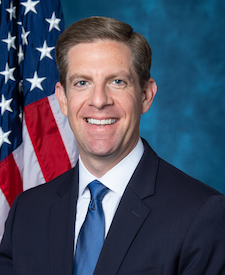
See how Mike Levin actually votes — against your values.
DeepSyte scores Mike Levin's record on the issues you care about — not party, not press releases. Take the 2-minute values quiz to see your personal alignment.
Sign in and take the values quiz to see how Mike Levin's votes line up with your views.
Prediction track record
How often we called Mike Levin's passage votes correctly, from their stated positions on each bill's tagged topics. Excludes “unclear” calls and abstentions.
A joint resolution to direct the removal of United States Armed Forces from hostilities within or against the Islamic Republic of Iran that have not been authorized by Congress.
To prohibit the disclosure of records by the Secretary of Housing and Urban Development of individuals for the purposes of immigration enforcement, and for other purposes.
We haven't yet found statement/vote pairs on the same topic for Mike Levin. This usually means either the rep hasn't taken public positions on bills that have come to a passage vote, or those bills haven't been tagged yet. The checker runs as new press releases and votes come in.
Pro analysis
AI rep analysis — Pro
Get an AI-narrated read on Mike Levin's full voting record against your stated values — aligned themes, conflicts, notable votes, and what to watch for.
We haven't extracted campaign positions for Mike Levin yet. Once their campaign website or position pages are processed, this card will track what they said vs how they voted.
Crossing the aisle
Passage votes where Mike Levin broke ranks with ≥75% of Democrats. Threshold catches substantively partisan splits; unanimous-ish or close votes are excluded.
7
Cross-aisle votes
118-hr-192·May 23, 2024·76% of D voted NO
To prohibit individuals who are not citizens of the United States from voting in elections in the District of Columbia and to repeal the Local Resident Voting Rights Amendment Act of 2022
ICE Reveals Over 16,000 Removals in San Diego Region Since January 2025 | U.S. Congressman Mike Levin
Position: Rep. Levin expresses concern that ICE removal operations may be driven by detention quotas rather than targeting individuals with criminal records, and calls for greater transparency and oversight of ICE operations, including mandatory public reporting on detainee criminal histories and detention locations.
Carlsbad, CA—Today, Rep. Mike Levin (CA-49) released a letter sent by Immigration and Customs Enforcement (ICE) to the San Diego Congressional Delegation which reveals that removals in the San Diego Area of Removal (AOR) totaled 16,368 between January 20, 2025, and April 1, 2026. In the letter, ICE breaks down the removals by country of origin with the highest share of removals being from Mexico (10,847), Guatemala (996), and Venezuela (544).
The letter also reveals how ICE officers identify themselves, what attire they wear, and when they identify themselves as immigration officers. Despite Rep. Levin’s request for information about the criminal records of the removed individuals or whether judicial warrants were issued during operations, the letter does not include such data.
Read the full ICE letter response here.
“I suspect these high numbers are part of Stephen Miller’s demands to meet high detention quotas. What this letter does not answer is how many detainees and removals had a criminal record. That is a question that deserves an answer,” said Rep. Levin. “I expect ICE to keep even more data than this, and they need to be able to provide information on where they are detaining individuals and why. This type of oversight—requiring ICE to do public reporting—is something I will continue to advocate for. This letter paints only half the picture, not a full one.”
The letter responds to Rep. Levin’s July 2025 letter to ICE, which expressed concerns about ICE’s tactics during operations in Oceanside and requested information about the warrants involved and the detainees’ criminal records.
Read Rep. Levin’s July 2025 letter here.
“The information I requested will help the public understand the scale of the removal operations being undertaken by the Trump Administration,” continued Rep. Levin. “The public should use these numbers to hold the government accountable and to push for greater transparency about who is being targeted for removal. Without that context, raw deportation figures can easily be used to paint a misleading picture of what these operations actually look like on the ground.”
"I appreciate ICE's response, and it is largely consistent with what we believed to be occurring in San Diego. However, the numbers in this letter are quite troubling,” said Rep. Scott Peters (CA-50). "When President Trump took office, he promised the American people that his immigration agenda would target the 'worst of the worst,' yet this letter raises serious questions: Are the 16,000 individuals who were removed from San Diego the 'worst of the worst'? Do they have criminal records, or are these removals simply part of a broader effort to hit an arbitrary quota by this Administration? Our constituents deserve to know who is being removed from their communities and why.”
“It’s disappointing but not surprising that ICE won’t admit the truth – that they’re not targeting ‘the worst of the worst,’ and are instead attempting to eliminate all forms of legal immigration. ICE removed over 16,000 people from San Diego – our friends, neighbors, and hardworking people – who deserve due process, and not to be disappeared without a trace. San Diegans need real answers about what’s happening to people in our community, and this letter response from ICE is a joke. We will keep pressing for actual answers,” said Rep. Sara Jacobs (CA-51).
"Donald Trump and Stephen Miller's mass deportation agenda has ripped families apart and created fear and chaos in our communities. These numbers are evidence of that. But ICE is still withholding information," said Rep. Juan. Vargas (CA-52). "This lack of accountability and clarity from ICE is unacceptable. We need answers, and we will continue to demand them."
Rep. Mike Levin Calls for Investigation into Hungarian Funds Funneled to CPAC | U.S. Congressman Mike Levin
Position: Rep. Levin calls for federal investigation into allegations that Hungary's government funneled public funds to CPAC, arguing such foreign funding undermines electoral integrity and may violate campaign finance, tax, and foreign agent registration laws.
Washington, D.C.—Rep. Mike Levin (CA-49) is calling for an investigation into allegations that the Conservative Political Action Conference (CPAC) received public funds from Hungary’s government under the leadership of outgoing Prime Minister Viktor Orbán. In a letter to the Internal Revenue Service (IRS), Federal Election Commission (FEC), and the U.S. Department of Justice (DOJ), Rep. Levin called on the agencies to use their respective investigative powers to determine whether any campaign finance, tax, or foreign agent registration laws were violated by these contributions. CPAC hosts major nationwide political events that attract Republican political candidates, elected officials, and more.
On April 13, 2026, Hungarian Prime Minister-Elect Péter Magyar announced that the country’s government under Orbán diverted Hungarian taxpayer money to CPAC and that the country’s authorities will be investigating. Allegations that any foreign government directly funded major political and electoral activities in the U.S. undermine confidence in our elections and must be treated accordingly.
Read the full letter here or below:
Dear Mr. Bisignano, Chair Broussard, and Acting Attorney General Blanche,
I write to express serious concern with recent allegations made by Hungarian Prime Minister-Elect Péter Magyar that the Conservative Political Action Conference (CPAC) received public funds from the country’s former government. Allegations that any foreign government – much less one that was willing to do the bidding of the Russian Federation – directly funded flagship political and electoral infrastructure here in the U.S. is a direct attack on the integrity of American democracy. I request that your agencies proactively cooperate with the Hungarian government and exercise your relevant investigative and enforcement powers to determine swiftly and thoroughly whether any campaign finance, tax, or foreign agent registration laws were violated.
On Monday, April 13, Hungarian Prime Minister-Elect Péter Magyar announced that the country’s previous government, under the leadership of Prime Minister Viktor Orbán, diverted Hungarian taxpayer money to CPAC, which hosts major political events attracting conservative candidates, elected officials, and media. Prime Minister-Elect Magyar announced that his country’s authorities will be investigating this “criminal offense.”
At best, these recent allegations create the appearance that a foreign government is undermining the integrity of our electoral system by funding major political activities. At worst, this is illegal.
Budapest has hosted CPAC Hungary each year since 2022. President Trump has provided remarks at CPAC Hungary several times in his capacities as both a political candidate and officeholder. In 2024, presidential candidate Trump delivered remarks to the conference, at which Prime Minister Orbán declared “Go Donald Trump…and let the electoral battle begin.”
As you may know, CPAC is organized by the American Conservative Union (ACU), which includes 501(c)(4) and 501(c)(3) entities and an affiliated political action committee. Federal campaign finance law is unambiguous: foreign money is banned from U.S. elections. Political candidates, campaigns, and political action committees are barred from soliciting or accepting contributions or another “thing of value” from foreign governments, and foreign governments are prohibited from making any independent election expenditure or electioneering communication. These laws are intended to safeguard against foreign interference and ensure that candidates for public office represent the interests of their constituents, not other governments. Federal law also prohibits 501(c)(3) organizations from directly or indirectly participating in campaign activities. Together, these laws protect the voice and vote of American citizens and shield civil society from outside influence.
Prime Minister-Elect Magyar’s claims are especially concerning in light of Prime Minister Orbán’s pledge to be at the service of Russian authoritarian Vladimir Putin. These allegations are also surfacing at a time when the Trump Administration is actively dismantling the very safeguards that counter foreign interference in American politics. This includes the closure of the Federal Bureau of Investigation’s Foreign Influence Task Force and the DOJ’s February 2025 memorandum scaling back enforcement of foreign agent registration laws. These actions signal to foreign governments intent on undermining American democracy that they are welcome to keep trying.
Given the Hungarian Prime Minister-Elect’s troubling claims and his announcement that Hungarian authorities will be investigating, I respectfully request answers to the following questions:
Will your agency coordinate with Hungarian authorities to investigate whether CPAC received foreign government funds, in what amounts, and for which CPAC recipient?
Will your agency investigate whether Hungarian government funds received by CPAC have been used for election or political activities, travel by political candidates or public officials, or electioneering communications in the United States in violation of any federal laws?
If not, will your agency investigate what these funds were used for?
Has the Internal Revenue Service conducted any auditing or enforcement actions to ensure that CPAC Hungary adheres to restrictions on political activities by charitable organizations?
Does the acceptance of foreign government contributions by CPAC and its annual event in Hungary satisfy the requirements for registration under the Foreign Agent Registration Act?
These concerns are not about any one candidate, campaign, or committee. They are about the integrity of our nation’s elections and the health of American democracy. The American people deserve to know that their vote matters and their voice is heard. These allegations demand a swift and thorough response by your agency to ensure a zero-tolerance approach to foreign interference in American politics.
Rep. Mike Levin Announces New Energy Affordability Legislation to Lower Electricity Bills as Iran Conflict Sends Shockwaves Through Global Energy Markets | U.S. Congressman Mike Levin
Position: Rep. Levin introduced the Energy Bills Relief Act to reduce electricity costs through deployment of low-cost clean energy, prioritizing consumer affordability over utility and fossil fuel company profits, and modernizing the electric grid.
Encinitas, CA – Today, Rep. Mike Levin (CA-49) was joined by consumers and local environmental advocates to announce the introduction of the Energy Bills Relief Act, new energy affordability legislation to drive down energy costs amidst global energy market volatility due to the war with Iran.
Over the past 12 months, electricity prices have increased more than twice as fast as inflation — and they are expected to keep rising as the war with Iran continues. Prices will also continue to climb as new data centers and factories connect to the power grid and clean energy credits phase out following their repeal by the Trump Administration. The new Energy Bills Relief Act addresses energy costs in three ways: deploying low-cost clean energy; putting affordability over profits; and modernizing the electric grid.
“Americans are tired of paying more while utilities and fossil fuel companies profit. That's why I'm proud to introduce the Energy Bills Relief Act — a consumer-first plan to lower electricity bills and take on the structural drivers of high energy costs, once and for all. We will deploy affordable clean energy that is good for the planet and your pocketbook, put families over fossil fuel companies, and modernize our grid for the 21st century,” said Rep. Levin. “President Trump promised to cut energy bills in half — instead, he started a war driving up the cost of gas, electricity, and groceries for every American family. We have a plan to lower energy costs and I will fight every single day to make it law.”
The Energy Bills Relief Act prioritizes consumers and ensures access to low-cost energy for our homes, businesses, and economy by:
“Solana Center for Environmental Innovation is pleased to host Congressman Levin as he introduces important legislation to promote clean, reliable energy sources in the USA,” said Jessica Toth, Executive Director of Solana Center for Environmental Innovation. “Our mission is to prevent the loss of natural resources and limit greenhouse gases emissions. Legislation requires community actors to drive intended outcomes. Solana Center is here to make the possible practical – lowering consumption, decarbonizing, and consuming responsibly.”
“In the middle of an affordability crisis, no one should be forced to cut back on essentials to keep their power on. The Energy Bills Relief Act is a straightforward step to ease that burden and finally deliver the kind of relief people can actually feel without gutting environmental protections and with Tribal consultation,” said Aaron McCall, Federal Advocacy Coordinator, California Environmental Voters. “Lowering these costs isn’t just good policy, it’s necessary to protect families right now. It’s time to stop letting high energy bills drain Californians and start putting money back where it belongs.”
“Two out of five homes in San Diego are behind on their bills, with families forced to choose between putting food on the table, going to the doctor, or keeping the lights on. And this isn’t just a few people here or there, it’s a crisis,” said Serena Pelka, Senior Policy Advocate, Climate Action Campaign. “The Energy Bills Relief Act is an important solution to tackle root causes of high energy costs.”
Text of the legislation can be found here.
A section-by-section can be found here.
A one-page summary can be found here. A three-page summary can be found here.
A list of cosponsors can be found here.
Reps. Levin & Casten & SEEC Clean Energy Deployment Task Force Introduce the Energy Bills Relief Act | U.S. Congressman Mike Levin
Position: The release advocates for federal energy policy prioritizing renewable energy deployment and consumer affordability, opposing what the sponsors characterize as policies favoring energy producers' profits over household cost relief.
Washington, D.C. – Today, 120 House Democrats led by the House Sustainable Energy and Environment Coalition (SEEC) Clean Energy Deployment Task Force Co-Chairs Reps. Mike Levin (CA-49) and Sean Casten (IL-06) introduced the Energy Bills Relief Act, a family- and consumer-focused approach to United States energy policy that ensures Americans have access to the most reliable and low-cost source of power available – renewable energy.
“The Energy Bills Relief Act is the consumer-first energy policy that American families have been demanding. It lowers energy bills by putting affordability over profits, deploys the most affordable and reliable energy we have ever had, modernizes our electric grid, and ensures that data centers and large energy users pay their fair share instead of passing those costs onto families and small businesses,” said Rep. Levin. “American families were promised lower energy costs. Instead, this Administration canceled clean energy projects that would have helped to meet rising demand, repealed the tax credits that were actually keeping costs down, and left families holding the bill. The Energy Bills Relief Act changes that equation entirely and delivers the real, comprehensive relief that families across this country deserve.”
“Families across America are struggling with ever-increasing energy prices. In the last year, electricity rates have soared, increasing by as much as 13% under the Trump Administration. We can point to any number of things that have driven those increases, but at the center of it is that our current energy policy prioritizes the interests of energy producers over the interests of energy consumers,” said Rep. Casten. “It’s time to change that. The Energy Bills Relief Act is a consumer-focused approach that prioritizes expanding access to low-cost, clean energy. It lowers costs, increases reliability, and helps provide a livable planet we can pass to our children and grandchildren.”
Text of the legislation can be found here.
A section-by-section can be found here.
A one-page summary can be found here. A three-page summary can be found here.
A list of cosponsors can be found here.
Statements of support from key issues advocacy organizations and industry leaders can be found here.
The Energy Bills Relief Act prioritizes consumers and ensures access to low-cost energy for our homes, businesses, and economy by:
Electricity rates are surging nationwide, and millions of households are struggling to pay their rising energy bills. The most effective way to lower utility costs for American households is to expand access to renewable energy — the most reliable and low-cost energy source.
We have the tools to power America with abundant, reliable, American-made clean energy. The missing link between those tools and expanded access to that low-cost and efficient energy is a consumer-first energy policy.
For too long, U.S. energy policy has boosted the profits of energy producers at the expense of energy consumers. The Energy Bills Relief Act shifts our focus to lowering costs and increasing reliability for American homes and businesses by deploying more renewable energy. It is firmly rooted in the American values of choice and competition. It prioritizes consumers and ensures access to low-cost energy for our homes, businesses, and economy.
The Energy Bills Relief Act is what American families need to see costs go down, reliability go up, and ensure our electric grid can meet rising demand.
Last September, Reps. Levin and Casten released a discussion draft of the legislation under the name of the Cheap Energy Act.
Rep. Mike Levin Introduces DEATH BETS Act to Ban Death & War Prediction Contracts | U.S. Congressman Mike Levin
Position: Rep. Levin supports legislation to explicitly prohibit CFTC-registered entities from listing prediction market contracts involving terrorism, assassination, war, or individual death, closing loopholes in existing federal law.
Washington, D.C.—Today, Rep. Mike Levin (CA-49) introduced the House companion bill of the DEATH BETS Act. The bill, H.R. 7942, would explicitly prohibit any Commodity Futures Trading Commission (CFTC) registered entity from listing any contract that involves, relates to, or references terrorism, assassination, war, or an individual’s death. Sen. Adam Schiff leads the Senate version of the bill.
“No one should make a profit betting on war and death through prediction markets. While federal law prohibits prediction market contracts on terrorism, war, and assassination, there are still loopholes that allow traders to profit off them,” said Rep. Levin. “The DEATH BETS Act would stop a system that allows individuals to make money off predicting if service members will be put in harm’s way. It is completely unacceptable. I thank Sen. Schiff for his partnership on this bill and look forward to it moving through the legislative process.”
Under the Commodity Exchange Act, the CFTC currently has the authority to prohibit war, terrorism, and assassination contracts from being listed if they are determined by the Commission to be contrary to the public interest. Whether or not these contracts are in the public interest is at the discretion of the CFTC. At a time when CFTC Chair Selig has indicated that he will rewrite the rules on prediction markets, the CFTC can no longer be granted this discretion. The DEATH BETS Act will unequivocally ban these contracts.
The introduction of this bill follows platforms listing prediction contracts relating to war and death, such as whether Iran’s Ali Khamenei would be “out as Supreme Leader" which had $54 million in trading volume on Kalshi before it was paused.
Rep. Levin previously raised alarms on these “death contracts” being offered on offshore exchanges, such as if Maduro would be removed from power and whether the Ukrainian town of Myrnohad would be captured by Russian forces.
The bill was assigned to the House Committee on Agriculture.
Rep. Mike Levin Reintroduces Bipartisan Bill to Coordinate Global Pandemic Response to Antimicrobial Resistance | U.S. Congressman Mike Levin
Position: Rep. Levin and Rep. Valadao support federal coordination with international partners and multilateral organizations to develop new antimicrobial drugs and pandemic countermeasures to combat drug-resistant pathogens.
Washington, D.C.—Today, Rep. Mike Levin (CA-49) and Rep. David Valadao (CA-22) announced the reintroduction of the bipartisan Saving Us from Pandemic Era Resistance by Building a Unified Global Strategy (SUPER BUGS) Act. The bill, H.R. 7879, would help prepare for future pandemics by directing the Department of State, in consultation with the Department of Health and Human Services (HHS), to coordinate a federal strategy for working with foreign countries, multilateral organizations, and other appropriate entities to help develop and commercialize new pandemic products, including antimicrobials. These new antimicrobial products would fight the rapid global spread of pathogens resistant to treatment, which are considered “superbugs.”
Each year in the United States, at least 2.8 million people become infected with bacteria that are resistant to antibiotics, and more than 35,000 of them die from these infections. Antimicrobial drugs are intended for short-term use, making the development of new ones less attractive to drug developers. In December 2018, there were 42 antibiotics in the global clinical pipeline, of which only 11 were being developed to treat superbugs on the World Health Organization (WHO) critical threat list.
“There is scientific consensus on the fact that our world will experience another global pandemic, and the next one is likely to be connected to antimicrobial resistance. It’s not a matter of if it will happen, it’s a matter of when,” said Rep. Levin. “In order to protect Americans and people across the world, we need international cooperation and a global strategy to fight superbugs that have become resistant to modern medicine. Our bill would direct the development of drugs and other products to fight superbugs by entering into partnerships with other countries and multilateral organizations. I thank Rep. Valadao for his partnership on this bill and look forward to it moving through the legislative process quickly.”
“In the Central Valley, we see firsthand the growing threat of superbugs like Valley Fever, which are becoming harder to treat,” said Rep. Valadao. “The bipartisan SUPER BUGS Act strengthens coordination with our international partners to accelerate new treatments and tools to combat drug-resistant pathogens, and I’m proud to partner with Congressman Levin to help prevent the next global pandemic.”
The SUPER BUGS Act would strengthen the United States’ ability to combat antimicrobial resistance and prepare for future pandemics by expanding collaboration with international partners and encouraging parallel investments in the development of antimicrobials and other pandemic countermeasures. The bill’s coordinated strategic approach would aim to ensure equitable contributions among participating entities and consider a range of mechanisms to accelerate development and access, including securing contracts with the private sector, establishing public-private partnerships, implementing alternative payment models, and streamlining regulatory approval processes.
The bill is endorsed by the Partnership for Fighting Infectious Disease, American Society of Microbiology, Global Health Technologies Coalition, American Public Health Association, Cystic Fibrosis Foundation, Infectious Diseases Society of America, Sepsis Alliance, Treatment Action Group, and IAVI.
“National public health emergencies are a threat to every American. Infectious diseases and antimicrobial resistance are the root cause, and right now, the nation is unprepared to prevent them. U.S. health care requires a national strategy to get, and stay, ahead of the next pandemic. We applaud the sponsors for introducing the SUPER BUGS Act and for their commitment to addressing these very serious health and national security concerns,” said Candace DeMatteis, Vice President, Policy & Advocacy, Partnership to Fight Infectious Disease (PFID).
Rep. Levin & Sen. Schiff Introduce New Bicameral Legislation to Explicitly Ban Death & War Prediction Contracts | U.S. Congressman Mike Levin
Position: Rep. Levin and Sen. Schiff introduce legislation to explicitly prohibit prediction market contracts involving terrorism, assassination, war, or death, closing regulatory gaps that currently allow such contracts to be listed and traded.
Washington, D.C.—Today, Rep. Mike Levin (CA-49) and U.S. Senator Adam Schiff (D-Calif.) are introducing the DEATH BETS Act, new bicameral legislation to explicitly prohibit any Commodity Futures Trading Commission (CFTC) registered entity from listing any contract that involves, relates to, or references terrorism, assassination, war, or an individual’s death.
“Betting on war and death should be illegal. While federal law prohibits prediction market contracts on terrorism, war, and assassination, there are still gaping holes that allow traders to profit off death. The result is a system with nothing standing between a prediction market and a contract that lets someone make money off the outbreak of war or the deaths of American service members. We already saw what that looks like: over half a billion dollars was wagered on the timing of U.S. military strikes on Iran alone. That is unacceptable, and this legislation puts a stop to it,” said Rep. Levin.
“Betting on war and death creates an environment in which insiders can profit off of classified information, our national security is jeopardized, and violence is encouraged. There is no justification for gambling on lives, or public benefit to be derived by such a market. With regulators turning a blind eye, prediction markets have rapidly become the Wild West. As the CFTC seeks to rewrite the rules of the road, Congress must make clear that these death bets are unequivocally prohibited, and this bill would do just that,” said Sen. Schiff.
Under the Commodity Exchange Act, the CFTC currently has the authority to prohibit war, terrorism, and assassination contracts from being listed if they are determined by the Commission to be contrary to the public interest. Whether or not these contracts are in the public interest is at the discretion of the CFTC. At a time when CFTC Chair Selig has indicated that he will rewrite the rules on prediction markets, the CFTC can no longer be granted this discretion. The DEATH BETS Act will unequivocally ban these contracts.
The introduction of this bill follows platforms listing prediction contracts relating to war and death, such as whether Iran’s Ali Khamenei would be “out as Supreme Leader" which had $54 million in trading volume on Kalshi before it was paused.
Rep. Levin previously raised alarms on these “death contracts” being offered on offshore exchanges, such as if Maduro would be removed from power and whether the Ukrainian town of Myrnohad would be captured by Russian forces.
The full text of the bill is available here.
Rep. Mike Levin Votes Yes on War Powers Resolution to Rein in Trump’s Unauthorized War on Iran | U.S. Congressman Mike Levin
Position: Rep. Levin voted in favor of a War Powers Resolution to require the President to withdraw U.S. forces from Iran unless Congress explicitly authorizes the conflict through a declaration of war or specific authorization for military force.
Washington, D.C.—Today, Rep. Mike Levin (CA-49) voted in favor of the War Powers Resolution to end the Trump Administration's unauthorized military campaign in Iran. The resolution invokes the War Powers Act of 1973 to require the President to withdraw U.S. forces from Iran unless and until Congress explicitly authorizes the conflict through a declaration of war or a specific authorization to use military force. Rep. Levin released the following statement after his vote:
“Today, I voted for the War Powers Resolution to end the Trump Administration's unauthorized military campaign in Iran.
“On February 28th, President Trump launched ‘major combat operations’ against Iran in the middle of night, without a declaration of war, without an authorization from Congress, and without a coherent explanation to the American people of what he intends to achieve or how it ends. He described the operation himself as ‘massive and ongoing.' Those are not the words of a president exercising limited emergency authority. Those are the words of a president who believes he can take this country to war alone.
“Article I is not a suggestion. It is the supreme law of the land. The Framers did not vest the power to declare war in a single executive because they understood, with clarity born of hard experience, what happens when unchecked power meets the temptation of military force. They gave that power to Congress — to the people's representatives — precisely so that no one person could make this nation's gravest decision alone. The Trump Administration has been content to reduce Congress to an afterthought, as if the power to take this nation to war is theirs alone to wield. That is not how our democracy works.
“I represent the Marines and Sailors at Camp Pendleton. There is no vote I take more seriously than one that determines whether our service members are sent into harm's way. They deserve a Commander-in-Chief who takes that responsibility seriously too, and a Congress that refuses to look the other way when the Constitution is ignored.
“Preventing Iranian nuclear proliferation is a serious objective. The Iranian regime has been a threat to American national security since 1979. I want to see a free, democratic future for the Iranian people, and I stand with the brave Iranians who have been fighting for exactly that. But I refuse to accept that the path to those goals runs through an open-ended, unauthorized regional war that has already cost American lives and that this Administration cannot coherently explain.
“Donald Trump ran for president promising to end wars. He launched this one without authorization, without a full strategy, and with open contempt for the congressional oversight the Constitution requires. I voted today to reassert what the Constitution has always required: that in this democracy, no one person decides when this nation goes to war. Not now. Not ever.”
Rep. Mike Levin's Statement on the Strikes Against Iran | U.S. Congressman Mike Levin
Position: Rep. Levin opposes sustained military operations in Iran without congressional authorization. He argues that Article I of the Constitution requires Congress to declare war, and that while the President may respond to imminent threats, an open-ended campaign requires legislative approval. He calls for an immediate War Powers vote and states he will vote against authorizing sustained war in Iran.
Washington, D.C.—Today, Rep. Mike Levin (CA-49) released the following statement on the U.S. strikes against Iran:
“In the dark of night, President Trump announced that the United States had begun ‘major combat operations’ in Iran, describing a ‘massive and ongoing operation.’ Those are not the words that describe a limited strike to repel an imminent threat or a sudden attack. They describe sustained warfare.
“Article I of the Constitution gives Congress, not the President, the power to declare war. A President may act to repel an imminent attack, but launching an open-ended campaign requires congressional authorization. If this operation is truly massive and ongoing, it cannot rest solely on unilateral executive authority.
“We pray for the brave service members placed in harm’s way. Preventing Iranian nuclear proliferation is a serious objective. The Iranian regime continues to be a threat to American national security—and the safety of its own people—as it has been since 1979. But national security goals must be pursued within constitutional limits.
“Congress must be brought into this decision immediately. There must be a prompt War Powers vote so that the American people, through their elected representatives, determine whether our nation goes to war.
“When we take that vote, I will oppose a sustained war in Iran. I have no greater responsibility as an elected representative than deciding whether to send service members into harm’s way. I believe that we can support Iranians’ struggle for democracy without initiating a regional war. This is the type of war that Donald Trump explicitly said he was opposed to during his presidential campaign. Once again, the American people have found out that we cannot trust Donald Trump.”
Rep. Mike Levin Opposes Trump Administration’s Moves to Open California’s Coast to Offshore Drilling | U.S. Congressman Mike Levin
Position: Rep. Levin opposes the Trump Administration's plan to open California's coast to offshore oil and gas leasing, citing risks to the environment, economy, and coastal communities, and referencing past environmental damage from oil spills.
Washington, D.C.—Today, Rep. Mike Levin (CA-49) released the following statement after the Bureau of Ocean Energy Management (BOEM) declared its intent to offer oil and gas leasing in California:
“We won’t tolerate the Trump Administration’s intent to auction off California’s coast for offshore drilling to the highest bidder. Our coastline is not for sale. Period.
“The Administration wants us to believe that offshore drilling would increase supply and lower prices. The facts tell a different story.
“This scheme will not lower prices at the pump. The consequences of offshore drilling would be catastrophic for our communities, our economy, and our environment. Our region has already endured the negative impacts of what even one offshore failure can do.
“Not long ago, an oil spill off the Orange County coast leaked tens of thousands of gallons of crude oil into the Pacific Ocean. The impact was severe. Families lost access to the shoreline. Businesses lost revenue. Beaches closed, wildlife died, and fisherman were forced to stop their operations. We cannot repeat the mistakes of the past.
“Coastal communities throughout our district do not want this. Cities up and down the coast have stood together on a bipartisan basis to oppose offshore drilling because protecting our coastline is common sense. Democrats and Republicans alike have rejected previous offshore drilling plans and will continue to do so. The risks are too high.
“I will fight this every single step of the way because protecting our coastline safeguards our economy, protects our environment, and preserves our way of life.”
In November 2025, the Trump Administration announced new offshore drilling plans for the nation that would include up to 34 offshore lease sales covering approximately 1.27 billion acres of United States coastline, including three lease sales in Southern California. The plan would also include 21 lease sales off the coast of Alaska and seven in the Gulf of Mexico, and create a new administrative planning area called the South-Central Gulf of America.
Rep. Levin has advocated extensively for a ban on offshore drilling. In November 2024, Rep. Levin sent a letter to the Biden Administration that resulted in the withdrawal of future oil and natural gas leasing in sensitive coastal areas across the country, including in Southern California. In April 2025, he reintroduced the Southern California Coast and Ocean Protection Act to ban offshore drilling along the Southern California coast. He also co-sponsored Rep. Jared Huffman’s (CA- 02) bill, West Coast Ocean Protection Act, which would ban offshore drilling throughout California and the Pacific Northwest. Rep. Levin’s bill has been endorsed by numerous environmental groups and cities throughout the 49th Congressional District.
The Trump Administration is now attempting to open these areas to drilling and roll back environmental regulations.
Source: GDELT 2.0 GKG, filtered to a curated list of national outlets. Inclusion is not endorsement; opinion pieces and reported news are mixed.
Recent stock activity
Periodic transaction reports filed under the STOCK Act — disclosed by the rep, sourced from public filings.
No disclosed trades on record.
Source: open-data mirrors of the Senate eFD and House Clerk financial-disclosure systems. Disclosure within 30 days of trade is required by law (45 for spouse/dependent trades).
Top PAC donors · 2026 cycle
Political action committees that gave the most to this rep's principal campaign committee this cycle. PAC giving is direct organizational support — industry, ideological, or leadership.
1.BOLD DEMOCRATS III - UNITEMIZED5 contributions$53,127
2.DEMOCRACY SUMMER 2026Ideological4 contributionsProgressive grassroots advocacy PAC — supports voter engagement, democratic participation, and candidates aligned with progressive causes.AI$43,001
3.END CITIZENS UNITED - URGENT 20241 contribution$15,000
4.INTERNATIONAL BROTHERHOOD OF TEAMSTERS (DRIVE)3 contributions$15,000
5.NATIONAL ASSOCIATION OF LETTER CARRIERS OF U.S.A. POLITICAL FUND3 contributions$15,000
6.STAND UP FOR DEMOCRACY JFAIdeological1 contributionIdeological PAC — supports candidates and causes aligned with democratic governance and civic participation values.AI$13,500
7.HOUSE MAJORITY PACLeadership2 contributionsMember-of-Congress leadership PAC — supports House Republican candidates and coordinates party strategy in federal elections.AI$10,000
8.MACHINISTS NON PARTISAN POLITICAL LEAGUELabor2 contributionsTrade-union PAC of the International Association of Machinists and Aerospace Workers — backs candidates supporting union organizing, prevailing wages, and aerospace/manufacturing jobs.AI$10,000
9.UNITE HERE TIP CAMPAIGN COMMITTEELabor2 contributionsTrade-union PAC for hospitality and food-service workers — backs candidates supporting union organizing, workplace standards, and worker protections in the service industry.AI$10,000
10.NATIONAL ASSOCIATION OF REALTORS POLITICAL ACTION COMMITTEEReal Estate2 contributionsTrade association PAC for U.S. real estate agents and brokers — backs candidates supporting property-rights protections, mortgage-lending access, and tax incentives for homeownership.AI$10,000
Source: OpenFEC (api.open.fec.gov) Schedule A receipts where contributor type is “committee.” Aggregated by contributing committee. Self-transfers from joint-fundraising / victory committees are excluded.
Top individual contributors · 2026 cycle
Itemized individual contributions over $200 to this rep's campaign committee, aggregated by donor employer. PAC giving is shown above; this section is people, not organizations.
1.UNIVERSITY OF CALIFORNIA, SAN DIEGO$15,823
2.TEVORA$14,000
3.GOOGLE LLC$11,550
4.ANDURIL INDUSTRIES, INC.$10,500
5.NETFLIX, INC.$9,000
6.SUNRUN INC.$8,750
7.ROBBINS GELLER RUDMAN & DOWD LLP$8,500
8.CTC GLOBAL CORPORATION$8,000
9.LA JOLLA MJ MANAGEMENT, LLC$8,000
10.CHRISTOPHER C. CALKINS, INC.$7,600
Source: OpenFEC Schedule A receipts where contributor type is “individual,” aggregated by the donor's self-reported employer. This is a geographic / industry correlation, not a corporate endorsement.