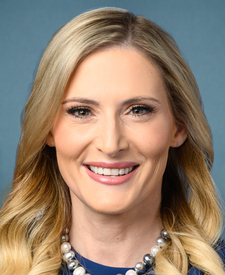
See how Laurel M. Lee's votes line up with your values.
DeepSyte scores Laurel M. Lee's record on the issues you care about — not party, not press releases. Take the 2-minute values quiz to see your personal alignment.
Sign in and take the values quiz to see how Laurel M. Lee's votes line up with your views.
Prediction track record
How often we called Laurel M. Lee's passage votes correctly, from their stated positions on each bill's tagged topics. Excludes “unclear” calls and abstentions.
32 predictions on record · none have been resolved by a passage vote yet. Check back as bills move.
Pending vote119-hr-5340
To prohibit the disclosure of records by the Secretary of Housing and Urban Development of individuals for the purposes of immigration enforcement, and for other purposes.
Based on 1 data point across public statements and recorded votes · AI analysis of public records
118-hr-192·Consistent
To prohibit individuals who are not citizens of the United States from voting in elections in the District of Columbia and to repeal the Local Resident Voting Rights Amendment Act of 2022
78/100
What they said
Mar 19, 2026
Rep. Lee and cosponsors introduced a constitutional amendment requiring that only U.S. citizens be eligible to vote in federal elections for President, Vice President, and Congress, arguing this codifies a longstanding principle and closes a constitutional gap.
Voted Yea on To prohibit individuals who are not citizens of the United States from voting in elections in the District of Columbia and to repeal the Local Resident Voting Rights Amendment Act of 2022
The statement supports limiting voting to U.S. citizens in federal elections, and the bill prohibits non-citizen voting in DC elections (local, not federal) and repeals DC's noncitizen local voting law. The rep's yes vote is directionally consistent with the citizenship-only voting principle, though the bill addresses DC local elections rather than the federal elections the statement focuses on.
Pairs with ambiguous language and high uncertainty are withheld until more data is available. Procedural, cloture, and amendment votes are excluded — they don't cleanly signal substantive support or opposition.
Pro analysis
AI rep analysis — Pro
Get an AI-narrated read on Laurel M. Lee's full voting record against your stated values — aligned themes, conflicts, notable votes, and what to watch for.
Positions Laurel M. Lee took during their campaign, scored against their subsequent record — public statements cross-checked with related votes. “Kept” means 80%+ of those statement-vs-vote pairs aligned; “Broken” means 30% or fewer.
0 kept0 broken0 mixed0 no action yet
Laurel M. Lee has 13 tracked positions but no scored statement-vs-vote pairs touching them yet. Verdicts will appear here as related statements and votes accumulate.
No action yetOpposes
People making over $400,000 a year should pay higher taxes.
“She championed the permanent tax relief provisions recently enacted by Congress, including protections for middle-class families, preservation of the 20% small business deduction, and a doubled child tax credit.”
Passage votes where Laurel M. Lee broke ranks with ≥75% of Republicans. Threshold catches substantively partisan splits; unanimous-ish or close votes are excluded.
Rep. Laurel Lee Joins Rep. Maxwell Frost to Introduce Bipartisan SLOTHS Act to Protect Vulnerable Wildlife
Position: Representatives Laurel Lee and Maxwell Frost introduced the bipartisan SLOTHS Act to prohibit importing sloths into the United States, with exceptions for legitimate research and accredited conservation breeding programs. The release states that existing laws were insufficient to prevent deaths of sloths connected to a planned Orlando tourist attraction.
Sanford, FL – Today, on International Sloth Day, Congresswoman Laurel Lee (FL-15) joined Congressman Maxwell Alejandro Frost (FL-10) at the Central Florida Zoo & Botanical Gardens to announce the introduction of the bipartisan Stopping Legalized Organized Trafficking and Harm to Sloths (SLOTHS) Act, legislation to prohibit the importation of sloths into the United States while preserving limited exceptions for legitimate research and accredited conservation breeding programs.
The legislation comes following a series of investigations into the deaths of more than 50 sloths connected to Sloth World, a planned Orlando tourist attraction that imported wild sloths from South America for commercial display. Investigative reporting by Inside Climate News first revealed the deaths in April, raising serious concerns about the conditions in which the animals were housed and the risks associated with transporting sloths from their natural habitats.
State records documented the deaths of 31 sloths between December 2024 and February 2025, including animals housed at a facility without running water or electricity. Subsequent investigations and reporting revealed that the death toll had risen to more than 50. Despite these findings, the Orange County Sheriff's Office concluded its investigation in August without finding evidence of criminal wrongdoing.
“More than 50 sloths died in Orlando, yet investigators found no violation of existing laws. That outcome should make all of us take a hard look at whether our laws are doing enough to protect these animals,”said Congresswoman Laurel Lee. “The bipartisan SLOTHS Act is a responsible step to prevent further harm by prohibiting sloth imports, with exceptions for legitimate research and accredited conservation breeding programs. I appreciate Congressman Frost's partnership and the advocates whose work brought this issue to light.”
“We owe it to these animals, and to the people in our community who spoke up, to make sure a tragedy like this never happens again,” said Congressman Frost.“Sloths have highly specialized needs, and their care requires scientific expertise and accountability. The bipartisan SLOTHS Act is an important step toward protecting these vulnerable animals and ensuring their welfare comes first.”
“I am grateful to see bipartisan legislation being filed in the United States Congress to protect wildlife and prevent the importation of wild-caught sloths into the United States. Wild animals deserve to live in the wild, free from human profit and exploitation,”said State Representative Anna Eskamani.“We'll continue to advocate for animal welfare at the state and local level as we support this federal effort.”
"The Association of Zoos and Aquariums commends Representatives Maxwell Frost and Laurel Lee for their leadership in protecting vulnerable wild sloth populations from unethical exploitation. The SLOTHS Act will restrict and penalize bad actors while ensuring the vital conservation initiatives of credible institutions can continue," saidDan Ashe, President and CEO of AZA. "On behalf of AZA, we thank Representatives Frost and Lee for their bipartisan proposal and proudly support this effort to safeguard sloth species."
“The exotic pet trade and wildlife tourism industry treat sloths as novelties, but sloths are fragile wild animals that suffer and often die when removed from their native habitats," said Kate Dylewsky, Assistant Director of Government Affairs, Animal Welfare Institute."Restricting the importation of sloths into the U.S. will help curb the demand that drives the trade in these animals and protect them from a life of suffering. The Animal Welfare Institute applauds Representatives Frost and Lee for introducing the SLOTHS Act.”
“After the deaths of 58 sloths at Sloth World, we made a promise to do everything in our power to make sure something like this could never happen again - and we meant it. But Sloth World was just the tip of the iceberg. It exposed a cruel and unnecessary trade in which hundreds of wild sloths are captured and sold as commodities every year, despite a mortality rate of up to 90%. The SLOTHS Act is an opportunity to finally draw a line and say that this is not acceptable," saidDr. Rebecca Cliffe, Founder and Executive Director, The Sloth Conservation Foundation. "By closing the door on the importation of wild-caught sloths into the United States we can stop this cruelty at its source. We cannot undo the suffering of the sloths already caught up in this trade, but we can make sure their suffering was not in vain. We made a promise, and we will not stop fighting until this trade is brought to an end. We are so grateful to Representatives Frost and Lee for standing alongside us and taking action to help make that promise a reality.”
“As sloths have grown more popular, so has their suffering. Sloth lovers are paying to interact with sloths, unaware they are contributing to a cruel industry. Most of these animals are ripped from the wild to endure inadequate living conditions and often painful deaths. The SLOTHS Act is a vital step toward ending this suffering," saidSam Trull, MSc - Co-founder and Executive Director, The Sloth Institute. "I am incredibly grateful to Representatives Frost and Lee for introducing this legislation to stop the removal of sloths from the wild for commercial import. Sloths belong in the rainforest, and the American people deserve to stop being misled.”
"What makes sloths so loveable also makes them targets for exploitation. Behind those sweet faces and slow movements lie complex life histories, long gestation periods, and specific environmental requirements. That's why the Stopping Legalized Organized Trafficking and Harm to Sloths (SLOTHS) Act's ban on importation into the US is so important," saidDanielle Kessler, US Director, International Fund for Animal Welfare. "Congressman Frost and Congresswoman Lee are taking the initiative to help keep these cherished animals in the wild and out of a cruel trade driven by the desire for pets and selfies. Sloths deserve more than the inhumane fate that awaits them in the name of entertainment."
"The Sloth World disaster is a devastating reminder of the suffering wild animals endure because of lax oversight and inadequate legal protections. Dozens of sloths died, yet authorities found that no laws had been violated," said Alicia Prygoski, Strategic Legislative Affairs Manager with the Animal Legal Defense Fund. "Prohibiting the import of wild sloths is a critical step toward preventing future tragedies and protecting these remarkable animals from exploitation. We commend Congressman Frost and Congresswoman Lee for championing this important legislation."
Sloths are particularly vulnerable to the stresses associated with international transportation and captivity. Their specialized diets, sensitivity to environmental changes, and unique physiological needs make proper care essential to their survival. The circumstances at Sloth World have raised broader concerns about the international trade of wild sloths and the need for stronger safeguards to prevent similar incidents.
The SLOTHS Act would:
Prohibit the importation of sloths into the United States, addressing the commercial demand that contributes to the international trade in these vulnerable animals.
Preserve limited exceptions for legitimate scientific research, including the importation of deceased sloths for documented research purposes.
Protect accredited conservation breeding programs by permitting eligible captive sloths to be transferred to Association of Zoos and Aquariums-accredited institutions, provided the animals were not taken from the wild after enactment.
Establish penalties for violations, including civil penalties of up to $20,000, criminal fines of up to $100,000 for knowing violations, cancellation of applicable federal authorizations, and forfeiture of illegally imported sloths.
Following the closure of Sloth World, the Central Florida Zoo & Botanical Gardens took in the facility's remaining sloths and provided specialized veterinary care. The zoo's involvement, along with the work of animal welfare advocates and conservation experts, helped draw attention to the challenges facing sloths in the commercial wildlife trade.
The SLOTHS Act has received support from the Sloth Conservation Foundation, the Sloth Institute, the Central Florida Zoo & Botanical Gardens, the Association of Zoos and Aquariums, the Animal Welfare Institute, the Animal Legal Defense Fund, and the International Fund for Animal Welfare.
The legislation represents a bipartisan effort to address the risks associated with importing sloths into the United States while ensuring that qualified conservation and research institutions can continue their important work.
ICYMI: Rep. Lee in the Washington Examiner: America doesn’t have an energy shortage. We have a lawsuit problem.
Position: Rep. Laurel Lee argues that federal approvals for interstate natural-gas pipelines are delayed by prolonged litigation and supports the Unleash American Pipelines Act to limit judicial review of approved projects.
Washington, D.C. - In case you missed it, the Washington Examiner published an op-ed by Representative Laurel Lee outlining the case for her new bill, the Unleash American Pipelines Act.
Read the op-ed here and below:
America doesn’t have an energy shortage. We have a lawsuit problem.
By Representative Laurel Lee
America does not have an energy shortage. We have an infrastructure problem. The United States is the world’s largest producer of natural gas, with abundant reserves, American workers ready to build, and the technology to power our homes, businesses, and industries for generations. But producing energy does little good if we cannot build the infrastructure necessary to move it where it is needed. Increasingly, the obstacle is a legal system that can turn federal approval into the beginning of years of litigation.
When the Federal Energy Regulatory Commission issues a certificate of public convenience and necessity for an interstate natural-gas pipeline, the project has already undergone extensive federal review, environmental analysis, public comment, and expert agency consideration. Judicial review should remain available to people genuinely harmed by an agency decision. But it should not become a mechanism for opponents to delay an approved project until it becomes too expensive to build.
The Mountain Valley Pipeline demonstrates the consequences. The project was originally expected to enter service in 2018 at an estimated cost of $3.5 billion. After years of litigation, regulatory setbacks, and construction delays, its cost reached approximately $7.85 billion. Congress ultimately had to intervene in 2023 to expedite completion of a project that had already received federal approval.
Other projects never made it that far. The roughly $8 billion Atlantic Coast Pipeline was canceled even after its developers prevailed in a 7-2 Supreme Court decision in a major permitting dispute. Dominion Energy cited growing costs and an increasingly uncertain permitting and litigation environment, while Duke Energy was left with more than $1.6 billion in costs associated with the canceled project. The Constitution Pipeline was similarly abandoned after years of regulatory and legal battles when its developers concluded that the project was no longer economically viable.
These cases reveal a larger structural problem. Investors considering new infrastructure must account for the possibility that a valid federal authorization will still be followed by years of litigation. That uncertainty raises financing costs, discourages investment, and means some viable projects are never built. A federal permit should not guarantee that a project succeeds, but neither should it become an invitation to another decade of litigation.
Americans ultimately pay the price when infrastructure fails to keep pace with demand. Winter Storm Fern provided a stark example. During the January 2026 storm, natural-gas supplies tightened across the Northeast, and spot gas prices in New York and New England approached $300 per million BTU, roughly 90 times the national average. New England’s vulnerability did not develop overnight. Pipeline projects intended to expand natural-gas capacity into the region have repeatedly faced regulatory opposition and litigation, leaving consumers more exposed when extreme weather sends demand soaring.
The reliability challenge is becoming more urgent. The North American Electric Reliability Corporation found that 13 of 23 North American assessment areas face resource-adequacy challenges over the next decade. Electricity demand is growing as manufacturing facilities, data centers, and other large loads connect to the grid. Natural gas remains essential to meeting demand when intermittent resources cannot provide sufficient power, but gas-fired generation cannot keep the lights on without pipelines to deliver its fuel.
Meanwhile, China is building. Its pipeline network exceeded 120,000 kilometers in 2025, while its state-owned pipeline operator accelerated construction on nearly 40 major infrastructure projects totaling more than 9,000 kilometers. China invested $500 billion in major energy projects in 2025 while the United States continues debating whether federally approved infrastructure can survive another round of litigation. We should not imitate China’s political system or abandon meaningful environmental review, but we should recognize the strategic consequences when our foremost economic competitor can build critical infrastructure while ours is litigated into paralysis.
That is why I introduced the Unleash American Pipelines Act. The legislation makes three targeted reforms to judicial challenges involving FERC Section 7 pipeline certificates, drawing from provisions that passed the House as part of the One Big Beautiful Bill before being removed in the Senate on procedural grounds.
The legislation requires petitioners to demonstrate direct and irreparable economic harm arising from the certificate they are challenging, including requirements for organizational petitioners. It establishes a clear-and-convincing-evidence standard for challenges to FERC’s determination, recognizing the agency’s technical expertise and extensive administrative record. Finally, it consolidates challenges in the U.S. Court of Appeals for the District of Columbia Circuit, creating a single, predictable judicial forum rather than allowing litigation across multiple circuits to multiply uncertainty, delay, and expense.
These reforms do not eliminate judicial review. They ensure those bringing a challenge have a genuine stake in the outcome, courts appropriately recognize the extensive administrative process preceding FERC’s decision, and litigation cannot be used indefinitely to accomplish what opponents could not achieve during the permitting process.
For Florida, the stakes are particularly high. Natural gas generates nearly three-quarters of our electricity, while our state produces very little of the natural gas it consumes. Florida families and businesses depend heavily on interstate pipelines to deliver the fuel that keeps our electric grid running. A system that prevents needed pipeline capacity from being built is not an abstract Washington policy dispute. It directly affects affordability, reliability, and economic growth for the people I represent.
The same is true for our country. America is entering an era of rapidly growing electricity demand while competing with China for advanced manufacturing, artificial intelligence, and the industries that will define the next century. We cannot pursue American energy dominance, reshore manufacturing, build new data centers, and strengthen our electric grid while maintaining a legal framework that allows essential infrastructure to spend years trapped between a federal permit and a courtroom.
America has built the interstate highway system, the transcontinental railroad, and pipelines across some of the most difficult terrain on the continent. We remain capable of building great things. Our laws should ensure rigorous review and protect Americans genuinely harmed by government decisions, but they should not allow delay itself to become the objective. America has the energy, workers, and technology to meet the next generation of demand. We need a legal system that allows us to build.
Rep. Laurel Lee Introduces the Unleash American Pipelines Act to Reform Natural Gas Pipeline Judicial Review
Position: Introduces legislation to reform judicial review of FERC-issued natural gas pipeline certificates by limiting challengers to those alleging direct and irreparable economic harm, requiring clear and convincing evidence to overturn FERC determinations, and consolidating challenges in the D.C. Circuit.
WASHINGTON, D.C. — Today, Congresswoman Laurel Lee, a member of the House Energy and Commerce Committee, introduced the Unleash American Pipelines Act, legislation to reform the judicial review process for natural gas pipeline certificates of public convenience and necessity issued by the Federal Energy Regulatory Commission (FERC).
The legislation would provide greater certainty for federally approved pipeline projects by limiting legal challenges to parties that can dictate direct and irreparable economic harm, establishing a clear and convincing evidence standard for overturning FERC’s expert determinations, and consolidating challenges in the U.S. Court of Appeals for the District of Columbia Circuit.
“Florida families and businesses depend on affordable, reliable energy, and natural gas powers nearly three-quarters of our state’s electricity,” said Rep. Lee. “When a pipeline has undergone extensive federal review and received approval from FERC, outside groups should not be able to use endless litigation to delay critical energy infrastructure indefinitely. The Unleash American Pipelines Act will bring greater certainty to the permitting process while preserving judicial review for those directly affected. This is a commonsense step to strengthen American energy infrastructure, lower costs, and ensure Florida has the reliable energy supply we need to continue growing.”
"Florida relies on interstate pipelines for nearly all of the natural gas that powers homes and businesses across the state,” said CEO of Florida Power & Light Company, Scott Bores. “Reliable pipeline infrastructure is essential to providing affordable, reliable electric service for our customers and supporting Florida's continued growth. We appreciate Congresswoman Lee's leadership on this important issue."
“TECO Energy applauds Congresswoman Lee for focusing on the right things: making government more efficient and effective to protect consumers and save customers' money. In Florida, natural gas is the backbone of the electric generation system, and smart policy that unleashes these investments promotes reliability and economic benefits,” said TECO. “We look forward to working with her on this legislation to improve the bureaucratic process to get much needed infrastructure built that supports growth in Florida.”
“Ensuring customer affordability and reliability has been and remains at the heart of everything Duke Energy does - from our operations to investments to our public policy engagement” said Louis Renjel, Chief Executive Officer of Duke Energy Florida and Midwest. “To that end, this legislation will help increase access to lower-cost gas supplies, strengthen energy reliability for Floridians and keep customer costs as low as possible.”
Florida’s dependence on natural gas makes reliable pipeline infrastructure especially important. The state produces less than one percent of the natural gas it consumes, meaning nearly all of the fuel used to power Florida homes and businesses must reach the state through interstate pipelines. When approved projects are tied up in years of litigation, the resulting uncertainty can increase financing and construction costs, discourage investment, and make it more difficult to build the infrastructure needed to meet growing energy demand.
Background:
Natural gas accounts for nearly 73 percent of Florida’s electricity generation. Yet Florida produces less than one percent of the natural gas it uses, leaving the state heavily dependent on interstate pipelines to deliver its supply.
Before an interstate natural gas pipeline can be built, developers must receive a certificate of public convenience and necessity from FERC. That approval comes after an extensive federal review process.
Under current law, however, receiving a FERC certificate does not necessarily provide certainty that an approved project will be completed. Third-party organizations that are not landowners or otherwise directly economically affected by a project can challenge a certificate in federal court, potentially adding years of litigation after the federal review process has already concluded.
Those delays have consequences beyond individual pipeline projects. Pipeline construction is capital intensive, and years of potential litigation create additional financial risk for developers and investors. That uncertainty can result in more expensive financing, higher required returns, and projects that become too costly to build. For projects that do move forward, additional costs incurred during years of litigation can ultimately affect the utilities that rely on pipeline capacity and the families and businesses paying their energy bills.
The Mountain Valley Pipeline illustrates the consequences of prolonged litigation. The 303-mile pipeline was approved by FERC and originally scheduled for completion in 2018 at an estimated cost of $3.5 billion. After years of litigation and delays, the project’s cost grew to approximately $7.85 billion—more than double its original estimate. Congress ultimately had to intervene to allow construction to be completed.
With electricity demand and utility costs increasing across the country, the Unleash American Pipelines Act would provide greater certainty after FERC completes its review and approves critical pipeline infrastructure.
The Unleash American Pipelines Act enacts three targeted reforms.
Standing Reform: Limits legal challenges to parties who have suffered direct and irreparable economic harm from the specific pipeline certificate at issue. Organizations may only bring claims if every individual member independently satisfies that standard, ensuring judicial review is available to those who are genuinely affected.
Heightened Standard of Review: Requires courts to apply a clear and convincing evidence standard before overturning FERC's expert determinations, reflecting the depth and rigor of the Commission's review process and preserving the appropriate role of agency expertise.
Exclusive D.C. Circuit Jurisdiction: Consolidates all pipeline certificate challenges in the U.S. Court of Appeals for the District of Columbia Circuit, eliminating forum shopping and creating a single, predictable appellate forum for all parties.
This legislation is supported by Duke Energy, TECO, and Florida Power and Light.
Rep. Laurel Lee’s Safe Cloud Storage Act Passes the House
Position: The release supports the Safe Cloud Storage Act, which would allow law enforcement to use trusted cloud service providers for storing and processing digital evidence in child sexual exploitation investigations, while maintaining security and accountability requirements.
WASHINGTON, D.C. – Today, the U.S. House of Representatives passed Congresswoman Laurel Lee’s bipartisan Safe Cloud Storage Act, legislation to modernize how law enforcement securely stores and processes digital evidence in child sexual exploitation investigations.
Rep. Lee introduced the House legislation alongside bipartisan co-leads Representatives Steve Cohen (D-TN), Madeleine Dean (D-PA), and Brad Knott (R-NC). Senators Marsha Blackburn (R-TN) and Amy Klobuchar (D-MN) led the Senate legislation, which passed the Senate in May.
The legislation addresses a growing challenge facing law enforcement as the volume of digital evidence in child sexual exploitation investigations continues to increase. Many agencies still rely on physical storage systems such as thumb drives, external hard drives, and local servers to manage highly sensitive evidence. The Safe Cloud Storage Act removes a legal barrier that has limited law enforcement’s ability to work with trusted cloud service providers while maintaining strict security and accountability requirements.
“Every minute matters when law enforcement is working to identify a child being exploited and bring the predator responsible to justice,” said Rep. Laurel Lee. “Our investigators should have access to modern, secure technology that helps them do that work as quickly and effectively as possible. The Safe Cloud Storage Act removes an unnecessary legal barrier that has prevented law enforcement from fully utilizing trusted cloud technology while maintaining strong safeguards for this incredibly sensitive evidence. I am proud that this bipartisan legislation has now passed both chambers of Congress, and I look forward to seeing it signed into law.”
“We must do everything in our power to protect children from abuse and prosecute those who commit such despicable crimes — that requires modernizing how law enforcement stores sensitive information so that they can bring more abusers to justice,” Rep. Dean said. “Many police departments still rely on older technology like thumb drives to store materials for child sexual abuse material (CSAM) investigations, which slows down investigations and lets criminals stay one or two steps ahead. Our bipartisan bill is a commonsense measure enabling law enforcement to use secure cloud-based storage, helping them to track, stop, and prosecute more of these heinous crimes. I am thrilled that the Safe Cloud Storage Act will become law, and I’m grateful to my colleagues in the House and Senate for their efforts in its passage.”
“I'm proud to work with Congresswoman Lee on this critical legislation, and I'm pleased to see it pass the House today with strong, bipartisan support,” said Congressman Brad Knott. “As a former federal prosecutor who worked investigations and in courtrooms, I know how essential it is to modernize evidence handling and production in these cases. This bill will help ensure that heinously criminal offenders are brought to justice more efficiently, that victims see accountability, and that strict standards govern the storage and use of this evidence. I look forward to seeing it move through the Senate.”
The Safe Cloud Storage Act provides limited civil and criminal liability protections to approved cloud service providers contracted by federal, state, and local law enforcement or prosecutorial agencies to securely store and process digital evidence related to child sexual exploitation investigations. The legislation requires covered providers to comply with cybersecurity requirements and establishes exceptions to its liability protections for certain misconduct.
The legislation builds on the framework established by the bipartisan REPORT Act, which was signed into law in 2024 and provided limited liability protections for vendors contracted by the National Center for Missing & Exploited Children (NCMEC) to store and transfer child sexual abuse material for investigative purposes.
The Safe Cloud Storage Act is supported by law enforcement, child protection, and victim advocacy organizations, including the National Center for Missing & Exploited Children, the Fraternal Order of Police, Thorn, Raven, the Child Rescue Coalition, the National District Attorneys Association, the National Center on Sexual Exploitation, the Association of State Criminal Investigative Agencies, and International Justice Mission.
Key Provisions of the Safe Cloud Storage Act:
Modernizes Evidence Storage: Enables law enforcement-approved cloud service providers to securely store and process digital evidence used in child sexual exploitation investigations.
Provides Limited Liability Protections: Protects approved vendors from certain civil and criminal liability when handling qualifying evidence on behalf of law enforcement.
Maintains Accountability: Preserves liability in circumstances excluded by the legislation and ensures protections are limited to qualifying vendors acting within the scope of their work with law enforcement.
Strengthens Cybersecurity: Requires approved vendors to comply with stringent cybersecurity requirements to protect highly sensitive evidence.
By allowing investigators to securely use modern cloud-based technology, the Safe Cloud Storage Act will help law enforcement more efficiently manage growing volumes of digital evidence and support investigations aimed at identifying victims and holding offenders accountable.
Rep. Laurel Lee Introduces Ballots by Election Day Act to Establish Clear Deadline for Federal Elections
Position: Introduces legislation requiring that absentee and mail-in ballots in federal elections be received by the close of polls on Election Day to be counted, while preserving UOCAVA protections for military and overseas voters, effective for federal elections beginning in 2027.
WASHINGTON, D.C. – Today, Congresswoman Laurel Lee (FL-15), Chairwoman of the House Administration Subcommittee on Elections and former Florida Secretary of State, introduced the Ballots by Election Day Act, legislation establishing a clear, uniform standard that ballots cast in federal elections must be received by the close of polls on Election Day in order to be counted.
The legislation is the House companion to legislation introduced by Senator Ashley Moody (R-FL). It would require absentee and mail-in ballots in federal elections to be received by the close of polls on Election Day, while preserving existing protections for military and overseas voters under the Uniformed and Overseas Citizens Absentee Voting Act (UOCAVA). The requirement would take effect beginning with federal elections held in 2027.
As Florida’s former Secretary of State, Rep. Lee served as the state’s chief election officer and oversaw the administration of Florida’s elections. Florida already requires most vote-by-mail ballots to be received by 7:00 p.m. on Election Day in order to be counted. The Ballots by Election Day Act would bring that same basic principle to federal elections nationwide: voters should know the deadline, election officials should know the rules, and Election Day should mark the end of voting.
“Having served as Florida’s Secretary of State and overseen elections across our state, I have seen firsthand that clear rules, firm deadlines, and consistent election administration work,”said Rep. Laurel Lee.“Florida has shown that we can provide voters with accessible ways to cast their ballots while maintaining a clear deadline for when those ballots must be received. Election Day should mean election results. When the polls close, voters should have confidence that the voting is over and election officials can move forward with determining the results. The Ballots by Election Day Act applies that commonsense standard to federal elections across the country and provides greater certainty for voters, election officials, and the American people.”
The Ballots by Election Day Act is a simple fix to rebuild trust in elections. The fact that some states allow ballots to pour in for days after an election is absurd. Passing our Ballots by Election Day Act would deliver results before bed,” said Senator Ashley Moody. “I’m happy to see my friend and colleague, Representative Laurel Lee, join me in this fight to bring Florida’s blueprint for elections nationwide.
BACKGROUND:
The Ballots by Election Day Act follows the Supreme Court’s decision in Watson v. Republican National Committee, which determined that current federal law does not establish a nationwide deadline for receiving mail ballots and left the issue for Congress to address.
This bill establishes a clear deadline for when ballots cast for federal office must be received. It provides voters with consistent rules and certainty about when their ballots are due, regardless of where they live. The approach is modeled after Florida, where most vote-by-mail ballots must be received by the close of polls on Election Day.
The Ballots by Election Day Act would:
Require absentee and mail-in ballots cast for federal office to be received by the close of polls on Election Day to be counted.
Preserve states’ responsibility for administering their elections.
Preserve existing protections and accommodations for military and overseas voters under UOCAVA.
Apply beginning with federal elections held in 2027.
Prison Staff Safety Enhancement Act Heads to the President’s Desk
Position: The release describes the Prison Staff Safety Enhancement Act, which passed the House and heads to the President, as strengthening oversight and accountability in federal prisons and protecting correctional staff from inmate sexual abuse and assault.
Washington, D.C. – Yesterday, Congresswoman Laurel Lee's legislation, the Prison Staff Safety Enhancement Act, passed through the House. The legislation is a bipartisan and bicameral measure to strengthen safety and accountability in federal correctional facilities. Senators Marsha Blackburn (R-TN) and Jon Osoff (D-GA) led the passage of the Senate version of the bill.
This legislation takes very important and necessary steps to improve the conditions for correctional officers, staff, and inmates by enhancing oversight, promoting safer facility operations, and addressing issues with sexual abuse and misconduct within these prisons. This bill will help to ensure all allegations are properly investigated and strengthen protections for the prison employees when the situation of an inmate assaulting an officer occurs.
“I am incredibly proud to see the Prison Staff Safety Enhancement Act head to the President’s desk and become one step closer to being a law,” said Rep. Laurel Lee. “For far too long, too many Bureau of Prisons employees have faced sexual harassment and assault by inmates while they are just trying to do their job. This bill is a very important step toward strengthening oversight, protecting our hardworking correctional officers, and ensuring the inmates who commit these horrific crimes are held accountable to the fullest extent. I remain committed to advancing reforms that strengthen public safety, support law enforcement, and improve the justice system.”
“No law enforcement officer should have to fear for their safety when they show up to work,” said Senator Blackburn. “The Prison Staff Safety Enhancement Act would help us end the sexual abuse of prison staff who are simply trying to do their jobs.”
The Prison Staff Safety Enhancement Act was passed under suspension of the House rules and now heads to the President’s desk to be signed into law.
Rep. Laurel Lee Hosts VA Secretary Doug Collins to Highlight Historic Investments and Reforms for America's Veterans
Position: Rep. Lee praises the Department of Veterans Affairs' reforms and investments in healthcare access, facility modernization, and benefits processing, and states she looks forward to continuing this work. The release describes these efforts as progress rather than advocating for specific pending legislation.
Zephyrhills, FL – Yesterday, Congresswoman Laurel Lee welcomed Secretary of Veterans Affairs Doug Collins to Florida's 15th Congressional District for a discussion with veterans and community leaders at the Zephyrhills Museum of Military History.
The visit highlighted the Department of Veterans Affairs' (VA) ongoing efforts to improve access to healthcare, modernize facilities, streamline benefits, and ensure American veterans receive the care and services they have earned through their service.
"As a community that is home to thousands of Veterans and military families, Florida's 15th Congressional District understands the importance of ensuring those who served our nation receive the highest quality care and support," said Rep. Laurel Lee. "I was honored to welcome Secretary Collins to our district to discuss the tremendous progress being made to strengthen the Department of Veterans Affairs. Under President Trump and Secretary Collins' leadership, the Department is cutting bureaucracy, improving access to care, modernizing facilities, and delivering results for the men and women who wore our nation's uniform. I look forward to continuing our work together to ensure every Veteran receives the care, benefits, and respect they have earned."
“Under President Trump and with the support of strong leaders like Rep. Laurel Lee, we are making VA benefits better, faster and easier to use than ever before,” said VA Secretary Doug Collins. “Since the start of the second Trump Administration, the department has cut the backlog of Veterans waiting for VA benefits by more than 70%, provided more direct health care and community care than ever before, and housed historic numbers of homeless Veterans. More than 200,000 new Veterans have enrolled in VA healthcare in 2026 alone – proof our reforms are working.”
During the visit, Rep. Lee and Secretary Collins discussed the significant progress the Department has made over the past year, including:
Enrolling more than 200,000 new veterans in VA health care in 2026.
Opening 38 new VA health care facilities nationwide since January 2025 to expand access to care.
Reducing the VA disability claims backlog by 74 percent, bringing it below 70,000 claims for the first time since 2020.
Investing a record $4.8 billion this fiscal year to modernize VA hospitals, clinics, and medical infrastructure, including $1.2 billion in newly approved third-quarter infrastructure improvements.
Expanding access to appointments by offering more than 3 million appointments outside normal business hours.
Permanently housing more than 51,000 homeless Veterans in FY2025, the highest total in seven years.
Improving disability claims processing accuracy to more than 94 percent while processing record numbers of claims.
The discussion also focused on the importance of continued investment in VA facilities across Florida. This year, the Department announced record infrastructure funding nationwide to improve medical centers and clinics, upgrade aging facilities, strengthen electronic health record systems, and expand access to high-quality care for Veterans throughout the state, including those served by the James A. Haley Veterans' Hospital and the rapidly growing veteran population across the Tampa Bay region.
Rep. Laurel Lee Introduces Bipartisan Stealth Bot Prohibition Act to Increase Transparency and Combat Deceptive AI Web Crawlers
Position: The release supports legislation requiring automated web crawlers to accurately identify themselves and disclose their purpose, and prohibiting deceptive stealth bots that misrepresent their identity or impersonate human users in connection with generative AI services, with FTC civil-penalty enforcement.
Washington, D.C. – Today, Representative Laurel Lee (R-FL-15) introduced the bipartisan Stealth Bot Prohibition Act, legislation to establish transparency standards for automated web crawlers and crack down on deceptive bots that conceal their identity while scraping online content. Representatives Valerie Foushee (D-NC-04) and Gus Bilirakis (R-FL-09) joined Rep. Lee as original co-leads of the legislation.
As artificial intelligence continues to transform the digital landscape, automated bots now account for more than half of all global web traffic, with malicious bot activity increasing at an alarming rate. Many AI-powered web crawlers ignore existing industry standards, disguise themselves as human users, or conceal their identities altogether, making it increasingly difficult for website operators across industries to understand who is accessing their systems and how their content is being used. These deceptive practices can increase cybersecurity risks, impose infrastructure costs, and make it more difficult to distinguish legitimate automated activity from malicious actors.
The Stealth Bot Prohibition Act requires automated web crawlers to accurately identify themselves and disclose their purpose when accessing websites. It also prohibits deceptive "stealth bots" that intentionally misrepresent their identity or impersonate human users in connection with generative AI services. The legislation authorizes the Federal Trade Commission (FTC) to enforce these requirements through civil penalties against violators.
"As artificial intelligence becomes more sophisticated, we must ensure innovation is accompanied by transparency and accountability. Today, website operators are too often left in the dark about who is accessing their systems and whether automated tools are collecting their content under false pretenses,” said Rep. Laurel Lee. “The Stealth Bot Prohibition Act establishes commonsense transparency standards that help businesses protect their networks, safeguard proprietary information, and better understand how AI systems interact with online content."
“Stealth ‘crawler’ bots are being deployed in deceptive ways by data scrapers to access digital platforms and websites without consent, harming creative work by scraping large amounts of unauthorized web data and content. As these bots become more advanced, some bad actors are using them to intentionally misrepresent their nature and appear as human traffic, undermining the standards used to responsibly govern web use and protect consumers,” said Congresswoman Valerie Foushee (NC-04). “Congress needs legislation that responds to these risks and protects creative and online content from misuse by requiring bot transparency and authorizing the Federal Trade Commission and state attorneys general to intervene and pursue civil penalties against bad actors. I’m proud to join Congresswoman Laurel Lee on this important bipartisan effort that puts hardworking Americans and creative work over exploitative automated bots and unauthorized use.”
“The rise of artificial intelligence presents incredible opportunities, but innovation must never come at the expense of those who create original content. News organizations invest significant time and resources to produce accurate, reliable journalism that keeps our communities informed. It is simply wrong for AI bots to scrape that content, repurpose it, and profit from it without permission or compensation,” said Congressman Gus Bilirakis. “As a proud co-lead of the BOTS Act, I am committed to protecting intellectual property, supporting local journalism, and ensuring that emerging technologies are developed responsibly. This bipartisan legislation establishes commonsense guardrails that encourage innovation while safeguarding the rights of content creators and preserving access to trusted news sources for the American people."
“The Stealth Bot Prohibition Act is a common-sense solution to an urgent problem plaguing news publishers and other industries across the internet. We are drowning in bot traffic that is hurting our ability to serve our readers, and existing technical tools simply aren’t enough to protect our content from malicious foreign actors that can disguise their identity,” said Danielle Coffey, President and CEO of the News/Media Alliance. “We need transparency and accountability for bad actors, as well as enforcement mechanisms that require the most basic disclosures, the first step in establishing a secure and healthy marketplace and web. The News/Media Alliance thanks Rep. Lee and Rep. Foushee for their commitment to keeping the internet clean, and look forward to working with them and their colleagues in both the House and the Senate to pass this critical piece of legislation.”
"AI companies are using disguised bots to scrape and steal original journalism with zero accountability. They use our work to train and operate their systems that then directly compete with us,” said Roger Lynch, CEO of Condé Nast. “The bipartisan Stealth Bot Prohibition Act, requiring bots to identify themselves and their purpose, is a practical step toward helping publishers preserve the integrity of our journalism and trust with audiences. We commend Representatives Lee and Foushee for their leadership in introducing this important legislation."
"This legislation is an important step toward creating a clean internet and a healthy marketplace. Innovation must flourish alongside responsible business practices,” said Debi Chirichella, President of Hearst Magazines.
“This bill gives needed protection to American companies like ours against bad actors. Malicious scraping by stealth bots hurts all content creators and, ultimately, consumers,” said Conan Gallaty, CEO of Tampa Bay Times.
“Stealth bots are the silent scavengers of the internet—phantom parasites that loot legitimate sites and pillage intellectual property. By unmasking these bad boy bots, this legislation performs a vital role in protecting creators and journalists, and safeguarding internet integrity,” said Robert Thomson, Chief Executive, News Corp. “The rampant proliferation of these malevolent bots has degraded the digital ecosystem, and we are proud to partner with other publishers in ensuring that AI does not stand for Abomination Incorporated.”
The legislation is supported by the News/Media Alliance, News Corp, Advance Local, Axel Springer US, Condé Nast, Hearst Magazines, McClatchy Media Company, Newsmax, Tampa Bay Times, The New York Times, USA TODAY Co, Vox Media, and Reddit.
The full text of the Stealth Bot Prohibition Act is available here.
Rep. Laurel Lee Hosts Secretary Robert F. Kennedy Jr. to Announce FDA Proposal Supporting Florida Citrus Industry
Position: The release supports the FDA's proposed rule to lower the minimum Brix standard for not-from-concentrate pasteurized orange juice from 10.5° to 10.0°, arguing it would give Florida citrus growers greater flexibility and reduce regulatory burden.
Lakeland, FL – Today, Representative Laurel Lee (FL-15) hosted Secretary of Health and Human Services Robert F. Kennedy, Jr., U.S. Senator Ashley Moody (R-FL), Representative Kat Cammack (FL-03) and Florida Agriculture Commissioner Wilton Simpson for a press conference alongside Florida citrus growers and industry leaders to discuss the Food and Drug Administration's (FDA) proposed rule to modernize the federal Brix standard for not-from-concentrate pasteurized orange juice.
The Brix standard measures the amount of naturally occurring sugars and other soluble solids in orange juice and is part of the federal standard of identity for not-from-concentrate pasteurized orange juice. Established decades ago, the current standard no longer reflects the realities facing Florida citrus growers. As growing conditions have evolved over time, many otherwise high-quality Florida oranges no longer meet the decades-old threshold, despite producing safe, nutritious, and great-tasting juice.
FDA’s proposed rule would lower the minimum Brix standard from 10.5° to 10.0°, an update that would provide greater flexibility for Florida citrus growers while preserving the quality consumers expect. It is a commonsense update that reduces unnecessary regulatory burdens while preserving the quality standards consumers trust. By modernizing the federal standard, the proposal better reflects today's agricultural conditions while supporting one of Florida's signature industries.
“President Trump is ending an outdated regulation that forced American orange juice producers to rely on foreign imports and an obsolete sugar standard,” said HHS Secretary Kennedy. “We are cutting red tape, saving the industry more than $50 million each year, strengthening American supply chains, and creating a level playing field for U.S. citrus growers — all while maintaining the safety, quality, and taste Americans expect. That is America First policy, guided by gold-standard science.”
“American farmers deserve every opportunity to compete, succeed, and lead the world with the products they grow here at home,” said Rep. Laurel Lee. “I appreciate Secretary Kennedy’s leadership in advancing this thoughtful, commonsense proposal to modernize the federal Brix standard. By updating a decades-old federal standard to reflect the realities of modern agriculture while preserving the outstanding quality consumers expect, this proposal creates new opportunities for Florida-grown citrus, strengthens domestic production, and gives Florida growers the opportunity to compete on the strength of the exceptional product they’ve produced for generations.”
“When I heard an outdated FDA rule was threatening the survival of Florida’s great citrus growers, I immediately went to work—filing the Defending Domestic Orange Juice Production Act and meeting with the White House to expedite a solution. Today is proof that the juice was worth the squeeze. Florida’s citrus farmers are an integral part of Florida’s culture, and I will always fight to ensure they have the support they need to continue growing and making a living,” said Senator Ashley Moody. “Thank you to everyone who worked so cohesively to make this happen, including Sec. Kennedy, Rep. Franklin, Rep. Lee, Rep. Cammack, and our industry partners. This is a major win for our state.”
“When Congressman Scott Franklin and I first started working on this issue, Florida growers kept asking us one simple question: Why are we being forced to blend imported juice into a product made from perfectly good Florida oranges? The answer was an outdated Washington regulation that had not kept pace with citrus greening, hurricanes, freezes, and the realities in Florida’s groves,” said Congresswoman Kat Cammack. "For years, we have worked with Florida Citrus Mutual, the Florida Citrus Processors Association, the Florida Farm Bureau, FDA, and our colleagues in Congress to fix it. We introduced legislation, took the case directly to the agency, and kept pushing until Washington listened. I’m grateful to Secretary Kennedy and Acting Commissioner Diamantas, Congressman Scott Franklin, Congresswoman Laurel Lee, and our partners across Florida’s citrus industry for helping make this commonsense, science-based solution possible. Now, more Florida oranges can go into Florida orange juice, and one of our state’s proudest industries has a stronger path forward.”
“For too long, outdated regulations have failed to reflect the realities facing Florida citrus. Citrus greening has changed our industry in ways no one could have imagined when many of these standards were written decades ago. Updating the minimum Brix standard is about modernizing regulations, so they reflect today’s science and today’s growing conditions,” said Jeb Smith, President & CEO of Florida Farm Bureau. “I want to thank Secretary Kennedy, Acting Commissioner Diamantas, Senator Ashley Moody, Congresswoman Kat Cammack, Congresswoman Laurel Lee, Congressman Scott Franklin, and the Trump Administration for recognizing an issue that Florida citrus growers have been raising for years and for moving to address it with the urgency needed.”
"Florida's citrus growers appreciate our steadfast partners, like Representative Laurel Lee, Representative Kat Cammack and Senator Ashley Moody, who have worked alongside us every step of the way to modernize the decades-old standard of identity for orange juice,” said Matt Joyner, Executive Vice President & CEO of Florida Citrus Mutual. “With this regulatory change in place, growers can use more Florida-grown oranges to bring high-quality, nutrient-dense orange juice to breakfast tables across the nation and the world."
Watch Rep. Lee’s remarks from the Press Conference here.
Background:
Under current federal regulations, the standard of identity for not-from-concentrate pasteurized orange juice requires a minimum Brix level of 10.5%, a measurement of naturally occurring sugar and soluble solids in orange juice. As growing conditions have evolved over time, many perfectly flavorful and nutritious Florida oranges no longer meet that outdated threshold. As a result, processors often must rely more heavily on imported juice to meet the existing standard, limiting opportunities for domestic growers.
The FDA's proposed rule would update the minimum Brix requirement to 10.0%, helping ensure that more Florida-grown oranges qualify for premium not-from-concentrate juice while preserving the taste, nutrition and quality consumers expect.
Rep. Laurel Lee Introduces Federal Diversity Jurisdiction Modernization Act to Reduce Court Backlogs and Improve Access to Justice
Washington, D.C. — Congresswoman Laurel Lee (FL-15) today introduced the Federal Diversity Jurisdiction Modernization Act, legislation to modernize federal court jurisdiction by raising the amount-in-controversy threshold for diversity cases from $75,000 to $500,000.
This reform is designed to alleviate growing caseload pressures in federal courts, ensure the timely resolution of cases, and restore the proper balance between federal and state judicial responsibilities.
“Across the country—and especially in Florida—we are seeing federal courts stretched beyond capacity, with litigants waiting years to have their cases resolved,” said Rep. Lee. “The Federal Diversity Jurisdiction Modernization Act is a practical, commonsense step to reduce unnecessary burdens on federal courts, return appropriate cases to state and local jurisdictions, and ensure Americans can access justice without costly and prolonged delays.”
Under current law, federal courts may hear cases between parties from different states if the amount in controversy exceeds $75,000—a threshold last updated by Congress in 1996. The Federal Diversity Jurisdiction Modernization Act raises that threshold to $500,000, reflecting decades of inflation and the evolving demands on the federal judiciary.
Federal court filings have increased by approximately 30 percent since 1990, while the number of authorized district court judgeships has grown by only 4 percent. As a result, backlogs have surged, with civil cases pending for more than three years increasing by 346 percent—from 18,280 cases in 2004 to 81,617 in 2024.
By raising the threshold, the legislation is projected to reduce the federal diversity caseload by roughly one-third, allowing federal judges to focus on the most complex and significant disputes while enabling state courts to adjudicate matters more appropriately within their purview.
The need for reform is particularly acute in Florida. The United States District Court for the Middle District of Florida—one of the busiest federal courts in the nation—has repeatedly requested between five and seven additional Article III judgeships to manage its caseload. According to the Judicial Conference’s March 2025 recommendations, the Middle District of Florida ranks second in the nation for urgent judicial need, behind only the Central District of California.
Rather than relying solely on expanding the number of judgeships, we should also address the structural drivers of congestion. Raising the amount-in-controversy threshold is a targeted solution that will benefit litigants, reduce costs, and improve efficiency across the system.”
The Federal Diversity Jurisdiction Modernization Act preserves federal courts’ role in adjudicating major interstate disputes while limiting federal overreach into lower-value cases that are more appropriately handled at the state level.
Source: open-data mirrors of the Senate eFD and House Clerk financial-disclosure systems. Disclosure within 30 days of trade is required by law (45 for spouse/dependent trades).
Top PAC donors · 2026 cycle
Political action committees that gave the most to this rep's principal campaign committee this cycle. PAC giving is direct organizational support — industry, ideological, or leadership.
1.ON WISCONSIN PAC, INC.3 contributions$10,000
2.CHARTER COMMUNICATIONS INC. POLITICAL ACTION COMMITTEETech2 contributionsTelecom and media PAC for Charter Communications — backs candidates supporting broadband infrastructure, net neutrality positions, and regulatory policies affecting cable and internet service providers.AI$10,000
3.AMERICAN RESORT DEVELOPMENT ASSOCIATION POLITICAL ACTION COMMITTEE (ARDA-PAC)2 contributions$10,000
4.FRIENDS OF COMMUNITY ONCOLOGY PAC2 contributions$10,000
5.VALUE IN ELECTING WOMEN POLITICAL ACTION COMMITTEE2 contributions$10,000
6.SPACE EXPLORATION TECHNOLOGIES CORP. PACDefense2 contributionsAerospace and defense contractor PAC — supports candidates backing federal space contracts, national security priorities, and commercial space development.AI$10,000
7.CONQUERING CANCER PAC2 contributions$10,000
8.THE EYE OF THE TIGER POLITICAL ACTION COMMITTEEOther2 contributionsPAC with a motivational slogan name — specific policy positions and affiliations not inferable from the name alone.AI · low$10,000
9.MAJORITY COMMITTEE PAC--MC PACLeadership2 contributionsLeadership PAC — likely affiliated with a member of Congress or caucus group; backs allied candidates and party priorities.AI · low$10,000
10.BUCKEYE LIBERTY POLITICAL ACTION COMMITTEE2 contributions$10,000
Source: OpenFEC (api.open.fec.gov) Schedule A receipts where contributor type is “committee.” Aggregated by contributing committee. Self-transfers from joint-fundraising / victory committees are excluded.
Top individual contributors · 2026 cycle
Itemized individual contributions over $200 to this rep's campaign committee, aggregated by donor employer. PAC giving is shown above; this section is people, not organizations.
1.BGR GROUP$20,500
2.CORCORAN PARTNERS$14,500
3.STARKEY HEARING TECHNOLOGIES$14,000
4.TAPPER VENTURES$14,000
5.ARNOLD VENTURES$14,000
6.HALL BOOTH SMITH$13,500
7.HOLTEC USA CORP$12,000
8.THE CANADIAN MEDSTORE$10,500
9.HEALTHEDGE INVESTMENT PARTNERS$10,300
10.PUBLIX$7,500
Source: OpenFEC Schedule A receipts where contributor type is “individual,” aggregated by the donor's self-reported employer. This is a geographic / industry correlation, not a corporate endorsement.