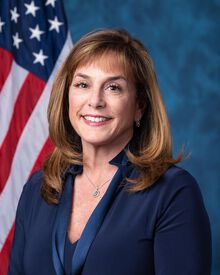
See how Lisa C. McClain's votes line up with your values.
DeepSyte scores Lisa C. McClain's record on the issues you care about — not party, not press releases. Take the 2-minute values quiz to see your personal alignment.
Sign in and take the values quiz to see how Lisa C. McClain's votes line up with your views.
Prediction track record
How often we called Lisa C. McClain's passage votes correctly, from their stated positions on each bill's tagged topics. Excludes “unclear” calls and abstentions.
95 predictions on record · none have been resolved by a passage vote yet. Check back as bills move.
Pending vote119-hr-5282
Reauthorizing Support and Treatment for Officers in Crisis Act of 2025
Based on 1 data point across public statements and recorded votes · AI analysis of public records
118-hr-7024·Consistent
Tax Relief for American Families and Workers Act of 2024
72/100
What they said
Apr 15, 2026
Chairwoman McClain expresses support for the Working Families Tax Cuts, characterizing them as broad-based tax relief that benefits families across income levels and life stages, including parents, workers, employers, and seniors.
The statement praises the Working Families Tax Cuts as broad-based relief for families, workers, employers, and seniors, and the bill's Title I expands the refundable child tax credit and EITC while Title II extends business expensing, so a YES vote is directionally aligned with the statement's general support for family and business tax relief. However, the statement does not address the bill's specific provisions, and the bill also contains Taiwan tax treaty and other subtitles the statement never mentions, so the match is generally consistent but not confirmed on the specific question.
Pairs with ambiguous language and high uncertainty are withheld until more data is available. Procedural, cloture, and amendment votes are excluded — they don't cleanly signal substantive support or opposition.
Pro analysis
AI rep analysis — Pro
Get an AI-narrated read on Lisa C. McClain's full voting record against your stated values — aligned themes, conflicts, notable votes, and what to watch for.
We haven't extracted campaign positions for Lisa C. McClain yet. Once their campaign website or position pages are processed, this card will track what they said vs how they voted.
Crossing the aisle
No party-break passage votes recorded for Lisa C. McClain. Either they've voted with Republicans on every substantive passage vote in the corpus, or their tenure overlaps few high-threshold party-line votes so far.
The 119th Congress did more by making government do less
Position: The release argues that the 119th Congress advanced limited government by repealing federal rules through the Congressional Review Act, making 2017 tax cuts permanent, and reducing projected federal spending.
WASHINGTON— House Republican Conference Chairwoman Lisa McClain (R-Mich.) published an op-ed in The Hill on how House Republicans used the 119th Congress to shrink Washington's reach and return more freedom to the American people.
"I don't call the 119th Congress the most successful because of the paper it produced." Chairwoman McClain said. "I say it because we changed the direction of the country. Washington has enough monuments to what government can build. We spent this Congress creating room for what Americans can build instead."
Washington has a peculiar definition of progress. A new program is an accomplishment. A new regulation is action. A new federal office means somebody is finally doing something. That is why some of the most important work Republicans did this Congress involved undoing that so-called "progress."
For decades, Washington accumulated authority one seemingly reasonable decision at a time. Congress delegated power to an agency full of faceless bureaucrats. The agency wrote a rule. The rule became another permit to obtain, expense to absorb, or decision somebody in Washington had already made for you.
Government grows quietly that way. Freedom disappears just as quietly. House Republicans of the 119th Congress came to Washington with the idea that the most consequential thing government can do is return freedom to the American people. Yes, we passed over 900 pieces of legislation this Congress, the second most in U.S. history, but that matters much less than what changed once the votes were cast.
House Republicans have overturned 23 federal rules through the Congressional Review Act, the most in history and more successful repeals than every previous Congress combined. In one session, we have turned a little-used oversight law into one of Washington's most powerful tools for permanently returning authority from federal regulators to the people they regulate.
Washington is accustomed to ratchets that turn in one direction. Government expands, the bureaucracy adjusts, and everyone learns to live with the new baseline. We turned the ratchet backward.
Democrats would have let the 2017 tax cuts expire and taken more money out of Americans' pockets. We made them permanent, cut taxes on tips and overtime, delivered new relief for seniors, and restored incentives to invest and build in America.
Americans have already claimed more than $82 billion in individual tax relief. Over the decade, the tax changes we enacted are projected to give $4.6 trillion back to families and businesses, and the laws enacted cut projected federal spending by roughly $1.1 trillion, meaning Washington will take less of Americans' money.
People take bigger chances when they know more of the reward will still belong to them. That is how opportunity compounds and how countries grow. But opportunity can only flourish where freedom is protected by order and the rules still mean something.
A limited government is not a weak government. It does a smaller number of things, and it does the essential ones well. It must defend the country, enforce the law, protect basic rights, and establish rules that allow a free society to function.
Securing a nation's borders is among the most basic responsibilities that government has. Democrats chose to dismantle our border and turn lawlessness into policy. Republicans flipped the script and have not allowed a single illegal immigrant to be released into the country in 16 months.
This Congress put the philosophy of limited government into practice across the economy. We gave small businesses tax certainty to hire and invest. We cleared regulatory barriers so manufacturers can expand, unleashed more American energy, and made it easier to build. None of these policies determines what Americans must do with their lives. They expand what Americans are free to do for themselves.
The alternative is government by permission slip. Washington chooses which industries deserve to grow, which products people may buy, which energy sources are acceptable, and how much of a worker's success belongs to somebody else. There needs to be a line between the power government is granted by the people, and the freedom Americans deserve to keep.
That is the foundation the 119th Congress has spent two years laying.
A foundation is not glamorous. Nobody walks through a finished house admiring the concrete underneath it, but everything built above depends on whether the foundation is strong.
Tax certainty. Regulatory relief. A secure border. American energy. Lower crime. More room to work, build and invest. These are not the finished house. They are what makes everything that comes next possible.
I don't call the 119th Congress the most successful because of the paper it produced. I say it because we changed the direction of the country. Washington has enough monuments to what government can build. We spent this Congress creating room for what Americans can build instead.
The government does not know what your life should look like. Neither do I, and that's precisely the point — you do.
Permalink: https://mcclain.house.gov/2026/11/the-119th-congress-did-more-by-making-government-do-less
562 Cannon House Office Building
Chairwoman McClain Celebrates JVIS Defense & Aerospace Creating 1,000+ Jobs in Auburn Hills October 27, 2026
Position: The release celebrates the launch of JVIS Defense & Aerospace's Tech Center in Auburn Hills and the jobs it is expected to create, and states support for efforts that strengthen national defense and domestic defense manufacturing.
AUBURN HILLS, MI – House Republican Conference Chairwoman Lisa McClain (R-Mich.) joined JVIS to celebrate the launch of JVIS Defense & Aerospace and its new Tech Center in Auburn Hills, an expansion expected to create more than 1,000 jobs in Michigan.
"Michigan has the manufacturing expertise and hardworking people our military needs," Chairwoman McClain said. "I'm proud to support efforts that strengthen our national defense, bring good-paying jobs to Michigan, and ensure our manufacturers have a role in building the technologies that keep our warfighters safe."
The new facility will support defense innovation and manufacturing, including JVIS's work with the U.S. Army's Ground Vehicle Systems Center in Warren to develop the "Silent Watch" Auxiliary Power Unit, which provides quiet, efficient power for military vehicles.
Permalink: https://mcclain.house.gov/2026/10/chairwoman-mcclain-celebrates-jvis-defense-aerospace-creating-1-000-jobs-in-auburn-hills-october-27-2026
562 Cannon House Office Building
Rep. Lisa McClain: Rural Michiganders deserve first-class healthcare
Position: Rep. McClain supports the federal Rural Health Transformation Program and states that Democrats in Congress voted against the reforms that created it. She argues the program's funding for rural workforce, technology, and care access is needed to address declining rural healthcare in Michigan.
WASHINGTON— House Republican Conference Chairwoman Lisa McClain (R-Mich.) published an op-ed in The Detroit News, highlighting how President Trump and House Republicans are investing in rural healthcare and bringing more doctors, technology, and care closer to families across Michigan.
"Despite every Democrat in Congress voting to kill these reforms, the Rural Health Transformation Program is providing unprecedented levels of new funding to states for a range of uses designed to make rural healthcare more effective and sustainable for years to come," Chairwoman McClain said. "The president and Republicans fought to give Michigan the tools to bring better care closer to home and build a rural healthcare system that can serve these communities for generations."
For a pregnant woman in Luce County, going into labor can mean a 67-mile trip to the nearest hospital. In Schoolcraft County, it's over 60 miles; in Ontonagon County, 55. Childbirth can begin long before a mother ever reaches the hospital doors.
Michigan has lost at least 11 hospital labor-and-delivery units since 2010, nine of which were in rural counties. The loss of those delivery rooms shows how quickly distance and scarcity can hollow out rural Michigan healthcare. Many of those communities can have good doctors and capable hospitals and still struggle because specialized care is located hours away.
President Donald Trump and Republicans in Congress addressed the crisis with the $50 billion Rural Health Transformation Program. It gives states flexible funding to expand their healthcare workforce, modernize technology and bring more care closer to patients. Michigan received more than $173 million in the program's first year, giving rural communities new tools to deliver better care closer to home.
A hospital can only serve a community if it has enough medical professionals to provide care. We started by directing nearly $45 million to Michigan's rural healthcare workforce so communities can retain providers and expand rural medical training where it's needed most. Our goal was to build pathways for young Michiganders to train for healthcare careers and serve the communities where they grew up.
Even when the right provider is within reach, rural patients can still lose an entire day traveling to a routine appointment. That is why Republicans ensured more than $41 million goes toward bringing care closer to patients through programs such as transportation assistance, mobile services and expanded care for older residents. An older Michigander recovering from a hospital stay may be eligible to receive high-quality, coordinated care at home instead of having to make another exhausting trip.
In Michigan's Thumb, Tuscola County will use this program to put a travel immunization nurse and weekly mobile clinics on the road so residents in underserved areas can receive preventive care closer to home.
Long distances between home and provider become even more consequential for patients living with diabetes or hypertension, where missed follow-up visits can turn a manageable condition into an emergency. New regional partnerships, including a hub serving the Upper Peninsula, are designed to help patients manage those conditions no matter how far they live from their care team. Better follow-up and remote monitoring can give rural doctors more opportunities to catch warning signs early.
Cutting-edge technology has made telemedicine a vital tool for physicians treating rural patients. Trump recently directed a $25 million investment to Michigan, including more than $16 million for rural digital systems and telehealth-related technology. More than $9 million targeted for improving internet access and connectivity for rural Michiganders. The Rural Health Transformation Program also made it easier for qualifying health plans to cover telehealth before the deductible without costing patients their Health Savings Account eligibility.
We did not write one plan and impose it on every rural community in America. We crafted the Rural Health Transformation Program so states could develop strategies based on their unique needs. The program is designed around improvements that can survive beyond its five-year funding window.
Despite every Democrat in Congress voting to kill these reforms, the Rural Health Transformation Program is providing unprecedented levels of new funding to states for a range of uses designed to make rural healthcare more effective and sustainable for years to come.
A young mother in the Upper Peninsula may still face a long drive when it is time to deliver her baby. No law can make Michigan smaller. But we can make healthcare more accessible in rural communities and use modern technologies to make those miles matter less.
Rural Michiganders should not receive second-class healthcare because of their ZIP code. The president and Republicans fought to give Michigan the tools to bring better care closer to home and build a rural healthcare system that can serve these communities for generations.
Permalink: https://mcclain.house.gov/2026/10/rep-lisa-mcclain-rural-michiganders-deserve-first-class-healthcare
562 Cannon House Office Building
Chairwoman McClain Brings Home $750,000 for Opioid Response in Rural Communities
Position: The release announces a $750,000 HRSA award to Bluewater Healthcare Network through the RCORP-Impact program to expand substance use disorder treatment and recovery services in rural Michigan, and praises the administration for prioritizing rural opioid response.
WASHINGTON – House Republican Conference Chairwoman Lisa McClain (R-Mich.) announced that the U.S. Department of Health and Human Services' Health Resources and Services Administration (HRSA) is awarding $750,000 to Bluewater Healthcare Network in Marlette, Michigan, through the Rural Communities Opioid Response Program – Impact (RCORP-Impact).
The funding, announced during September's National Recovery Month, will expand access to substance use disorder treatment and recovery services in rural communities across Michigan's 9th District.
"Too many Michigan families know the heartbreak of watching someone they love struggle with addiction, especially when help is hard to find close to home," Chairwoman McClain said. "This funding delivers real resources to rural communities in Michigan's Thumb. I applaud President Trump for making rural opioid prevention and recovery a priority and for helping ensure Michiganders get the support they need, regardless of their ZIP code."
The RCORP-Impact award will help Bluewater Healthcare Network strengthen evidence-based treatment, grow the local addiction-care workforce, and build community partnerships that support long-term recovery.
Permalink: https://mcclain.house.gov/2026/10/chairwoman-mcclain-brings-home-750-000-for-opioid-response-in-michigan-rural-communities
562 Cannon House Office Building
Chairwoman McClain Condemns Senate Democrats’ Vote Against Ratepayer Protection Act
Position: The release criticizes Senate Democrats for blocking H.R. 9340, the Ratepayer Protection Act, and states that the bill would have shielded ratepayers from subsidizing new power demands tied to AI development.
WASHINGTON— House Republican Conference Chairwoman Lisa McClain (R-Mich.) released the following statement after Senate Democrats blocked H.R. 9340, the Ratepayer Protection Act, from advancing.
"Families should not be forced to subsidize massive new power demands they did not create," Chairwoman McClain said. "This bill would have protected ratepayers in Michigan and nationwide while allowing America to keep building, innovating, and leading the world in AI. Instead, Senate Democrats chose obstruction and left hardworking Americans exposed to higher costs."
"That is the wrong choice. Washington should be protecting families from unnecessary price hikes, not standing in the way of commonsense reforms that keep more money in their pockets. Democrats can make all the excuses they want, but today they stood in the way of lower costs for the American people."
Permalink: https://mcclain.house.gov/2026/9/chairwoman-mcclain-condemns-senate-democrats-vote-against-ratepayer-protection-act
562 Cannon House Office Building
Chairwoman McClain Applauds New Rule Lowering Costs for American Drivers
Position: The release supports the Department of Transportation's rule lowering fleetwide fuel economy requirements for passenger cars and light trucks, arguing it reduces vehicle costs for consumers and removes federal mandates on automakers.
WASHINGTON — House Republican Conference Chairwoman Lisa McClain (R-Mich.) released the following statement after the Department of Transportation finalized new fuel economy standards for passenger cars and light trucks.
"The Biden Administration forced automakers to meet increasingly costly fuel-economy mandates and American families paid the price," Chairwoman McClain said. "We ended that. President Trump's new standards give automakers the freedom to build the cars and trucks Americans actually want, and they will save families an estimated $1,300 on a new vehicle. Over the next five years, that adds up to $13 billion in savings for Americans buying cars. That's real money back in people's pockets. This is what common sense looks like: more choice, lower costs, and Washington forced out of the way."
The rule lowers the projected fleetwide requirement to 34.9 miles per gallon by model year 2031. The Biden-era standards would have required automakers to reach a projected fleetwide average of 50.4 miles per gallon by 2031.
Permalink: https://mcclain.house.gov/2026/9/chairwoman-mcclain-applauds-new-rule-lowering-costs-for-american-drivers
562 Cannon House Office Building
Chairwoman McClain Secures $50 Million for Water Projects in House-Passed WRDA bill
Position: The release announces that a House-passed Water Resources Development Act of 2026 authorizes $50 million for water infrastructure projects in four Michigan counties and states support for upgrading aging water systems.
WASHINGTON – House Republican Conference Chairwoman Lisa McClain (R-Mich.) today secured authorization for $50,000,000 in water infrastructure projects in Lapeer, Macomb, Oakland, and St. Clair Counties in the Water Resources Development Act (WRDA) of 2026. The legislation now heads to the Senate for further consideration.
"When you turn on the tap, you expect clean, safe drinking water to come out," Chairwoman McClain said. "But as many families in Michigan know, aging infrastructure means we can't take that for granted. This $50 million authorization will help communities upgrade the water systems families and businesses rely on every single day.
The legislation comes after a May 2026 water main break left families and businesses in Lake Orion and surrounding communities without running water for days. Subject to appropriations, the funding authorized by WRDA 2026 will allow the U.S. Army Corps of Engineers to partner with local communities to improve water supply resiliency in the future.
Permalink: https://mcclain.house.gov/2026/9/chairwoman-mcclain-secures-50-million-for-water-projects-in-house-passed-wrda-bill
562 Cannon House Office Building
House Passes Chairwoman McClain's Common Cents Act to End Wasteful Penny Production
Position: Supports H.R. 10167, the Common Cents Act, which would end production of the penny for general circulation, permit cash rounding to the nearest five cents, and direct a Federal Reserve transition plan for existing pennies.
WASHINGTON— Today, the House passed H.R. 10167, the Common Cents Act, legislation led by House Republican Conference Chairwoman Lisa McClain (R-Mich.), to permanently end production of the penny for general circulation and modernize America's coinage system.
"Washington has a spending problem, and it shows up in places big and small," Chairwoman McClain said. "If the federal government is spending nearly four cents to make a penny worth one cent, something is broken. House Republicans are proving that common sense still has a place in government by cutting waste and protecting taxpayer dollars."
The Common Cents Act ends production of pennies for general circulation while keeping existing pennies legal tender and allowing the U.S. Mint to continue producing collectible coins. It also establishes uniform guidance allowing cash transactions to be rounded to the nearest five cents when exact change is unavailable. Electronic payments and other non-cash transactions will continue to be charged to the exact cent.
The legislation also directs the Federal Reserve to develop a national transition plan for the hundreds of billions of pennies already in circulation and requires Treasury to notify Congress before discontinuing any other circulating coin. It also authorizes a lower-cost nickel composition if testing shows it will reduce production costs without significantly disrupting coin-operated machines.
Permalink: https://mcclain.house.gov/2026/9/house-passes-chairwoman-mcclain-s-common-cents-act-to-end-wasteful-penny-production
562 Cannon House Office Building
ICYMI: Conference Chairwoman McClain Attends Michigan Farm Bureau Dinner on the Farm
Position: The release praises the Working Families Tax Cuts for benefiting farmers and calls for Congress to pass a long-term Farm Bill, reduce input costs, and cut red tape for agricultural producers.
MICHIGAN – House Republican Conference Chairwoman Lisa McClain (R-Mich.) this week joined the annual Michigan Farm Bureau Dinner on the Farm at Zwerk & Sons Farms to highlight the benefits of the Working Families Tax Cuts for Michigan farmers and to discuss ongoing work to pass a long-term Farm Bill.
Attendees included House Agriculture Committee Vice Chairman Austin Scott (R-Ga.); Matt Frostic of Frostic Farms and the National Corn Growers Association; Mike Noll of Noll Farms and Michigan Farm Bureau; and Michigan Farm Bureau President Ben LaCross.
"It was a rewarding evening of honest discussions with Michigan farmers who work tirelessly every day to feed our families and boost our economy. Washington should support their efforts by making their work easier," Chairwoman McClain said. "I fought to deliver meaningful wins for our farmers through the Working Families Tax Cuts, and I will continue pushing to reduce input costs, cut through excessive red tape, and get a long-term Farm Bill across the finish line to bring much-needed relief to our agricultural community."
"I want to thank Chairwoman McClain for inviting me to join her at Dinner on the Farm and giving me the opportunity to hear from Michigan's farmers. Though our commodities may differ, our message remains the same: we will continue the fight in Washington to advance policies that support our producers and rural communities. Across the country, farmers want fair access to markets both domestically and abroad, they want Congress to address rising input costs, and they want to ensure the next generation can succeed on the farm. Chairwoman McClain is a fierce advocate for addressing these issues and I look forward to continuing to work with her on behalf of American agriculture," House Agriculture Committee Vice Chairman Austin Scott said.
"We always look forward to working with our federal partners to advance crucial ag policies," said Michigan Farm Bureau President Ben LaCross. "Farm Bureau couldn't be the voice of agriculture without our members coming to events like this, lending their voices and your credibility in the ag discussion. Because of our members, we are able to engage with elected officials in Washington, D.C., and in Lansing who are willing to advocate and listen to us — just like Congresswoman McClain is doing with the farm bill and E15."
The Working Families Tax Cuts delivered major wins for farmers by strengthening crop insurance, raising reference prices, strengthening dairy coverage, and providing tax relief that helps family farms plan for the next generation.
The House passed the Farm, Food, and National Security Act of 2026 in April, but the Senate has yet to advance a Farm Bill to the floor.
Permalink: https://mcclain.house.gov/2026/8/conference-chairwoman-mcclain-attends-michigan-farm-bureau-dinner-on-the-farm
562 Cannon House Office Building
Chairwoman McClain Holds Field Hearing on Supporting Servicemembers Serving on School Boards
Position: The release argues that servicemembers serving on local school boards should not be pressured to resign or penalized for deployment, and that schools should support them in continuing to serve.
MICHIGAN - House Republican Conference Chairwoman Lisa McClain (R-Mich.) and Education and Workforce Committee Chairman Tim Walberg (R-Mich.) today held a field hearing at Richmond City Hall titled Deployed, Not Disqualified: Defending Servicemembers in Our Schools. The hearing examined how schools, communities, and government can better support servicemembers participating in their local school systems.
Master Sergeant Raymond Stier, an elected member of the Richmond Board of Education, faced pressure from fellow board members to resign while deployed overseas, despite attending board meetings virtually when he could. Some board members later criticized his absence as a "disservice".
The hearing featured testimony from Amy Stier, Master Sergeant Stier's wife; Colonel Chris Neeley, superintendent of the South Carolina Public Charter School District; and Jonathan Butcher, an education policy expert at the Heritage Foundation.
"Richmond knew exactly whom it elected, a man with three decades in uniform," Chairwoman McClain said. "After being deployed to the Middle East, despite significant time zone differences, Master Sergeant Stier continued to serve his community virtually. He kept his oath to his country and to this community and took fire for both. The board members should be ashamed of forcing a servicemember to choose between serving their country and their community."
"Unfortunately, too many servicemembers face professional obstacles because of their military service, both while they are deployed and when they return home. Some have even faced outright employment discrimination, including in our nation's school systems," Chairman Walberg said. "Our schools should welcome servicemembers home, not criticize or penalize them for serving. These are parents who can bring a spirit of service to school boards, classrooms, volunteer organizations, and school leadership."
Permalink: https://mcclain.house.gov/2026/8/chairwoman-mcclain-holds-field-hearing-on-supporting-servicemembers-serving-on-school-boards
562 Cannon House Office Building
Source: open-data mirrors of the Senate eFD and House Clerk financial-disclosure systems. Disclosure within 30 days of trade is required by law (45 for spouse/dependent trades).
Top PAC donors · 2026 cycle
Political action committees that gave the most to this rep's principal campaign committee this cycle. PAC giving is direct organizational support — industry, ideological, or leadership.
1.GROWING OUR OWN DYNAMIC ECONOMY NOW3 contributions$15,000
2.UBS AMERICANS INC. POLITICAL ACTION COMMITTEE2 contributions$10,000
3.SYNCHRONY FINANCIAL EMPLOYEES POLITICAL ACTION COMMITTEE (SY3 contributions$10,000
5.MARATHON PETROLEUM CORPORATION EMPLOYEES POLITICAL ACTION CO2 contributions$10,000
6.LOWE'S COMPANIES INC. POLITICAL ACTION COMMITTEE2 contributions$10,000
7.KRATOS DEFENSE & SECURITY SOLUTIONS INC. POLITICAL ACTION C3 contributions$10,000
8.FINANCIAL SERVICES INSTITUTE PAC2 contributions$10,000
9.ABBOTT LABORATORIES EMPLOYEE POLITICAL ACTION COMMITTEE2 contributions$10,000
10.WINE AND SPIRITS WHOLESALERS OF AMERICA INC. POLITICAL ACTI2 contributions$10,000
Source: OpenFEC (api.open.fec.gov) Schedule A receipts where contributor type is “committee.” Aggregated by contributing committee. Self-transfers from joint-fundraising / victory committees are excluded.
Top individual contributors · 2026 cycle
Itemized individual contributions over $200 to this rep's campaign committee, aggregated by donor employer. PAC giving is shown above; this section is people, not organizations.
1.INFORMATION REQUESTED PER BEST EFFORTS$119,075
2.CIENA HEALTHCARE$39,000
3.ANDREESSEN HOROWITZ$21,000
4.TODD STRATEGY GROUP$19,500
5.NOVARA LAW GROUP$18,000
6.BREEZE SMOKE$14,000
7.OLD MISSION WOUND CARE$14,000
8.WINKLEVOSS CAPITAL MANAGEMENT$14,000
9.HAWORTH INC.$14,000
10.OPTALIS HEALTHCARE$10,500
Source: OpenFEC Schedule A receipts where contributor type is “individual,” aggregated by the donor's self-reported employer. This is a geographic / industry correlation, not a corporate endorsement.