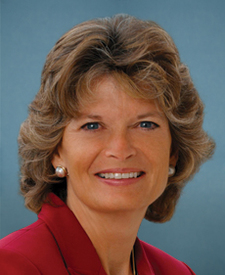
See how Lisa Murkowski actually votes — against your values.
DeepSyte scores Lisa Murkowski's record on the issues you care about — not party, not press releases. Take the 2-minute values quiz to see your personal alignment.
Sign in and take the values quiz to see how Lisa Murkowski's votes line up with your views.
Prediction track record
How often we called Lisa Murkowski's passage votes correctly, from their stated positions on each bill's tagged topics. Excludes “unclear” calls and abstentions.
100%
Accuracy
1
Correct
0
Incorrect
36
Pending
Right119-sjres-184
A joint resolution to direct the removal of United States Armed Forces from hostilities within or against the Islamic Republic of Iran that have not been authorized by Congress.
A joint resolution to direct the removal of United States Armed Forces from hostilities within or against the Islamic Republic of Iran that have not been authorized by Congress.
A joint resolution to direct the removal of United States Armed Forces from hostilities within or against the Islamic Republic of Iran that have not been authorized by Congress.
A joint resolution to direct the removal of United States Armed Forces from hostilities within or against the Islamic Republic of Iran that have not been authorized by Congress.
Based on 1 data point across public statements and recorded votes · AI analysis of public records
119-sjres-184·Notable gap
A joint resolution to direct the removal of United States Armed Forces from hostilities within or against the Islamic Republic of Iran that have not been authorized by Congress.
25/100
What they said
Apr 30, 2026
Senator Murkowski argues that Congress must exercise its constitutional authority to authorize military operations against Iran rather than allowing the President to conduct an open-ended conflict without congressional oversight. She opposes both abrupt withdrawal and unlimited executive authority, calling for a deliberate congressional authorization with defined mission parameters.
Voted Nay on A joint resolution to direct the removal of United States Armed Forces from hostilities within or against the Islamic Republic of Iran that have not been authorized by Congress.
Senator Murkowski's statement emphasizes that Congress must exercise its constitutional authority to authorize military operations and calls for deliberate congressional action with defined parameters before the 60-day War Powers limit expires. However, she voted against S.J.Res. 184, which would have mandated removal of U.S. Armed Forces from Iran hostilities absent congressional authorization—the very mechanism to enforce congressional oversight she advocated for. Her statement does not oppose the underlying principle of the bill; rather, the 'no' vote appears to reflect disagreement with the bill's approach or timing, but this contradiction between her stated position and her vote is substantial.
Pairs with ambiguous language and high uncertainty are withheld until more data is available. Procedural, cloture, and amendment votes are excluded — they don't cleanly signal substantive support or opposition.
Pro analysis
AI rep analysis — Pro
Get an AI-narrated read on Lisa Murkowski's full voting record against your stated values — aligned themes, conflicts, notable votes, and what to watch for.
We haven't extracted campaign positions for Lisa Murkowski yet. Once their campaign website or position pages are processed, this card will track what they said vs how they voted.
Crossing the aisle
Passage votes where Lisa Murkowski broke ranks with ≥75% of Republicans. Threshold catches substantively partisan splits; unanimous-ish or close votes are excluded.
4
Cross-aisle votes
119-sjres-181·Jul 30, 2026·94% of R voted NO
A joint resolution to direct the removal of United States Armed Forces from hostilities within or against the Islamic Republic of Iran that have not been authorized by Congress.
A joint resolution to direct the removal of United States Armed Forces from hostilities within or against the Islamic Republic of Iran that have not been authorized by Congress.
A joint resolution providing for congressional disapproval under chapter 8 of title 5, United States Code, of the rule submitted by the Food and Nutrition Service relating to "Application of Bostock v. Clayton County to Program Discrimination Complaint Processing-Policy Update".
Murkowski Welcomes Funding for Emergency and Resilience Needs In Alaska Native Villages | U.S. Senator Lisa Murkowski of Alaska
Anchorage – U.S. Senator Lisa Murkowski (R-AK) released the following statement after the Bureau of Indian Affairs (BIA) announced $20 million in emergency funding to help 16 Alaska Native villages that were facing severe shortages of basic, necessary supplies. The funding includes $4 million for immediate relief, delivering essential resources such as heating fuel, water, and firewood to 16 villages, and $16 million for critical infrastructure and climate resilience efforts in the Native Village of Chefornak.
“For many Alaskans, this support could mean the difference between getting by and going without. Last year alone, Akiak residents were without community power for 43 days. In Selawik, residents went nearly a month without drinking water due to failing infrastructure, relying on bottled water donations to tide them over.
“These realities are far too common in rural Alaska. Communities that rely on barges and small planes for deliveries often face weather delays that leave store shelves empty and fuel tanks low. Fuel costs are already high and projected to go even higher with the spring deliveries – expect to see prices upwards of $15 per gallon. Families will struggle to heat their homes, travel safely, haul firewood, or hunt to feed their households, and many communities have suffered water system failure over the cold winter. So emergency relief for heating fuel, water, and firewood will be welcome news to these communities.
“Challenges in Chefornak are also intensifying as they grapple with erosion, permafrost loss, and failing infrastructure which not only destroy homes and other vital buildings but threaten the safety and livelihood of the community itself. Investments that help relocate at-risk homes, repair essential infrastructure, restore wetlands, and rebuild critical access points such barge landings are vital to keeping communities connected and safe.
“That is why it is so important that the BIA is delivering essential resources to Alaska Native villages in urgent need. These investments are an important step toward safeguarding community health and supporting Tribal leadership in their pursuit of long-term resilience. I appreciate Assistant Secretary Kirkland for traveling to Alaska, listening directly to communities, and helping provide emergency support while recognizing the urgent need for greater long-term stability,” said Senator Murkowski.
Background: The 16 communities receving supplies are: Akiak, Ambler, Beaver, Buckland, Chefornak, Gambell, Goodnews Bay, Kiana, Kipnuk, Koyuk, Kongiganak, Kwigillingok, Newtok, Selawik, Shaktoolik and Shungnak. This funding will assist the village of Chefornak address threats of severe erosion, permafrost loss, and failing infrastructure by relocating at-risk homes, restore damaged wetlands, and reconstruct its barge landing. Chefornak is one of many Alaska Native villages facing these types of infrastructure and resilience needs.
The Bureau of Indian Affairs Tribal Community Resilience was funded at $34 million in FY25. Senator Murkowski is the Chairman of the Interior appropriations subcommittee and Chairman of the Senate Committee on Indian Affairs. On May 5 and 6, Chairman Murkowski held a two-part field hearing in Alaska in which Assistant Secretary Kirkland participated and heard directly from Tribal leaders. Part one was held in Anchorage and titled, “Alaska Native Voices: A Roundtable with Kipnuk and Kwigillingok on Disaster Impacts, Recovery, and Resilience.” The second part is titled, “From Disaster to Resilience: Strengthening Tribal Communities through Federal Response, Mitigation and Relocation Programs.” Hearing will be followed by a Tribal Leader listening session.
510 L Street
Suite 600
Anchorage, AK 99501
Phone: (907) 271-3735
Fax: (877) 857-0322
800 Glacier Ave
Suite 101
Juneau, AK 99801
Phone: (907) 586-7277
Fax: (877) 857-0322
851 E. Westpoint Drive
Suite 307
Wasilla, AK 99654
Phone: (907) 376-7665
Fax: (877) 857-0322
44539 Sterling Highway
Suite 203
Soldotna, Alaska 99669
Phone: (907) 262-4220
Fax: (877) 857-0322
1900 First Avenue
Suite 225
Ketchikan, AK 99901
Phone: (907) 225-6880
Fax: (877) 857-0322
522 Hart Senate Office Building
Washington, DC 20510
Phone: (202)-224-6665
Fax: (202)-224-5301
Murkowski Addresses Iran Conflict on Senate Floor | U.S. Senator Lisa Murkowski of Alaska
Position: Senator Murkowski argues that Congress must exercise its constitutional authority to authorize military operations against Iran rather than allowing the President to conduct an open-ended conflict without congressional oversight. She opposes both abrupt withdrawal and unlimited executive authority, calling for a deliberate congressional authorization with defined mission parameters.
Washington, DC—U.S. Senator Lisa Murkowski (R-AK) today spoke on the Senate floor today as we draw near to the sixty days limit that the President has the authority to conduct military operations that have not been authorized by Congress.
Watch Senator Murkowski’s full remarks here.
Full transcript of Senator Murkowski’s remarks, as delivered:
Mr. President, I'm here to speak this afternoon about the conflict involving Iran, and more specifically, the role of Congress within it.
At the outset, I want to reiterate something that I think gets lost in these discussions. The fact of the matter is the Iranian regime is not an abstract adversary of America, or anyone who supports free people in a more peaceful world.
For over 47 years, the Islamic Revolutionary Guards have brutalized their own people in the name of preserving the power of their Supreme Leader. Protesters and dissenters are met with violence, imprisoned and murdered in cold blood. And at the same time, that same regime, through its proxies and networks, has killed thousands of Americans over the years. They have empowered groups like Hezbollah, Hamas, Shia militias in Iraq to orchestrate significant attacks that have destabilized the region.
There is no doubt that the Iranian people would be better without the Islamic Republic of Iran.
There is no doubt that the world would be a safer place without the regime spreading terror around the world.
We now find our nation at war with Iran, and I'm not here to relitigate how we got into this conflict. The fact of the matter is we're in it. But we owe it to our service members and the Americans who are feeling the economic impacts of this war, we owe them a clear, a thoughtful, a rational plan for what comes next.
Some two months later, the regime retains the ability to strike across the region. They continue to disrupt shipping through the Straits of Hormuz. And while the administration may point to ongoing negotiations, events on the ground and the rhetoric coming out of Tehran tell a different story.
But if the US steps back abruptly and prematurely, we almost certainly leave their critical capabilities intact. We risk a new set of leaders who are even more radicalized against us. And we all but invite retaliation against American military forces, our allies, and the American people.
And those are not risks that I'm willing to take. But the answer is not a blank check for another endless war. Nor is it open ended authority for the administration with no guardrails, no oversight from Congress and no clearly defined mission.
The answer, I believe, relies on careful, deliberate use of congressional power. And this is where I think we're falling short. Because we are approaching the 60-day mark under the War Powers Act.
So, what comes next? The Constitution is clear on this point, Congress holds the power to declare war and authorize the use of military force. And yes, the President must have flexibility to respond to emergencies and imminent threats, and he does.
But those are not ongoing military campaigns like we find ourselves currently mired in. In such conflicts, the President and the administration must explicitly state their goals, their plans, and the metrics for success.
And if we don't press them to define those parameters, we may risk repeating history. One of the clearest lessons from the War on Terror is that the failure to think beyond the initial phase of military operations can lock us into a conflict that becomes more lengthy, more deadly, more costly and more difficult to unwind.
Which brings me to a concern I have had from the outset of this conflict, and that's the lack of clarity from the administration, from their public statements to the classified briefings that we receive as members of Congress.
When American service members are deployed and lives are on the line, the administration owes Congress and the American people a straight answer about what we are trying to achieve. And that's why I have been working with several of my colleagues on an Authorization for the Use of Military Force.
Now this is an authorization but is also a restraint. It's not a blank check. It would not grant open ended authority, but instead, it would seek to establish a framework requiring the president to come to Congress with clearly defined political and military objectives. It would require metrics for success, notice of any changes in objectives, and an exit criteria. It would ultimately ensure that Congress is engaged.
AUMFs should precede wars, not be enacted in their midst. That wasn't a choice for us here, but it cannot be used as an excuse to abandon our responsibilities. We're supposed to represent, engage, debate, vote, and when and where necessary, restrain the executive. That's why we're supposed to be here in Congress, and that matters most in times of war.
We've already lost service members in this conflict; may God rest their souls. And there is still danger and more service members will almost certainly be put in harm's way, even during an economic blockade.
Now, I think there is a fair and legitimate question that some may be asking.
You're looking at an AUMF. We've just had a vote on a War Powers Resolution. Actually, we have had several votes on War Powers Resolution, and I have opposed each of them, including the one that we just took today.
So why AUMF and not a War Powers Resolution? The War Powers Resolution we have voted on would have required the removal of US forces from active hostilities. They would have halted operations that were already underway without any framework for what comes next, and that's just something I can't support.
Iran has been targeting U.S. personnel, our allies, and our partners across the region, and I don't believe that we can responsibly tie the hands of our military or walk away in the middle of an ongoing fight without a plan. We saw in Afghanistan in 2021 the dangers of withdrawing without a strategy.
The president should have come to Congress before engaging in military action at this scale that we're seeing now, and that regrettably did not happen. So, we're now in a position where Congress must step in; not to abruptly end operations, but to define them.
And that's the difference here.
The War Powers resolutions have attempted to stop this conflict without establishing a path forward. An AUMF recognizes the reality that the US military is already engaged, and provides structure and clarity by requiring the administration to define what we're trying to achieve and the means of achieving it. It requires reporting to Congress, and it brings transparency where little has existed over the past two months.
Now, Mr. President, I'm not introducing an AUMF today, but if we pass this 60-day mark from the start of hostilities with still a lack of a credible plan and information from the administration, it is something that I intend to introduce once the Senate reconvenes here.
So, I want to close by saying as plainly as I can: I stand firmly behind our troops, and as part of that, I do not take their deployment lightly, and I do not accept that we should engage in open-ended military action without clear direction or accountability.
Congress has a role. Congress has to step up and fulfill that role, that obligation that the Constitution assigns to us. We owe it to the men and women who are serving our great nation.
And with that, Mr. President, I yield the floor. Thank you.
510 L Street
Suite 600
Anchorage, AK 99501
Phone: (907) 271-3735
Fax: (877) 857-0322
800 Glacier Ave
Suite 101
Juneau, AK 99801
Phone: (907) 586-7277
Fax: (877) 857-0322
851 E. Westpoint Drive
Suite 307
Wasilla, AK 99654
Phone: (907) 376-7665
Fax: (877) 857-0322
44539 Sterling Highway
Suite 203
Soldotna, Alaska 99669
Phone: (907) 262-4220
Fax: (877) 857-0322
1900 First Avenue
Suite 225
Ketchikan, AK 99901
Phone: (907) 225-6880
Fax: (877) 857-0322
522 Hart Senate Office Building
Washington, DC 20510
Phone: (202)-224-6665
Fax: (202)-224-5301
Murkowski, Colleagues Introduce Legislation to Support AI/AN Health Organizations | U.S. Senator Lisa Murkowski of Alaska
Position: The release introduces bipartisan legislation to authorize U.S. Public Health Service Commissioned Corps officers to be assigned to Urban Indian Organizations and establish incentive programs for service in remote and rural areas, addressing healthcare workforce shortages in AI/AN communities.
Washington, D.C. – Today, U.S. Senators Lisa Murkowski (R-AK) and Patty Murray (D-WA) introduced legislation that would allow U.S. Public Health Service (USPHS) Commissioned Corps officers to be assigned to Urban Indian Organizations (UIOs). The PHS ACCESS Act addresses an oversight in current law to authorize these assignments and establishes an incentive program for officers serving in remote and rural areas. The bill is co-sponsored by U.S. Senators Thom Tillis (R-NC) and Catherine Cortez Masto (D-NV).
Forty-one UIOs nationwide offer comprehensive, community-based, culturally competent healthcare services, fulfilling the healthcare needs of the American Indian and Alaska Native population. UIOs play a critical role in serving the healthcare needs of the estimated 2.9 million urban American Indians and Alaska Natives (AI/ANs), who make up approximately 70% of the total AI/AN population. However, these organizations face significant healthcare workforce shortages that limit their capacity to meet the unique needs of their patient population.
“UIOs provide far more than a place for an annual check-up; they deliver culturally grounded care that reflects the needs and values of the communities they serve,” Senator Murkowski said. “All Native people deserve access to quality health care, whether they live in a city or a rural community. Ensuring these facilities are adequately staffed will strengthen health outcomes for American Indian and Alaska Native communities nationwide and help fill a critical gap in care.”
“Everyone deserves high quality health care. That’s why the work that our Public Health Service Officers do is so critical—they keep Americans healthy and conduct research that saves lives,” said Senator Murray. “This bipartisan legislation would make common sense changes to cut red tape to ensure that PHS Officers can be deployed to Urban Indian Organizations to better serve Native communities and make it more affordable for local agencies to bring on officers. I will always fight for federal funding and policies to make sure Tribal communities get the support they need, no matter where they live.”
“This bipartisan legislation takes a commonsense step to strengthen our public health workforce and ensure Urban Indian Organizations have the personnel they need to deliver quality care,” Senator Tillis said. “By expanding access to U.S. Public Health Service officers and supporting service in rural and underserved areas, we can help close critical gaps and improve health outcomes for Native communities across the country.”
“Nevada’s Urban Indian health facilities are chronically understaffed,” said Senator Cortez Masto. “Even the best doctors and nurses can’t provide patients with the quality of care that they need if there simply aren’t enough of them. This commonsense fix gives the Department of Health and Human Services the flexibility it needs to ensure that Tribal communities across the Silver State can get the health care they need.”
“We are grateful to Senators Murkowski and Murray for championing this bipartisan effort to allow U.S. Public Health Service Commissioned Officers to be detailed directly at urban Indian organizations. Due to limited funding, Urban Indian Organizations continue to face significant challenges in recruiting and retaining skilled health care professionals, and detailing Commissioned Officers help them address workforce shortages and increase collaboration across the federal health care system. Recently, Secretary Kennedy detailed 70 officers to Indian Health Service facilities to help stabilize staffing needs. We urge Congress to pass this legislation swiftly so that Urban Indian Organizations can similarly benefit from this vital workforce support,” said Francys Crevier (Algonquin), CEO of National Council of Urban Indian Health.
“Access to care is critical to achieving the vision that Alaska Native people are the healthiest people in the world,” said Monique R. Martin, the Vice President of Intergovernmental Affairs at the Alaska Native Tribal Health Consortium. “The PHS Access Act is a strong step forward in strengthening the services we provide and improving the health and well-being of the people we serve. ANTHC thanks Senator Murkowski for her leadership in introducing this legislation.”
"Senators Murray and Murkowski are leading a critical effort to address one of Indian Country's greatest healthcare challenges—staffing shortages,” said Esther Lucero (Diné), president and CEO of Seattle Indian Health Board. “We are grateful this bipartisan bill recognizes the needs of urban Indian clinics alongside tribal health facilities. With approximately 76% of American Indians and Alaska Natives living in urban areas, their right to healthcare doesn't end beyond their traditional homelands."
The full text of the bill can be found here.
Current law allows Health and Human Services to assign USPHS officers to specific entities but does not directly grant this authority to UIOs to authorize USPHS Commissioned Corps officers to perform healthcare services and supportive functions.
This legislation also follows the constructive service credit model adopted by the Department of Defense to make the program discretionary for all USPHS Commission Corps officers. This will provide the necessary flexibility for USPHS to adapt incentives to evolving personnel and mission needs moving forward.
510 L Street
Suite 600
Anchorage, AK 99501
Phone: (907) 271-3735
Fax: (877) 857-0322
800 Glacier Ave
Suite 101
Juneau, AK 99801
Phone: (907) 586-7277
Fax: (877) 857-0322
851 E. Westpoint Drive
Suite 307
Wasilla, AK 99654
Phone: (907) 376-7665
Fax: (877) 857-0322
44539 Sterling Highway
Suite 203
Soldotna, Alaska 99669
Phone: (907) 262-4220
Fax: (877) 857-0322
1900 First Avenue
Suite 225
Ketchikan, AK 99901
Phone: (907) 225-6880
Fax: (877) 857-0322
522 Hart Senate Office Building
Washington, DC 20510
Phone: (202)-224-6665
Fax: (202)-224-5301
Articles & Op-eds | U.S. Senator Lisa Murkowski of Alaska
One of the final bills President Joe Biden will have signed during his time in office is one that Alaska U.S. Sen. Lisa Murkowski has been pursuing since she joined Congress more than two decades ago.
On Sunday, Biden signed the Social Security Fairness Act, repealing federal laws that dock Social Security payments to workers who pay into Social Security and receive public sector retirement benefits. The change will boost Social Security benefits for about 15,000 people in Alaska.
“I have been… Continue Reading
U.S. Sen. Lisa Murkowski, R-Alaska, sees her job in the incoming presidential administration as making sure Alaska is successful, just as she did in the previous administration of the former and now incoming President Donald Trump - with whom she remains at odds.
In a couple of decades in the U.S. Senate, Murkowski said, she has been able to work with all presidents and she has figured out areas where she can work and opportunities where one needs to push back.
“At the end of the day it wil… Continue Reading
Governor Mike Dunleavy and Senator Lisa Murkowski joined local leaders in Juneau to survey the aftermath of this week's outburst flood.
The Governor notes that hundreds of Alaskans are hurting right now, calling the damage he saw "significant."
"I'm grateful that there were no deaths or severe injuries reported, and I want to recognize the local, state, and federal officials along with several non-profits that have stepped up to the plate to support those Alaskans affected by this flooding eve… Continue Reading
On Monday, Senator Lisa Murkowski, Vice Chairman of the Senate Committee on Indian Affairs, introduced the Tribal Forest Protection Act (TFPA) Amendments Act of 2024, aimed at expanding tribal forest protections.
According to a press release from Murkowski, this piece of legislation, S.4370, promotes greater indigenous management of Federal Indian forest and rangelands.
The purpose of this new legislation is to correct previous oversights. For example, the 2004 TFPA law was set forth to protec… Continue Reading
On Tuesday, Senator Lisa Murkowski introduced a bill aimed at giving Tribes in Alaska and around the country tools to fight rabies and other zoonotic diseases.
Rural communities in the state of Alaska are vulnerable to high rates of rabies transmission due to having comparatively large numbers of dog bite injuries and the highest rate of hospitalizations from these bites in the U.S.
That’s according to a press release from Murkowski’s office announcing the introduction of the bill to combat di… Continue Reading
Senator Lisa Murkowski last week voted in favor of the Federal Aviation Administration (FAA) Reauthorization Act, legislation that will improve traveler safety while addressing the unique needs of the FAA Alaska Region.
The legislation reauthorizes the Federal Aviation Administration (FAA) and the National Transportation Safety Board (NTSB) through Fiscal Year 2028, providing policy direction, certainty, and authority to hire and train air traffic controllers, establish protections for passenge… Continue Reading
FAIRBANKS, Alaska (KTVF) - Senator Lisa Murkowski (R-Alaska) praises USDA Food and Nutrition Service (FNS) for including Alaskan salmon into the Special Supplemental Nutrition Program for Women, Infants, and Children (WIC) food packages, according to a press release.
When the process to update WIC food packages began, Murkowski advocated for healthy, nutritious food items such as Alaska salmon to be included in the food packages.
“It is great news for America’s mothers and their children who r… Continue Reading
Alaska is behind the rest of the country on housing, education and child care, Alaska’s senior senator told the Alaska Legislature on Thursday.
“But when you step back, you step back and look at things, there’s a lot going well in our state right now,” said Sen. Lisa Murkowski, R-Alaska.
Murkowski’s annual address to the Legislature “was a downer in some places,” the senator told reporters afterward, but sought to emphasize good things that have been overlooked as the state focuses on its prob… Continue Reading
For months, Republicans in Congress have rightfully been sounding the alarm: The world is on fire, and the fire has reached our doorsteps.
From Israel’s multi-front war and Russia’s invasion of Ukraine, to China’s provocations against Taiwan and especially the migrant crisis at our southern border, America needs to lead on both domestic and global emergencies.
Put simply, the situation at our southern border is a disaster. There have been more than 8.8 million illegal encounters there since Pr… Continue Reading
Recently, U.S. Senators Lisa Murkowski (R-AK) and Kirsten Gillibrand (D-NY) sent a letter to U.S. Department of Health and Human Services Secretary Xavier Becerra calling on him to waive the full enrollment initiative penalty for Head Start programs who have not met their enrollment numbers due to challenges recruiting and retaining staff amid workforce shortages.
Since the COVID-19 pandemic, Head Start programs across the country have faced unprecedented staffing challenges. In response, the O… Continue Reading
U.S. Senators Lisa Murkowski and Alex Padilla of California, introduced bipartisan legislation to reauthorize the National Earthquake Hazards Reduction Program (NEHRP) through Fiscal Year 2028, on Wednesday.
If passed, the bill would authorize a total of $175.4 million per year from FY 2024-2028 across the four federal agencies responsible for long-term earthquake risk reduction under NEHRP: the Federal Emergency Management Agency (FEMA), the National Institute of Standards and Technology (NIST… Continue Reading
Second Hearing Senator Lisa Murkowski, along with Senator Brian Schatz of Hawai‘i led an oversight hearing titled, “Fentanyl in Native Communities: Federal Perspectives on Addressing the Growing Crisis,” a continuation of the Committee’s oversight work on fentanyl.
“Our hearing last month was important - not just for our work in this Committee and Congress, but also for the Executive Branch - to better understand the situation on the ground and inform our next steps. That’s why today’s hearing … Continue Reading
Federally recognized Tribes in Alaska will receive $150 million from the U.S. Environmental Protection Agency for clean energy projects and climate resilience initiatives to address environmental and climate justice challenges.
“I am glad to see this dedication of at least $150 million to address contaminated lands, pollution reduction and climate adaptation in Alaska,” U.S. Rep. Mary Peltola said in a press release. “This is an important step in improving the quality of life of many Alaska Nat… Continue Reading
U.S. Senators Lisa Murkowski and Dan Sullivan announced Tuesday that seven communities across the state will receive the funds as part of the Infrastructure Investment and Jobs Act.
The grant money is designated for projects ranging from Arctic port development in Nome to a breakwater replacement in Metlakatla.
Cold Bay is slated to receive $43.3 million, the most money by far for any of these projects.
The community of around 50 people used to be the home of Thornbrough Air Force Base, and p… Continue Reading
The federal Department of Health and Human Services has allocated just over $19 million to help Alaskans facing high energy costs.
U.S. Sen. Lisa Murkowski said in a Wednesday statement that over $11 million is coming from the Low Income Home Energy Assistance Program (LIHEAP) funding. That money is intended to help low income households lower their energy bills this winter. The other $8 million is aimed at helping tribes in Alaska with high energy costs.
LIHEAP is a congressionally funded pro… Continue Reading
Farmers neither milk cows with nets, nor harvest vegetables with rods. And fishermen neither scatter seeds in the oceans, nor catch fish with sickles.
Despite our differences, something we do share is a common threat from the expansion of industrial fish farming and big agribusiness.
More specifically, the expansion of industrial fish farming provides an increasingly profitable outlet for large-scale agriculture corporations to market surplus grains like soy and corn as “fish feed.” Such devel… Continue Reading
Alaska’s congressional delegation and governor have condemned Hamas militants’ weekend surprise attack on Israel, saying they support both Israel’s right to defend itself and U.S. aid to do so.
Early Saturday morning, Hamas fired more than 3,000 rockets at Israel from the Gaza Strip, then launched an air, land and sea assault that government officials said left more than 700 Israelis dead. The Associated Press reported that militants have also taken about 130 captives, with Palestinian official… Continue Reading
Sen. Lisa Murkowski, R-Alaska, is urging the Biden administration to suspend any U.S. assistance to Canadian mining projects until environmental protections are established for transboundary wild salmon rivers flowing into Southeast Alaska.
In a letter to President Biden sent on Sept. 15, and released publicly on Sept. 26, Murkowski urged Biden “not to allocate any U.S. funding to Canadian projects in the transboundary watershed in general, and to withhold all U.S. support for [mining] project… Continue Reading
One of the fault lines dividing Congress is whether to continue aid for Ukraine as it defends itself from Russia. A number of hard-right Republicans say no, and they say they’re willing to shut down the government over it. Alaska’s Republican senators aren’t among them.
Sen. Dan Sullivan wants to reframe aid for Ukraine by deemphasizing the Ukraine part.
“It’s not Ukraine. What I’ve been trying to do is make the case that it’s defeating authoritarian aggression,” he said Wednesday as he boarde… Continue Reading
510 L Street
Suite 600
Anchorage, AK 99501
Phone: (907) 271-3735
Fax: (877) 857-0322
800 Glacier Ave
Suite 101
Juneau, AK 99801
Phone: (907) 586-7277
Fax: (877) 857-0322
851 E. Westpoint Drive
Suite 307
Wasilla, AK 99654
Phone: (907) 376-7665
Fax: (877) 857-0322
44539 Sterling Highway
Suite 203
Soldotna, Alaska 99669
Phone: (907) 262-4220
Fax: (877) 857-0322
1900 First Avenue
Suite 225
Ketchikan, AK 99901
Phone: (907) 225-6880
Fax: (877) 857-0322
522 Hart Senate Office Building
Washington, DC 20510
Phone: (202)-224-6665
Fax: (202)-224-5301
2024 Address to the Alaska State Legislature | U.S. Senator Lisa Murkowski of Alaska
President Stevens, Speaker Tilton, Members of the Legislature:
Thank you for this hour and the privilege to be with you, though a day later than intended. It seems like nothing goes as planned in DC nowadays.
Yesterday was Valentine’s Day, so I’ll begin with an update on my valentines—my family.
That starts with Matt, our youngest son, who was born on Valentine’s. He’s growing the family pasta company, and he regularly reminds me of the hardships that inflation and supply chains still cause. For him, it’s flour, eggs, and more.
Like Matt, Nic is now married—to his bride, Morgan, in October. He’s working as an attorney, and they’re living just a bit southeast of Juneau—in Tennessee.
Verne is doing well and still has a long list of home improvement projects.
My parents celebrated their 90th birthdays last year—and, as you all know, Dad is still not shy in expressing his views.
My news is that I finally got a season ski pass for Alyeska. It’s not that I have more time to ski, but the price was right—I’ve hit that magic age when older people get “discounts.”
As we get started, I also want to introduce my staff in the gallery:
Much of my team is in town to hear what you’re working on and how we can help. If you’d like to meet, let Grace know, and we’ll come find you.
In keeping with the theme of the week, I also have some professional valentines to hand out—for things you’ve done, that I appreciate, over the past year.
First is Senator Stevens, the legislature’s best playwright. I went to see his play, Uncle Ted, at Cyrano’s in Anchorage—what a great tribute to a great man.
The next is for Senator Giessel, Representative Saddler, and Representative Johnson, for returning to the legislature to continue your service to Alaska.
To the freshman class, the largest in 20 years, thank you for your genuine focus on bipartisanship—and Representative Gray, for helping to set that tone.
Senator Bjorkman and Representative Sumner, thank you for your lumber grading bill, and Representative McCabe, for your focus on the Alaska Railroad.
President Stevens and Speaker Tilton, thank you for tabbing energy as a priority. We don’t need more of a reminder than the impacts those subzero temperatures recently had across the state.
The reality is that I could find a reason to credit most of you for something you did over the past year. And on that note, I want to thank all of you for unanimously passing a resolution in support of the Willow Project.
The Willow resolution helped us.
Representative Baker’s resolution opposing BLM’s rule to lock down our petroleum reserve, which may be the most damaging of the dozens of actions the Biden administration has taken against Alaska, helps us.
Representative Dunbar’s resolution, supporting my legislation to amend ANCSA to free up land in Native communities, helps us.
So thank you for weighing in, and keep those resolutions—especially the unanimous ones—coming.
There are also individuals beyond the legislature who deserve our recognition. Among them, I want to single out Dr. Anne Zink, who is stepping down from her role as Alaska’s Chief Medical Officer, for her years of leadership and for saving lives across our state during the pandemic.
I also want to recognize my partners in the delegation, Dan and Mary. I don’t know what exactly they’ll say, when they address you, but what I hope you’ll hear is how hard they work, how deeply they care, and how well we work together.
You know the Treasury Department is finally closing loopholes in U.S. sanctions that allow Russia to dump its overharvested seafood into our markets.
Treasury’s announcement is unequivocally good for us, at a time when so much is unequivocally bad for our fisheries. But it didn’t just happen. Dan led the delegation charge, pushing for months until the announcement was made.
Mary helped push that with the administration, and she’s worked tirelessly to educate her House colleagues about our fisheries and our resources. She’s one of 435, but she stands out, and she, too, is making a difference for Alaska.
Fisheries are hard and only getting harder. But when you step back and look at things, there’s a lot going well in our state right now.
Willow and Pikka are both on track. That’s great not just for TAPS, but for hardworking Alaskans, our economy, and our budget.
Graphite One has received a major award from the Department of Defense as it seeks to develop North America’s largest deposit of natural graphite.
Tourism is back above pre-pandemic levels.
Then there’s our investments in infrastructure. More than $7.2 billion has been announced for Alaska under our bipartisan infrastructure law—the most per capita in the nation.
Nearly $2 billion is headed our way for broadband, as we seek to connect every community to high-speed internet.
We’ve secured 10 percent of national funding for ports and harbors, benefitting communities like Anchorage, Adak, Cordova, Nome, and Yakutat.
A total of $416 million, and counting, for our Marine Highway System.
Our Railbelt utilities will receive $216 million from the Department of Energy to modernize Southcentral’s electric grid.
Beyond infrastructure, I’ve secured $170 million to begin the long overdue cleanup of ANCSA contaminated lands.
At the request of Alaska communities, I’ve now funded more than 200 projects through the congressionally directed spending process—from nursing education at UAA, to the renovation of the emergency room at the Alaska Native Medical Center, to the expansion of the Fairbanks Senior Center and housing for Alaska State Troopers.
We’ve boosted our ability to host the military, through strategic investments in everything from barracks to runways to the Arctic Angels of the 11th Airborne. That’s helped our construction industry through some lean years, while positioning Alaska perfectly for the next of generation of assets and platforms.
We’re also putting ourselves on the map as an Arctic capital. We’re building infrastructure, like the deepwater port in Nome. We’re establishing institutions like the Ted Stevens Center for Arctic Security Studies and UAA’s Homeland Security Center of Excellence. Now I’m pushing to ensure the commitments made to us on icebreakers are kept and for an Arctic Ambassador—our own Dr. Mike Sfraga—to be confirmed.
There’s more hope on the horizon. ConocoPhillips is hiring 1,800 people this winter for its construction activities at Willow. Santos is hiring more than 2,400 on the North Slope this season. That’s over 4,000 in total. When was the last time we could point to numbers like that, for anything in our state?
Forecasts show we are on track to add thousands more jobs, mostly from major projects, in the next few years.
Think about this: electrical workers helping to install broadband and transmission lines. Engineers and construction workers building roads and repairing bridges. Plumbers and pipefitters installing water purification systems in rural villages. Teamsters and truckers hauling goods and materials to the North Slope. Longshoremen and Inlandboatman workers, busy thanks to a revitalized Marine Highway System.
All while tourism, mariculture, and more continue to boom.
That’s all right in front of us. But so are the challenges we still face.
Everything I’ve mentioned requires workers, and we’re at 11 straight years and counting with a net loss of working-age Alaskans.
Quality of life is everything—but inflation has made everything cost more, high interest rates add insult to injury, and we’re behind on housing, childcare, and education.
KPU can’t attract a lineman to Ketchikan. The hospital in Valdez can’t hire a nurse without housing and childcare for their family.
We aren’t taking good enough care of those struggling with hunger, mental health, or homelessness, either—roughly 40 percent of the funds I secured for Alaska to help homeless kids in school, through the American Rescue Plan Act, have not been spent.
I mentioned earlier the unequivocally bad state of so many of our fisheries. The “absence of abundance” is threatening subsistence, commercial, and recreational fishing alike. Fish racks hang empty on the Yukon and Kuskokwim. The processing industry is undergoing a wave of consolidation. Outside groups are attempting to shut down entire fisheries and list the king salmon as endangered.
So much of we thought we knew is changing. The changes in our climate threaten our food security and our economic security. I worry about King Cove, False Pass, Kodiak, and all the coastal communities that depend on fish, fish processing, and the fish tax. Just as I worry about those who are not able to fill their freezers with fish from the river.
All of this comes at the front end of a divisive presidential election year, with two deeply flawed candidates set to lead their party tickets.
A time when Congress is more inclined to kick the can than solve our nation’s problems.
You’ve seen that with the budget. We passed all 12 appropriations bills out of full committee last July with strong bipartisan support, but only three of them have been brought up on the Senate floor since then. We have our work cut out for us to close out the FY 2024 budget when we return in 10 days.
The latest example of kick the can is border security—which Republicans rightly demanded be part of the national security supplemental, and then refused to bring to the floor for debate when presented with our best shot at reform in decades.
We could have improved our failing border policies, but instead, we locked them in for the rest of the year and potentially well beyond.
Globally, I can’t recall a time when so many hostilities were flaring up in so many places.
On Tuesday morning at about 6:00 am, the Senate passed a major package with security assistance for Ukraine, Israel, and Taiwan. It helps our allies, it sends a strong message to our enemies, and it is crucial to reinforce our domestic defense base—but it’s also months late and faces resistance in the House of Representatives.
Regarding Ukraine, set aside, for a moment, our abundantly clear geopolitical interests in containing Russia.
That war is being fought by Ukrainians, not Americans, and those Ukrainians are giving their lives to try to preserve their fledgling democracy. Yet the outcome largely depends not on them, but their allies, and whether we still believe enough in our core principles—the principles we have held since at least World War II, that NATO was founded on—that we will not turn our backs on global bullies, let alone openly encourage them to attack others.
This is the moment we’re living through. Russia, China, Iran, and North Korea are looking to unseat Western power. Our own southern border is in chaos. Cartels are poisoning our people with fentanyl. Times like these require leadership that brings us together. We’re seeing anything but that in these highly partisan times.
So to keep my head above water during this unproductive Congress, I’m focusing on legislative solutions for Alaska—and looking for every window of opportunity.
One is my Improving ARCTIC Act, which will help strengthen Alaska’s food security, seafood industry, and more. It will improve my Micro-Grants for Food Security Program, which has helped hundreds of Alaskans grow more food; boost food banks in rural communities; increase local food processing capacity; establish a Denali Housing Fund to build and rehabilitate housing; and more.
Another is my Working Waterfronts legislation, which offers a range of new opportunities and tools—from a tax credit for marine energy, to loan guarantees for commercial fishermen and fish processors—to help our coastal communities.
We need to make all of our communities safer, healthier, and more resilient.
At the federal level, that happens through legislation—as well as congressionally directed spending, Appropriations more broadly, and by trying to work with the administration, regardless of who is President and the timing of the next election.
I hope to support an expansion of the Child Tax Credit. I’m pushing to do more to address substance use disorders, including fentanyl through Bruce’s Law. On the Indian Affairs Committee, we are exploring innovative solutions to address the housing deficit and overcrowding in rural Alaska.
When it comes to public safety and the tragedy of of Missing and Murdered Indigenous Women, I was proud to pass two bills into law.
We now have the commission report and recommendations required by the Not Invisible Act. I thank the members of the legislature who are engaging on this with me and building partnerships across all levels of government, including with Tribes.
I’m also working to address natural hazards, especially in the wake of Wrangell’s deadly landslide. As the people in Haines and Sitka can attest, these hundred-year events are now happening every few years and taking the lives of Alaskans. Our communities need to be protected, and anxious residents need reassurance.
It’s going to take time to build out data and forecasting, but we’re underway. I’ve reintroduced my earthquake preparedness bill, another to reauthorize landslide monitoring, and will continue to secure federal funds to directly meet these needs.
I have a lot underway in Washington, DC. So do Dan and Mary, but we know not all of it will advance this year. Congress is ground down, and that puts some responsibility on you.
We need to work together to keep our progress going in Alaska.
Provide state matching funds for infrastructure projects—particularly AMHS and GRIP—for federal programs like Head Start, and supplemental funding for programs like VOCA.
Ensure our infrastructure projects are “built smart”—with broadband, for example, reaching our defense sites and weather observing stations.
Make strategic state-level investments to help Alaska compete.
Ask yourself what we can do to keep Alaskans here, and attract those who might move here, but can’t afford a home or find childcare and worry about crime, drugs, and homelessness.
Invest in our kids’ education, and support the University. We know that only about 25 percent of those who leave our state for college come back home. But 70 to 90 percent of the University’s graduates stay in Alaska, and under President Pitney’s leadership, enrollment is up across the board.
Alaska has so much good to offer. We are resilient in so many ways.
When I was in Wrangell, just a few weeks after their deadly landslide, I was reminded of what sets Alaskans apart.
This community of 2,100 had every reason to be discouraged. They lost a whole family, three kids, a great fisherman described as the best neighbor you could have. And I went there and talked to city leaders, the search and rescue team, and the people who had been cut off, without access and power at the end of the road.
What I heard was, “A terrible thing hit our community. But we have one another. We’re resilient.”
They were wearing T-shirts that said Wrangell Strong. And it was a reminder that even in the face of hard things, of sad and awful things, there is a strength and a goodness in our people.
This is a perfect year to find that strength and look for that goodness. As the elections approach, there’s going to be pressure to show whether you’re with the Republicans or the Democrats, with little in between. So let’s show the country that sure, we have our differences—but we work them out, by working together and putting Alaska ahead of all else.
That’s how we get things done. That’s how we reckon with hard things. That’s how we advance projects and create jobs and establish the quality of life that are at the root of everything we need and want for Alaska.
If we can do that, there’s no limit to what we can achieve, and we will have every reason to be optimistic and confident about our future.
510 L Street
Suite 600
Anchorage, AK 99501
Phone: (907) 271-3735
Fax: (877) 857-0322
800 Glacier Ave
Suite 101
Juneau, AK 99801
Phone: (907) 586-7277
Fax: (877) 857-0322
851 E. Westpoint Drive
Suite 307
Wasilla, AK 99654
Phone: (907) 376-7665
Fax: (877) 857-0322
44539 Sterling Highway
Suite 203
Soldotna, Alaska 99669
Phone: (907) 262-4220
Fax: (877) 857-0322
1900 First Avenue
Suite 225
Ketchikan, AK 99901
Phone: (907) 225-6880
Fax: (877) 857-0322
522 Hart Senate Office Building
Washington, DC 20510
Phone: (202)-224-6665
Fax: (202)-224-5301
Anchorage Daily News: OPINION: Alaska’s Farm Bill promises to safeguard our oceans and fishing families By Linda Behnken | U.S. Senator Lisa Murkowski of Alaska
Position: Senator Murkowski supports the Improving ARCTIC Act for inclusion in the Farm Bill, which would enhance food sovereignty in rural Alaska, strengthen protections against oil spills in the Arctic, prevent industrial-scale offshore fish farms in federal waters, and support sustainable fishing communities and marine ecosystem health.
I first came to Sitka in 1982, driven by a love for wildness. I took up fishing to earn college money, but it didn’t take long for me to realize that the well-being of Alaska’s wild, pristine environment is directly tied to the stewardship of local fishing communities.
My passion for Alaska’s oceans led me to become an advocate for sustainable fisheries. I still earn my living fishing, and I am now the executive director of the Alaska Longline Fishermen’s Association. My family’s livelihood, and that of others in our fishing community, is entwined with the long-term health of our oceans. We fish and live with deep respect for the natural world and our unique place on this earth.
It is with this connection to our state’s natural bounty and coastal families that I applaud Sen. Lisa Murkowski for introducing the Improving Agriculture, Research, Cultivation, Timber, and Indigenous Commodities (ARCTIC) Act for inclusion in the Farm Bill, to ensure Alaska is represented in this pivotal federal legislation. This bill is a win for local fishing communities, which is a win for Alaska’s environment.
The Improving ARCTIC Act enhances food sovereignty and housing security in rural areas; bolsters Tribal self-determination; establishes stronger safeguards against oil spills in the Arctic; and protects our marine ecosystems from floating factory fish farms. It also allocates major resources for local and regional supply chains, fortifying the fishing industry that is the lifeblood of our state.
Alaskans rely on robust fisheries for subsistence, jobs, and our way of life. Yet, in addition to warming waters and shifting fish populations, our fishing communities must contend with the ever-present threat of corporate exploitation of Alaska’s water, land, and people.
Many Alaskans are familiar with the staggering bycatch of salmon, halibut, crab, sablefish and other fish species taken by the industrial trawl fleet: approximately 141 million pounds caught, killed, and mostly discarded each year for the past decade. While fishing communities struggle to address this travesty, many are also working to stop agribusiness giants from imposing industrial fish farming on U.S. federal waters, including those off Alaska’s coasts. These massive operations threaten ocean ecosystems and the wild fish populations that sustain our coastal communities.
Responsible mariculture that is community-based and appropriately scaled can and should be an integral part of local food systems. Alaska has tremendous opportunities for sustainable and community-led mariculture. But we must not allow a few corporations to steer the ship with disregard for the health of our communities and the planet.
The Improving ARCTIC Act prevents the federal government from allowing industrial-scale, offshore fish farms in federal waters. Alaska has already protected state waters by banning fish farms within three miles, but at just 3.1 miles, waters shift to federal jurisdiction. We need the robust provisions included in the Improving ARCTIC Act to ensure states such as Alaska, which has wisely protected wild fish populations, aren’t subject to the havoc of factory fish farms.
Moreover, Murkowski’s legislation sharpens the USDA’s vision when it comes to seafood, expanding federal assistance for commercial fishermen and processors, and requiring the labeling of genetically engineered fish (aka “frankenfish”) to help consumers make informed decisions. For too long, seafood has been on the sidelines of the USDA’s Farm Bill, but the Improving Arctic Act reminds decision-makers that investments in America’s fishing communities are investments in our nation’s food security, cultural heritage, and ocean stewardship.
Alaskans care deeply about seafood. In recognizing the challenges facing our fisheries and taking proactive steps to address them, Murkowski has demonstrated her commitment to Alaska’s people and place.
Linda Behnken lives in Sitka and divides her time between catching fish and advocating for healthy oceans and sustainable fisheries.
510 L Street
Suite 600
Anchorage, AK 99501
Phone: (907) 271-3735
Fax: (877) 857-0322
800 Glacier Ave
Suite 101
Juneau, AK 99801
Phone: (907) 586-7277
Fax: (877) 857-0322
851 E. Westpoint Drive
Suite 307
Wasilla, AK 99654
Phone: (907) 376-7665
Fax: (877) 857-0322
44539 Sterling Highway
Suite 203
Soldotna, Alaska 99669
Phone: (907) 262-4220
Fax: (877) 857-0322
1900 First Avenue
Suite 225
Ketchikan, AK 99901
Phone: (907) 225-6880
Fax: (877) 857-0322
522 Hart Senate Office Building
Washington, DC 20510
Phone: (202)-224-6665
Fax: (202)-224-5301
Anchorage Daily News: OPINION: Empowering Alaska’s communities through effective leadership | U.S. Senator Lisa Murkowski of Alaska
As an Anchorage-based businesswoman who is deeply invested in the success of our state, I feel compelled to shine a light on the leadership of our two U.S. senators, Lisa Murkowski and Dan Sullivan. In an era where collaboration and bipartisanship are often overshadowed by political grandstanding, their work continues to shine brightly. Much like the late Sen. Ted Stevens and Congressman Don Young, they demonstrate a loyal commitment to Alaskans through initiatives and investments that prioritize our unique needs and the challenges of our blossoming young state.
While recent headlines boast about the Biden administration’s rollout of new federal infrastructure investments to Alaska, it is the demonstrated actions of both Murkowski and Sullivan, as well as Young, that have been the catalyst for many of these tangible investments coming to Alaska. Often overlooked is the key role our delegation played in securing these funding sources through their engagement, development and passage of the bipartisan Infrastructure Investment and Jobs Act. Now, 21 months after its passage, that legislation is paving the way for much-needed funding that is already delivering on the promise to reshape our state’s infrastructure and economy.
Another testament to their leadership and ability to foster partnerships was their recent engagement with U.S. Transportation Secretary Pete Buttigieg. By inviting and hosting Buttigieg in Alaska, Murkowski and Sullivan showcased their commitment to hands-on, comprehensive governance. Like they’ve always done, regardless of which political party holds the White House, they provided Secretary Buttigieg a firsthand look at the complex challenges our state faces in terms of our degrading and in many cases non-existent transportation systems and infrastructure. Priorities such as the lack of clean water and sewer programs for our rural communities, the need for more reliable and low-cost energy deployment, and the many challenges our nearly 80% of communities off the road system face each and every day. These visits are not just a photo op; they demonstrate a dedication — beyond party politics — to finding practical solutions that address our specific needs.
Alaska’s potential for progress and prosperity has often been met with the challenges posed by our diverse and rugged geographical landscape. However, thanks in large part to Alaska’s two senior Republican leaders, we are witnessing a new era of transformation in key areas such as historic broadband deployment, new port infrastructure and bridge investments, tribal transportation improvements, efforts to make our communities more resilient in the face of thinning sea ice and thawing permafrost, and so much more. Their commitment to infrastructure development is not just about building roads and bridges; it’s about connectivity, accessibility and ensuring our communities are not isolated from each other or the resources they need.
The funding secured through the Infrastructure Investment and Jobs Act, coupled with their earnest efforts to host various senior-level federal officials in Alaska this August reflect their vision for a better, more resilient Alaska — one where infrastructure is not a limitation, but a spark for growth.
Carol Ashlock is a longtime Alaska businesswoman.
510 L Street
Suite 600
Anchorage, AK 99501
Phone: (907) 271-3735
Fax: (877) 857-0322
800 Glacier Ave
Suite 101
Juneau, AK 99801
Phone: (907) 586-7277
Fax: (877) 857-0322
851 E. Westpoint Drive
Suite 307
Wasilla, AK 99654
Phone: (907) 376-7665
Fax: (877) 857-0322
44539 Sterling Highway
Suite 203
Soldotna, Alaska 99669
Phone: (907) 262-4220
Fax: (877) 857-0322
1900 First Avenue
Suite 225
Ketchikan, AK 99901
Phone: (907) 225-6880
Fax: (877) 857-0322
522 Hart Senate Office Building
Washington, DC 20510
Phone: (202)-224-6665
Fax: (202)-224-5301
Anchorage Daily News: OPINION: Alaska’s all-of-the-above energy policy is an example for the US | U.S. Senator Lisa Murkowski of Alaska
In the midst of our nation’s ongoing struggle to bridge the divide around energy innovation, navigating the dynamics around a changing climate and the recognized need for a consensus-driven path toward a long-term energy future, Alaska’s energy leadership has been on full display in recent months. Collectively, Alaska has shown a refreshing, directional approach to responsible energy solutions; offering a powerful example and in many ways a standard for the rest of the country to follow.
This leadership was evident as Gov. Mike Dunleavy concluded the second annual Alaska Sustainable Energy Conference in Anchorage this past May, attracting distinguished world-class speakers, policy leaders, federal and state officials, and U.S. and international investors interested in Alaska’s promising energy future. By convening this premier energy gathering, coupled with the passage of recently enacted carbon offset legislation and the creation of the Alaska Energy Security Task Force, Gov. Dunleavy and his administration have offered a refreshing vision to work collaboratively on energy innovation and modernization in a changing security world. And by reshaping our energy and climate conversations to incorporate economics, community-focused solutions and lowering the cost of power for Alaskans, Dunleavy is showcasing what many Alaskans already know — a more efficient, more affordable and more environmentally responsible energy future is well within reach by finding common ground and rising above the parochial political biases, self-interests and agendas.
When great minds gather together and roll up their sleeves, progress happens. Efforts like the development of a new hydropower facility at Sweetheart Lake near Juneau, the groundbreaking of the state’s largest solar project in the Mat-Su, the expansion of the Bradley Lake Hydroelectric project on the Kenai Peninsula, bipartisan efforts in the Alaska Legislature to extend the Renewable Energy Grant fund and the implementation of innovative carbon management legislation, all serve as shining examples of tangible, proactive, homegrown energy solutions that underscore Alaska’s commitment to an all-of-the-above energy strategy and long-term sustainability.
In fact, from local governments to the state Legislature and the U.S. Senate, our state leaders are at the center of a holistic, market-based approach to energy, climate, and environmental stewardship. Like the governor, both Sens. Lisa Murkowski and Dan Sullivan have been a driving force behind a level-headed, American-led approach to responsible energy development.
Sen. Sullivan’s recent legislative efforts, the Energy, Climate and Jobs Act, underscores a commitment to balancing economic growth and environmental stewardship to reduce carbon emissions while bolstering job creation, American family wages and innovation. He shows that our energy and climate strategy can serve as a positive tool for leveraging America’s abundant energy and natural resources to secure strong domestic supply chains to gain comparative advantages against China, Russia and other foreign adversaries while materially lowering global greenhouse gas emissions.
Sen. Murkowski’s leadership on comprehensive energy policies and Alaska’s unique community needs is equally noteworthy. Her instrumental role on the passage of both the Energy Act of 2020 and the bipartisan infrastructure bill, as well as her outsized influence in areas of hydropower policy, highlight her commitment to bringing our nation’s energy infrastructure into the 21st Century. Her work includes broadening and funding Alaska’s spectrum of energy technologies, from microgrid technology, expanded transmission lines, new electric vehicle deployment and investments in renewables like wind, solar and geothermal to cutting-edge advanced and safe nuclear deployment.
Our delegation has also championed important legislation known as the Maintaining and Enhancing Hydroelectricity and River Restoration Act to enhance our nation’s leadership in fish-friendly and environmentally responsible hydropower development. And together, Sens. Murkowski and Sullivan, along with key sectors of our economy spanning private business and organized labor, have made a strong push for permitting and regulatory reform to ensure all energy projects — renewable, traditional, and critical mineral development — can be built efficiently, environmentally and promptly for our nation’s security while safeguarding our environment.
U.S. Ambassador to Japan Rahm Emanuel, chief of staff to former President Barack Obama during his first term, put it well during his remarks at the 2023 Alaska Sustainable Energy Conference. Energy is not just a commodity, it is not just a mere cost or economic input; Energy is a “strategic asset.” Without it, global actors use energy as a tool for conflict and coercion, as witnessed by current events in Ukraine and Europe. Acknowledging this strategic imperative, Alaska and America must unquestionably be energy self-reliant.
We are an untapped hydro, renewable and critical mineral powerhouse that requires both support and encouragement. As one of the few places in the world with the blessing of vast traditional and renewable energy sources, Alaska possesses the unique capacity to showcase to the rest of the country exactly how to responsibly develop energy locally and sustainably while lowering costs, improving the quality of life for our geographically diverse communities, and providing for our nation’s energy needs. Renewable, low-cost energy can also fuel resource development and critical mineral development, which in turn fuels a zero-carbon future. Unmistakably Alaska is the critical minerals breadbasket for our nation’s future and national security needs.
Admittedly, there is no single answer to our energy challenges, but the task requires a unified, determined effort. Still, Alaska’s leaders are demonstrating that energy policy, environmental stewardship, and the climate are not mutually exclusive by forging ahead with commonsense, sustainable solutions for our future. More must be done to achieve our full energy potential and advance our nation security interests, but the rest of the nation should look to Alaska’s pragmatic, common-man approach to energy as a blueprint worth emulating.
Duff Mitchell is the managing director of Juneau Hydropower, executive director of the Alaska Independent Power Producers Association, serves on the Juneau Commission on Sustainability, the National Hydropower Association’s legislative affairs committee, the Alaska Energy Security Task Force, and is a veteran who served in Operation Iraqi Freedom.
510 L Street
Suite 600
Anchorage, AK 99501
Phone: (907) 271-3735
Fax: (877) 857-0322
800 Glacier Ave
Suite 101
Juneau, AK 99801
Phone: (907) 586-7277
Fax: (877) 857-0322
851 E. Westpoint Drive
Suite 307
Wasilla, AK 99654
Phone: (907) 376-7665
Fax: (877) 857-0322
44539 Sterling Highway
Suite 203
Soldotna, Alaska 99669
Phone: (907) 262-4220
Fax: (877) 857-0322
1900 First Avenue
Suite 225
Ketchikan, AK 99901
Phone: (907) 225-6880
Fax: (877) 857-0322
522 Hart Senate Office Building
Washington, DC 20510
Phone: (202)-224-6665
Fax: (202)-224-5301
Source: GDELT 2.0 GKG, filtered to a curated list of national outlets. Inclusion is not endorsement; opinion pieces and reported news are mixed.
Recent stock activity
Periodic transaction reports filed under the STOCK Act — disclosed by the rep, sourced from public filings.
No disclosed trades on record.
Source: open-data mirrors of the Senate eFD and House Clerk financial-disclosure systems. Disclosure within 30 days of trade is required by law (45 for spouse/dependent trades).
Top PAC donors · 2026 cycle
Political action committees that gave the most to this rep's principal campaign committee this cycle. PAC giving is direct organizational support — industry, ideological, or leadership.
1.TAKE BACK THE SENATE4 contributions$28,947
2.2021 SENATORS CLASSIC COMMITTEELeadership2 contributionsMember-of-Congress leadership PAC — likely affiliated with a Senate Republican or Democrat who organizes an annual fundraising event or caucus.AI$27,100
3.KPMG PAC2 contributions$10,000
4.UNITE AMERICA2 contributions$10,000
5.RELY ON YOUR BELIEFS FUND2 contributions$10,000
6.PROCTER & GAMBLE CO GOOD GOVT CMTE2 contributions$10,000
7.COZEN O'CONNOR PAC2 contributions$10,000
8.AMERICA FOREVER (PAC)1 contribution$5,000
9.TRUE NORTH PAC1 contribution$5,000
10.PRICEWATERHOUSECOOPERS PAC1 contribution$5,000
Source: OpenFEC (api.open.fec.gov) Schedule A receipts where contributor type is “committee.” Aggregated by contributing committee. Self-transfers from joint-fundraising / victory committees are excluded.
Top individual contributors · 2026 cycle
Itemized individual contributions over $200 to this rep's campaign committee, aggregated by donor employer. PAC giving is shown above; this section is people, not organizations.
1.SELF$30,775
2.TRIBE$12,100
3.GCI$11,500
4.JANE STREET CAPITAL$10,500
5.CONOCOPHILLIPS$9,500
6.LYNDEN$9,000
7.EUGENE A HOFFMAN MANAGEMENT INC$8,000
8.ASRC ENERGY$7,500
9.TRIDENT SEAFOODS$7,500
10.KNOWLEDGE CREATORS$7,000
Source: OpenFEC Schedule A receipts where contributor type is “individual,” aggregated by the donor's self-reported employer. This is a geographic / industry correlation, not a corporate endorsement.