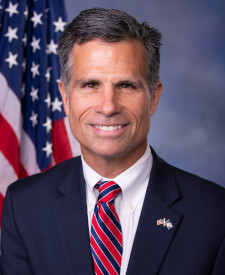
See how Daniel Meuser's votes line up with your values.
DeepSyte scores Daniel Meuser's record on the issues you care about — not party, not press releases. Take the 2-minute values quiz to see your personal alignment.
Sign in and take the values quiz to see how Daniel Meuser's votes line up with your views.
Prediction track record
How often we called Daniel Meuser's passage votes correctly, from their stated positions on each bill's tagged topics. Excludes “unclear” calls and abstentions.
No paired statements and votes yet for Daniel Meuser
We haven't yet found statement/vote pairs on the same topic for Daniel Meuser. This usually means either the rep hasn't taken public positions on bills that have come to a passage vote, or those bills haven't been tagged yet. The checker runs as new press releases and votes come in.
Pro analysis
AI rep analysis — Pro
Get an AI-narrated read on Daniel Meuser's full voting record against your stated values — aligned themes, conflicts, notable votes, and what to watch for.
We haven't extracted campaign positions for Daniel Meuser yet. Once their campaign website or position pages are processed, this card will track what they said vs how they voted.
Crossing the aisle
Passage votes where Daniel Meuser broke ranks with ≥75% of Republicans. Threshold catches substantively partisan splits; unanimous-ish or close votes are excluded.
2
Cross-aisle votes
119-hr-4058·Nov 20, 2025·78% of R voted YES
Enhancing Stakeholder Support and Outreach for Preparedness Grants Act
Chairman Meuser Releases Staff Report on Public Housing Agency Failures
Position: The release presents a staff report finding mismanagement and oversight failures at troubled Public Housing Agencies, attributes the problems to prior administrations, and endorses Trump Administration policies such as Moving to Work requirements and voluntary time limits as improvements.
WASHINGTON, D.C. — This week, Congressman Dan Meuser (PA-09), Chairman of the House Financial Services Subcommittee on Oversight and Investigations, and Congressman French Hill (AR-02), Chairman of the House Financial Services Committee, released a staff report examining Public Housing Agencies (PHAs) nationwide.
This report is the culmination of a year-long Subcommittee-led investigation into serious mismanagement of PHAs across the country. On February 9, 2026, Chairman Meuser, Chairman Hill, and Congressman Mike Flood (NE-01), Chairman of the Subcommittee on Housing and Insurance, sent letters to 32 PHAs designated by HUD as “troubled,” seeking information on living conditions, management, and financial oversight. This was followed by an Oversight and Investigations Subcommittee hearing examining management failures at PHAs and ways to improve conditions for residents. During the hearing, witnesses outlined severe shortcomings at PHAs due to mismanagement from previous administrations and discussed best practices for reversing the trend.
On March 13, 2026, Chairman Meuser held a Subcommittee field hearing in Little Rock, Arkansas, focused on failures at the city’s PHA—the Metropolitan Housing Alliance (MHA)—and its impact on residents. Committee leadership also sent a letter to the U.S. Attorney for the Eastern District of Arkansas urging an investigation into MHA.
Federal law requires PHAs to provide housing that is decent, safe, and sanitary. However, the Subcommittee’s investigation found that many troubled PHAs failed to meet these requirements due to management issues and oversight problems, resulting in significant waste of taxpayer resources and poor living conditions.
The Housing Authority of Champaign County is a good example of a PHA that has implemented commonsense Trump Administration policies, such as Moving to Work (MTW) requirements and voluntary time limits, that strengthen public housing standards and promote solutions that improve financial management.
“For years, the Biden Administration allowed PHAs to fail without proper support or oversight. Mismanagement and a lack of accountability in PHAs have wasted taxpayer dollars meant to support our most vulnerable citizens and led to unacceptable living conditions,” said Subcommittee Chairman Meuser. “This report shows that taxpayers and residents pay the price when leadership at PHAs falls short. Democrat administrations allowed this problem to fester for far too long. I appreciate Chairman Hill’s leadership, as well as President Trump and HUD Secretary Turner for their efforts to enhance federal support for public housing and demand greater accountability. This report supports and builds on that work to ensure that taxpayer-funded resources are well managed, and that Americans in need can benefit from decent, safe, and sanitary housing. I look forward to implementing our report’s recommendations and providing these crucial reforms to America’s most vulnerable citizens.”
“Americans living in federally supported housing deserve access to housing that is safe, clean, and livable,” said Chairman Hill. “PHAs exist to deliver on that promise. Unfortunately, as we've seen firsthand in my hometown of Little Rock, too many PHAs are failing the tenants who rely on them and the taxpayers who are footing the bill. I thank Subcommittee Chairman Meuser for his work holding PHAs accountable, protecting tenants, and for advocating for responsible stewardship of taxpayer dollars.”
“PHA accountability and addressing waste, fraud, and abuse are key priorities for President Trump, Secretary Turner, and myself. At HUD, we are committed to restoring compliance and operational integrity. Our residents need it, and taxpayers expect it. HUD will continue working with Chairman Hill and Congress to ensure America’s public housing authorities are providing quality housing to America’s most vulnerable,” said HUD Assistant Secretary for Public and Indian Housing Ben Hobbs.
Key Findings:
PHA Leadership: Frequently, PHA Boards lack sufficient understanding of housing programs to effectively manage the PHA.
HUD’s Assessment Systems Disincentivize Rent Collection: HUD’s assessment system awards up to 16 points for occupancy but only 6 for rent collection, so a PHA that collects no rent can still pass HUD’s operations assessment.
Between 15 and 30 percent of residents at struggling PHAs pay only the minimum rent. The COVID-era eviction moratoriums caused unpaid rent to rise sharply.
Data and Due Diligence Issues: Troubled PHAs have insufficient data retention and due diligence standards across their operations, but particularly as it relates to their contracting and procurement standards.
PHAs struggle to find staff: PHAs struggle to find staff with sufficient experience and understanding of their roles and responsibilities. PHAs have particularly struggled to hire and retain maintenance staff, who can often find higher pay and more flexibility as independent contractors.
What HUD is Doing:
Proposed rule allowing work requirements and time limits: PHAs could opt in to work requirements of up to 40 hours a week and time limits of two years or more for work-capable adults. The comment period has closed, but the rule isn't final yet.
Reformed NSPIRE Inspections: HUD retrained inspectors, issued more guidance, improved its online inspection systems, and reorganized how inspectors are assigned to cut costs. It set February 1, 2027, for full implementation of these new standards.
More Inspections: HUD did 25 percent more inspections in 2025 than in 2024, and PHAs say inspections have become more consistent.
Took steps on safety: HUD launched a national public housing crime hotline, required stricter background checks for applicants, and rescinded guidance that had allowed people with criminal records to live in Section 9 housing.
Key Report Recommendations:
PHAs should develop systems and policies to enhance oversight of employees and contractors.
PHAs should conduct self-inspections at least quarterly and require before-and-after photos of maintenance work. They should also digitize their records, strengthen oversight of staff and contractors, and better enforce rent collection.
HUD and Congress should set baseline qualifications for PHA board members and executives and give HUD the authority to remove poor leaders.
Congress should consider legislation that permanently allows for and encourages PHAs to implement time limits and work requirements on public housing assistance for able-bodied adult residents.
Read the report here.
Issues:Safe and Strong Communities
Meuser Thanks Treasury Secretary Bessent for Touting Benefits of Auto-Enrollment for Trump Accounts
Position: The release praises the Treasury Department's automatic enrollment of children into Trump Accounts and credits the Working Families Tax Cuts Act with creating the program to promote long-term family savings and financial participation in markets.
HARRISBURG, PA — Today, Congressman Dan Meuser (PA-09) issued the following statement after Treasury Secretary Scott Bessent’s press conference in Harrisburg, PA, where he discussed what automatic enrollment for Trump Accounts means for Pennsylvania families.
“I’d like to thank Secretary Bessent for being in Harrisburg today highlighting the opportunities that Trump Accounts are creating for Pennsylvania families,” said Congressman Meuser. “Through participatory capitalism, we are creating the opportunity for families to set their children up for financial success and empowering parents to teach their children the benefits of responsible financial management and participation in our markets. Thanks to auto-enrollment, over 60 million children now have an account that can easily be claimed by their parents. Created by the Republican’s Working Families Tax Cuts Act, Trump Accounts are giving millions of young Pennsylvanians a financial head start. I’m grateful to Secretary Bessent and President Trump for their hard work in ensuring every American child has access to the wealth-building opportunities Trump Accounts provide.”
Background on Trump Accounts:
Created by the GOP’s Working Families Tax Cuts Act, these tax-free investment accounts will harness the strength of financial markets to reignite the American Dream of a comfortable retirement for America’s youth. Supercharged by a one-time contribution of $1,000 from Treasury, Trump Accounts allow families to contribute up to $5,000 per year to boost their child’s long-term savings. Additionally, employers can contribute up to $2,500 per year to Trump Accounts for their employees’ children, expanding the pool of potential investments. Republicans in Congress were careful in crafting the Working Families Tax Cuts Act to ensure the healthy growth of Trump Accounts. When families invest in their child’s Trump Account, the funds are allocated to a diversified portfolio of low-cost index funds, mutual funds, or exchange-traded funds designed to maximize long-term growth while minimizing risk.
With automatic enrollment complete, every eligible child under the age of eighteen with a valid Social Security number now has a Trump Account. A parent or guardian must claim the child’s automatically enrolled Trump Account to manage it and allow for family members, friends, and employers to contribute. Automatic enrollment also allows businesses, financial institutions, and philanthropists to contribute individual stocks into the accounts of thousands or even millions of children. To claim your child’s Trump Account, download the official Trump Accounts app, available for iOS and Android. During the claiming process, a parent or guardian will verify their identity and relationship to their child, review the child’s information, and accept the account terms. Eligible children born between January 21, 2025, and December 31, 2028, are eligible to receive the one-time $1,000 seed contribution. For more information, visit TrumpAccounts.gov.
Since Trump Accounts went live on July 4, 2026, 7 million children have already had a Trump Account created for them by their families. With Automatic Enrollment now in effect, over 60 million additional children now have an account created in their name. According to the White House Council of Economic Advisors, Trump accounts are projected to grow anywhere from roughly $6,000 (with only the initial $1,000 federal seed and no extra contributions) to over $300,000 by age 18 if maximum annual contributions of $5,000 are made. This is money that young Americans can use for their college education, to buy a home, or other important life expenses.
Meuser Commends President Trump for Extending Most Favored Nation Drug Pricing to All State Medicaid Programs
Position: The release supports extending Most Favored Nation drug pricing to Medicaid beneficiaries in all states and calls for Congress to pass the Most Favored Patient Act to codify MFN pricing deals.
WASHINGTON, D.C. — Today, Congressman Dan Meuser (PA-09) released the following statement commending President Donald Trump, Secretary of Health Robert Kennedy Jr., and Administrator Mehmet Oz on rolling out Most Favored Nation (MFN) drug pricing to Medicaid beneficiaries in all 50 states.
Last May, President Trump signed an executive order requiring pharmaceutical manufacturers to offer their products in the United States at the same low price offered in other nations. Since then, the Trump Administration has secured agreements with 26 major pharmaceutical companies to offer nearly 90% of branded pharmaceutical products on the market at MFN pricing. The deals cover a variety of drugs and deliver significant cost reductions, including an 88% decrease in the cost of multiple sclerosis medication, a 90% decrease in the cost of Hepatitis C medication, and an 81% decrease in the cost of diabetes medicines.
So far, MFN pricing has been accessible to consumers via TrumpRx, which connects consumers directly to pharmaceutical companies to purchase prescription drugs at MFN pricing. Today’s announcement expands MFN pricing to Medicaid beneficiaries in all 50 states through the Center for Medicare and Medicaid Innovation GENEROUS Model, which requires manufacturers to provide supplemental rebates to states to align Medicaid drug prices with what other countries pay. The Council of Economic Advisors estimates that today’s announcement will save Medicaid a total of $64.3 billion over the next decade. The federal government would save $36.6 billion, while the states would save the remaining $27.6 billion.
“Today’s announcement marks an important milestone in expanding Most Favored Nation drug pricing to Americans nationwide,” said Congressman Meuser. “Pennsylvanians who are on Medicaid will now see a substantial reduction in their drug pricing due to the policies of the Trump Administration. We can continue to build on this success by passing my Most Favored Patient Act, which would lock in MFN savings for years to come and ensure that all Americans can purchase drugs at lower prices.”
Congressman Meuser’s Work on Lower Drug Prices:
Congressman Meuser has led the effort in Congress to codify the MFN drug pricing deals that the Trump Administration has secured through the Most Favored Patient Act. This legislation would codify the 26 existing MFN drug pricing deals and establish a permanent framework to codify and enforce future cost-saving healthcare agreements as they are reached. This legislation would lock in at least $600 billion in savings for the American people.
During last year’s State of the Union Address, President Trump called on Congress to codify the existing MFN and included it in his Great Healthcare Plan, which would lower drug prices and premiums for all Americans.
Meuser Applauds President Trump for Rescinding Obama-era "Rain Tax" Executive Order
Position: Congressman Meuser supports the rescission of an Obama-era executive order that he says has been used to impose stormwater management fees (the 'rain tax') on residents and businesses in Luzerne County, and he calls on the Pennsylvania Department of Environmental Protection to adjust stormwater requirements accordingly.
WASHINGTON, D.C. — Congressman Dan Meuser (PA-09) released the following statement after President Trump rescinded an Obama-era Executive Order that has been used to impose costly stormwater management fees, otherwise known as the "rain tax," on residents and businesses in Luzerne County.
“Since coming to Congress in 2019, I have worked to find a solution to the burdensome rain tax imposed on families and businesses in Luzerne County. Unfortunately, the Biden Administration was unwilling to consider any changes. President Trump and EPA Administrator Lee Zeldin listened to our concerns and took action. Congressman Rob Bresnahan has been a strong advocate in this effort and made the difference in moving this issue forward," said Congressman Meuser. "Today’s action is a major step toward finally providing relief to the people of Luzerne County. The Pennsylvania Department of Environmental Protection must now acknowledge the termination of this Obama-era executive order and abide by the President’s action by adjusting the stormwater requirements that have driven these costly fees.”
Meuser Introduces Legislation to Expand Housing Assistance for Homeless Veterans
Position: Introduces H.R. 10168, the Veterans Housing Opportunity Act, which would establish a five-year HUD pilot program to identify and relocate underutilized HUD-VASH rental assistance to communities with greater concentrations of homeless veterans.
WASHINGTON, D.C. — Congressman Dan Meuser (PA-09) recently announced the introduction of H.R. 10168, the Veterans Housing Opportunity Act, legislation that would increase the availability of housing assistance to veterans experiencing or at risk of homelessness.
Specifically, the legislation would establish a five-year pilot program at the U.S. Department of Housing and Urban Development (HUD) to identify underutilized HUD-Veterans Affairs Supportive Housing (HUD-VASH) rental assistance funding and relocate it to areas where it can better serve veterans. By redirecting unused housing assistance to areas with greater demand, the legislation will help more veterans access stable housing using existing federal resources.
The HUD-VASH program combines HUD rental assistance with VA case management and supportive services to help veterans experiencing homelessness obtain and maintain stable housing. While the program serves tens of thousands of veterans every year, its effectiveness is limited because HUD cannot reallocate unused vouchers to towns and cities with greater concentrations of homeless veterans. The Veterans Housing Opportunity Act addresses this issue by allowing HUD to redirect underutilized vouchers to communities where the need for veteran housing assistance is greatest.
Congressman Meuser worked with the Tunnel to Towers Foundation in drafting this legislation. Tunnel to Towers is a national nonprofit whose mission is to provide more housing opportunities to veterans, first responders, Gold Star families, and families of fallen first responders with young children.
In addition to collaborating with HUD and the U.S. Department of Veterans Affairs on the HUD-VASH program, the Tunnel to Towers Foundation also operates the Veterans Villages program, which aims to create comprehensive residential communities to house veterans and eradicate veteran homelessness. Earlier this week, Congressman Meuser attended the Tunnel to Towers Steel Across America Event at the White House, where steel from the devastation at Ground Zero was displayed.
“No veteran who has proudly served our country should be without a safe and stable home,” said Congressman Meuser. “The Veterans Housing Opportunity Act will help ensure that HUD has the flexibility and ability to direct housing assistance and supportive services to the communities across the country where veterans need it most.”
The full text of the legislation is available here.
Meuser Applauds DOJ Scam Center Strike Force Operation Against Chinese-Run Scammer Marketplace
Position: The release commends the Scam Center Strike Force and U.S. Attorney Jeanine Pirro for enforcement actions against Xinbi Guarantee, a cryptocurrency-linked illicit marketplace, and related scam center operations in Madagascar. It also describes the Congressman's prior work on consumer fraud, including the SCAM Act on online scam advertisements.
WASHINGTON, D.C. — Today, Congressman Dan Meuser (PA-09) released the following statement commending U.S. Attorney Jeanine Pirro and the Scam Center Strike Force for their recent actions against Southeast Asian cryptocurrency-related fraud and scams and Chinese organized crime operations in Madagascar.
The Scam Center Strike Force announced major action against Xinbi Guarantee, a Chinese-language illicit marketplace operating through Telegram and based in Myanmar, Thailand, and Laos. Xinbi provided scam centers with services including fake investment websites, money laundering, and the recruitment of trafficking victims for Southeast Asian scam compounds. These overseas operations are estimated to extract roughly $12 billion annually from American victims, according to U.S. Attorney Jeanine Pirro. The Strike Force and Treasury restrained more than $52 million in cryptocurrency connected to Xinbi—bringing total restrained funds to approximately $938 million—and authorities also seized Xinbi’s Telegram channels and cryptocurrency wallets.
Pirro also announced expanded international operations, including a two-week deployment to Madagascar that assisted local authorities in dismantling 13 scam centers and led to nearly 400 arrests. The operation also helped identify and target the Chinese organized crime leaders behind these compounds, with approximately 30 alleged leaders arrested.
“Financial fraud and scams are a direct threat to American consumers and taxpayers, and this Administration has made clear that combating these schemes is a top priority,” said Subcommittee Chair Meuser. “In Congress, I have made combating fraud and scams a priority by convening roundtables with federal and local law enforcement, financial institutions, technology companies, and other stakeholders to identify vulnerabilities and develop solutions. The crackdown announced today, including the seizure of illicit funds and arrests of those operating scam centers, is exactly the kind of action needed to disrupt these criminal networks and protect Americans. I commend the Scam Center Strike Force and our federal, state, and international partners for their continued efforts to hold these criminals accountable and ensure that fraudsters have nowhere to hide.”
Congressman Meuser’s Work on Combatting Consumer Fraud and Scams:
Congressman Meuser has spearheaded Congress’ work on combating consumer fraud and scams. Most recently, the Congressman participated in a roundtable discussion with Vice President JD Vance and his Task Force to Eliminate Fraud, outlining legislative solutions to reduce fraud. He also introduced the bipartisan Safeguarding Consumers from Advertising Misconduct (SCAM) Act, which would combat predatory online scam advertisements and require online platforms to take reasonable steps to prevent fraudulent and deceptive ads.
Further, under the leadership of Financial Services Committee Chairman French Hill, Congressman Meuser and his Subcommittee on Oversight and Investigation held multiple hearings and roundtables investigating consumer fraud and scams against the American people. The product of this important work was a staff report entitled Fighting Back: A Policy Framework for Combating the Rise of Financial Fraud & Scams, which was published following an exhaustive investigation into the growing threat of financial fraud. The investigation included roundtables with banks, social media firms, telecom companies, the DOJ, FBI, Attorneys General, the Fed, and other federal agencies to discuss the scope of the problem and identify policy solutions to address scams.
Meuser Participates in Vice President’s Fraud Task Force Roundtable
Position: The release describes Congressman Meuser's participation in the Vice President's Fraud Task Force roundtable and his support for legislation and initiatives aimed at reducing taxpayer and consumer fraud, including the Ending Improper Payments to Deceased People Act and the SCAM Act. It also cites the task force's reported fraud findings and the need for stronger fraud detection in federal and state benefit programs.
WASHINGTON, D.C. — Yesterday, Congressman Dan Meuser (PA-09), joined Vice President JD Vance for a roundtable discussion with his Task Force to Eliminate Fraud. Created on March 16, 2026, by Executive Order 14395, the Task Force to Eliminate Fraud is tasked with restoring the integrity of taxpayer-funded programs. Since its establishment, the Task Force has identified $230 billion in fraud and has already halted $56 billion in fraudulent payments. As Chairman of the House Financial Services Subcommittee on Oversight and Investigations, Congressman Meuser has been a leading voice in Congress advocating for identifying and eliminating both taxpayer fraud and consumer fraud.
Congressman Meuser has used his position in Congress to advocate for legislation and support initiatives that strengthen protections against both taxpayer fraud and consumer fraud. This includes cosponsoring the Ending Improper Payments to Deceased People Act, legislation that would permanently allow the Social Security Administration to share its Death Master File with the Treasury Department’s “Do Not Pay” system to stop payments to deceased individuals. Congressman Meuser also introduced the Safeguarding Consumers from Advertising Misconduct (SCAM) Actto combat predatory online scam advertisements and require online platforms to take reasonable steps to prevent fraudulent and deceptive ads. During the roundtable, Vice President Vance applauded Congressman Meuser for encouraging him to bring together members of Congress and involve them in the task force's efforts.
As Chairman of the House Financial Services Subcommittee on Oversight and Investigations, Congressman Meuser has held multiple hearings and roundtables investigating fraud and scams against the American people. On July 22, the Subcommittee released its staff report on fraud and scams, an exhaustive investigation into the growing threat of financial fraud facing the American public.
The roundtable was extremely timely following the U.S. Department of Justice charging 19 defendants in Philadelphia in an alleged $4 million Medicare and Medicaid fraud scheme involving home health care services. The scheme involved home health aides allegedly billing Medicaid for services while they were incarcerated, hospitalized, working other jobs, traveling overseas, or otherwise unable to provide care. Investigators identified widespread impossible billing patterns, with one aide allegedly submitting more than 64,000 hours of work and billed over 24 hours a day more than 1,000 times, resulting in more than $1.2 million in fraudulent Medicaid payments. Prosecutors also highlighted cases where beneficiaries allegedly participated in schemes, including one case involving more than $400,000 in alleged false claims by aides and Medicaid recipients. More than 96% of Pennsylvania personal care claims are coded as “illness unspecified,” limiting fraud detection efforts. Pennsylvania’s home care program has grown rapidly in recent years, with spending increasing from $120 million in 2018 to $8 billion in 2025.
“Fraud across federal programs is costing taxpayers enormous sums thanks in part to a lack of safeguarding government programs that many Americans depend upon,” said Congressman Meuser. “The money lost to Pennsylvania SNAP payment errors alone could revitalize communities throughout the Commonwealth and eliminate blight. I have spent the last two years working to eliminate taxpayer and consumer fraud as Chair of the Financial Services Subcommittee on Oversight and Investigations. I’m glad to continue that work alongside Vice President Vance and Republicans in Congress to root out and eliminate taxpayer fraud as well.”
At the roundtable, Congressman Meuser outlined legislative solutions to reduce fraud against taxpayers, including:
Stricter criminal penalties for fraudsters
Require phone providers to notify customers when a call originates outside the U.S.
Creation of an Overpayment Czar to coordinate efforts to combat payments and fraud
Grants for state Attorneys General to fight fraud
Watch the opening of the roundtable here.
Meuser Announces Over $9.5 Million in Funding for Upgrades to Hospitals Across the 9th District
Position: The release announces $9.5 million in federal Rural Health Transformation Fund grants for hospital and healthcare facility upgrades in Pennsylvania's 9th Congressional District and credits the Working Families Tax Cuts with creating the program.
WASHINGTON, D.C. — Today, Congressman Dan Meuser (PA-09), announced more than $9.5 million in federal funding for hospital upgrades throughout Pennsylvania’s 9th Congressional District. This funding stems from $193 million the Center for Medicare and Medicaid Services (CMS) awarded to Pennsylvania earlier this year from the Rural Health Transformation Fund created by Congressional Republicans in the Working Families Tax Cuts.
The money allocated for this initial group of projects supports technology and infrastructure improvements, upgrades for rural hospitals, emergency medicine, and health care providers.
Congressional Republicans created the $50 billion Rural Health Transformation Fund through the Working Families Tax Cut. This funding, which represents the largest direct federal investment in rural healthcare in American history, will be distributed over the next five years to help states improve healthcare access and outcomes in rural communities.
“When Republicans passed the Working Families Tax Cuts, we made an explicit choice to create the Rural Health Transformation Program to confront the challenges unique to rural communities like those in Pennsylvania’s 9th District,” said Congressman Meuser. “This investment will expand access to quality healthcare across our district and reverse years of decline in rural communities. The Working Families Tax Cuts are delivering historic results for the American people by strengthening rural healthcare, investing in critical infrastructure, and ensuring that communities across Pennsylvania have access to the quality care they deserve.”
Background:
The Rural Health Transformation Fund is a $50 billion federal grant program that distributes funding to states from 2026-2030 to strengthen health care access across rural America. The funding advances preventive care, expands sustainable access to rural health services, strengthens the health care workforce, promotes innovative value-based care models, and invests in technology to improve care delivery, coordination, and system resilience.
The Rural Health Transformation Fund allocates $9,601,779 in federal support that will flow to 11 hospitals across Pennsylvania’s 9th Congressional District:
Robert Packer Hospital, Sayre: $1,000,000 to upgrade the hospital's cogeneration engine, ensuring uninterrupted access to essential services across a rural, multi-campus system.
Darway Rehabilitation and Healthcare Center, Forksville: $1,000,000 to renovate resident care areas, improving resident safety, infection control, life-safety compliance, and rehabilitation services.
Meadowview Rehabilitation and Healthcare Center, Montrose: $1,000,000 to renovate resident care areas, improving resident safety, infection control, life-safety compliance, and rehabilitation services.
Barnes-Kasson County Hospital, Susquehanna: $1,000,000 to replace the hospital's failed operating room air handling system, restoring surgical services and ensuring compliance with infection prevention and patient safety standards.
Geisinger Medical Center, Danville: $1,000,000 to modernize the hospital's advanced pharmacy by installing a new modular compounding suite, upgrading HVAC systems, expanding hazardous drug compounding capacity, and improving workflow.
Lehigh Valley Hospital–Schuylkill, Pottsville: $997,428 to purchase new medical equipment, including telehealth technology, smart hospital beds, retinal scanners, ultrasound equipment, and emergency department stretchers to expand access to specialty and emergency care.
Geisinger St. Luke's Hospital, Orwigsburg: $948,927 to fully equip a fourth operating room, expanding surgical capacity by approximately 1,700 additional procedures annually.
St. Luke's Hospital–Miners Campus, Coaldale: $909,231 to replace an aging fluoroscopy system and upgrade operating room technology to improve diagnostic imaging and surgical care.
Wyoming County Healthcare Center, Tunkhannock: $879,750 to replace critical electrical infrastructure, including the facility's main electrical distribution system, ensuring reliable healthcare services for a rural county without a hospital.
Geisinger Bloomsburg Hospital, Bloomsburg: $700,000 to replace an aging high-volume X-ray system, reducing equipment downtime and improving access to diagnostic imaging.
CMSU Behavioral Health and Developmental Services, Danville: $166,443 to replace aging mobile information technology equipment and purchase a new passenger van to improve access to behavioral health and developmental services in rural communities.
Issues:Health
Chairman Meuser Releases Staff Oversight and Investigations Subcommittee Report on Fraud and Scams, Holds Fireside Chat with Chairman Hill
Position: The release presents a staff report on financial fraud and scams, stating that an all-of-ecosystem approach with coordinated government response is needed and that the report's recommendations should be implemented; the specific legislative recommendations are not detailed in the text.
WASHINGTON, D.C. — Today, Congressman Dan Meuser (PA-09), Chairman of the House Financial Services Subcommittee on Oversight and Investigations, released a final staff report on financial fraud and scams facing the American public. The report, entitled Fighting Back: A Policy Framework for Combating the Rise of Financial Fraud & Scams, represents the culmination of an exhaustive investigation into the growing threat of financial fraud, convening roundtables with banks, social media firms, telecom companies, the DOJ, FBI, Attorneys General, the Fed, and other federal agencies to discuss the scope of the problem and identify policy solutions to address scams.
The report outlines the findings of this yearlong investigation, identifies the biggest threats to consumers, highlights emerging strategies and technologies fraudsters are using, and provides recommendations to strengthen protections by improving coordination between law enforcement, regulators, and the private sector.
“Financial fraud and scams affect everyone. From veterans and small businesses to seniors and young people, everyone is vulnerable to financial fraud and scams,” said Subcommittee Chair Meuser. “As Chair of the Oversight and Investigations Subcommittee, I’ve made it a top priority to address the threat of financial fraud and scams and provide the public the tools they need to secure their finances. However, as schemes become more elaborate and are increasingly perpetrated by transnational criminal organizations, our committee and other stakeholders must remain vigilant and address threats as they evolve. Over the past several months, I have convened roundtables with stakeholders, including banks, social media firms, telecom companies, the DOJ, FBI, Attorneys General, the Fed, State Department, FTC, and FCC to identify problems and determine solutions. This report highlights the need for an all-of-ecosystem approach to include a coordinated government response. I want to thank Chairman Hill for letting the Oversight & Investigations Subcommittee spearhead this Committee-wide initiative and look forward to advocating for implementation of the report’s recommendations.”
“Financial fraud is one of the fastest-growing threats facing Americans, costing consumers and financial institutions billions of dollars each year,” said Financial Services Committee Chairman Hill. “As fraudsters become more sophisticated, we must ensure law enforcement, regulators, and financial institutions have the tools they need to stay ahead of these evolving threats. I thank Subcommittee Chairman Meuser for his leadership on this issue and his work to develop a framework that strengthens fraud prevention, improves coordination among law enforcement, regulators, and the private sector, and better protects Americans’ hard-earned money.”
Following the release of the report, Chairman Meuser and Financial Services Committee Chairman French Hill (AR-02) held a Fireside chat detailing the Subcommittee’s findings and recommendations for combating the rise of financial fraud and scams. The fireside chat was moderated by Leigh Ann Caldwell of Puck News. Watch the fireside chat here.
Background:
The Scale of the Threat
Financial fraud is now the largest category of property crime in America by dollar value. In 2025, Americans reported nearly $15.9 billion in losses to fraud and scams — and because most victims never come forward, the true cost is estimated at roughly $196 billion. An estimated 15 million Americans were scammed last year alone, a 24% increase over 2024. The harm reaches every generation: losses among seniors have quadrupled since 2020, from $600 million to $2.4 billion, with the average senior victim losing roughly $83,000 — yet younger Americans are twice as likely to be scammed as the elderly.
A Year-Long Investigation
This report is the culmination of a year-long inquiry led by the Oversight and Investigations Subcommittee. The Committee convened four hearings across its subcommittees and three roundtables — bringing industry, law enforcement, and financial regulators to the same table — to examine how modern scams operate and what it will take to stop them. The same priorities surfaced again and again: stronger consumer education, deliberate friction to slow suspicious transactions, greater cross-industry data sharing, more aggressive prosecution, and a coordinated, cross-agency response.
A Whole-of-Ecosystem Response
The report documents a fight now underway on every front. Across the private sector, banks, payment networks, social media platforms, and telecom carriers are deploying new detection tools, filtering billions of scam calls and texts, dismantling fraudulent networks, and expanding financial-literacy campaigns. Federal regulators like Secretary Bessent, Vice Chair Bowman, Chairman Ferguson of the FTC, and Chairman Carr of the FCC are answering with sanctions and financial monitoring, reforms to modernize outdated payment rules, oversea call screening, and simpler ways for victims to report. In coordination with international partners, U.S. authorities have disrupted overseas scam compounds and secured arrests abroad.
The Trump Administration has mobilized the federal government behind the effort. A series of executive orders has moved to close information silos, screen federal payments for fraud, modernize outdated payment systems, and directly target the transnational criminal organizations behind these schemes. Vice President J.D. Vance chairs the Task Force to Eliminate Fraud, a whole-of-government initiative to root out fraud across federal benefit programs. And the Department of Justice’s Scam Center Strike Force, led by U.S. Attorney Jeanine Pirro, has carried the fight overseas — dismantling Southeast Asian scam operations and recovering more than $800 million in stolen funds for victims.
Yet despite this progress, the threat keeps growing — the central reason the report calls for a unified, all-of-ecosystem strategy that brings these efforts together.
View the full text of the report here.
Meuser Reintroduces Legislation to Reduce Burdensome Regulations for Small Businesses
Position: Congressman Meuser advocates for legislation that would require federal agencies to conduct more frequent and rigorous reviews of existing regulations, with stricter timelines and justification requirements, to reduce compliance burdens on small businesses.
WASHINGTON, D.C. – Today, Congressman Dan Meuser (PA-09) reintroduced the Regulatory Review Improvement Act, legislation aimed at strengthening oversight of federal regulations by requiring agencies to regularly review, update, or eliminate rules that impose excessive burdens on America’s small businesses.
Current law requires federal agencies to review existing regulations every ten years; however, agencies are currently permitted to postpone those reviews for an additional five years without providing an explanation. The Regulatory Review Improvement Act reforms this process by limiting review delays to no more than one year and requiring agencies to provide a clear justification for any extension.
The bill also directs agencies to conduct comprehensive evaluations of existing regulations, including both qualitative and quantitative assessments. These reviews would examine the actual costs imposed, compliance burdens, and paperwork hours that have accumulated since a rule took effect. Agencies would also be required to determine whether regulations continue to serve their intended purpose or should be modified or eliminated.
Under the Biden Administration, new federal regulations imposed an estimated $1.8 trillion in costs and added more than 355 million hours of annual paperwork. Small businesses are disproportionately burdened by growing compliance demands, often without the resources to comply. The Regulatory Review Improvement Act addresses this imbalance by requiring agencies to regularly reassess and justify the regulations they impose.
“Federal agencies should not be implementing new regulations without fully considering how they affect Main Street,” said Congressman Meuser. “Small business owners already have enough on their plate. Unnecessary and costly regulations only make their jobs harder. When rules sit on the books for years without a real review, costs grow, paperwork piles up, and small businesses get buried in red tape. That’s why I’m pleased to reintroduce The Regulatory Review Improvement Act. This bill brings common sense back to the regulatory process by requiring agencies to take a hard look at the real-world impact of their rules and justify whether they should stay in place.”
The full text of the legislation is available here.
Source: open-data mirrors of the Senate eFD and House Clerk financial-disclosure systems. Disclosure within 30 days of trade is required by law (45 for spouse/dependent trades).
Top PAC donors · 2026 cycle
Political action committees that gave the most to this rep's principal campaign committee this cycle. PAC giving is direct organizational support — industry, ideological, or leadership.
1.AMERICAN ISRAEL PUBLIC AFFAIRS COMMITTEE PACIdeological2 contributionsFederal PAC arm of AIPAC, established 2021. Backs candidates from both parties who support U.S.-Israel security and economic ties.AI$10,000
2.NATIONAL AUTOMOBILE DEALERS ASSOCIATION PACBusiness2 contributionsTrade association PAC for new-car dealers — backs candidates supporting dealer franchise protections, vehicle sales regulations, and automotive retail interests.AI$10,000
3.CAPITAL ONE FINANCIAL CORP. ASSOC. POLITICAL FUND3 contributions$10,000
5.BUILD PAC OF THE NATIONAL ASSOCIATION OF HOME BUILDERS (BUILDPAC)3 contributions$10,000
6.NATIONAL ASSOCIATION OF REALTORS PACReal Estate3 contributionsReal-estate industry PAC — backs candidates supporting property-rights protections, mortgage-lending access, and tax incentives for homeownership.AI$10,000
7.DELOITTE PAC5 contributions$10,000
8.INDEPENDENT INSURANCE AGENTS & BROKERS OF AMERICA, INC. POLITICAL ACTION COMMITTEE (INSURPAC)2 contributions$10,000
9.PREMIUM CIGAR ASSOCIATION POLITICAL ACTION COMMITTEE (PREMIUM CIGAR PAC)2 contributions$10,000
10.NATIONAL ASSOCIATION OF INSURANCE AND FINANCIAL ADVISORS POLITICAL ACTION COMM3 contributions$10,000
Source: OpenFEC (api.open.fec.gov) Schedule A receipts where contributor type is “committee.” Aggregated by contributing committee. Self-transfers from joint-fundraising / victory committees are excluded.
Top individual contributors · 2026 cycle
Itemized individual contributions over $200 to this rep's campaign committee, aggregated by donor employer. PAC giving is shown above; this section is people, not organizations.
1.SELF$53,894
2.NASDAQ$16,705
3.ROBINDALE$12,500
4.PACE-O-MATIC$10,500
5.THOMAS EDISON ELECTRIC$10,500
6.CFG MERCHANT SOLUTIONS$10,335
7.CHAMPION BUILDERS INC$9,000
8.TALEN ENERGY$8,167
9.READING ANTHRACITE$7,250
10.EEG, INC$7,144
Source: OpenFEC Schedule A receipts where contributor type is “individual,” aggregated by the donor's self-reported employer. This is a geographic / industry correlation, not a corporate endorsement.