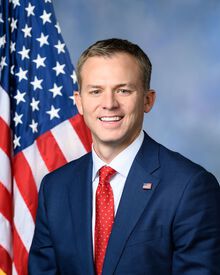
See how Blake D. Moore actually votes — against your values.
DeepSyte scores Blake D. Moore's record on the issues you care about — not party, not press releases. Take the 2-minute values quiz to see your personal alignment.
Sign in and take the values quiz to see how Blake D. Moore's votes line up with your views.
Prediction track record
How often we called Blake D. Moore's passage votes correctly, from their stated positions on each bill's tagged topics. Excludes “unclear” calls and abstentions.
A joint resolution to direct the removal of United States Armed Forces from hostilities within or against the Islamic Republic of Iran that have not been authorized by Congress.
No paired statements and votes yet for Blake D. Moore
We haven't yet found statement/vote pairs on the same topic for Blake D. Moore. This usually means either the rep hasn't taken public positions on bills that have come to a passage vote, or those bills haven't been tagged yet. The checker runs as new press releases and votes come in.
Pro analysis
AI rep analysis — Pro
Get an AI-narrated read on Blake D. Moore's full voting record against your stated values — aligned themes, conflicts, notable votes, and what to watch for.
We haven't extracted campaign positions for Blake D. Moore yet. Once their campaign website or position pages are processed, this card will track what they said vs how they voted.
Crossing the aisle
Passage votes where Blake D. Moore broke ranks with ≥75% of Republicans. Threshold catches substantively partisan splits; unanimous-ish or close votes are excluded.
Moore, Goldman Introduce Legislation to Launch Federal Investigation into Impact of Widespread Sports Betting | U.S. Congressman Blake Moore
Position: Representatives Moore and Goldman introduced bipartisan legislation to direct the federal government to conduct a comprehensive investigation into gambling disorder, its causes, effects, and treatment strategies, and to fund this research through a portion of federal excise tax revenue on sports wagers.
WASHINGTON, D.C. — Representatives Blake Moore (R-UT) and Dan Goldman (D-NY) introduced the bipartisan Gambling Disorder Health Study Act to direct the federal government to conduct a comprehensive, multi-year investigation into the causes, development, and long-term effects of gambling disorder and to evaluate prevention, treatment, and intervention strategies.
Despite a skyrocketing percentage of Americans engaging in online gambling following the overturn of the federal ban on sports betting, no federal agency is currently designated or funded to lead national research in this area. This legislation would appropriate 10% of the federal excise tax revenue on state-authorized wagers to fund this study for up to three fiscal years.
“We are in a new age of gambling addiction as sports betting and prediction markets have proliferated into every aspect of life. Lawmakers and all Americans need to take a deeper look into the causes and effects of gambling addiction so we can best craft real solutions. This bill will go a long way in helping us address this crisis," Rep. Moore said.
“Gambling addiction is a growing public health crisis, especially for young men, and the federal government needs to start treating it as such,” Rep. Goldman said. “This bipartisan legislation is a commonsense first step to help us understand the full implications of the apps and sites that have made gambling readily accessible 24/7; to identify those most at risk of addiction; and to develop strategies to intervene and treat them, just as we do with other forms of addiction. Congress must take a more active role in fighting gambling addiction and pass this bill.”
"As online gambling surges, permeating the lives of Americans, we are increasingly concerned about how this experiment will unfold for those who will inevitably develop dependencies that can hurt families, weaken relationships, harm finances, and destroy mental health. The Kennedy Forum supports this bill so we can better understand the scope and scale of the issue and help curb the emerging wave of addictions for profit that rely on shame, isolation, and silence to proliferate in our culture,” said Lauren Finke, Senior Director of Policy at The Kennedy Forum.
Gambling addiction has become a significant public health concern in the United States, exacerbated by the rapid expansion of legalized sports betting following the Supreme Court’s decision in Murphy v. NCAA (2018), which overturned the federal ban on sports betting. By 2024, sports betting expanded from one operational state in 2017 to 39 operational states, in addition to Washington, D.C., and Puerto Rico as of 2025. Correspondingly, total sports wagers increased from $4.7 billion in 2017 to approximately $220 billion wagered annually between traditional sports betting platforms and prediction markets.
Today, 27% of Americans and over half of men between the ages 18-49 claim to have an active account with an online sportsbook. Moreover, 33% of men aged 18-49 have claimed to have used an online event-based prediction market to place a bet on a sports event. This growing prevalence of gambling creates concern regarding addiction and its broader mental health impacts. National data indicates that internet searches for gambling addiction help-seeking have increased 23 percent since Murphy v. NCAA, and approximately 2-3% of the national population meet one or more of the criteria for gambling disorder and experience problems due to their gambling behavior.
Despite these trends, gambling addiction has not received the same level of federal attention as other addictions. Gambling disorders are classified as behavioral addictions in the Diagnostic and Statistical Manual of Mental Disorders (DSM-5). However, no federal agency is currently designated or funded to lead national research in this area, even though the federal government collects revenue from gambling activity through an excise tax. This lack of federal attention is particularly concerning given the widespread exposure and access to gambling.
The Gambling Disorder Health Study Act would:
This legislation is endorsed by The Kennedy Forum, Foundation on Drug Policy Solutions (FDPS), New York Council on Problem Gambling (NYCPG), American Society of Addiction Medicine (ASAM), Stop Predatory Gambling, Texans Against Gambling, and the National Council on Problem Gambling (NCPG).
Representatives Moore, Carbajal Lead Bipartisan Effort to Support Transit Infrastructure in Mid-Sized Cities | U.S. Congressman Blake Moore
Position: Representatives Moore and Carbajal introduced bipartisan legislation to create a new federal funding category within the Section 5307 transit program to provide dedicated support for public transportation infrastructure in medium-sized cities with populations between 200,000 and 999,999.
WASHINGTON, D.C. — Representatives Blake Moore (R-UT) and Salud Carbajal (D-CA) introduced bipartisan legislation to provide more federal support for transportation infrastructure in medium-sized cities.
The Medium Transit Intensive Cities (MTIC) Authorization Act creates a new Medium Transit Intensive Cities category within the Section 5307 transit-funding program. The program would be modeled on the successful Small Transit Intensive Cities (STIC) formula but designed for medium-sized urban areas with 200,000 to 999,999 residents.
While medium-sized urban areas often provide transit service comparable in quality and intensity to large metropolitan systems, the current federal funding formula for infrastructure projects does not adequately recognize or reward their performance.
"Existing transit programs often favor either small or large cities, overlooking medium-sized cities such as Ogden and Layton in Northern Utah. By creating a federal set-aside to reward high-performing transit agencies operating in medium-sized cities, we can ensure that transit agencies are able to meet citizens' needs and make the long-term investments necessary to support growing populations. I’m excited to work with Representative Carbajal to introduce the Medium Transit Intensive Cities Authorization Act to support medium-sized communities that are providing high-quality transit options,” Rep. Moore said.
“Many medium-sized cities on the Central Coast and across the country have strong transit systems that people depend on to get to work, school, and to stay connected with their communities,” Rep. Carbajal said. “But the current federal transit funding framework isn’t adequate for these communities, leaving too many of them without the support they need. My bipartisan bill closes that gap by ensuring we invest in transit systems that serve their riders effectively, no matter the community’s size.”
“Utah Transit Authority (UTA) strongly supports the Medium Transit Cities Authorization Act and applauds Rep. Salud Carbajal and Rep. Blake Moore for their leadership in advancing this important bipartisan legislation,” UTA Executive Director Jay Fox said. “Mid-sized regions like Utah’s are experiencing rapid growth and increasing transit demand, yet too often face challenges competing for limited federal transit resources. This legislation will help ensure communities that are meeting or exceeding performance benchmarks receive the fair share of federal transit funding to improve mobility, reduce congestion, and strengthen regional economies. UTA is especially grateful to Congressman Moore for championing this issue and advocating for transit systems in Utah that are delivering real results for the communities they serve.”
Under current law, transit agencies in medium-sized regions are effectively measured against—and must compete with—large urban areas with populations over one million, which benefit from scale, density, and significantly greater resources. As a result, even high-performing medium-sized transit systems are at a structural disadvantage and are less able to access performance-based funding opportunities available within the existing framework.
The MTIC program would dedicate 1.5 percent of Section 5307 funding to reward transit agencies in these mid-sized regions that meet or exceed performance benchmarks. Metrics such as ridership, service frequency, and service provided per capita would be used to ensure that funding is directed toward systems delivering strong results for their communities.
By aligning incentives with performance, this proposal would:
Congressman Blake Moore Introduces Legislation to Strengthen Critical Mineral Supply Chains | U.S. Congressman Blake Moore
Position: Rep. Moore introduced legislation to strengthen domestic critical mineral supply chains by updating tax credits to incentivize domestic mining and extraction of minerals identified by the U.S. Geological Survey, framed as supporting economic competitiveness and national security.
WASHINGTON, D.C. — Congressman Blake Moore introduced legislation to strengthen domestic critical mineral supply chains, incentivize domestic mining, and support America's economic and national security.
The Critical Mineral and Extraction Tax Parity Act bolsters domestic critical mineral supply chains by updating the list of minerals eligible for the 45X Advanced Manufacturing Tax Credit to mirror the U.S. Geological Survey’s 2025 List of Critical Minerals and ensure extraction costs are eligible activities under the credit.
Rep. Moore's Ways and Means Committee colleagues, Representatives Vern Buchanan (R-FL), Mike Carey (R-OH), Max Miller (R-OH), and Aaron Bean (R-FL) cosponsored this legislation.
“Critical minerals are a crucial component of American everyday life. They’re used for everything from electronics to energy production, medical devices and treatments, and the defense technology that keeps our military the best in the world," Rep. Moore said. "Many of these minerals can be extracted right here in the United States, and even better, in Utah. I am proud to introduce the Critical Mineral and Extraction Tax Parity Act to update our tax code to incentivize domestic mining and processing of all 60 USGS critical minerals. Promoting a domestic critical mineral supply chain is not only important to the U.S. economy, but it is also essential to our national security.”
“Congressman Blake Moore’s Critical Mineral and Extraction Tax Parity Act is a timely and strategic step toward strengthening America’s domestic supply chains and reducing reliance on foreign sources for minerals essential to our economic and national security. By aligning the 45x tax credit with the U.S. Geological Survey’s critical minerals list and recognizing extraction as a qualifying activity, this legislation ensures that U.S. producers can compete on a level playing field. In Utah—where we responsibly mine many of the minerals incorporated into the bill including copper, uranium, phosphate, potash, silver, lead, and rhenium—these updates will help unlock investment, accelerate project development, and reinforce Utah’s leadership role in pursuing our nation’s minerals and energy dominance agenda,” said Brian Somers, President, Utah Mining Association.
"The Critical Mineral and Extraction Tax Parity Act positions Utah as a stronger, more reliable partner in global trade. From energy and aerospace to defense and emerging technologies, critical minerals are foundational to the industries shaping the future economy. Strengthening domestic supply chains creates new opportunities for Utah companies to lead, innovate, and compete globally," said Jonathan Freedman, president and CEO, World Trade Center Utah.
"A secure and robust domestic supply chain is the bedrock of America's aerospace and defense leadership. The Critical Mineral and Extraction Tax Parity Act introduced by Representative Moore is a vital step forward for our industrial base. This legislation ensures we can competitively source the elements necessary for next-generation aviation, defense and space technologies. Furthermore, by bringing tax parity to domestic ore extraction costs and explicitly excluding foreign countries of concern, this bill directly fortifies our national security. 47G strongly supports this effort to onshore our critical supply chains and empower the innovators building America's deep tech frontier," said Aaron Starks, CEO and President, 47G.
“Minerals are crucial to the future of American energy dominance. By incentivizing domestic extraction, we are shifting production away from adversarial regimes with abysmal environmental and labor records. This will unlock jobs for our rural communities, secure our supply chains, and help lower costs. It’s time we stop importing our energy future from China and start building it ourselves,” said Andrew Sandstrom, Executive Director, Unleash Utah.
“To reliably and affordably meet increasing demand, electric utilities need access to domestically produced electrical equipment. This same equipment contains critical minerals like copper that Utah produces. UAMPS applauds Congressman Moore for working to increase critical mineral mining and processing capacity in the United States,” said Mike Squires, Managing Director of Government Affairs, Utah Associated Municipal Power Systems (UAMPS).
“Copper is essential to America’s energy future, advanced manufacturing, infrastructure, and national defense. Including copper processing in the 45X tax credit strengthens domestic supply chains, supports American jobs, and ensures the United States has the refining and smelting capacity needed to compete in a rapidly changing global economy. At Rio Tinto Kennecott, we are proud to produce copper and other critical materials that are vital to the country’s economic and national security,” said Nate Foster, Managing Director, Kennecott Utah Copper.
“The National Mining Association applauds Utah Congressman Blake Moore’s introduction of the Critical Mineral and Extraction Tax Parity Act. This bill will offer real incentives for domestic mining operations across the country. By adding Boron, Copper, Lead, Potash, Rhenium, Silicon, Silver, Uranium and Phosphate to the list of eligible minerals under the Advanced Manufacturing Tax Credit, the U.S. can better compete in developing the irreplaceable mineral supply chains that underpin our modern industrial base and our energy, economic and national security. Incentivizing production of our vast domestic mineral resources is essential to creating the mineral security we so urgently need but don’t have. This bill is an important step forward in addressing our alarming mineral import overreliance and building U.S. mineral strength,” said Rich Nolan, President and CEO, National Mining Association.
“Critical minerals are essential manufacturing inputs, including for robotics, industrial automation, electronics, and electric grid components. The Advanced Manufacturing Production Credit is an important tool for boosting the domestic manufacturing of advanced technologies and bolstering U.S. competitiveness in the face of competition from China. By aligning the 45X statute with the recently updated 2025 Critical Minerals List, Rep. Moore’s Critical Mineral and Extraction Tax Parity Act will ensure greater access to those materials and help manufacturers launch projects that will secure our supply chains,” said Chris Phalen, Vice President of Domestic Policy, National Association of Manufacturers.
“The U.S. Chamber of Commerce is pleased to support the Critical Mineral and Extraction Tax Parity Act, which would strengthen the advanced manufacturing production tax credit. By expanding eligibility to additional critical minerals and better aligning the incentive with the full value chain, this legislation would encourage more domestic production and refining, bolster critical mineral supply chains, support U.S. manufacturers, and enhance America’s economic and national security,” said Ruth Demeter, Global Energy Institute, U.S. Chamber of Commerce.
"The Uranium Producers of America (UPA) strongly supports Representative Moore's legislation to strengthen domestic critical mineral production, including uranium. This legislation will strengthen domestic critical mineral production and reduce U.S. dependence on foreign adversaries for uranium supply chains. Including uranium and other critical minerals within the Section 45X Advanced Manufacturing Tax Credit will encourage new investment in American critical mineral production, ensuring American energy security and national security into the future. Representative Moore’s legislation will help ensure a robust and reliable domestic nuclear fuel supply chain that UPA and its member companies are already actively working to expand,” said Scott Melbye, President, UPA and Executive Vice President of Uranium Energy Corp.
“Congressman Moore’s work on critical minerals underscores how essential these materials are to America’s manufacturing strength and energy security. Ensuring a stable, domestic supply chain supports the industries that keep our nation moving, including steelmaking and advanced manufacturing,” said Emily Athrun, CEO, American Coal Council.
“CDA applauds Congressman Moore for his forward-thinking legislation to ensure important 45X tax credits apply to new USGS Critical Minerals like copper. Through massive state subsidies, China currently controls approximately 40% of global copper smelting capacity. This is unacceptable. With copper demand expected to increase 50% by 2040, extending 45X critical mineral production tax credits to primary and secondary copper smelters is a strategic imperative to make new and expanded copper processing capacity economically viable in America,” said Adam Estelle, President and CEO, Copper Development Association.
“Strengthening U.S. economic security and global technology leadership requires increased domestic critical mineral production and extraction. The Section 45X Advanced Manufacturing Production Credit is a key incentive that will help reach that important goal. ITI strongly supports the Critical Mineral and Extraction Tax Parity Act, legislation that will further expand and scale U.S. production capacity,” said Jason Oxman, President and CEO, Information Technology Industry Council.
“The Critical Mineral and Extraction Tax Parity Act ensures our policy framework reflects today’s critical mineral realities by aligning with the latest U.S. Geological Survey list and recognizing the full value of domestic production. This is practical and forward-looking legislation that modernizes our tax policy and takes steps to reduce our reliance on foreign sources and reinforce a strong, resilient domestic mining sector,” said Lyndsey Wright, Executive Director, Women’s Mining Coalition.
"America should lead the world in critical minerals production. The Critical Mineral and Extraction Tax Parity Act will incentivize domestic production for all minerals on the USGS critical minerals list, strengthen supply chains and ensure America, not foreign adversaries, controls our energy and economic future,” said Jeremy Harrell, CEO, ClearPath Action.
"Securing domestic supply chains for critical minerals is imperative for us to lead on the technologies that make our modern world possible. We applaud Congressman Moore on introducing the Critical Mineral and Extraction Tax Parity Act, a valuable piece of legislation that will help incentivize the development of more resilient supply chains and assure we have the critical components necessary for our national, energy, and economic security,” said Heather Reams, President & CEO, Citizens for Responsible Energy Solutions.
“Adding phosphate to the list of eligible minerals under section 45X of the Internal Revenue Code will greatly help domestic phosphate producers like the Simplot Company and will incentivize future investment in phosphate mining and processing. We applaud Congressman Blake Moore’s introduction of this legislation and his support of strengthening the domestic supply chain for critical minerals such as phosphate,” said Garrett Lofto, President and CEO, the Simplot Company.
The Critical Mineral and Extraction Tax Parity Act will strengthen America’s energy supply chains and help ensure we meet growing energy demand with materials sourced and processed here at home. Sunrun applauds Representative Moore’s leadership in creating American jobs, strengthening domestic mineral production, and accelerating the deployment of resilient energy infrastructure nationwide,” said Stephen Lassiter, Senior Director, Sunrun.
“The Mosaic Company commends Congressman Blake Moore and Congressman Vern Buchanan for their leadership in strengthening America’s critical mineral supply chain and prioritizing national security. The Critical Mineral and Extraction Tax Parity Act will help U.S. miners and manufacturers supply essential minerals here at home, reducing reliance on Chinese minerals producers. Representing two states producing phosphate fertilizers, Reps. Moore and Buchanan understand the strategic importance of domestic phosphate production. Phosphate is a U.S. Critical Mineral. Adding phosphate to the Advanced Manufacturing Production Tax Credit levels the playing field for American companies while supporting U.S. mining and fertilizer competitiveness,” said Bruce Bodine, President and CEO, the Mosaic Company.
“Representative Moore’s legislation reflects a clear-eyed understanding of what American manufacturing truly needs to compete and win. We cannot build world-class batteries without world-class access to the minerals that go into them. By expanding 45X to cover all critical minerals, Congress can send a powerful signal that America is committed to owning every link of its supply chains,” said Roger Miksad, President and Executive Director, Battery Council International.
The United States Geological Survey (USGS) is responsible for updating the annual List of Critical Minerals, based on which minerals are most vital to the U.S. economy and national security and face potential risks from disrupted supply chains. In their most recent update in November 2025, the USGS added 10 new minerals to the list: boron, copper, lead, metallurgical coal, phosphate, potash, rhenium, silicon, silver, and uranium.
The Advanced Manufacturing Tax Credit, frequently referred to as 45X, provides a 10% tax credit for the cost of production of critical minerals (2.5% limit for the production of metallurgical coal), but the tax credit has not yet been updated to reflect the additional minerals added by the Trump Administration.
The Critical Mineral and Extraction Tax Parity Act:
Additional supporters of the bill include:
Congressman Blake Moore Introduces Bill to Protect Parents and Promote Childhood Independence | U.S. Congressman Blake Moore
Position: Congressman Moore supports legislation that clarifies the definition of child neglect to protect parents who allow unsupervised outdoor play and independent activities, and requires federal support for training child welfare staff on the developmental importance of childhood independence.
WASHINGTON, D.C. — Today, Congressman Blake Moore introduced bipartisan legislation to promote childhood independence and protect parents who allow their children to play outside unsupervised, get off screens, and develop social skills.
Representatives Jennifer McClellan (D-VA) and Virginia Foxx (R-NC) are original co-leads of this legislation.
Today, more than ever before, children are spending time indoors, on screens, and alone rather than playing outside and socializing with other kids. This has caused increased anxiety, depression, and a lack of social skills. A culture shift in parenting has created a fear of investigation, separation, and even arrest if parents choose to allow their child to play and explore unsupervised, even though such activity is a key part of children growing into competent adults.
A study by the Institute for Family Studies found that American kids spend enormous amounts of time online with very few significant restrictions. Yet they have very strict limits on their activities in the real world. The study also found that the key factor in determining whether or not children have rich social lives with their friends is simply how much freedom parents allow them.
The Promoting Childhood Independence and Resilience Act underlines state efforts, including in Utah, to promote a freer, healthier childhood. It clarifies the definition of "neglect" to ensure parents aren't punished for allowing independent play—a critical component of childhood development. This legislation also requires a study by the Department of Health and Human Services on how states can best empower parents; pushes states to train child welfare staff; and ensures that grants to states for child abuse or neglect prevention can be used to educate child welfare staff on the importance of reasonable independence activities.
“Neighborhood games, park days, errands, and bike rides with friends defined my childhood. Now raising my own boys, it’s clear that parents are too often forgoing unstructured activities for youth in favor of indoor time on screens," Rep. Moore said. "We must restore the normalcy of outdoor exploration and protect parents who want to give their children more freedom to safely play unsupervised. While there are numerous pieces to this puzzle, we must ensure that parents aren’t acting out of fear of a child welfare report or investigation. Parents shouldn’t be judged for doing what is best for their kids; we need to make things easier on American parents, not increasingly harder. The Promoting Childhood Independence and Resilience Act ensures that reasonable unsupervised activities do not constitute child neglect and educates child welfare agencies about the salience of independent activity. It’s time we empower parents to help the next generation play outside, get off screens, and learn independence and responsibility—just like my childhood memories, the time to come home is when the neighborhood parents yell, ‘Come on home boys!’”
“In an increasingly digital world, our kids and teenagers spend less time exploring independent play and more time online,” Rep. McClellan said. "The Promoting Childhood Independence and Resilience Act will help chart a new path forward by encouraging children to participate in reasonable independent activities, promoting time outside with in-person socialization. At a pivotal time for children’s development, we must equip our next generation with the tools to thrive in adulthood.”
“The formative years of a child’s life are meant to help build skills and develop an intricate understanding of the world around them – those years are meant to be spent far from screens. Parents who seek to instill independence in their children, whether it be in routines or simple activities away from screens, deserve to do so freely and without outdated and incompatible child welfare standards threatening their parental rights. I’m proud to support the Promoting Childhood Independence and Resilience Act that will bring back a healthy dose of common sense to child welfare in our nation,” Rep. Foxx said.
“'I’m not afraid of my kid getting kidnapped. I’m afraid of someone seeing my kid outside and calling Child Protective Services!' I hear that far too often from decent, loving parents. They’ve heard stories of parents investigated for letting their kids walk to the store, or go to the park. So they second-guess themselves even when they know their kids are ready to do some things on their own, including playing outside! Excess overprotection has been disastrous for kids’ mental health. As independence has gone down, anxiety has gone up. There’s a risk in trying to eliminate all risk. We’ve helped pass Reasonable Childhood Independence laws in 13 states, and this federal effort is an important step toward giving families the clarity and confidence they need. We’re grateful to Reps. Moore and McClellan for their leadership,” said Lenore Skenazy, President and Co-Founder, Let Grow.
“Reasonable childhood independence is important for kids to grow into self-reliant and problem-solving adults. Parents shouldn’t be punished or investigated for letting their kids play in the yard or walk to school. Eight years ago, Utah passed the country’s first law to explicitly protect families who give their children independence, and I’m glad to see Congress recognizing these state-level successes and supporting parental rights nationwide,” Utah State Senator Lincoln Fillmore said.
"Throughout the country, parents have at least one thing in common: We all want our children to be safe. However, age-appropriate independence, such as a pre-teen taking a walk around their neighborhood alone, has led to undo child welfare investigations throughout the nation. As state lawmakers, we must find a balance between protecting our kids and allowing them the independence they need to develop socially and emotionally. Here in Indiana, we passed House Enrolled Act 1035, which I co-authored, to ensure parents are shielded from unnecessary investigations simply for allowing their kids to be kids. As a mother, I know the importance of keeping a close eye on your children, but I have also seen the mental health and developmental impacts of a child not being able to connect with their peers outside of the classroom or not having age-appropriate responsibilities and freedoms. House Enrolled Act 1035, and similar legislation throughout the country, will have a meaningful impact on the lives of our children and our families, without threatening safety or the ability for authorities to step in when necessary to protect children in need,” Indiana State Representative Victoria Garcia Wilburn said.
"Childhood in America is under threat, not least by legal and social norms that push parents to limit their children's autonomy and independence," said Lyman Stone, Senior Fellow at the Institute for Family Studies. "By explicitly protecting reasonable independent activities from being considered negligence, this bill helps protect parents trying to foster resilient children from excess intervention in the home."
“American children are in crisis – not because the world is more dangerous, but because we have systematically stripped them of the independence, free play, and real-world experience they need to grow into capable, resilient adults. What Rep. Moore and Rep. McClellan are doing at the federal level is the logical next step: ensuring that state child welfare plans include training and policies to prevent needless investigations, that CAPTA's definition of neglect cannot be weaponized against parents making reasonable, developmentally appropriate decisions, and that grant-funded child welfare programs actively support a culture of healthy independence rather than fear. This is a commonsense, bipartisan bill that strengthens parental rights, reduces government overreach into family life, and puts children's developmental needs ahead of bureaucratic risk aversion. AFPI is proud to support it,” said Jennifer Bauwens, Director, America First Policy Institute.
“At the Child First Policy Center, we believe putting children first means empowering parents to raise resilient kids through real-world experiences, not just screens. We support the Promoting Childhood Independence and Resilience Act. It’s time we trust families across the nation to raise capable, confident children,” said the Child First Policy Center based in Utah.
It is becoming increasingly clear that American youth are suffering from collapsing mental and physical health, in part because of screen time, and in part due to a lack of independence, responsibility, and free play. Children today experience 50% less unstructured outdoor play compared to the 1970s, as well as significant declines in in-person socialization. A 2023 study found that over the decades, as children’s independence declined, their anxiety and depression have increased.
There have been far too many arrests and registry placements with no actual abuse or harm for parents who are simply giving their children developmentally appropriate experiences to help them thrive. These cases are exacerbating an environment of increased parental fear and anxiety, and they are undermining efforts to help children get outside, socialize with other kids, and engage in physical activity. The Promoting Childhood Independence and Resilience Act is a step in the right direction toward healthier childhoods for the next generation.
Representatives Moore, Kiggans Introduce State Boating Act to Protect States’ Authority to Fund Waterway Safety and Conservation Programs | U.S. Congressman Blake Moore
Position: Representatives Moore and Kiggans introduced legislation to clarify states' authority to collect boating registration fees for waterway safety, search and rescue, and aquatic invasive species prevention programs, asserting that federal restrictions on this funding stream undermine state agency operations.
WASHINGTON, D.C. — Representatives Blake Moore (UT-01) and Jen Kiggans (VA-02) introduced the State Boating Act, a bill to clarify a state’s authority to collect boating-related vessel registration fees to support search and rescue, boating safety, and protection of waterways. This bill safeguards states’ ability to collect and use these funds for aquatic invasive species prevention and public safety programs, while providing much-needed certainty for state agencies and the communities they serve.
“In Utah and across the country, state fish and wildlife agencies work tirelessly to improve boater experience and safety,” Rep. Moore said. "In many cases, those activities are directly funded by state boating fees. By taking away this funding stream, the federal government is hindering the important work these state agencies do to improve boater programs, conduct search and rescue operations, and protect waterways from invasive species. I’m glad to work with my colleagues to right this wrong and provide our states access to the funding they need to do their jobs.
“Virginia’s waterways, from the Chesapeake Bay to our inland rivers, are vital to our economy, our environment, and our way of life,” Rep. Kiggans said. "The State Boating Act ensures that states can continue to fund critical programs like search and rescue, boating safety, and waterway protection without unnecessary federal interference. This commonsense legislation provides certainty for states and helps keep our waterways safe, accessible, and well-maintained for everyone who depends on them.”
"In Utah, we know firsthand how important it is for state fish and wildlife agencies to have the resources they need to prevent, detect, and respond to aquatic invasive species like quagga mussels," said Director Riley Peck, Utah Division of Wildlife Resources. "And this benefits not just that state, but also others that share those water bodies. I commend Utah Congressman Moore, Congresswoman Kiggans (R-VA), and Congresswoman Balint (D-VT) for introducing the State Boating Act (H.R.8550), which will ensure states can continue to fund their aquatic invasive species programs via the boat registration process without jeopardizing the boating safety grants they receive from the federal government."
“ConservAmerica supports the State Boating Act and appreciates Congresswoman Kiggans’ leadership on this commonsense legislation. By empowering state fish and wildlife agencies to address aquatic invasive species, strengthen boating safety, and keep our waterways accessible for recreation, this bill helps protect America’s natural resources while supporting outdoor traditions and local economies,” said Jason Solomon, head of government affairs, ConservAmerica.
“The Atlantic States Marine Fisheries Commission (ASMFC) fully endorses Representative Kiggans’ and Representative Moore’s State Boating Act. Aquatic invasive species, such as blue catfish in the Chesapeake Bay, act as some of the biggest roadblocks to our rebuilding of important fisheries. This bill would streamline the pathway for states to collect additional resources to address predation and habitat loss from aquatic invasive species, and support programs to keep fishery participants safe. This bill would help ensure the long-term sustainability of iconic fisheries for generations to come.”
"State fish and wildlife agencies are committed to delivering high quality angling and boating opportunities,” said Paul Johansen, Chief of the Wildlife Resources Section at the West Virginia Division of Natural Resources and President of the Association of Fish and Wildlife Agencies. “To do that, many agencies support boater safety, expand boating access, and address aquatic invasive species through targeted programs. By safeguarding the authority of states to collect critical funding during registration, the State Boating Act maintains both program revenue and a seamless user experience. We thank Representative Kiggans for working to reduce administrative barriers so states can offer better boating and fishing opportunities and remain eligible for vital recreational boating safety grants."
This bill is endorsed by ConservAmerica, the Atlantic States Marine Fisheries Commission, and the Association of Fish and Wildlife Agencies
Congressman Blake Moore Introduces Bipartisan Bill Protecting Children from AI Companion Chatbots | U.S. Congressman Blake Moore
Position: The release advocates for the GUARD Act, which would ban AI companion chatbots for minors, require AI chatbots to disclose their non-human status, and establish criminal penalties for companies allowing minors to access AI companions that solicit or produce sexual content.
WASHINGTON – Today, Representatives Blake Moore (R-UT) and Valerie Foushee (D-NC) introduced bipartisan legislation to protect children from AI companion chatbots.
The Guidelines for User Age Verification and Responsible Dialogue (GUARD) Act bans AI companion chatbots for minors, requires AI chatbots to disclose their non-human status to users of the platform, and establishes new criminal penalties for companies that allow minors to access AI companions that solicit or produce sexual content.
Companion legislation was introduced in the Senate by Senator Josh Hawley (R-MO).
“While our AI development agenda should seek to innovate and break barriers, it must also protect children from addictive and manipulative technology," Rep. Moore said. "The GUARD Act is a critical step to draw lines in the sand with Big Tech and ensure that minors are protected from chatbots that mimic romantic and social companionship. Parents and policymakers alike need to ground our children’s development in real-world interactions rather than push them further into the unaccountable black hole of frontier technology.”
“People under the age of 18 should not be able to interact with AI chatbots. These chatbots continue to put the lives and mental health of children at risk, and it is critical for Congress to act immediately,” Rep. Foushee said. “Our children are our top priority, and we have a responsibility to implement proper safeguards to ensure they are not being negatively impacted by AI. I’m proud to introduce the bipartisan and bicameral GUARD Act with Congressman Moore, and I will continue to advocate for further safeguards that protect our communities from the harms and risks associated with AI.”
“Time’s up for unregulated AI chatbots to have free rein over our children. The harms are unfolding in real time, they aren’t hypothetical. AI chatbots have already had sexually abusive conversations with children. AI chatbots have already coerced children into committing suicide. The GUARD Act will help to protect minors from these harms by deliberately ensuring that violations are punishable by law. The GUARD Act has the sharp teeth needed to deal with rising AI exploitation,” said Haley McNamara, Executive Director and Chief Strategy Officer, National Center on Sexual Exploitation.
“The Alliance for a Better Future (ABF) strongly supports the House introduction of the GUARD Act and commends Reps. Moore and Foushee for their focus on this critical issue. The remarkable breadth of chatbot capabilities makes the bill’s commonsense safeguards more necessary, not less. Chatbots can perform as a tutor, confidant, therapist, companion, and even, sadly, suicide coach — simultaneously, around the clock, and with sophisticated emotional attunement — posing emotional risks to children that are qualitatively different from any prior consumer technology. The risks are already real and urgent, with a rapidly-growing body count. The GUARD Act is a needed measure that will protect American families, preserve constitutional freedoms, and position the U.S. to lead in artificial intelligence,” said Janet Kelly, CEO, Alliance for a Better Future.
In June 2025, the American Psychological Association issued a health advisory on artificial intelligence and adolescent well-being. The report noted that "adolescents are less likely than adults to question the accuracy and intent of information offered by a bot compared to a human. The report suggests that adolescents may struggle to distinguish between the simulated empathy of an AI chatbot or companion and genuine human understanding. They may also be unaware of the persuasive intent underlying an AI system’s advice or bias. Consequently, youth are likely to have heightened trust in, and susceptibility to, influence from AI-generated characters, particularly those that present themselves as friends or mentors."
Nearly all major chatbot service providers have terms of service that restrict their products from being used by unsupervised children under the age of 13. Yet, these organizations fail to implement sufficient safeguards to ensure that minors and young children are protected from harmful and sexual content on their platforms. The GUARD Act aims to spur Big Tech into action and establish commonsense protections to ensure AI companies are held accountable.
Representative Moore's Bill to Support Wildfire Victims in Honor of Doug LaMalfa Passes House | U.S. Congressman Blake Moore
Position: Representatives Moore and Fong support legislation that exempts wildfire disaster relief payments from federal income taxation, allowing victims to recover without facing additional tax burdens.
WASHINGTON – The House of Representatives unanimously passed the Doug LaMalfa Federal Disaster Tax Relief Certainty Act, which included Representatives Blake Moore (R-UT) and Vince Fong's (R-CA) Doug LaMalfa Protect Innocent Victims of Taxation After Fire Extension Act. Re-introduced in memory of the late California Representative Doug LaMalfa, this bill exempts wildfire relief payments made to victims from federal income tax.
Other original co-sponsors include Representatives Tom McClintock (R-CA), Brad Sherman (D-CA), Mike Thompson (D-CA), Cliff Bentz (R-OR), Janelle Bynum (D-OR), and Jill Tokuda (D-HI).
“After a catastrophic fire destroys their homes and livelihoods, the last thing wildfire victims should worry about is whether they will have to pay taxes on the disaster aid they receive to rebuild and recover,” Rep. Moore said. “I am thrilled to see the Doug LaMalfa Protect Innocent Victims of Taxation After Fire Extension Act, aptly named after my friend and a champion for rural Americans, pass the House. This bill extends support for wildfire victims and ensures their recovery payments are exempt from federal taxes.”
This bill allows wildfire victims to exempt disaster aid incurred from a qualified wildfire disaster payment from gross income filings. This excludes wildfire recovery payments, including compensation that covers living expenses, lost wages, personal injury, death, or emotional distress, from federal income taxation. Having been passed by the House of Representatives, this bill will now move to the Senate for consideration.
“In California, we are all too familiar with the devastation caused by wildfires,” Rep. Fong said. “After these disasters strike in our community, survivors shouldn’t have to worry about whether they will have to pay burdensome federal taxes as they work to recover and rebuild. Doug was a steadfast champion of rural California; it is an honor to continue his legacy and further this legislation in his memory so we can provide a lifeline to families as they navigate the most difficult of times. I look forward to seeing this bill signed into law and urge the Senate to Act quickly to ensure wildfire survivors receive the help they need without facing additional financial barriers.”
“Californians are constantly under threat of wildfire,” Rep. McClintock said. “This bill reauthorizes commonsense protections and ensures victims are supported when tragedy strikes.”
“Californians are all too familiar with the devastation caused by wildfires. In the wake of losing their homes and livelihoods, it is wrong to tax survivors on settlement money that is meant to help them rebuild their lives. Survivors can't afford to wait around for retroactive relief,” Rep. Thompson said. “Our late colleague Doug LaMalfa knew this well. I was proud to work with him to pass tax relief for fire victims in our communities in 2024, and I am proud we passed this bill now to honor his work and to extend our tax relief so more victims can be compensated.”
“The horrific wildfires in the West have cost families their property, homes, and in some cases, their jobs,” Rep. Bentz said. “Until late last year, the United States Tax Code added insult to injury by taxing settlement funds meant for recovery. People who lose their homes and wages due to wildfire should not be taxed on the funds they received as result of these disasters. By extending such protections through 2032, we are helping victims get at least a little closer to recovery from their losses.”
“When wildfire survivors are trying to rebuild after a massive tragedy, the federal government shouldn’t be taking a cut of their relief,” Rep. Bynum said. “This bipartisan bill ensures that survivors aren’t taxed on the money meant to help them pick up the pieces. Now, we’re one step closer to doing right by wildfire survivors.”
Congressman Blake Moore's Bipartisan Legislation to Halt Counterfeit Imports Passes House | U.S. Congressman Blake Moore
WASHINGTON – Today, Congressman Blake Moore’s Counterfeit Notification Act passed the House of Representatives. Introduced with Congressman Brad Schneider (D-IL), this legislation halts counterfeit and pirated imports into the United States. The bill changes how Customs and Border Protection (CBP) can share the packing and shipping information of suspected counterfeit products with key intellectual property rights holders, transportation carriers, and e-commerce platforms.
This bill passed the Ways and Means Committee in December of 2025 by a bipartisan vote of 40-0.
“The global economy is flush with threats from counterfeiters, IP thieves, and black-market traders," Rep. Moore said. "This bill unlocks real-time intelligence sharing between CBP and the private sector that will help shut down these networks and cut off the flow of counterfeit products before they reach American shores. This will safeguard American businesses and protect our citizens from dangerous counterfeit goods. I’m thrilled that this bill has generated strong bipartisan support and passed the House of Representatives today."
“The limits placed on information sharing between Customs and Border Protection officials and private businesses when it comes to stopping intellectual property theft are needless and counterproductive,” said Ways and Means Committee Chairman Jason Smith (MO-08). “Expanding CBP’s ability to coordinate with those who have a vested interest in protecting American innovation will improve our law enforcement capabilities and help protect and preserve the well-established IP laws in America that fuel innovation and allow entrepreneurs to thrive. I commend Representative Moore for his leadership in defending strong trade enforcement that provides for the development of cutting-edge technology – whether in the heart of the Silicon Slopes in his home state of Utah or in communities across this country.”
“Counterfeit goods undercut American businesses, threaten jobs, and endanger public safety. I’m extremely proud that the House has passed this important legislation that enhances CBP’s ability to disrupt counterfeit trafficking networks and better safeguards our economy and communities. I’m proud to have worked closely with my colleague on the Ways and Means Committee Rep. Blake Moore to advance this legislation through the House, and I look forward to swift passage in the Senate,” Rep. Schneider said.
While CBP’s job is to identify counterfeit products at U.S. ports of entry and flag for businesses when they suspect a particular shipment might be counterfeit or pirated, they are currently only allowed to provide limited information about shipments in question. CBP is not permitted to share packing materials (such as the external container in which goods are shipped), images, labels, invoices, or packing slips that identify the product’s country of origin with key parties such as property rights holders, carriers like DHL, UPS, or FedEx, and e-commerce platforms like Etsy and Amazon.
This bill provides explicit authority for CBP to share all relevant information with companies, carriers, and platforms when a shipment in question contains suspected counterfeit or pirated products. The bill also broadens the range of parties with whom CBP can disclose such information, including shipping companies and e-commerce sites where the product in question may be sold.
Under this bill, CBP is allowed to share:
This means CBP could flag patterns of behaviors such as:
Example: A counterfeit electronics shipment from Shenzhen repeatedly enters via the Port of Los Angeles using the same fake return address and tracking patterns. With this bill, CBP can share these patterns with carriers like UPS, DHL, and FedEx to intercept future parcels earlier in the pipeline.
You can read the full bill here and on Congress.gov.
Representatives Moore, Wagner, Owens, Moskowitz Introduce Bipartisan Legislation to Protect Children from Abuse | U.S. Congressman Blake Moore
Position: The release advocates for federal legislation that would provide financial support to states that voluntarily implement digital recording of Child Protective Services interviews to improve evidence preservation and prosecution of child abuse cases.
WASHINGTON – Representatives Blake Moore (R-UT), Ann Wagner (R-MO), Burgess Owens (R-UT), and Jared Moskowitz (D-FL) introduced the bipartisan GRACIE Act to support state efforts to require and retain the digital recording of all Child Protective Services (CPS) interviews.
Companion legislation was introduced in the Senate by Senator Marsha Blackburn (R-TN).
“In Utah, the Division of Child and Family Services, Children’s Justice Centers, and law enforcement work tirelessly to keep families safe and prosecute those who abuse or neglect children. They need every tool available to them to support and stand up for children when they need it most,” Rep. Moore said. “I’m proud to introduce the GRACIE Act with Rep. Wagner to financially support states that voluntarily choose to record official child protective service interviews.”
“Child Protective Services is a critical tool to shield children from abuse, and they are often the first step in ensuring children are taken out of abusive situations and abusers are put behind bars. The GRACIE Act would help ensure these initial interviews with investigators are appropriately retained so our justice system has the right evidence to hold accountable the perpetrators of this despicable crime,” Rep. Wagner said. “I appreciated working with my colleagues in the House and Senate, as well as partners in Missouri, to introduce this legislation that will help victims find justice.”
“When a child speaks up about abuse, we cannot afford to lose that evidence. The GRACIE Act helps make sure those early interviews are preserved so the people who hurt children can be prosecuted,” Rep. Moskowitz said. “This is a smart, straightforward bill that puts protecting kids first and I’m proud to support it.”
"Every child deserves to have their voice heard, protected, and preserved. We have seen firsthand how unrecorded CPS interviews can keep truth hidden in the darkness even when a child is brave enough to cry out, and how that darkness can open the door to further exploitation and trafficking,” Street Grace CEO Bob Rodgers said. “This legislation is a commonsense, overdue reform that brings accountability and transparency to the frontlines of child protection. We are deeply grateful to Reps. Ann Wagner, Elise Stefanik, Jared Moskowitz, Blake Moore, and Burgess Owens for their bold, bipartisan leadership in championing this bill in the House. The GRACIE Act will address the foster care-to-trafficking pipeline that has devastated far too many young lives."
"At 3Strands Global Foundation, we know that how systems respond in moments of crisis can shape a child’s life forever. The GRACIE Act represents a critical step toward transparency, accountability, and trauma-informed care within child protective services,” said Ashlie Bryant, CEO and Co-Founder, 3Strands Global Foundation. “By ensuring that child welfare interviews are recorded, this legislation helps protect the integrity of investigations, safeguard the rights of children and families, and build trust in the systems designed to keep them safe. We are grateful to Representatives Wagner, Stefanik, Moskowitz, Moore, and Owens for their leadership in advancing common-sense protections that prioritize both child safety and system accountability."
In the United States, an estimated 37.4% of children are interviewed by CPS before the age of 18. Additionally, it is estimated that 60% of all child sex trafficking victims have been involved in the foster care system.
CPS serves as the gatekeeper to this foster care system, and interview protocols remain outdated throughout the United States. Often, initial interviews are conducted spontaneously at the child’s school or at home by a social worker, and the child’s statements are written down without witnesses or accountability for accuracy.
The U.S. Department of Justice (DOJ), as well as most state-level police departments, already require recordings of all interrogations or body cameras.
Congressman Blake Moore Introduces Bill to Ban Artificial Intelligence Chatbots in Children's Toys | U.S. Congressman Blake Moore
Position: Congressman Moore introduced legislation to ban artificial intelligence chatbots in children's toys, citing concerns about data privacy, addictive engagement patterns, and exposure to explicit content.
WASHINGTON – Congressman Blake Moore introduced the AI Children's Toy Safety Act to ban the manufacturing, importation, sale, or distribution of any children’s toy or childcare article that incorporates an artificial intelligence chatbot in the United States.
The insertion of AI chatbots into children’s toys, many of which are made by companies that explicitly state that their platform should not be used by young children, poses serious data privacy challenges, locks children into addictive and unpredictable engagement patterns with toys, and risks exposing them to explicit content through chatbots trained on data generated by adults.
“Every aspect of how we adopt artificial intelligence must be human-centric. America will continue to compete, innovate, and strive to break barriers in AI development, but we must prioritize basic ethics and restrain these tools where they will negatively impact human activity when it comes to privacy, safety, human development, and addiction,” Congressman Moore said. “There is no shortage of data on the impact addictive technologies have on America's youth. Kids have a lot to learn when it comes to relational maturity, self-control, and self-discipline. We cannot allow AI chatbot programs to infiltrate the children's toy or childcare industry or give our kids the idea that playing with AI is somehow similar to building real-life experiences and relationships. The AI Children's Toy Safety Act draws a line in the sand. AI companies shouldn’t be using children’s toys as a vessel for data collection or influence on minors.”
Nearly all major chatbot service providers, such as OpenAI, Google, Perplexity AI, xAI, and Anthropic, have terms of service that prevent their products from being used by unsupervised children under the age of 13. Yet, these companies have allowed their technology to be licensed by children’s toymakers anyway. With over 1,500 AI toy companies currently operating in China, the temptation for U.S.-based toy companies to compete in the global marketplace will only rise.
While toymakers may argue they set guardrails for how children can interact with the chatbots in these toys, these break down quickly and have multiple workarounds. Key testing from the U.S. Public Interest Research Group showed that these toys frequently veered into adult themes, vulgar language, and discussion of explicit content when used consistently.
Many of the toys tested by the U.S. PIRG even discouraged participants from leaving after being told they were finished.
Read more about their research here.
Source: GDELT 2.0 GKG, filtered to a curated list of national outlets. Inclusion is not endorsement; opinion pieces and reported news are mixed.
Recent stock activity
Periodic transaction reports filed under the STOCK Act — disclosed by the rep, sourced from public filings.
No disclosed trades on record.
Source: open-data mirrors of the Senate eFD and House Clerk financial-disclosure systems. Disclosure within 30 days of trade is required by law (45 for spouse/dependent trades).
Top PAC donors · 2026 cycle
Political action committees that gave the most to this rep's principal campaign committee this cycle. PAC giving is direct organizational support — industry, ideological, or leadership.
1.THE EYE OF THE TIGER POLITICAL ACTION COMMITTEEOther4 contributionsPAC with a motivational slogan name — specific policy positions and affiliations not inferable from the name alone.AI · low$20,000
2.NATIONAL AUTOMOBILE DEALERS ASSOCIATION POLITICAL ACTION COMMITTEEBusiness4 contributionsTrade association PAC for new-car dealers — backs candidates supporting dealer franchise protections, vehicle sales regulations, and automotive retail interests.AI$20,000
3.NATIONAL CATTLEMEN'S BEEF ASSOCIATION POLITICAL ACTION COMMITTEE (NCBA-PAC)Agriculture3 contributionsAgribusiness PAC representing U.S. cattle ranchers and beef producers — backs policies supporting livestock production, trade, and agricultural infrastructure.AI$15,000
4.REPUBLICAN GOVERNANCE GROUP/TUESDAY GROUP PACLeadership2 contributionsMember-of-Congress leadership PAC affiliated with the Tuesday Group, a caucus of moderate House Republicans — supports Republican candidates aligned with the group's centrist positions.AI$10,000
5.MAJORITY COMMITTEE PAC--MC PACLeadership2 contributionsLeadership PAC — likely affiliated with a member of Congress or caucus group; backs allied candidates and party priorities.AI · low$10,000
6.CULAC THE PAC OF CREDIT UNION NATIONAL ASSOCIATIONFinance2 contributionsCredit union industry PAC — supports candidates and policies favoring credit union regulatory treatment, consumer lending, and financial services competition.AI$10,000
7.THE HOME DEPOT INC. POLITICAL ACTION COMMITTEEBusiness2 contributionsRetail corporation PAC — supports candidates aligned with business-friendly policies on tax, labor, and regulatory matters.AI$10,000
8.ES3 PAC2 contributions$10,000
9.NATIONAL ASSOCIATION OF REALTORS POLITICAL ACTION COMMITTEEReal Estate2 contributionsTrade association PAC for U.S. real estate agents and brokers — backs candidates supporting property-rights protections, mortgage-lending access, and tax incentives for homeownership.AI$10,000
10.KOCH INDUSTRIES PAC2 contributions$10,000
Source: OpenFEC (api.open.fec.gov) Schedule A receipts where contributor type is “committee.” Aggregated by contributing committee. Self-transfers from joint-fundraising / victory committees are excluded.
Top individual contributors · 2026 cycle
Itemized individual contributions over $200 to this rep's campaign committee, aggregated by donor employer. PAC giving is shown above; this section is people, not organizations.
1.SELF$51,050
2.SUNRUN$18,800
3.HEALTHEQUITY$18,200
4.BOYER COMPANY$16,000
5.GOLDENWEST CREDIT UNION$14,500
6.ARNOLD VENTURES$14,000
7.NOMI HEALTH$13,500
8.AMERICA FIRST CREDIT UNION$13,500
9.APOLLO GLOBAL MANAGEMENT$11,500
10.HICKMAN LAND TITLE$10,500
Source: OpenFEC Schedule A receipts where contributor type is “individual,” aggregated by the donor's self-reported employer. This is a geographic / industry correlation, not a corporate endorsement.