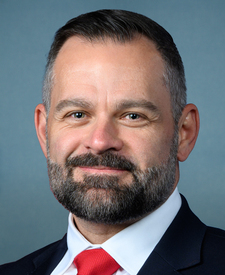
See how Cory Mills's votes line up with your values.
DeepSyte scores Cory Mills's record on the issues you care about — not party, not press releases. Take the 2-minute values quiz to see your personal alignment.
Sign in and take the values quiz to see how Cory Mills's votes line up with your views.
Prediction track record
How often we called Cory Mills's passage votes correctly, from their stated positions on each bill's tagged topics. Excludes “unclear” calls and abstentions.
A joint resolution to direct the removal of United States Armed Forces from hostilities within or against the Islamic Republic of Iran that have not been authorized by Congress.
We haven't yet found statement/vote pairs on the same topic for Cory Mills. This usually means either the rep hasn't taken public positions on bills that have come to a passage vote, or those bills haven't been tagged yet. The checker runs as new press releases and votes come in.
Pro analysis
AI rep analysis — Pro
Get an AI-narrated read on Cory Mills's full voting record against your stated values — aligned themes, conflicts, notable votes, and what to watch for.
We haven't extracted campaign positions for Cory Mills yet. Once their campaign website or position pages are processed, this card will track what they said vs how they voted.
Crossing the aisle
Passage votes where Cory Mills broke ranks with ≥75% of Republicans. Threshold catches substantively partisan splits; unanimous-ish or close votes are excluded.
23
Cross-aisle votes
119-hr-2860·Jun 3, 2026·76% of R voted YES
Northwest Straits Marine Conservation Initiative Reauthorization Act of 2025
Congressman Mills Supports FY27 National Defense Authorization Act
Position: The release supports the House-passed FY27 National Defense Authorization Act, citing military pay raises, barracks and family housing investment, munitions and weapons stockpile rebuilding, defense industrial base expansion, and Pentagon audit and cost-cutting provisions.
Peace through strength requires more than words, it requires action. The House passed the FY27 National Defense Authorization Act to ensure our military remains the most capable fighting force in the world.
America faces the most dangerous security environment in generations. From China’s military expansion to the growing threats posed by Russia, Iran, and North Korea, we cannot afford complacency. That’s why House Republicans passed the Fiscal Year 2027 National Defense Authorization Act (NDAA), legislation that rebuilds America’s military, supports our servicemembers, revitalizes our defense industrial base, and restores the principle of Peace Through Strength.
As a combat veteran, I know firsthand that our military’s greatest advantage is the men and women who volunteer to serve. They deserve the resources, equipment, and support necessary to accomplish the mission and return home safely. The FY27 NDAA delivers on that commitment.
Supporting Our Servicemembers
The bill provides a 5–7% pay raise for every servicemember while strengthening military housing, childcare, education, and quality-of-life programs for military families. It also invests $1.8 billion to improve barracks and family housing because those who defend our nation deserve safe, modern living conditions.
Rebuilding American Military Strength
Weakness does not prevent war, it invites further aggression. The FY27 NDAA restores America’s military readiness by rebuilding depleted weapons stockpiles, accelerating production of critical munitions, and investing in next-generation technologies including hypersonic weapons, quantum computing, and autonomous systems. It also strengthens our missile defense, modernizes our nuclear deterrent, and ensures our Armed Forces remain prepared to counter threats from China, Russia, Iran, and North Korea.
Revitalizing America’s Defense Industrial Base
A nation that cannot build its own military cannot guarantee its own security.
This legislation expands American defense manufacturing, modernizes shipyards and maintenance depots, reduces unnecessary regulations, and encourages greater competition by opening opportunities for innovative companies and small businesses. These investments will create thousands of skilled American jobs while strengthening the industrial base that underpins our national defense.
Delivering Accountability for Taxpayers
The FY27 NDAA also demands greater accountability from the Department of Defense by eliminating nearly $30 billion in wasteful programs, establishing new authorities to combat fraud, and requiring progress toward achieving a full and clean Pentagon audit within 24 months.
Every taxpayer dollar dedicated to national defense should strengthen our military, not unnecessary bureaucracy.
Keeping America Safe
The FY27 NDAA advances more than 65 priorities that support President Trump’s Peace Through Strength agenda and ensures our military remains the strongest, most capable force in the world.
America has always led because we were willing to out-build, out-innovate, and out-produce every adversary. House Republicans are rebuilding that foundation once again by investing in our servicemembers, restoring military readiness, strengthening American manufacturing, and ensuring our nation remains prepared to meet the challenges of the next generation.
Congressman Cory Mills Introduces Resolution Calling for Redesign of National Global War on Terrorism Memorial
Position: Rep. Cory Mills introduced a resolution stating that the current design concept for the National Global War on Terrorism Memorial does not adequately honor post-9/11 service members and urging a redesign that more explicitly depicts their service, valor, and sacrifice.
WASHINGTON, D.C. — Congressman Cory Mills introduced a resolution expressing the sense of the House that the current design concept for the National Global War on Terrorism Memorial fails to adequately honor the sacrifices of America’s post-9/11 service members and urging a redesign that more clearly reflects the valor, sacrifice, and warrior ethos of those who served.
More than 2.7 million Americans answered the nation’s call following the terrorist attacks of September 11, 2001, deploying to combat zones across the globe in what became the longest continuous conflict in American history. Over 7,000 U.S. service members gave their lives, while tens of thousands returned home bearing the physical and invisible wounds of war.
“The men and women who fought in the Global War on Terrorism answered our nation’s call without hesitation, serving through two decades of sustained conflict to defend the American people,” said Rep. Mills. “Their memorial should leave no doubt about who they were, what they endured, and what they sacrificed. Future generations should not have to interpret abstract symbolism to understand the courage of those who fought after September 11th, but rather they should see it plainly.”
The resolution argues that unlike iconic military memorials such as the Marine Corps War Memorial, the Korean War Veterans Memorial, and the Vietnam Veterans Memorial, the current design concept relies too heavily on abstract architectural features and landscaping rather than explicitly depicting the service and sacrifice of America’s post-9/11 veterans.
Specifically, the resolution states that:
The current design concept does not provide the level of recognition deserved by Global War on Terrorism veterans and Gold Star families.
A national war memorial should visibly honor military service, valor, and combat sacrifice rather than prioritize abstract artistic interpretation.
The memorial’s design should be substantially revised to better represent the warrior ethos and realities of combat.
The final memorial should prominently depict the physical sacrifice, equipment, and collective service of the men and women who fought in the Global War on Terrorism.
The National Global War on Terrorism Memorial will serve as the nation’s permanent tribute to the generation of Americans who served in the conflicts that followed the September 11, 2001, terrorist attacks. This memorial must preserve their legacy with the dignity, clarity, and honor they earned. We owe them nothing less.
Congressman Cory Mills Introduces PETS Act to Strengthen Prescription Monitoring Program Compliance for Veterinary Controlled Substances
Position: Introduces the PETS Act, which would require veterinarians to comply with Prescription Drug Monitoring Program consultation and reporting requirements, link veterinary controlled-substance records to animal owners or caretakers, and report non-fatal overdose events within 72 hours, with the aim of making state PDMP compliance standards more consistent.
WASHINGTON, D.C. — Congressman Cory Mills introduced the Practitioner Enforcement and Tracking of Substances Act (PETS Act), legislation aimed at strengthening Prescription Drug Monitoring Program (PDMP) compliance for veterinarians and improving transparency and accountability in the dispensing of controlled substances. This legislation will help prevent the exploitation or intentional harming of animals for the purpose of obtaining controlled substances.
The PETS Act updates federal law to clarify that licensed veterinarians must comply with PDMP requirements when prescribing or dispensing controlled substances, while establishing clear reporting standards that account for veterinary patients by linking records to the animal’s owner or primary caretaker. The bill also strengthens reporting requirements for non-fatal overdose events and reinforces consistent standards for controlled substance oversight across practitioners. Currently, different states have different rules for tracking prescription drugs, and vets don’t all report the same way. That creates a gap where some controlled drugs may not be properly tracked or connected to the person using them, which can be taken advantage of to misuse or divert those drugs.
“Prescription drug monitoring programs are a critical tool in combating substance misuse and protecting public health," Congressman Mills said. "The PETS Act ensures these safeguards are applied consistently, including in the veterinary space where controlled substances still require proper oversight. This legislation strengthens accountability, improves data reporting, and helps close gaps that can be exploited in the system.”
Key Provisions of the PETS Act
• Requires veterinarians to comply with PDMP consultation and reporting requirements when prescribing controlled substances
• Clarifies reporting procedures for veterinary patients by associating records with owners or caretakers
• Expands PDMP reporting requirements to include non-fatal overdose events within 72 hours
• Strengthens federal standards to reduce misuse and abuse of controlled substances
• Reinforces consistency across states in PDMP compliance expectations for all practitioners
Prescription Drug Monitoring Programs (PDMPs) are state-run electronic databases used to track controlled substance prescriptions. While veterinarians are sometimes subject to PDMP requirements, compliance standards vary significantly by state. The PETS Act seeks to create clearer federal guidance and improve consistency in reporting and oversight. The legislation also expands reporting requirements related to non-fatal overdoses, strengthening data collection efforts that can inform prevention strategies and public health responses.
###
Congressman Cory Mills Introduces Legislation to Establish Concealed Carry Reciprocity for Active-Duty Service Members
Position: Introduces legislation to establish nationwide concealed carry reciprocity for qualified active-duty military members who have completed a recent military firearms qualification, consistent with existing reciprocity standards for law enforcement officers.
WASHINGTON, D.C. — Congressman Cory Mills (FL-07) introduced legislation to amend Title 18 of the United States Code to establish nationwide concealed carry reciprocity for qualified active-duty members of the Armed Forces.
The bill would allow eligible servicemembers, those currently serving on active duty and who have completed a military firearms qualification within the past 12 months, to carry concealed firearms across state lines, consistent with the standards already applied to qualified law enforcement officers.
“Our men and women in uniform are highly trained, disciplined, and trusted to defend our nation,” said Congressman Mills. “They should not face hurdles of conflicting state laws when it comes to their ability to protect themselves and others here at home.”
Under this legislation, qualified servicemembers would be required to carry valid Department of War identification along with proof of current firearms qualification in order to be eligible for reciprocity. Florida’s 7th District is home to a strong and growing military and veteran community and this legislation ensures that those who serve our country are afforded the same consideration and consistency as law enforcement officers when traveling across state lines.
In Congress, Congressman Mills remains committed to advancing policies that support America’s service members, uphold their rights, defend their constitutional rights, and ensure they are treated with the respect, consistency, and recognition they have earned through their service to our nation.
###
National Police Association Endorses Congressman Cory Mills’ HILTON Act
Position: The release endorses legislation that would prohibit federal agencies from contracting with businesses that refuse service to federal law enforcement officers based on their official duties, arguing that taxpayer dollars should not support entities that discriminate against law enforcement.
Washington, D.C. — The National Police Association (NPA) has endorsed Congressman Cory Mills’ (FL-07) Halting Inappropriate Limits Targeting Officers Now (HILTON) Act, legislation that would prohibit federal agencies from contracting with businesses that refuse service to federal law enforcement officers based on their official duties.
The HILTON Act ensures that taxpayer dollars are not awarded to businesses that discriminate against the men and women tasked with enforcing the nation’s laws. The bill applies to a wide range of services, including lodging, food and beverage, healthcare, property rentals, and equipment storage, and treats parent companies and their brands as a single entity for enforcement.
"Law enforcement officers are being denied service simply for wearing a badge and upholding our nation's laws. While these businesses may have a general right to refuse providing their services to officers, they also shouldn't be awarded with federal contracts for demonstrating flagrant discrimination," said Paula Fitzsimmons, Legislative Director, National Police Association. "The HILTON Act will ensure that our hard-earned tax dollars aren't rewarding entities that wrongfully penalize the men and women of federal law enforcement who are dedicated to keeping our streets safe."
The legislation comes in response to growing reports of federal officers being denied service at restaurants, hotels, and other establishments. The bill reinforces accountability by ensuring entities that engage in such practices are not eligible for federal contracts. Rep. Mills emphasized that the legislation is about standing up for law enforcement and ensuring fairness in how federal dollars are spent. The bill has been referred to the House Committee on Oversight and Government Reform for consideration.
The National Police Association praised the effort and is urging Congress to pass the HILTON Act, highlighting the importance of supporting federal officers and ensuring they are treated with respect.
###
Congressman Cory Mills Introduces HILTON Act to Prohibit Federal Contracts with Entities that Discriminate Against Law Enforcement
Position: Congressman Mills introduced legislation to prohibit federal agencies from contracting with entities that refuse service to federal law enforcement officers based on their profession, with limited waivers for unavailable alternatives or remedial action.
WASHINGTON, D.C.-- Congressman Cory Mills (FL-07) today introduced the Halting Inappropriate Limits Targeting Officers Now Act (HILTON Act), legislation that prohibits federal agencies from entering into contracts with entities that discriminate against federal law enforcement officers based on their official duties.
The HILTON Act ensures that taxpayer dollars will not be used to support businesses or organizations that refuse service to federal law enforcement officers because of their profession.
Under the legislation, federal agencies would be prohibited from entering into agreements for covered services, including lodging, transportation, food and beverage, healthcare, vehicle rental, property rental, and storage, with entities that, within the previous year, either:
• Refused service to a federal law enforcement officer due to the officer’s official duties; or
• Maintained a policy expressly permitting such refusal.
The bill also includes a limited waiver provision allowing agency heads to contract with such entities only when no comparable service is available within a 50-mile radius or when a parent company takes sufficient remedial action to address discriminatory conduct. Additionally, entities under common corporate control are treated as a single entity to prevent circumvention of the law.
“Our law enforcement officers deserve respect, not political targeting,” Mills said. “If a business chooses to discriminate against those who enforce our laws, it should not expect to do business with the federal government. This legislation reinforces fairness, accountability, and support for those who protect our freedoms. Federal law enforcement officers put their lives on the line every day to protect our communities and defend our nation, it is unacceptable that any entity benefiting from federal contracts would deny basic services to these brave men and women simply because of the badge they wear. The HILTON Act makes clear that discrimination against law enforcement will not be subsidized by the American taxpayer.”
Congressman Cory Mills Introduces Bill to Ensure U.S. Capitol Police Are Paid During Government Shutdowns
Position: Rep. Mills supports establishing a Capitol Police Reserve Fund to ensure officers receive pay and critical resources during government shutdowns, framing it as a responsible safeguard for public safety and law enforcement support.
Washington, D.C. — Congressman Cory Mills (FL-07) introduced legislation to establish a United States Capitol Police Reserve Fund, a commonsense “just-in-case” safeguard designed to ensure Capitol Police officers and staff continue to receive pay and critical resources during a potential lapse in government appropriations if the government were to shut down in 2026.
The bill, titled the United States Capitol Police Reserve Fund Act of 2026, creates a limited, tightly controlled reserve fund that would only be activated in the event of a federal government shutdown affecting the Capitol Police. The fund would cover salaries and necessary operating expenses until regular appropriations are restored.
“Our Capitol Police officers show up every single day to protect Members of Congress, staff, and visitors, no matter what’s happening in Washington,” said Rep. Mills. “They should never have to worry about missing a paycheck because Congress can’t get its act together. This bill is a responsible, backstop to make sure public safety and national security aren’t put at risk during a shutdown.”
Key Provisions of the United States Capitol Police Reserve Fund Act of 2026:
• Establishes a Reserve Fund solely for use during a lapse in appropriations affecting the U.S. Capitol Police.
• Limits use of funds to salaries and essential operating expenses, with strict oversight by the Capitol Police Board.
• Provides $50 million in funding to ensure continuity of operations during a shutdown.
• Requires full accountability, including a report to Congress detailing how funds were used.
• Returns unused funds to the Treasury, ensuring no long-term or unnecessary spending.
Importantly, the reserve fund is not a permanent funding mechanism and cannot be used during normal operations. Any unused funds must be returned to the U.S. Treasury.
“This isn’t about expanding government or creating a slush fund,” Mills added. “It’s about basic preparedness. When political gridlock happens, the men and women protecting the Capitol shouldn’t be collateral damage.”
The legislation reinforces Rep. Mills’ continued commitment to public safety, fiscal responsibility, and supporting law enforcement officers who serve on the front lines, especially during moments of uncertainty in Washington.
Congressman Mills Introduces Resolution Condemning Iran’s Repression and Terror Sponsorship
Position: Congressman Mills introduced a resolution condemning Iran's violent repression of protesters, human rights abuses, and support for designated terrorist groups, and calling for U.S. coordination with allies on sanctions and diplomatic efforts to promote accountability.
WASHINGTON, D.C.-- Congressman Cory Mills introduced a resolution in the House of Representatives condemning the Government of the Islamic Republic of Iran for its violent crackdown on peaceful protesters, ongoing human rights abuses, and support for extremist militant groups across the Middle East.
The resolution denounces Iran’s violent repression of widespread protests since December 2025, which has resulted in thousands of reported deaths and mass detentions. It condemns ongoing human rights violations, including censorship, restrictions on communications, and systematic suppression of civil liberties, as well as Iran’s continued financial, material, and strategic support to terrorist-designated groups such as Hezbollah, Hamas, and the Houthis, which threatens regional stability and U.S. interests.
The resolution also calls for an immediate end to the use of lethal force and abusive tactics against peaceful demonstrators, the restoration of internet and communications access across Iran, the release of individuals arbitrarily detained for exercising basic rights, and continued U.S. coordination with allies to promote accountability through targeted sanctions, diplomatic efforts, and multilateral actions.
“America must remain steadfast in defending human rights and standing with those fighting for freedom,” Congressman Mills said. “This resolution sends a clear message: the Iranian people are not alone, and their bravery in the face of tyranny deserves global support. Peaceful protest is a universal right, and the Iranian people deserve freedom, safety, and justice. The Iranian regime’s use of lethal force against civilians, arbitrary detentions, and suppression of fundamental freedoms is unacceptable. The United States must stand with the Iranian people in their pursuit of dignity, liberty, and the rule of law.”
Issues:
Congress
Congressman Cory Mills Introduces the "China Budget Act"
Position: Congressman Mills argues that the Congressional Budget Office has provided biased fiscal analysis that has blocked Republican tax-cut legislation and defense spending, and he introduces legislation to remove the CBO Director and rename the office to highlight what he characterizes as the agency's lack of accountability and alignment with American economic priorities.
FOR IMMEDIATE RELEASE
January 20, 2026
Washington, D.C. — Congressman Cory Mills introduced legislation to fire the Director of the Congressional Budget Office (CBO), and redesignate the office as the “China Budget Office,” highlighting the lack of oversight and accountability that the government office has faced while wielding the power to block the Trump Administration and Congress’s Constitutional authority.
For years, the CBO has blocked Republican legislation through its so-called analysis, while failing to provide the basis of its decisions. This corrupt analysis has resulted in roadblocks to President Trump’s Tax Cuts, as well as the One Big Beautiful Bill, while they underestimated the costs of Obamacare and the Green New Deal by billions. The CBO’s mission is to provide non-partisan analysis on the costs of upcoming legislation. Americans know that when taxes are cut, businesses thrive, but apparently the bureaucrats in the CBO disagree. The taxpayer deserves accountability and transparency in the office’s decisions. Even further, the CBO has hindered Congress’s ability to invest in the American warfighter, with no ability to contest or audit their decisions. This is why Congressman Mills has echoed President Trump’s calls to rename the CBO as the “China Budget Office.” By hindering the warfighter, they support the adversary.
These underscores growing concerns about the Chinese Communist Party’s outsized influence on America’s economy, supply chains, and fiscal future. As a result, the CBO’s goals no longer align with the will of the American people or the tax relief they voted for. While their mission claims to provide non-partisan fiscal analysis, its projections consistently downplay the real-world economic benefits of tax cuts, including the growth, investment, and job creation that Americans have repeatedly experienced firsthand. The CBO’s methodology must be updated to reflect economic reality and the priorities of American taxpayers, with greater accountability and full transparency of how its conclusions are reached, otherwise they will continue to operate only benefiting China.
“Washington cannot have an honest conversation about budgets, debt, or spending while relying on analyses by the CBO," said Cory Mills. “Under President Donald Trump, the Congressional Budget Office was weaponized to stand in the way of the Trump Tax Cuts and Jobs Act and later to undermine efforts like the One Big Beautiful Bill, while at the same time drastically underestimating the true costs of things like the Green New Deal-style spending. These failures didn’t just mislead people; they weakened American competitiveness. Communist China exploits those failures through supply chains, debt exposure, trade imbalances, and strategic leverage. This legislation forces transparency, restores accountability, and makes it clear that fiscal responsibility and national security go hand in hand. America should never base its economic future on models that benefit China at the expense of American families.”
Congressman Mills emphasized that the legislation is intended to send a clear message to policymakers and the American people that fiscal responsibility and national security are inseparable. In addition, the CBO director must be held to the highest standards of objectivity, transparency, credibility, and accountability. When unelected officials carry this much weight over decisions that affect every American family, Congress has a responsibility to provide oversight and ensure the public can trust the process. The CBO director holds an enormous influence over spending, debt, and economic policy in the United States and that power must be held by an elected that the American people can trust.
The legislation directs that any reference to the Congressional Budget Office in federal law or official documents be considered a reference to the “China Budget Office,” reinforcing the bill’s intent across government operations. Congressman Mills has consistently advocated for policies that confront the threat posed by the Chinese Communist Party, protect American workers, and prioritize U.S. economic and national security interests.
Issues:
Congress
Congressman Cory Mills Introduces the SAFE SERVICES Act
Position: Congressman Mills introduces legislation requiring the Department of War to prioritize American companies for defense professional services contracts, arguing that current policy allows over $1 billion annually to flow to foreign-owned firms despite available qualified American alternatives.
WASHINGTON, D.C.-- Congressman Cory Mills (FL-07), along with Congressman Hamadeh (R-Ariz.), introduced the Securing American Firms & Expertise in Services (SAFE Services) Act, legislation to ensure American companies are prioritized for Department of War (DoW) professional services contracts critical to U.S. national security.
In Fiscal Year 2024 alone, the Department of War awarded more than $1 billion in professional services contracts to 616 foreign-owned companies, despite the availability of thousands of qualified American firms capable of performing the same work. These contracts include services such as engineering, architecture, design, consulting, program management, and legal advisory, many of which directly support the construction and sustainment of U.S. military facilities around the world.
While existing laws such as the Buy American Act and the Berry Amendment prioritize domestically produced goods, no comparable preference currently exists for defense professional services. The SAFE Services Act addresses this oversight by requiring the Department of War to prioritize American companies when procuring professional services essential to military readiness and infrastructure.
The SAFE Services Act would apply to defense professional services including:
• Engineering and architecture
• Design and environmental consulting
• Financial consulting
• Program management
• Legal advisory and other expert services as defined under the Federal Acquisition
Regulation
By leveling the playing field, the legislation strengthens supply chain security, supports American workers and small businesses, and ensures that sensitive defense-related work remains in trusted hands.
“American tax dollars should strengthen American companies and protect American security,” said Congressman Cory Mills. “When foreign-owned firms are designing, advising on, or managing sensitive defense projects, we expose ourselves to unnecessary economic and national security risks. The SAFE Services Act closes that gap and puts American expertise first. America has the talent. America has the companies. It’s time our defense procurement policies reflect that reality."
"The people in my district elected me to put America first. That means supporting American workers and revitalizing American industry. It’s why I prioritized Arizona military communities and our local manufacturers in my amendments to the defense bill," stated Congressman Hamadeh, a member of the House Armed Services Committee. "This legislation by Rep. Mills helps codify that spirit. It requires the Department of War to prioritize American companies during the procurement of professional services. The economic and national security implications alone should demand a preference for American companies, but this bill will ensure it is more than a suggestion."
###
Articles from a curated list of national outlets that mention Cory Mills.
No recent news mentions yet.
Source: GDELT 2.0 GKG, filtered to a curated list of national outlets. Inclusion is not endorsement; opinion pieces and reported news are mixed.
Recent stock activity
Periodic transaction reports filed under the STOCK Act — disclosed by the rep, sourced from public filings.
No disclosed trades on record.
Source: open-data mirrors of the Senate eFD and House Clerk financial-disclosure systems. Disclosure within 30 days of trade is required by law (45 for spouse/dependent trades).
Top PAC donors · 2026 cycle
Political action committees that gave the most to this rep's principal campaign committee this cycle. PAC giving is direct organizational support — industry, ideological, or leadership.
1.UNITED STATES SUGAR CORPORATION EMPLOYEE STOCK OWNERSHIP PLAN PAC,1 contribution$5,000
2.HONEYWELL INTERNATIONAL PACDefense3 contributionsDefense and aerospace contractor PAC — backs candidates supporting federal defense spending, military modernization, and aerospace manufacturing.AI$5,000
3.LEAN FORWARD AMERICA FUNDIdeological1 contributionProgressive advocacy PAC — supports candidates and causes aligned with forward-looking Democratic and progressive policy priorities.AI$3,500
4.NATIONAL ASSOCIATION OF REALTORS PACReal Estate2 contributionsReal-estate industry PAC — backs candidates supporting property-rights protections, mortgage-lending access, and tax incentives for homeownership.AI$3,000
5.SAALEX CORP PAC2 contributions$3,000
6.SCIENCE APPLICATIONS INTERNATIONAL CORPORATION VOLUNTARY PAC1 contribution$2,500
7.NATIONAL SHOOTING SPORTS FOUNDATION, INC. PAC (NSSF PAC)1 contribution$2,500
8.SOLSTICE ADVANCED MATERIALS INC. PAC1 contribution$2,500
9.AMERICA'S CREDIT UNIONS PAC OF CREDIT UNION NATIONAL ASSOCIATION, INC.Finance1 contributionCredit union industry PAC — backs candidates and policies supporting credit union operations, member protections, and regulatory positions favoring cooperative financial institutions.AI$2,000
10.TEXAS REPUBLICANS UNITED PAC (TRU PAC)1 contribution$1,500
Source: OpenFEC (api.open.fec.gov) Schedule A receipts where contributor type is “committee.” Aggregated by contributing committee. Self-transfers from joint-fundraising / victory committees are excluded.
Top individual contributors · 2026 cycle
Itemized individual contributions over $200 to this rep's campaign committee, aggregated by donor employer. PAC giving is shown above; this section is people, not organizations.
1.FARAH MEDICAL LLC$9,500
2.SELF$9,440
3.ASAS HEALTH$7,000
4.JASMINE NAAMOU$7,000
5.NEXTGEN MANAGEMENT LLC$6,600
6.DX-WEB$6,600
7.DX- WEB$6,600
8.RHEUMATOLOGY IN$6,500
9.ADVANCED MEDICAL CENTER$6,250
10.COMMUNITY HOSPITAL$5,000
Source: OpenFEC Schedule A receipts where contributor type is “individual,” aggregated by the donor's self-reported employer. This is a geographic / industry correlation, not a corporate endorsement.