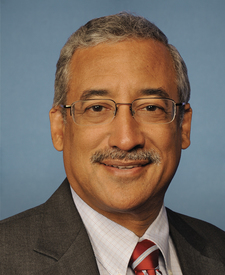
See how Robert C. "Bobby" Scott's votes line up with your values.
DeepSyte scores Robert C. "Bobby" Scott's record on the issues you care about — not party, not press releases. Take the 2-minute values quiz to see your personal alignment.
Sign in and take the values quiz to see how Robert C. "Bobby" Scott's votes line up with your views.
Prediction track record
How often we called Robert C. "Bobby" Scott's passage votes correctly, from their stated positions on each bill's tagged topics. Excludes “unclear” calls and abstentions.
A joint resolution to direct the removal of United States Armed Forces from hostilities within or against the Islamic Republic of Iran that have not been authorized by Congress.
No paired statements and votes yet for Robert C. "Bobby" Scott
We haven't yet found statement/vote pairs on the same topic for Robert C. "Bobby" Scott. This usually means either the rep hasn't taken public positions on bills that have come to a passage vote, or those bills haven't been tagged yet. The checker runs as new press releases and votes come in.
Pro analysis
AI rep analysis — Pro
Get an AI-narrated read on Robert C. "Bobby" Scott's full voting record against your stated values — aligned themes, conflicts, notable votes, and what to watch for.
We haven't extracted campaign positions for Robert C. "Bobby" Scott yet. Once their campaign website or position pages are processed, this card will track what they said vs how they voted.
Crossing the aisle
Passage votes where Robert C. "Bobby" Scott broke ranks with ≥75% of Democrats. Threshold catches substantively partisan splits; unanimous-ish or close votes are excluded.
Scott Calls on Watchdog to Investigate Whether or Not HHS Lied in Litigation
Position: Ranking Member Scott requests that the HHS Inspector General investigate whether HHS provided false, incomplete, or inaccurate information in litigation since January 20, 2025, and criticizes HHS for not complying with GAO requests and not responding to his letters.
As originally released by the Committee on Education and Workforce, Democrats
WASHINGTON – Today, House Education and Workforce Committee Ranking Member Robert C. “Bobby” Scott (D-VA-03) urged the Department of Health and Human Services (HHS) Inspector General to investigate HHS’s potential submission of inconsistent or fraudulent information in active litigation.
On February 6, 2025, Ranking Member Scott calledonthe U.S. Government Accountability Office (GAO)to assess the security of HHS's information technology (IT) systems after reports that Elon Musk’s Department of Government Efficiency (DOGE) accessed data from various government agencies. However, HHS has refused to comply with GAO’s requests, citing potential discrepancies between what was produced in litigation and would be provided to GAO.
Furthermore, during the Committee’s oversight hearing on April 17, 2026, Secretary Kennedy could not provide a clarification when questioned by Ranking Member Scott whether the Department is providing false or inaccurate information in litigation and failed to follow up with information on the matter.
“On May 17, 2026, I wrote to Secretary Kennedy to follow-up and request a detailed explanation about what the Department meant when it informed GAO that it could not cooperate or accommodate an observational walkthrough, artifacts, screenshots, and other documentation out of concern for discrepancies with what HHS produced in litigation and what it would provide to GAO, and whether HHS did provide false, incomplete, or inaccurate information in litigation.6 I have given the Department ample opportunity to respond to my requests and refute the assertion that it has provided misinformation to one or more courts and yet have received no response to date,” wrote Ranking Member Scott.
“Accordingly, given the serious nature of the allegation, I request the Office of Inspector General to initiate an investigation immediately of whether HHS has provided false, incomplete, or inaccurate information, materials, items, or other documentation in litigation since January 20, 2025.”
To read the full letter to HHS Inspector General Thomas March Bell, click here.
###
Issues:Committee on Education and WorkforceHealth Care
190 Members of Congress Slam HHS Effort to Dismantle Head Start
Position: The release opposes an HHS proposed rule that would remove federal quality standards for Head Start, including safety, staff-to-child ratios, staff qualifications, teaching standards, health services, operating hours, and enrollment protections for children with disabilities, and urges HHS to withdraw the rule.
As originally released by the Committee on Education and Workforce, Democrats
WASHINGTON –One hundred ninety Members of Congress demanded that the Department of Health and Human Services (HHS) withdraw its proposalto remove more than 90 percent of Head Start’s standards that ensure children receive a high-quality early education. Under the proposed rule, nearly one in ten children currently enrolled in Head Start could become ineligible overnight.
In the House, the letter is led by Education and Workforce Committee Ranking Member Robert C. “Bobby” Scott (D-VA-03), House Democratic Leader Hakeem Jeffries (D-NY-08), Early Childhood and Elementary and Secondary Education Subcommittee Ranking Member Bonamici (D-OR-01), and Representative Nikki Budzinski (D-IL-13). In the Senate, the letter is led by Health, Education, Labor and Pensions (HELP) Committee Ranking Member Sanders (I-VT), Senate Democratic Leader Chuck Schumer (D-NY), Senator Raphael Warnock (D-GA), and Senator Ben RayLuján (D-NM).
The Members are concerned that the proposed rule would illegally modify and weaken the services required by the Head Start Act. Specifically, the rule would eliminate federal quality standards for Head Start classrooms, including safety standards, staff-to-child ratios, staff qualifications, and standards for teaching. Additionally, the rule would erode critical services Head Start provides children and families, including health services. It would also shorten Head Start operating hours, eliminate enrollment protections for children with disabilities, and undermine services for dual language learners.
“This proposed rule is a brazen attempt to dismantle Head Start without regard for the hundreds of thousands of young children and working-class families who depend on these programs and services every year. Under your proposal, Head Start children could be subject to corporal punishment; left unsupervised; have larger class sizes; have less qualified teachers; and no longer receive preventative and continuous health services, including oral health and mental health services,” wrote the Members. “We strongly urge you to withdraw the proposed rule, obey the law, and protect the legacy of Head Start.”
Since the beginning of the second Trump Administration, HHS has repeatedly attempted to undermine and disrupt Head Start programs with an aggressive deregulation agenda, illegally withholding funding, firing federal staff, and threats to eliminate the program entirely. These actions serve the Trump Administration’s goal to end the Head Start program as laid out on page482 of Project 2025.
In the House, the letter was signed by: Representatives Robert C. “Bobby” Scott (VA-03), Hakeem S. Jeffries (NY-08), Gabe Amo (RI-01), Becca Balint (VT-AL), Joyce Beatty (OH-03), Wesley Bell (MO-01), Donald S. Beyer (VA-08), Sanford Bishop (GA-02), Everton Blair (GA-13), Suzanne Bonamici (OR-01), Brendan F. Boyle (PA-02), Shontel M. Brown (OH-11), Julia Brownley (CA-26), Nikki Budzinski (IL-13), Janelle Bynum (OR-05), Salud O. Carbajal (CA-24), Andre Carson (IN-07), Troy A. Carter (LA-02), Greg Casar (TX-35), Ed Case (HI-01), Kathy Castor (FL-14), Joaquin Castro (TX-20), Judy Chu (CA-28), Gilbert R. Cisneros Jr. (CA-31), Katherine M. Clark (MA-05), Yvette D. Clarke (NY-09), Emanuel Cleaver (MO-05), Steve Cohen (TN-09), J. Luis Correa (CA-46), Jim Costa (CA-21), Joe Courtney (CT-02), Jason Crow (CO-06), Sharice Davids (KS-03), Danny K. Davis (IL-07), Donald G. Davis (NC-01), Madeleine Dean (PA-04), Diana DeGette (CO-01), Rosa L. DeLauro (CT-03), Suzan K. DelBene (WA-01), Christopher R. Deluzio (PA-17), Mark DeSaulnier (CA-10), Maxine Dexter (OR-3), Lloyd Doggett (TX-37), Sarah Elfreth (MD-3), Adriano Espaillat (NY-13), Dwight Evans (PA-3), Bill Foster (IL-11), Laura Friedman (CA-30), Maxwell Alejandro Frost (FL-10), John Garamendi (CA-8), Robert Garcia (CA-42), Jesús G. “Chuy” García (IL-04), Sylvia R. Garcia (TX-29), Jimmy Gomez (CA-34), Vicente Gonzalez (TX-34), Maggie Goodlander (NH-02), Josh Gottheimer (NJ-05), Adelita S. Grijalva (AZ-07), Jahana Hayes (CT-05), Pablo José Hernández (PR-AL), James A. Himes (CT-04), Steven Horsford (NV-04), Steny H. Hoyer (MD-05), Jared Huffman (CA-02), Glenn Ivey (MD-04), Jonathan L. Jackson (IL-01), Sara Jacobs (CA-51), Pramila Jayapal (WA-07), Marcy Kaptur (OH-09), Robin L. Kelly (IL-02), Timothy M. Kennedy (NY-26), Ro Khanna (CA-17), Raja Krishnamoorthi (IL-08), Greg Landsman (OH-01), Rick Larsen (WA-02), Summer L. Lee (PA-12), Teresa Leger Fernandez (NM-03), Ted Lieu (CA-36), Zoe Lofgren (CA-18), Stephen F. Lynch (MA-08), John W. Mannion (NY-22), Doris O. Matsui (CA-07), Lucy McBath (GA-06), Sarah McBride (DE-AL), April McClain Delaney (MD-06), Jennifer L. McClellan (VA-04), Betty McCollum (MN-04), Kristen McDonald Rivet (MI-08), James P. McGovern (MA-02), LaMonica McIver (NJ-10), Grace Meng (NY-06), Kweisi Mfume (MD-07), Kelly Morrison (MN-03), Frank J. Mrvan (IN-01), Kevin Mullin (CA-15), Jerrold Nadler (NY-12), Richard E. Neal (MA-01), Donald Norcross (NJ-01), Eleanor Holmes Norton (DC-AL), Alexandria Ocasio-Cortez (NY-14), Johnny Olszewski Jr. (MD-02), Ilhan Omar (MN-05), Jimmy Panetta (CA-19), Chris Pappas (NH-01), Nancy Pelosi (CA-11), Scott H. Peters (CA-50), Brittany Petterson (CO-07), Chellie Pingree (ME-01), Mark Pocan (WI-02), Nellie Pou (NJ-09), Ayanna Pressley (MA-07), Mike Quigley (IL-05), Delia C. Ramirez (IL-03), Emily Randall (WA-06), Jamie B. Raskin (MD-08), Josh Riley (NY-19), Deborah K. Ross (NC-02), Andrea Salinas (OR-06), Linda T. Sanchez (CA-38), Mary Gay Scanlon (PA-05), Janice D. Schakowsky (IL-09), Bradley Scott Schneider (IL-10), Hillary J. Scholten (MI-03), Terri A. Sewell (AL-07), Brad Sherman (CA-32), Lateefah Simon (CA-12), Adam Smith (WA-09), Eric Sorensen (IL-17), Darren Soto (FL-09), Melanie A. Stansbury (NM-01), Greg Stanton (AZ-04), Haley M. Stevens (MI-11), Marilyn Strickland (WA-10), Suhas Subramanyam (VA-10), Mark Takano (CA-39), Bennie G. Thompson (MS-02), Mike Thompson (CA-04), Dina Titus (NV-01), Rashida Tlaib (MI-12), Jill N. Tokuda (HI-02), Paul Tonko (NY-20), Norma J. Torres (CA-35), Ritchie Torres (NY-15), Lori Trahan (MA-03), Derek Tran (CA-45), Gabe Vasquez (NM-02), James Walkinshaw (VA-11), Debbie Wasserman Shultz (FL-25), Bonnie Watson Coleman (NJ-12), George Whitesides (CA-27), Nikema Williams (GA-05), and Frederica S. Wilson (FL-24).
In the Senate, the letter was signed by Senators: Bernie Sanders (I-VT), Chuck Schumer (D-NY), Raphael Warnock (D-GA), Ben Ray Luján?(D-NM), Tammy Baldwin (D-WI), Michael Bennet (D-CO), Richard Blumenthal (D-CT), Lisa Blunt Rochester (D-DE), Cory Booker (D-NJ), Maria Cantwell (D-WA), Christopher Coons (D-DE), Tammy Duckworth (D-IL), Richard Durbin (D-IL), John Fetterman (D-PA), Kirsten Gillibrand (D-NY), Maggie Hassan (D-NH), Martin Heinrich (D-NM), Mazie Hirono (D-HI), Timothy Kaine (D-VA), Mark Kelly (D-AZ), Andy Kim (D-NJ), Angus King (I-ME), Amy Klobuchar (D-MN), Edward J. Markey (D-MA), Jeff Merkley (D-OR), Patty Murray (D-WA), Alex Padilla (D-CA), Gary Peters (D-MI), Jack Reed (D-RI), Adam Schiff (D-CA), Jeanne Shaheen (D-NH), Tina Smith (D-MN), Chris Van Hollen (D-MD), Mark R. Warner (D-VA), Elizabeth Warren (D-MA), Peter Welch (D-VT), Sheldon Whitehouse (D-RI), and Ron Wyden (D-OR).
To read the full letter, click here.
###
Issues:Committee on Education and WorkforceEducation
Position: The release criticizes the economic policies of the Trump administration, arguing that wages are not keeping pace with inflation and that cuts to SNAP benefits are harming working families. It states support for protecting school meals, strengthening job training, lowering college costs, and ensuring a living wage.
As originally released by the Committee on Education and Workforce, Democrats
WASHINGTON – Ranking Member Robert C. “Bobby” Scott (VA-03), House Committee on Education and Workforce, released the following statement after the Bureau of Labor Statistics announced that the economy gained 29,000 jobs in September, and the unemployment rate increased from 4.1 percent to 4.2 percent.
“This Trump economy might be working for the wealthy and the well connected, but it clearly is leaving workers behind. CEO pay is skyrocketing, while for working people, it's a daily struggle just to cover groceries and rent. Workers’ wages are failing tokeep up with inflation, and the increasing cost of daily expenses are eating into workers’ paychecks. According to the Century Foundation, inflation-adjusted debt payments grew faster than income in recent years as working families have struggled to make ends meet.
“The jobs numbers show the same strain: Trump has added only 776,000 jobs between January 2025 and September 2026, while the Biden administration added 10.7 million within its first 20 months. Since President Trump returned to office, not one month has reached the average monthly job creation under the Biden administration. In fact, he has not even achieved 70 percent of Biden’s monthly average.
“And now, as a result of the ‘Big Ugly Bill’s’ cuts to the SNAP program, families are losing their food assistance. An estimated 4.5 million people have lost their SNAP benefits, including more than 1.5 million children. Across the country, people are feeling the impact. In North Carolina, demand at food pantries and food banks is up 20 percent this year, as SNAP enrollment has plummeted by more than 110,000 people since September 2025. In Kansas, one pantry reports distributing 50 percent more food than a year ago. In Oregon, pantry directors say they have gone from being a supplemental resource to the primary source of food, and many incoming families have never had to ask for help before. This is what happens when tax breaks for the wealthy are paid for by taking food off the tables of working families.
“That's why I, alongside my Democratic colleagues, am fighting to put working families first. Children cannot learn on an empty stomach, and parents cannot build a better life when they cannot afford groceries. We will keep pushing to protect school meals, strengthen job training, lower the cost of college, and make sure every worker can earn a living wage and retire with dignity.”
To see a chart comparing the cumulative seasonally adjusted job change by month between President Trump's first and second terms, and President Biden's presidency, click here.
To see a chart comparing the total job change between President Trump's first 20 months in office and President Biden's first 20 months in office, click here.
###
Issues:Committee on Education and WorkforceEconomy and Jobs
House, Senate Introduce Bill to Lower Cost of Community College
Position: The release announces the introduction of the America's College Promise Act of 2026, which would waive tuition fees at community colleges and two-year Tribal Colleges and Universities for eligible students, and argues that community college affordability should be expanded through federal investment.
As originally released by the Committee on Education and Workforce, Democrats
WASHINGTON – Today, House Education and Workforce Committee Ranking Member Robert C. “Bobby” Scott (D-VA-03), Representative Adelita Grijalva (D-AZ-07), Representative Teresa Leger Fernández (D-NM-03), Representative Madeleine Dean (D-PA-04), and Senator Tammy Baldwin (D-WI) introduced theAmerica’s College Promise Act of 2026. The bill would make community college and two-year Tribal Colleges and Universities more accessible by waiving tuition fees for eligible students.
“Community colleges play a unique and vital role in providing students access to a quality postsecondary degree. Regrettably, the chronic underfunding of community colleges is jeopardizing their ability to support their students and communities,” said Ranking Member Scott (D-VA-03). “The America’s College Promise Act is a major investment in expanding opportunities for students and rebuilding a stronger economy.”
“Students in Southern Arizona and throughout the country should not have to take on tens of thousands of dollars of debt to get a college education,”said Representative Grijalva. “The America’s College Promise Act will provide two years of free in-state tuition and fees for students enrolled in community and technical college programs. Whether they’re just starting out or returning to the classroom later in life, every student deserves the opportunity to learn new skills and pursue higher education. By expanding access to education and workforce training, we’re strengthening the workforce that businesses and local economies depend on.”
“In New Mexico, we know free community college can unlock the doors to a brighter future. The America’s College Promise Act builds on New Mexico’s example by making sure students across the country can attend community college without the burden of tuition and fees,” said Representative Leger Fernández. “Our bill will provide funds for services students need to earn their degrees and reduce the financial burden for low-income students to attend TCUs, HBCUs, and MSIs. From recent high school graduates to experienced workers who want to go back to school — every student deserves the opportunity to keep learning without the fear of drowning in debt.”
“As a professor, it was a privilege to witness students claim their education and seize their futures — yet the real fear and burden of immense student loan debt often deters young adults and returning students from expanding their learning,”saidRepresentative Dean. “The America’s College Promise Act provides tuition-free community college courses and expands funding for HBCUs and trade schools, making the path to higher education and career readiness available to more Americans and future generations.”
“Every Wisconsinite deserves the opportunity to get the education and skills they need to land a good-paying job and build a better life, no matter where they come from or how much money their family makes,” said Senator Baldwin. “But for too many working families, the rising cost of higher education leaves students saddled with debt for years to come, or it is simply out of reach. That’s why I am proud to work with my colleagues to remove barriers and lower the cost of community college, so more Wisconsinites have the opportunity to compete, succeed, and live a good middle-class life.”
The America’s College Promise Act of 2026 will make the skills and credentials necessary to succeed in the workforce more accessible to all students by creating a new federal-state partnership to provide two years of tuition-free community college.
Specifically, the America’s College Promise Act of 2026:
Creates a partnership between the federal government and states to waive tuition and fees for two years of community and technical college programs for eligible students, while promoting key reforms to accelerate student success;
Creates a sliding scale for federal share beginning at 100 percent for the first year and ending at 80 percent for the fifth and subsequent years;
Ensures that programs offer academic credits that are transferable to four-year institutions in their state, or occupational training that leads to recognized credentials;
Maintains and encourages state funding for higher education;
Establishes a student success fund to improve enrollment, retention, transfer, or completion rates and labor market outcomes for underserved student populations, including students of color and low-income and first-generation college students, who attend community and technical colleges at disproportionate rates;
Waives two years of tuition and fees for eligible students at tribal colleges and universities; and
Establishes a new grant program to provide pathways to success at historically black colleges and universities and minority-serving institutions by covering a significant portion of tuition and fees for the first two years of attendance for low-income students.
To read the bill text for the America’s College Promise Act of 2026, click here.
To read the fact sheet for America’s College Promise Act of 2026, click here.
To read the section-by-section for America’s College Promise Act of 2026, click here.
###
Issues:Committee on Education and WorkforceEducation
Scott Champions Bills to Protect and Strengthen Workers’ Retirement Security
Position: The release supports three bills to protect workers' retirement savings and strengthen their ability to enforce rights under ERISA, including closing loopholes that allow conflicted financial advice and ensuring access to courts for benefit denials and fiduciary breaches.
As originally released by the Committee on Education and Workforce, Democrats
WASHINGTON— Today, Ranking Member of the House Committee on Education and Workforce Robert C. “Bobby” Scott (D-VA-03) touted three bills to secure workers’ retirement savings.
The first, the Workers’ Retirement Savings Protection Act of 2026, would ensure workers are not ripped off when investing their retirement savings. The second, theProtecting Workers’ Benefits Act of 2026would better enable workers, retirees, and their families to enforce their rights under the Employee Retirement Income Security Act (ERISA). And the third, he co-sponsored the Employee and Retiree Access to Justice Act of 2026, with Health, Employment, Labor, and Pensions (HELP) Subcommittee Ranking Member Mark DeSaulnier (D-CA-10) and Senator Tina Smith (D-MN), to ensure workers can fight back when they are denied benefits under an employee benefit plan.
“Unfortunately, in the 119th Congress, Republicans relentlessly tried to weaken retirement savers’ rights and protections. At the same time, the Trump Administration increased risk for workers trying to save for a dignified retirement. This is unacceptable. We must reverse course and advance an agenda that protects workers’ retirement savings and strengthens their ability to enforce their rights under ERISA. For instance, we must stop unscrupulous financial advisors from ripping off their retirement clients and ensure workers have access to courts to challenge mental health benefit denials and fiduciary breaches,”said Ranking Member Scott.“That’s what these bills would do. If Congress considers a ‘SECURE 3.0’ retirement bill in the future, these pro-worker bills must be included.”
Those who can build a retirement nest egg may seek financial advice. While most financial advisors act in their retirement clients’ best interests, bad actors can easily exploit regulatory loopholes and provide conflicted advice that costs workers billions of dollars in losses every year. The Workers’Retirement Savings Protection Act of 2026 would close these loopholes and protect retirement savers from being harmed by conflicted advice.
Specifically, the bill would:
Ensure workers receive retirement investment advice, including advice on their 401(k)s, IRAs, and rollovers, that’s in their best interest – even if they only hire an advisor on a one-time basis.
Stop bad actors from evading their fiduciary duty by hiding behind vague boilerplate language saying that they never intended for their advice to serve as the “primary basis” for an investment decision.
Additionally, current law applies to those advisors who render retirement investment advice for a fee or other compensation, direct or indirect. The Workers’Retirement Savings Protection Act of 2026 specifies that such fees or other compensation include a broad range of payments from any source, including commissions, among other forms of payment that are connected with or the result of an advisor’s recommendation.
The Workers’ Retirement Savings Protection Act of 2026 is endorsed by the AFL-CIO, Alliance for Retired Americans, American Federation of State, County and Municipal Employees (AFSCME), International Association of Machinists and Aerospace Workers (IAM Union), Iron Workers International, United Food and Commercial Workers (UFCW), United Mine Workers of America (UMWA), and United Steelworkers (USW).
To read the bill text for the Workers’ Retirement Savings Protection Act of 2026, click here.
To read a fact sheet for the Workers’ Retirement Savings Protection Act of 2026, click here.
The Protecting Workers’ Benefits Act of 2026 would ensure that participants and beneficiaries can exercise their rights under ERISA when they are harmed by mismanagement of their plan. Although ERISA guarantees “ready access to the Federal courts” by law, a 2020 Supreme Court decision, Thole v. U.S. Bank, has restricted standing under ERISA in many cases until a plan is on the brink of collapse — even when clear fiduciary mismanagement has already caused massive financial losses. The Protecting Workers’ Benefits Act of 2026 would allow individuals who have been harmed by mismanagement to bring an action as assignees on behalf of their plan, similar to actions brought by whistleblowers under the False Claims Act.
To read the bill text for the Protecting Workers’ Benefits Act of 2026, click here.
The Employee and Retiree Access to Justice Actof 2026 would strengthen the rights of workers, retirees, and their families to seek relief under ERISA. It would deem pre-dispute and post-dispute forced arbitration clauses, class action waivers, and representation waivers unenforceable, ensuring participants and beneficiaries receive their day in court when they are affected by fiduciary mismanagement or benefit denials. It would also prohibit “discretionary clauses” under certain ERISA plans to ensure that individuals receive de novo review when they challenge a benefit denial in federal court.
“As Ranking Member on the House Committee on Education and Workforce’s Subcommittee on Health, Employment, Labor and Pensions, I am proud to introduce this legislation that would help safeguard the promise of ERISA so that workers can retire with financial security and dignity by cracking down on employer abuses and protecting workers’ access to recourse under the law,”said HELP Subcommittee Ranking Member Mark DeSaulnier.
“Too often, employers can deny workers the right to appeal a claim denial in court or impose huge burdens that make it nearly impossible to win a suit for wrongly denied benefits. The Employee and Retiree Access to Justice Act would put the power back in the hands of workers by clarifying their right to take their bosses to court if they aren’t being paid what they’re owed,"said Senator Smith.
To read the bill text for the Employee and Retiree Access to Justice Act of 2026, click here.
Issues:Committee on Education and Workforce
Scott Statement on the Trump Administration’s National School Voucher Scheme
Position: Opposes the federal Scholarship Tax Credit voucher program and the Treasury Department's proposed rule implementing it, arguing that public education funds should go to public schools rather than private school subsidies. Also opposes provisions that would limit state requirements for public-school benefit and anti-discrimination protections.
As originally released by the Committee on Education and Workforce, Democrats
WASHINGTON – Ranking Member Robert C. “Bobby” Scott (VA-03), House Committee on Education and Workforce, released the following statement after the U.S. Department of the Treasury’s new proposed rule, entitled “Federal Scholarship Tax Credit.”
“America's public school system is founded on the promise that all students should have access to a high-quality public education. Today, the Treasury Department issued a proposed rule to implement the massive federal voucher scheme that was included in the Republicans’ ‘Big Ugly Bill.’ The program effectively diverts billions of taxpayer dollars away from public schools through the voucher program to subsidize private school education. Today’s proposal goes even further by prohibiting states from adding requirements to ensure the program meaningfully benefits public schools and the students who attend them. It also prohibits states from adding additional requirements to ensure students do not face discrimination when accessing educational services.
“Voucher schemes are inefficient, ineffective, and an expensive tool to privatize public education. If just 20 percent of eligible donors participate in the voucher scheme, the cost to the taxpayer would be roughly $37.6 billion — more than all federal spending on Title I and the Individuals with Disabilities Education Act (IDEA) combined. Meanwhile, data from existing state voucher programs shows that most students who benefit from those programs are already enrolled in private schools. Yet ninety percent of America’s children attend public schools. Despite this, public education has gone underfunded for decades. Without long term, sustained federal investment, schools and educators lack the resources they need to teach all students effectively.
“Moreover, when federal dollars go to public schools, schools are required to use that money to serve all students equally without discrimination. By funneling these dollars into private schools, taxpayers are unwittingly paying for schools that neglect underprivileged communities, are permitted to ignore civil rights laws, and can freely discriminate against students without accountability.
“Public dollars should be spent on public education. Just imagine what we could do if this money were used to improve all of America’s public schools instead. Democrats are committed to investing in public education for all communities — not just the privileged few.”
###
Issues:Committee on Education and WorkforceEducation
Scott, Grijalva, Lee Introduce Bill to Invest in Direct Care Workers
Position: The release supports federal legislation (the Direct CARE Opportunity Act of 2026) to fund training, recruitment, retention, and career pathways for direct care workers, citing low wages and high injury rates, and criticizes Medicaid funding cuts for reducing home and community-based services.
As originally released by the Committee on Education and Workforce, Democrats
WASHINGTON – Today, House Committee on Education and Workforce Ranking Member Robert C. “Bobby” Scott (VA-03), Rep. Adelita Grijalva (AZ-07), and Rep. Susie Lee (NV-03) announced plans to reintroducethe Direct Creation, Advancement, and Retention of Employment (CARE) Opportunity Act of 2026. The legislation invests in training and increasing opportunities for our nation’s direct care workers.
Between 2025 and 2035, the direct care workforce is projected toadd more than 886,000 new jobs. Despite this growing demand, direct care workers still earn low wages and experience unstable working conditions. The current median wage for direct care workers is just $17.36 an hour. In addition to low wages, direct care workers also face high injury rates. For example, nursing assistants are nearly five times more likely than the typical U.S. worker to experience workplace injuries or illnesses.
Congressional Republicans and the Trump Administration have made the situation even more dire by cutting Medicaid funding by nearly $1 trillion in the “Big Ugly Bill” and threatening other public assistance that helps many direct care workers make ends meet. As a result, many states are reducing access to home and community-based services, the main source of funding for direct care workers.
The Direct CARE Opportunity Act of 2026strengthens the training, support, and career opportunities that direct care workers need to support millions of older Americans and people with disabilities.
“Direct care workers play an essential role in caring for our nation’s seniors and individuals with disabilities,” said Ranking Member Scott.“Regrettably, our investments in this critical workforce have lagged far behind the rapidly growing need for their services. It’s time to address the shortage of care workers and provide them with the resources and support they deserve. By funding innovative strategies to recruit, retain, and support direct care workers, the Direct CARE Opportunity Act of 2026 helps ensure that our nation’s seniors and individuals with disabilities have access to vital, everyday care.”
“For so many families throughout Southern Arizona, direct care workers provide critical support that allows older adults and people with disabilities to live with dignity and age in place. Despite the essential work they do, direct care workers are too often underpaid and lack the support and opportunities they deserve, contributing to a growing shortage of providers. The Direct CARE Opportunity Act invests in these workers by expanding training, strengthening career pathways, and helping recruit and retain the workforce our communities depend on,” said Rep. Grijalva.
“Nevada is home to more than 13,000 direct care workers who work tirelessly to support Nevada seniors and those with disabilities every day, and demand for their services is skyrocketing,”said Rep. Lee.“The Direct CARE Opportunity Act meets that demand by directly investing in the retention, recruitment, and training of our direct care workforce. This practical investment supports caregivers currently in the workforce, strengthens the direct care workforce pipeline, and ensures that those who depend on direct care workers can continue to live securely and with dignity.”
To meet the need for a well-trained and empowered direct care workforce, the Direct CARE Opportunity Act of 2026:
Provides funding to states and entities to invest in strategies to recruit, retain, and advance the direct care workforce pipeline.
Implements models and strategies to make the field of direct care more attractive, such as training, registered apprenticeships, and mentoring, enabling local and regional innovation to address workforce shortages and needs in a high-demand field.
Encourages retention and career advancement in the field of direct care through the development and utilization of a career pathways model.
Responds to the needs of a growing aging population and allows older Americans, people with disabilities, and others who require direct care services to remain in their communities, when possible.
Supports the health and well-being of those who need and rely on direct care services, helping prevent more costly institutional care.
To read the bill text for the Direct CARE Opportunity Act of 2026, click here.
To read the fact sheet for the Direct CARE Opportunity Act of 2026, click here.
To read the section-by-section for the Direct CARE Opportunity Act of 2026, click here.
The Direct CARE Opportunity Act of 2026 is endorsed by: Argentum, Caring Across Generations, The Arc, American Network of Community Actions and Resources (ANCOR), National Alliance for Direct Support Professionals (NADSP), Paraprofessional Healthcare Institute (PHI) National, Alliance for Independence, National Association of Councils on Developmental Disabilities (NACDD), and National Association of State Directors of Developmental Disabilities Services (NASDDDS).
###
Issues:Committee on Education and WorkforceEconomy and Jobs
Position: Opposes the Department of Education directing funding to HBCUs and TCUs at the expense of other Minority Serving Institutions, and calls for Congress's mandatory funding for MSIs authorized under the FUTURE Act to be honored. Also criticizes recent cuts to student aid programs.
As originally released by the Committee on Education and Workforce, Democrats
WASHINGTON – Ranking Member Robert C. “Bobby” Scott (VA-03), House Committee on Education and Workforce, released the following statement following the Department of Education’s funding of Historically Black Colleges and Universities (HBCU) and Tribal Colleges and Universities (TCU) at the expense of Minority Serving Institutions (MSI), such as Predominantly Black Institutions (PBI), Hispanic-Serving Institutions (HSI) and Asian American and Native American Pacific Islander-Serving Institutions (AANAPISI).
"In 2019, Congress passed the bipartisan FUTURE Act which authorized $255 million in mandatory funding to HBCU, TCUs, and MSIs. This funding supports the ongoing work done by under resourced institutions to boost the academic success and economic mobility of their students. But now, the Trump Administration refuses to follow Congress’ directive and provide the funding owed to MSIs.
“HBCUs and TCUs are chronically underfunded and under-resourced. And while I appreciate any influx of funding to HBCUs and TCUs, it should not come at the expense of funding MSIs, which are also in need of funding to support students.
"This allocation of funds to HBCUs and TCUs will likely not offset the funding cuts that many students rely on as a result of the Republicans’ ‘Big Ugly Bill,’ which cut Parent PLUS loans, Graduate PLUS loans, and Pell Grants. Moreover, this will not help HBCU and TCU alumni, whose student loan payments are also increasing because of Republicans’ ‘Big Ugly Bill.’ Eliminating crucial funding for MSIs while also slashing student aid programs will never be in the best interest of students.”
###
Issues:Committee on Education and WorkforceEducation
Position: Supports expanding Pell Grant access to workforce training programs and emphasizes the importance of robust oversight to ensure program quality and effective state administration.
As originally released by the Committee on Education and Workforce, Democrats
WASHINGTON – Ranking Member Robert C. “Bobby” Scott (VA-03), House Committee on Education and Workforce, released the following statement after the Department of Education (ED) finalized a new rule regarding the Workforce Pell Grant program.
“Expanding Pell Grant access to support students seeking short-term training programs, such as IT, health care, finance, and manufacturing courses, has long been a bipartisan priority. In the 117th Congress, I helped advance legislation to expand access to Pell Grants for workforce programs through the House of Representatives as part of the America COMPETES Act nd in the 118th Congress, I worked with then-Chairwoman Virginia Foxx (NC-01) to lead the Committee passage of the Bipartisan Workforce Pell Act.
“If implemented properly, expanding Pell Grant access could create new pathways for Americans to gain in-demand skills, increase their earning potential, and access greater economic mobility in today’s economy. I look forward to conducting robust oversight to ensure that only high-quality workforce programs are approved. We must also ensure the Department provides states with the resources and guidance they need to administer these programs efficiently and effectively to maximize the impact.”
###
Issues:Committee on Education and WorkforceEducation
Position: The statement criticizes the Trump Administration's economic policies, arguing they have prioritized tax breaks for the wealthy and corporations while failing to deliver robust job growth and affordability for workers. The release advocates for raising the minimum wage, protecting workers' right to organize, and expanding paid leave as solutions to the affordability crisis.
As originally released by the Committee on Education and Workforce, Democrats
WASHINGTON – Ranking Member Robert C. “Bobby” Scott (VA-03), House Committee on Education and Workforce, released the following statement after the Bureau of Labor Statistics announced that the economy gained 115,000 jobs in April, and the unemployment rate remained unchanged at 4.3 percent.
“Rather than making life more affordable, the Trump Administration has prioritized tax breaks for the wealthy and corporations while leaving workers behind. The results speak for themselves: lackluster job growth, multiple months of job losses, and an economy that isn't working for most Americans. And in February 2026, the American Farm Bureau Federation releaseda report which found that Chapter 12 family farm bankruptcies surged by 46 percent last year. Under President Biden, at this point in his term, the economy created 8.8 million jobs, compared to just 468,000 under President Trump's second term.
“Last month, Committee Democrats convened leading experts to examine the real-world toll of Republican economic policies, from shuttered factories to skyrocketing gas prices. In addition to outlining the damage, they identified concrete steps Congress can take to deliver relief, such as raising the minimum wage, protecting the right to organize, and expanding access to paid leave.
“American workers deserve better. Committee Democrats have a clear agenda to address the affordability crisis: lower costs, create good-paying jobs, and raise wages. Together, we can restore the promise of the American dream.”
To see a chart comparing the cumulative seasonally adjusted job change by month between President Trump's first and second terms, and President Biden's presidency,click here.
To see a chart comparing the total job change between President Trump's first 15 months in office and President Biden's first 15 months in office,click here.
###
Issues:Committee on Education and WorkforceEconomy and Jobs
Source: GDELT 2.0 GKG, filtered to a curated list of national outlets. Inclusion is not endorsement; opinion pieces and reported news are mixed.
Recent stock activity
Periodic transaction reports filed under the STOCK Act — disclosed by the rep, sourced from public filings.
No disclosed trades on record.
Source: open-data mirrors of the Senate eFD and House Clerk financial-disclosure systems. Disclosure within 30 days of trade is required by law (45 for spouse/dependent trades).
Top PAC donors · 2026 cycle
Political action committees that gave the most to this rep's principal campaign committee this cycle. PAC giving is direct organizational support — industry, ideological, or leadership.
1.INTERNATIONAL BROTHERHOOD OF BOILERMAKERS CAMPAIGN ASSISTANCE FUND2 contributions$10,000
2.AMERICAN FEDERATION OF TEACHERS, AFL-CIO COMMITTEE ON POLITICAL EDUCATIONLabor2 contributionsTrade-union PAC for teachers — backs candidates supporting public education funding, collective bargaining rights, and worker protections.AI$10,000
3.ENGINEERS POLITICAL EDUCATION COMMITTEE (EPEC)/INTERNATIONAL UNION OF OPERATING ENGINEERSLabor3 contributionsTrade-union PAC for the International Union of Operating Engineers — backs candidates supporting prevailing-wage standards, infrastructure investment, and project labor agreements.AI$10,000
6.FORWARD TOGETHER PACIdeological2 contributionsProgressive-aligned PAC — backs candidates and causes aligned with Democratic and progressive priorities, though specific policy focus is not clear from the name alone.AI · low$10,000
7.SOUTHERN COMPANY GAS EMPLOYEES PAC2 contributions$8,500
8.FRATERNITY & SORORITY POLITICAL ACTION COMMITTEE2 contributions$7,500
9.AMERICAN ASSOCIATION FOR JUSTICE POLITICAL ACTION COMMITTEE (AAJ PAC)3 contributions$7,500
10.AMERICAN FEDERATION OF STATE COUNTY & MUNICIPAL EMPLOYEES P E O P L E3 contributions$7,500
Source: OpenFEC (api.open.fec.gov) Schedule A receipts where contributor type is “committee.” Aggregated by contributing committee. Self-transfers from joint-fundraising / victory committees are excluded.
Top individual contributors · 2026 cycle
Itemized individual contributions over $200 to this rep's campaign committee, aggregated by donor employer. PAC giving is shown above; this section is people, not organizations.
1.SELF$14,750
2.ARNOLD VENTURES$14,000
3.DOMINION ENERGY$13,250
4.ECPI UNIVERSITY$8,500
5.FEDERAL GOVT$7,000
6.FRAIM & FIORELLA PC$7,000
7.COTULLA EDUCATION$7,000
8.PATIENTRIGHTSADVOCATE.ORG$7,000
9.CLA$7,000
10.PATTEN, HATTEN, WORNOM AND DIAMONSTEIN$6,000
Source: OpenFEC Schedule A receipts where contributor type is “individual,” aggregated by the donor's self-reported employer. This is a geographic / industry correlation, not a corporate endorsement.