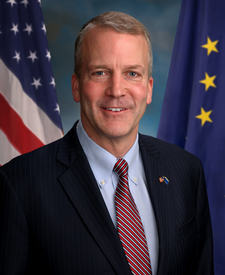
See how Dan Sullivan's votes line up with your values.
DeepSyte scores Dan Sullivan's record on the issues you care about — not party, not press releases. Take the 2-minute values quiz to see your personal alignment.
Sign in and take the values quiz to see how Dan Sullivan's votes line up with your views.
Prediction track record
How often we called Dan Sullivan's passage votes correctly, from their stated positions on each bill's tagged topics. Excludes “unclear” calls and abstentions.
100%
Accuracy
1
Correct
0
Incorrect
245
Pending
Right119-sjres-184
A joint resolution to direct the removal of United States Armed Forces from hostilities within or against the Islamic Republic of Iran that have not been authorized by Congress.
A joint resolution to direct the removal of United States Armed Forces from hostilities within or against the Islamic Republic of Iran that have not been authorized by Congress.
Based on 5 data points across public statements and recorded votes · AI analysis of public records
118-hr-2670·Consistent
National Defense Authorization Act for Fiscal Year 2024
85/100
What they said
Mar 7, 2026
Senator Sullivan advocates for continued and expanded U.S. military investments in Alaska, including Arctic infrastructure, icebreaker construction, and enhanced military readiness to counter threats from China and Russia.
Senator Sullivan's statement advocates for expanded U.S. military investments in Alaska, including Arctic infrastructure, icebreaker construction, and enhanced military readiness. His YES vote on the FY2024 National Defense Authorization Act, which authorizes military procurement and defense spending across services, is generally consistent with that position. The bill directly funds the types of military capabilities and infrastructure investments Sullivan champions. However, the statement focuses on specific Alaska-based priorities (Port of Nome expansion, Adak naval base, icebreakers) while the NDAA is a broad authorization covering all military procurement; the bill's text provided does not confirm it includes those specific Alaska provisions.
National Defense Authorization Act for Fiscal Year 2024
82/100
What they said
Mar 7, 2026
Senator Sullivan advocates for continued and expanded U.S. military investments in Alaska, including Arctic infrastructure, icebreaker construction, and enhanced military readiness to counter threats from China and Russia.
Senator Sullivan's statement advocates for expanded U.S. military investments in Alaska, Arctic infrastructure, icebreaker construction, and enhanced military readiness—all core provisions addressed in the National Defense Authorization Act for Fiscal Year 2024, which authorizes defense procurement and military spending. His affirmative passage vote aligns with his stated position supporting continued military buildup and infrastructure investments. The score is not higher because the statement emphasizes specific Alaska-focused priorities (Port of Nome, Adak naval base, icebreakers) while the bill is a broader defense authorization covering multiple service branches and programs.
A joint resolution directing the removal of United States Armed Forces from hostilities in the Republic of Niger that have not been authorized by Congress.
75/100
What they said
Mar 7, 2026
Senator Sullivan advocates for continued and expanded U.S. military investments in Alaska, including Arctic infrastructure, icebreaker construction, and enhanced military readiness to counter threats from China and Russia.
Voted Nay on A joint resolution directing the removal of United States Armed Forces from hostilities in the Republic of Niger that have not been authorized by Congress.
Senator Sullivan's statement emphasizes strengthening U.S. military readiness, Arctic infrastructure, and countering threats from China and Russia through expanded defense investments. His NO vote on a resolution requiring withdrawal from Niger aligns with this pro-military-engagement posture—he opposed constraining executive military authority in that theater. However, the statement focuses on Arctic/Alaska-specific priorities while the bill addresses a different geographic region (Niger) and a different mechanism (congressional authorization requirements). The votes point in the same directional preference for military flexibility, but address distinct operational questions.
Senator Sullivan advocates for continued and expanded U.S. military investments in Alaska, including Arctic infrastructure, icebreaker construction, and enhanced military readiness to counter threats from China and Russia.
Senator Sullivan's statement advocates for expanded U.S. military investments in Alaska, Arctic infrastructure, and defense readiness to counter China and Russia. The bill is a broad FY2024 omnibus appropriations measure that includes the Department of Defense Appropriations Act, which funds military activities. Sullivan's YES vote on passage is generally consistent with his stated support for military investments, though the omnibus nature of the bill means it also funds non-defense agencies and programs he may not have specifically endorsed. The vote aligns directionally with his advocacy for military spending, but the bill's breadth prevents confirmation that it specifically funded the Arctic priorities he highlighted.
Senator Sullivan advocates for continued and expanded U.S. military investments in Alaska, including Arctic infrastructure, icebreaker construction, and enhanced military readiness to counter threats from China and Russia.
Senator Sullivan's statement advocates for expanded U.S. military investments in Alaska, including Arctic infrastructure and icebreaker construction. The Consolidated Appropriations Act, 2024 includes the Military Construction, Veterans Affairs, and Related Agencies Appropriations Act, which funds military construction and infrastructure projects. Sullivan's yes vote on this omnibus appropriations bill is generally consistent with his stated support for military readiness and Arctic infrastructure investments. However, the omnibus nature of the bill—bundling six separate appropriations bills covering agriculture, commerce, energy, interior, and transportation alongside military construction—creates some ambiguity about whether the vote reflects support for the specific military priorities he emphasizes or reflects broader fiscal considerations.
Pairs with ambiguous language and high uncertainty are withheld until more data is available. Procedural, cloture, and amendment votes are excluded — they don't cleanly signal substantive support or opposition.
Pro analysis
AI rep analysis — Pro
Get an AI-narrated read on Dan Sullivan's full voting record against your stated values — aligned themes, conflicts, notable votes, and what to watch for.
We haven't extracted campaign positions for Dan Sullivan yet. Once their campaign website or position pages are processed, this card will track what they said vs how they voted.
Crossing the aisle
Passage votes where Dan Sullivan broke ranks with ≥75% of Republicans. Threshold catches substantively partisan splits; unanimous-ish or close votes are excluded.
1
Cross-aisle vote
118-hr-2670·Dec 7, 2023·85% of R voted YES
National Defense Authorization Act for Fiscal Year 2024
Alaska Delegation Announces Nearly $105 Million for Six Critical Port Infrastructure Projects Across Alaska - Senator Dan Sullivan
Position: The release announces $105 million in federal DOT Port Infrastructure Development Program awards to six Alaska port and maritime projects and states that the senators and representative support expanding port and infrastructure investment in Alaska.
ANCHORAGE, ALASKA—U.S. Senators Dan Sullivan and Lisa Murkowski and Congressman Nick Begich (all R-Alaska) today announced nearly $105 million in U.S. Department of Transportation (DOT) awards to six critical port and maritime infrastructure projects across Alaska through the Port Infrastructure Development Program (PIDP). The investments will support the modernization and expansion of ports, harbors, docks, and related infrastructure serving communities from Southeast Alaska to the Aleutians and the Arctic.
“Alaska is a resource-rich but infrastructure-poor state, and expanding our critical infrastructure has been one of my highest priorities since coming to the Senate,” said Senator Sullivan. “My team and I worked hard to secure this $105 million in new investments—another major win for our coastal communities and part of the generational infrastructure opportunities we are creating across Alaska. With more coastline than the rest of the country combined, our ports and harbors are lifelines for our communities, our economy, and our national security. That's why we fought to change federal law to ensure Alaska projects can fairly compete for these investments. From our ports and rural docks to broadband, aviation safety, energy, water and sanitation, rural health care, and military infrastructure, we are making investments on a scale that will benefit Alaskans for generations. I want to thank Secretary Sean Duffy, Under Secretary Ryan McCormack, and MARAD Administrator Stephen Carmel for their leadership and commitment to addressing Alaska's unique infrastructure needs.”
“The Infrastructure Investment and Jobs Act continues to deliver for Alaska,” said Senator Murkowski. “These projects will improve safety and efficiency while helping ensure Alaska can continue to serve as a gateway for commerce, transportation, and our national security. I’m proud to have worked with the delegation to drive further federal investment to modernize our ports and build the infrastructure Alaska’s future demands.”
“Since day one, we have been advocating for critical investments in Alaska’s ports and harbors, making their strategic importance clear to the Administration and advancing these priorities through our work in Congress,” said Congressman Begich. “Alaska's ports are critical to our state's maritime economy and America's strategic presence in the Arctic and North Pacific. From modernizing Kodiak’s St. Herman’s Harbor to expanding Nome’s deep-draft port capabilities, these investments will support Alaska’s commercial fishing sector, maritime security, and strengthen our transportation and supply chain networks. I appreciate the Administration's recognition of Alaska's strategic importance, and I will continue working to ensure our state has the infrastructure necessary to support good-paying jobs and lasting economic growth.”
Alaska Port Infrastructure Development Program Awards
The six projects receiving funding are:
The awards also come as the U.S. Maritime Administration (MARAD) expands its presence in Alaska. In September, MARAD announced it would establish a Gateway Office in Anchorage to provide regional maritime expertise and serve as a liaison between Alaska’s ports, MARAD, and the U.S. Department of Transportation. Previously, Alaska’s ports were served by MARAD’s Pacific Northwest Gateway Office in Seattle, despite 125 of the 204 ports within that office’s jurisdiction being located in Alaska. The new office is expected to help streamline permitting and project approvals and better position Alaska communities to compete for federal port infrastructure and shipbuilding grants.
Historic Infrastructure Investments Across Alaska
The awards build on billions of dollars in federal infrastructure investments secured for Alaska in recent years, including major projects to improve ports and harbors, expand broadband connectivity, strengthen aviation safety, modernize military and Coast Guard installations, improve rural energy infrastructure, and transform rural health care.
Sullivan Highlights Progress, Partnership, and a Stronger Future for Alaska Native Communities at AFN Convention - Senator Dan Sullivan
Position: The release describes the senator's efforts to expand land allotment for Alaska Native Vietnam veterans, support rural health funding through the Rural Health Transformation Program, improve rural water and sanitation and aviation safety, and defend the 8(a) program and Alaska Native corporations. It largely reports on past and enacted actions and commitments to continue working with Alaska Native communities.
ANCHORAGE, ALASKA—U.S. Senator Dan Sullivan (R-Alaska) today addressed the Alaska Federation of Natives (AFN) annual convention, highlighting progress made over the past year to advance Alaska Native priorities and raise Alaska Native voices at the federal level and reaffirming his commitment to work alongside Alaska Native leaders to strengthen communities, preserve traditions, and expand opportunities across rural Alaska. During his remarks, Sen.Sullivan highlighted efforts to expand land allotment opportunities for Alaska Native Vietnam veterans, restore National Guard units to rural communities, support communities recovering from devastating storms, and protect Alaska's fisheries and subsistence resources.
Sen. Sullivan also discussed the historic Rural Health Transformation Program, which is expected to deliver $1.4billion to Alaska over five years to strengthen rural health care, as well as his efforts to improve rural infrastructure—including water and sanitation projects—and to strengthen aviation safety through generational investments. Additionally, Sen, Sullivan addressed efforts to strengthen public safety, combat the crisis of domestic violence and sexual assault, defend the 8(a) contracting program and Alaska Native corporations, and support Alaska Native artists through his recently enacted ARTIST Act.
Below is a full transcript of Senator Sullivan's remarks.
Wow, well, thank you. Thank you. First, Sheri and Megan, thank you for standing here and for, introducing me. That was a wonderful introduction, and you've been great friends, but I have so many great friends here. How about a round of applause for Megan and Sheri. Thank you.
I just want to say, I'm so thankful to be back at AFN. I love coming to this great convention. It’s the heart and soul of our state in so many ways. So, thanks to all the members of AFN, the board members, the delegates, our elders, our veterans, our Native corporation leaders, and thanks also to FAI. I don’t know if Roy is here, but your team put on another wonderful Elders and Youth Conference, and they deserve a round of applause for that.
One of the greatest privileges of serving as your senator has been the opportunity to learn from so many Alaska Native elders, leaders, and friends. Starting with my wonderful family, one of our great elders, my late mother-in-law, Mary Jane Fate, and my incredible, brilliant, gracious… I don't know, I'm going to run out of adjectives—my wife, Julie, and her sisters, Janine and Jennifer, who are here today. Just for the record, I did not call my wife an elder. I may have screwed that up, so she's not an elder yet. Kind of. She's a beautiful elder. Right?
I am truly blessed to have her as my life partner, who exemplifies the Native values of service and respect and truth every single day. I want to do another round of applause for my amazing wife, Julie.
I've also had the privilege, and I mean, it's the privilege of my entire life—to have legendary Alaska Native leaders, like Lyman Hoffman, and some who are no longer with us—Jake Adams, Oliver Leavitt, Walter Soboleff, and so many others who have taken the time to share their wisdom and guidance with me when I've sought it. That has been an incredible honor for me.
Through this wisdom, I've learned important lessons. Some challenges can be solved quickly, but others take years, even decades. And some may never fully be resolved.
What matters is partnership, patience, perseverance, hard work, and a commitment to never give up, even when challenges seem insurmountable. That's the approach I've taken working alongside all of you—listening to your concerns, elevating your voices in the halls of Congress, and at the highest levels of our federal government, and tackling even the most difficult challenges together. That's what we should be doing.
II. Special Patriotism: Alaska Native Military Service
Nowhere is that spirit of service, perseverance, and commitment more evident than in the extraordinary patriotism of Alaska Natives, who have answered our nation's call to serve for generations at the highest rate of any ethnic group in America! Right here. I'm looking at a bunch of them here.
During World War II, tens of thousands of Alaska Natives answered the call to sign up for the Alaska Territorial Guard. They were as old as 80 and as young as 12. Many Alaska Native women enrolled before anyone told them they weren't allowed to enroll.
Laura Beltz Wright of Haycock was the first woman to join. See her beautiful picture up there? And wouldn't you know it; she was the best sharpshooter in the Alaska Territorial Guard. Sorry, Bill Thomas. She could outshoot you, my friend. That special patriotism has continued through America's other conflicts—Korea, Vietnam, the Middle East.
Many Alaska Native Vietnam vets, as we know, missed their opportunity to apply for their Native allotment, because they were serving their country in a war when a lot Americans were avoiding service. I've worked with so many in this room—and I'm looking out seeing them; there are pictures of us—to relentlessly fix this injustice and pass legislation to make sure our Alaska Native Vietnam veterans got the lands that they were promised. You saw a couple hours ago, three more Alaska Native Vietnam vets got their allotment because of that legislation.
So last year, you might remember, at AFN, I reached out to all of you and said, this vital program is going to expire at the end of the year. I need your help. I have a law to extend it for five more years, but it's being blocked. I'm going to go down the Senate floor every day until they fix this, but I need your help: AFN, everybody else. And you know what? Everybody here answered the call. It was the Alaska Native Brotherhood, Alaska Native Sisterhood, TCC, Tlingit & Haida—everybody came to help. And guess what? In December, they finally relented, and we got an extension for five more years, and my bill signed into law. Thank all of you.
But we're not finished because a lot of Alaska Native Vietnam vets, particularly those in Southeast, and on the North Slope, don't have lands by their homes. That's why I've introduced legislation to open approximately 4 million additional acres for land selections for our Vietnam veterans in Southeast and on the North Slope, and we're going to get that done too.
III. Reviving Rural Alaska Guard Units
So, also, in this spirit of service to our country, for decades, Alaska National Guard units and armories gave rural Alaskans the opportunity to serve their country close to home while strengthening emergency response and national defense. For reasons that still baffle me, most rural guard units were shut in the 1990s.
Take a look at this photo. This is a gut punch to our state, in my view. These were all the Guard units and armories that we had in the 1980s. The vast majority were shut down. We saw the critical role of the National Guard during their response to Typhoon Halong.
In conversations I had with leaders in the region, we discussed how reopening armories and returning Guard units to rural communities that want them would strengthen disaster response. But revitalizing the National Guard units throughout rural Alaska would also provide training, leadership, mentorship, and a sense of purpose for young Alaskans right at home.
We need to revitalize the Alaska National Guard in rural Alaska, and that's exactly what my bill, the Alaska National Guard Rural Community Revival Act, will do. I like to tell you, this bill was already marked up in the Armed Services Committee, unanimously passed. Every Democrat, every Republican voted for it. The U.S. Army is on board, the National Guard is on board, and with your help, we're going to get this done this year for communities in Alaska that want a National Guard unit and armory back. I think it's a really big idea, and we're going to get it done.
So, this is just part of a massive build-up in the Arctic, in terms of military investments and capabilities. We are undertaking in Alaska, the largest build-up of our military since World War II, maybe ever. Billions of dollars for the Air Force, for the Army, even my beloved Marine Corps is going to be coming up to Alaska. But the biggest area where we're really investing is the Coast Guard.
We had, last year, a $25 billion recapitalization of the United States Coast Guard. That is the biggest recapitalization of the Coast Guard in American history. A ton of that is coming to Alaska. For example, we're going to have four icebreakers homeported in our state. Think about that.
It took our country 250 years to figure out that you should put the icebreakers in the state with the ice. But we're going to do it. We're going to do it. This means more investments for Arctic security, greater search and rescue capabilities in our rural communities, and, of course, better fisheries enforcement and rescue operations.
V. Addressing the Crisis in Our Salmon Runs
So, let's turn to fisheries. When the salmon are strong, our communities are strong. Strengthening the role of Alaska Natives in fisheries management isn't just a priority. It's essential to thriving fisheries and maintaining your culture. I’ve worked for years to empower Alaska Native voices through federal law in this area.
That's why I've made the salmon crisis—which we are clearly going through—one of my top priorities during my entire time in the Senate, particularly on the Yukon and Kuskokwim Rivers. A number of years ago, my wife, Julie, and I were sitting on the banks of the Yukon River at our family's fish camp. It was ghostly quiet. No boats on the river.
It was another year with dismal king salmon runs that generations of Alaskans, all of you, have depended on. Julie asked a simple but profound question. What is happening? We have to do something about this.
Her questions echoed what I've heard from thousands of you and helped inspire my Alaska Salmon Task Force Act, which became law over six years ago. This law brought together some of our best minds—Alaska Native, tribal leaders, state, federal, university experts—to better understand what was happening to our salmon runs and build consensus on the path forward to strengthen salmon runs across Alaska.
Now, it's not easy to pass laws on fisheries, but I've had many signed into law, and they've focused on empowering Native voices.
The President also signed my North Pacific Research Board Enhancement Act into law. That adds an Alaska Native board member, incorporating traditional knowledge, and ensuring your voices are a guiding, important principle for federal research on salmon.
We also changed federal law to allow fishery disasters to be declared based on subsistence losses, which was never allowed in federal law before, to help Native communities. And based on…yeah, that’s a big deal.
Based on the Salmon Task Force law that, as I mentioned, passed six years ago, we are directly tackling the issue of bycatch. My team and I work relentlessly for years to ban the importation of all Russian trawl-caught fish into America. That's very important. Now, we're going after the Chinese trawl-caught fish. As I like to say, the American people and Alaskans should be eating “freedom fish,” not “communist fish” from China and Russia.
My Bycatch Reduction Act was recently introduced last year. It's the most comprehensive bycatch legislation ever to reduce bycatch, protect seafloor habitat, strengthen transparency and accountability in federal fisheries management, and importantly, like our other bills have done, this bill gives Alaska Natives oversight of NOAA’s Bycatch Observer Program.
This bill passed in its first vote in the Senate in a strong bipartisan way in the Commerce Committee earlier this year. But my effort to pass it on the Senate floor, unfortunately, was blocked. But you have my word that I will not give up on this bill. I will work hard to get this bill done. That is my promise to all of you, and I always keep my promises.
VI. Rural Health, Water & Sanitation
Now, I want to talk about health care, another challenging issue, and the opportunity we have to turn one of Alaska's greatest challenges into a huge opportunity for our entire state. Alaska Native health organizations are a shining light for innovation in terms of health care across Alaska, in many ways, across America.
Last year, working with many of you, I led the effort to pass legislation creating a $50 billion Rural Health Transformation Fund. That is the largest investment in American history in rural health care in America, and Alaska got the biggest award of any state in the country on this.
This award provides roughly $1.4 billion over five years for Alaska health care innovation. Let me repeat what I said last year at AFN: This legislation doesn't cut Social Security funding, doesn't cut Medicare funding, and does not cut Medicaid funding.
But, for too long, DC, in terms of health care, has imposed a one-size-fits-all approach to health care, designed in DC, imposed on states where it doesn't work. This program flips that model. It provides very significant funding—historic funding, But it enables us, Alaskans, to design our health care system with Alaska-specific solutions for innovative health care approaches for Alaska villages and communities.
In the past year, almost a quarter of a billion dollars has been allocated under this new program, including almost $70 million going directly to Alaska tribes, many represented here, in 68 innovative health care programs.
Everywhere I go in Alaska, all over the state, I ask, what are we doing on the Rural [Health] Transformation Fund? What are you doing? These awards are expanding mobile health care, addiction treatment, behavioral health, maternal and child health, workforce development for health care. Some of the innovation—I'll give specifics: $2 million for the Arctic Slope Native Association to expand surgical services; $2 million for Maniilaq to modernize health care technology; and nearly $3 million to YKHC to strengthen telehealth and telecommunications.
And, my favorite one, not just because my wife and sisters are from the Interior—how about Tanana Chiefs Conference’s idea to develop a drone-based prescription drug delivery system to reach remote villages with drones? How about that? That is very cool. That's one of the innovations.
Healthy communities in rural Alaska also means stopping the flow of fentanyl into our villages that has been poisoning our children and killing our kids. We are doing that through legislation that finally secures the border. Illegal immigration with these drug cartels is almost down to zero for America, and that's healthy for all Alaskans.
Healthy communities also means clean running water and sanitation. This issue has been a top priority of mine since Day One in the Senate, and I was honored that Megan Onders mentioned it. Here's why: We are the richest country in the world, and yet some of the most patriotic communities in the world, meaning yours, with more veterans per capita than any communities in America, still don't have running water and flush toilets. I believe that is absolutely wrong. It is wrong.
So, since Day One, one of my first bills that I got passed into law was a brand new program for small, disadvantaged communities in Alaska for water and sewer. Just a couple months ago, in the Water Resources Development Act, my bill got marked up as part of that bill—it’s going to pass by the end of the year—unanimously, every Republican, every Democrat, voted for it. We got a quarter of a billion dollars directed to running water and flush toilets in Alaska communities in that bill. A quarter of a billion.
We're going to get that done, especially working alongside an ANTHC. I ran into Natasha right before I came in here. They're doing great, innovative work. I want to thank them on that.
VII. Generational Infrastructure Investments
Clean water and sanitation are just one part of the historic infrastructure investments we've been making across Alaska. These are generational opportunities that we are working on now, especially in rural Alaska, that are saving lives.
Take broadband. We have secured nearly $3 billion, more than any other state by far from the federal government, to expand broadband and internet connectivity. This was done in the bipartisan infrastructure bill, with Senator Murkowski and Don Young and [me].
We were negotiating the formula on where the broadband was going, and a lot of senators were saying, I want to take my state from 4G to 5G connection. I was in the room saying, 4G to 5G? What about “no G?” We’ve got “no G” in Alaska. Shouldn’t we prioritize “no G” before we go 4G to 5G. We got that done and now, $3 billion later, we have the most investment from the federal government of any state in the country on broadband.
We are making historic investments in aviation safety, too. I had the NTSB and FAA in 2020 commission a report on aviation safety in Alaska. You all know what the results were. We have the highest crash rates in the country by far—two and a half times higher than the rest of the country. And, we have the highest death rates, by far, in terms of aviation safety. We have made aviation safety a huge priority.
We had a roundtable recently with a lot of Alaska Native leaders, with the head of the FAA, the head of the NTSB. They've announced, in the next three years, a half a billion dollars to upgrade weather systems, infrastructure, cameras, a whole host of things that are coming to rural Alaska that will do the one thing we all agree on we all want: Make sure Alaskan pilots and passengers make it home safely every night. We are working on that.
Finally, we are advancing major infrastructure projects that we've been talking about for decades. Here's the good news: We're not talking about them anymore. We're actually building them!
From the deep-water port in Nome that Megan mentioned, to reopening the Navy base way out in Adak, to the life-saving King Cove-Cold Bay Road. That is one, I think we’re all passionate about.
I was recently in King Cove. At the community meeting we had, I saw tears of joy and tears of sadness. Joy, because we're finally making progress on a road that the brave residents of King Cove have been trying to get built for almost a half a century. Sadness, as families remembered the 18 people who lost their lives because we didn't have a reliable nine-mile, single lane, gravel road.
For too long, Lower 48 environmental groups and the federal government have blocked this road, prioritizing birds over human lives. Not anymore. We are building the King Cove Road.
I also want to remember my good friend, Stanley Mack, who fought tirelessly for this road, but sadly passed away before seeing it complete. Our hearts go out to his family. In his honor, I think we all need to recommit to making sure we are going to finally build the King Cove Road.
VIII. Addressing High Energy Costs
Now, Senator Murkowski talked about one of the biggest challenges we face now, and it's the high cost of energy, particularly in rural Alaska. We are focused on that every day. We know how hard of an issue that is. We are working to provide immediate relief.
In May, the Secretary of the Interior came to Alaska and announced an energy task force specifically focused on rural Alaska—to try to bring down energy costs in rural communities. We were able to work together to get LIHEAP assistance funding for low-income families more than doubled, and to get EPA waivers for more diesel supplies for Alaskans.
A few days ago, the Department of Energy announced a huge $150 million investment in Alaska's transmission lines to bring down utility costs.
And right here at AFN this morning, the Deputy Secretary of Energy announced that the Office of Indian Affairs was providing a $50 million grant to 20 projects in Alaska to improve energy affordability. That is one of the biggest awards the Department of Energy has ever made for American tribes anywhere in the country. I want to thank the Secretary.
But I think, as we all know, the best way to address Alaska's energy challenges is to produce more Alaskan energy—by and for Alaskans. That is exactly what we are doing.
Under the previous administration, Alaska Native leaders from the North Slope traveled to Washington, D.C. eight different times to oppose unwanted restrictions on responsible resource development on their lands.
The North Slope Borough, the tribe, ICAS, the ANCs, the leadership all came to D.C. and delivered the same message: Don't shut down the NPR-A. It will hurt our communities. It will hurt our way of life. It will hurt thousands of jobs. It will hurt the high cost of energy. But the previous administration didn't listen to these Native voices. They wouldn't even meet with these great Alaska Native leaders.
Now, we have changed that. We have passed laws to reverse these restrictions and open NPR-A to responsible resource development, bringing back good-paying jobs, more oil flowing through TAPS, which is what the Native leaders of the North Slope wanted, and what all Alaskans want.
Senior officials are now traveling to Utqiaġvik, to Anaktuvuk Pass, and to other North Slope communities—listening to and respecting their voices.
And we're going to get the Alaska gasline and LNG project done as well. We're going to get it done.
Now, I know people are rolling their eyes. Sure Dan, we've heard this for 50 years. But, first of all, don't listen to the naysayers. They've never built a thing. They've never built a thing. We've never been further along on this project. The federal government is now in the lead. We're going to get it done.
Think about it: Think about what low-cost, clean-burning Alaska gas can do if we have it for 50 to 100 years, what it can do for our communities, for our future. It's going to keep our kids and grandkids here. This is the biggest project. We’re going to get done. It will help everybody in terms of lower energy cost, more jobs, and greater economic opportunity.
IX. Empowering Survivors of Violence
So, our communities must not only be strong, but they must be safe. Now I'm going to talk about a difficult issue for all of us.
Many years ago, when I was your Attorney General, I led what was called the rural subcabinet, and I traveled throughout rural Alaska to all kinds of different communities. One of the communities I went to, I met a leader of one of the school districts.
He pulled me aside and, just one-on-one, he said, “Attorney General Sullivan, I just wanted to tell you a story. You might not be aware of it. My star student in this school came to me this morning and said, she couldn't take her final exam because she had been sexually assaulted last night.” Then he said, “You might not know this—but not just in rural Alaska, all of Alaska—this happens a lot. And nobody talks about it.”
This was one of the most impactful meetings I've ever had in my entire life, because he said we have to do something about it. We have to do something about it. This opened my eyes to one of the most horrendous problems facing our state that I have made my life's passion as an elected official to address. That is to combat violence against women and children and the related scourge of human trafficking that we also have a giant problem with.
As I mentioned, I've made combating this scourge my life's work in Alaska, starting with the statewide Choose Respect initiative, to bring these issues out in the open, so people know about them, and to take bold actions across the board to combat them.
In the Senate, I've continued that work through legislation that I’ve passed, one called the Choose Respect Act, the other called the POWER Act, mobilizing free legal assistance for survivors, including a focus on indigenous women.
Since its passage, the POWER Act has helped reach more than 90,000 lawyers across America to connect them with survivors of domestic violence and help them break out of the cycle of domestic violence.
This legal representation matters. One study found that 83 percent of sexual assault survivors who had an attorney were able to get a protective order to break out of the cycle of violence, while those without an attorney, less than 30 percent got anything done.
I want to thank the advocates, attorneys, tribal organizations throughout Alaska, and AFN, for helping survivors find safety. We have to continue this work, and we have to [ensure] that these heinous crimes get answers and justice.
I want to thank Gloria O’Neill and Cook Inlet Tribal Council, and everyone who joined our May 5th Missing and Murdered Indigenous People roundtable, where Assistant Secretary of the Interior, Billy Kirkland, who was here this morning, announced a renewed effort to relaunch Operation Lady Justice, which was the work initiated by our own great Alaska Native leader, Tara Sweeney, when she was the Assistant Secretary of Interior.
We're going to continue to focus on this. We must follow through on all these things.
X. Defending ANCs and the 8(a) Program
Finally, I want to update AFN on a never-ending battle we've been fighting together: The persistent lack of understanding back in D.C. —and perhaps even some Lower 48 jealousy—surrounding ANCSA and our unique system of Alaska Native Corporations.
Our ANCs are so important to all Alaskans—not just Native Alaskans, all Alaskans. These companies create jobs. They own their own land, they control their own destiny. They've created thousands of jobs. They've strengthened our economy, and they support communities all over the state.
Congress passed ANCSA over 50 years ago, yet we repeatedly see Democrats and Republicans alike target these organizations in a deeply unfair manner that harms all of you.
Whenever this has happened, and unfortunately, it happens all the time, we have worked together, we have fought back, and we have prevailed. Let me give you just two recent examples.
During COVID, when we were crafting the $6 billion CARES Act Tribal Relief Package, my team and I secured language that made sure that this tribal relief package, which was huge, covered all Native Americans. In Alaska, that meant tribal members and ANC shareholders. We wrote the bill to do that and everybody was fine with it. It passed. Everybody was eligible for relief. That was the right thing to do.
The minority leader of the U.S. Senate then, Democrat New York Senator Chuck Schumer, later attacked this provision—even though he had agreed to it—even accusing certain Alaska Native leaders of corruption simply because they were an ANC shareholder.
Subsequent legislation, like the $2 trillion American Rescue Plan, and the CHIPS and Science Act—a quarter of a billion dollars—led by this same senator when he became majority leader, consistently singled out ANCs for unfair treatment, discrimination, and depriving them of any opportunity to receive federal funding.
Now, in my view and I think in most of your view, this was an absolute outrage. I fought this relentlessly in speeches on the Senate floor: “What are you doing? Why are you discriminating against Alaska Native people?”
We all stuck together, even taking litigation on as it related to that CARES Act provision. By the way, that litigation went all the way to the United States Supreme Court. And guess what? Working together, my team led an amicus brief, but so many here did too: AFN, others. We won this issue in the U.S. Supreme Court!
So, my team and I continue to remain very, very vigilant. We scrub every single piece of legislation coming through the Congress looking for, striking, and catching anything that singles out Alaska Native Corporations or Alaska Native tribes for discriminatory treatment.
So, let me give you another example. Last year, the Republicans took their turn at going after ANCs, when the Secretary of Defense tried to equate ANC involvement in the SBA 8(a) program with “DEI” and said it needed to be dismantled. That was wrong.
I called the Secretary of Defense directly and said, “Mr. Secretary, what on earth are you doing? What on earth are you doing? Do you even know what you're talking about?”
Sheri Buretta was talking about how important this program is. So, again, working with dozens of you, we went directly to senior Pentagon officials and made our case.
Take a look at that pamphlet. That was a book that we put together with all your help. We went to all these top Pentagon officials and said, “ANCs are not DEI. They are patriots. They've been working for 40 years with the Pentagon to make our military stronger, more agile, more lethal. Undermining the 8(a) program as it relates to ANCs doesn't just hurt ANCs—It hurts the military!”
By the way, that pamphlet was so impressive, because what we did, we got all these programs that all of you were working on—and these are amazing programs. I am telling you, if you saw it, you would be like, “Wow, I am so proud to be an Alaska Native defending our country!”
Well, I was so proud, I told the team, I'm going to ship this pamphlet—40 pages of what you all were doing to make our country stronger—out to everybody, so people can see how strong Alaska Natives are for the Pentagon. Then I was reminded, “Senator, a lot of this is classified. We can't send any of this out.” But it is a great pamphlet on just what everybody here is doing.
So, as a result of our joint advocacy, we are now in a much better place with these federal agencies. As Sheri mentioned—and I do want to mention Sheri, Shauna Hegna, Nicole Borromeo, so many others who have been working with us on this.
I will say again—if additional problems arise, I will continue to pick up the phone and make our case, your case, directly to the Secretary of Defense, the Secretary of the Army, the Secretary of the Navy, the SBA administrator. I’ve called every one of these guys, and ladies, and said, “Enough. You can't do this. You're wrong on this.” Now we're back in a stronger position.
XI. Defending Alaska Native Culture, Lifting Voices
Let me conclude with this. Julie's grandmother, the late Sally Hudson, used to tell us all the time, “Alaska Natives are the most brilliant, hard-working, and resilient people in the world.” And she was right.
One of the greatest parts of my job is celebrating your culture, and making sure the rest of America understands and appreciates it, and, when necessary, passing laws to protect it.
Take our great whaling captains. I've stood alongside them throughout my entire time in the Senate, fighting to protect their rights and traditions, telling their stories on the Senate floor, telling their stories even to the President of the United States.
Just last month, Julie and I were in Utqiaġvik. and attended a special church service, led by Vietnam veteran, Pastor Arnold Brower, Jr., blessing all the whaling captains and their families and their crews. It was a beautiful service. Last year, we secured in law an important tax provision that will help ensure these extraordinary whaling captain traditions can continue for generations to come.
Now, Megan Onders already mentioned this next one. You look up here—take our Alaska Native artists, some of the most talented in the world, many of them downstairs at the craft fair. For years, as Megan mentioned, certain states—California, New Jersey, Hawaii—targeted and unfairly restricted the sale of authentic Alaska Native ivory crafts.
And after a decade of fighting, pushing, holding hearings here at AFN, we finally got my ARTIST Act signed into law this year that preempts state laws that target beautiful, Alaska Native ivory and crafts.
I want to thank Megan, I want to thank Melanie Bahnke, Vera Metcalf, Nagruk Harcharek. So many helped us on this. And, of course, so many of our incredible ivory artisans who worked with us.
I just want to make an announcement: Any out-of-towners from California, New Jersey, or Hawaii, you are now free to go down to the craft store and buy as much ivory as you want. Nobody in California is going to put you in jail for that.
Finally, I'm on a never-ending quest—that's a selfie I always do when I'm in Juneau, when I'm out running in the morning—a never-ending quest to make sure Elizabeth Peratrovich is recognized as one of America's great civil rights leaders.
Now, Alaskans know her extraordinary story, but not enough Americans do. That's why I've worked every single year to pass my Elizabeth Peratrovich Day resolution in the United States Senate. It does pass every year, honoring her remarkable legacy and sharing it with the rest of our country.
As I mentioned, as I've learned from our elders, some challenges take years, even decades to resolve. There will be setbacks. There will be people telling us some things can't be done.
But through partnership, perseverance, hard work, we can prevail on these big, difficult issues. That's what I've learned from so many of you. That's the approach I will continue to take as your Senator.
You deserve a Senator who works as hard as you do.
Thank you, Anaa basee'. I'm honored to be here. Thank you, everybody.
Sullivan Ensures Alaska Fishermen Eligible for USDA Fuel Cost Relief - Senator Dan Sullivan
Position: The release announces that Alaska fishermen are eligible for USDA's Harvest Fuel Relief Program, which provides relief for high diesel and energy costs, and encourages fishermen to submit fuel consumption data to USDA.
FAIRBANKS, ALASKA—U.S. Senator Dan Sullivan (R-Alaska), chairman of the Senate Commerce Subcommittee on Coast Guard, Maritime, and Fisheries, today announced the eligibility of Alaska fishermen for the U.S. Department of Agriculture’s (USDA) newly formed Harvest Fuel Relief Program. The program, announced yesterday by USDA Secretary Brooke L. Rollins, makes available $8 billion in relief from recent high energy prices and market disruptions for American farmers and food harvesters.
“Like America’s farmers, America’s fishermen have been strained by rising diesel prices and disruptions in global energy markets,” said Sen. Sullivan. “After working closely with Secretary Rollins and the White House, I’m glad to announce that Alaska’s fishermen will have access to USDA’s new Harvest Fuel Relief Program to help offset these increased costs. We need our fishermen to keep doing what they do best: sustainably harvesting the freshest, healthiest wild seafood in the world for the benefit of our coastal communities and the entire country. I encourage all Alaska fishermen to help us get the word out and begin compiling and submitting data on their vessels’ fuel consumption and costs to help USDA determine relief payments.”
“Senator Sullivan has always been a steadfast champion of our fishermen,” said Matt Alward, president of the United Fishermen of Alaska (UFA). “Alaska’s fishermen thank him for making sure the federal government included fishermen in this new USDA relief program, which will help offset the recent spike in the cost of diesel.”
USDA is still in the development stage of the Harvest Fuel Relief program, and an application period announcement is still forthcoming. USDA is currently asking Alaska fishermen to provide reliable on-vessel fuel consumption data as soon as possible and to set up Login.gov accounts in advance of the application period announcement. The agency’s payment methodology will be heavily dependent upon the availability of data. Data can be submitted to HarvestFuel@usda.gov. The Office of Sen. Sullivan is available to assist and can be reached at Contact_Sullivan@sullivan.senate.gov.
According to USDA, the $8 billion is being authorized under the Commodity Credit Corporation (CCC) Charter Act and will be administered by the Farm Service Agency (FSA).
Sen. Sullivan has led efforts to provide relief for Alaskans from the recent period of higher energy prices, and to prioritize the needs of Alaska fishermen since joining the Senate.
Alaska Delegation Announces $249 Million Federal Grant to Complete Port MacKenzie Rail Extension - Senator Dan Sullivan
Position: The release announces $249 million in federal CRISI grant funding to complete the 32-mile Port MacKenzie Rail Extension and expresses support for infrastructure investment to develop Alaska's natural resources, supply chains, and energy projects.
ANCHORAGE, ALASKA—U.S. Senators Dan Sullivan and Lisa Murkowski and Congressman Nick Begich (all R-Alaska), and Department of Transportation (DOT) Secretary Sean Duffy, announced today that the Alaska Railroad Corporation (ARRC) has been awarded $249 million in federal funding through the Federal Railroad Administration’s (FRA) Fiscal Year 2025–2026 Consolidated Rail Infrastructure and Safety Improvements (CRISI) Program to complete the long-awaited Port MacKenzie Rail Extension. The funding will support completion of 32 miles of rail connecting Port MacKenzie’s deepwater port facilities to the Alaska Railroad’s 500-mile main line, creating a critical new transportation corridor between Southcentral and Interior Alaska, and enhancing connections between maritime shipping, rail transportation, and industrial development.
“This is a major win for the Mat-Su Borough and our entire state, and another important step toward unlocking Alaska’s extraordinary resource potential,” said Senator Sullivan. “Alaska has enormous deposits of critical minerals, world-class energy resources, and a strategic location at the crossroads of the world. But having these resources isn't enough. We need the infrastructure to develop them responsibly and get them to market. This $249 million investment will finally help complete a long-awaited connection between Port MacKenzie and the Alaska Railroad, opening new opportunities for mineral development, supporting major energy projects like Alaska LNG, and creating good-paying jobs for Alaska’s hard-working families. It will also strengthen our supply chains, improve transportation efficiency, and bolster America's economic and national security. I want to thank the administration, especially Secretary Duffy, Governor Dunleavy, the Mat-Su Borough, the Alaska Railroad, AIDEA, and all the local, state, and federal partners who have worked for years to make this project a reality. This is how we build a stronger future for our great state and create new opportunities for the next generation of Alaskans.”
“I’m thankful to Secretary Duffy and the administration for recognizing the importance of this project, which I have long supported,” said Senator Murkowski. “This new link will help move cargo, including from resource projects in the area, while improving system safety and reducing shipping times and costs. This is exactly what we envisioned when we included the CRISI program in our bipartisan infrastructure law, and it’s why I continue to push for additional funding through our annual appropriations process. Good things happen in Alaska when we help fund infrastructure investments at the federal level.”
“For decades, Alaskans have recognized the tremendous opportunity at Port MacKenzie, but realizing that vision requires sustained investment and a commitment to building the infrastructure necessary to move our resources to market,” said Congressman Nick Begich.“As Vice-Chair of the Subcommittee on Railroads and Pipelines in the U.S. House, I have worked to ensure Alaska’s unique transportation needs remain a priority in Washington. Earlier this year, we helped secure $34 million to expand Port MacKenzie’s capabilities, and today’s announcement of and additional 250 million builds on that progress by advancing the critical rail connection needed to support Alaska’s mining, energy, and industrial development. I thank Secretary Duffy and the Alaska delegation for their partnership and look forward to continuing our work to see this project through to completion.”
“Alaska is America’s natural resource powerhouse, but the state needs strong infrastructure to get those resources from point A to point B safely, reliably, and efficiently,” said U.S. Transportation Secretary Sean P. Duffy. “Thanks to President Trump, and Alaska’s congressional delegation—particularly Senator Sullivan—we’re building a massive new rail supply line that will power the energy and critical mineral projects of the future. This landmark investment will generate an economic boom for the region, unleash American energy dominance, and enhance our national security.”
On July 21, 2026, Senator Sullivan led a letter from Alaska's congressional delegation supporting ARRC's application for the full $249 million federal award. In August, FRA Administrator David Fink joined Alaska Railroad officials on an aerial tour of the Port MacKenzie right-of-way, viewing the extensive embankment work already completed and the port district's potential for future industrial development.
The $311 million project includes a $249 million federal CRISI award and a $62 million non-federal match consisting of in-kind contributions from the Mat-Su Borough and cash contributions from AIDEA and the Alaska Railroad Corporation (ARRC). The CRISI Program supports projects that improve the safety, efficiency, and reliability of freight and passenger rail transportation nationwide.
Sullivan Introduces Legislation to Expand Available Lands for Alaska Native Vietnam-era Veteran Allotments - Senator Dan Sullivan
Position: Senator Sullivan introduced legislation to open approximately 3.7 million acres of National Wildlife Refuge System lands and require the Forest Service to identify and make available additional national forest lands for land allotment selection by Alaska Native Vietnam-era veterans and their heirs, including in Southeast Alaska.
ANCHORAGE, ALASKA—Last week, U.S. Senator Dan Sullivan (R-Alaska) introduced the Alaska Native Vietnam Veterans Land Allotment Fulfillment Act of 2026. This legislation builds on Sen. Sullivan’s longstanding efforts to fulfill the federal government’s commitment to Alaska Native Vietnam-era veterans by making additional federal lands available for allotment selection. The bill would immediately open approximately 3.7 million acres of National Wildlife Refuge System lands that the U.S. Fish and Wildlife Service identified as suitable in 2020 and require the Forest Service to identify additional suitable lands within Alaska’s national forests and make them available for selection. This legislation would make previously unavailable federally managed lands in Southeast Alaska available to eligible Alaska Native Vietnam-era veterans and their heirs.
“While serving their country during the Vietnam War era, many Alaska Native veterans missed the deadline to apply for their legally entitled land allotment—an injustice that we are still working to fix nearly 70 years later,” said Sen. Sullivan. “I’ve been working on this issue since I came into office. Last year, my colleagues and I came together to pass a five-year extension of the application period for the program granting Alaska Native Vietnam veterans the opportunity to apply for their congressionally mandated land allotments that many missed due to their service to our country overseas. Last week, I introduced legislation to address another important concern of our incredible veterans and their heirs: making available millions of acres of land for selection in the regions in which these great Alaskans actually live, especially throughout Southeast Alaska, where eligible veterans and their heirs have historically lacked access. We’re going to continue working to ensure these heroes get the land allotments they so rightfully deserve.”
Below is a timeline of Senator Sullivan and the Alaska congressional delegation’s work on the Alaska Native veteran land allotment issue.
Alaska Delegation Welcomes $150M Investment in Beluga-Healy Transmission Project - Senator Dan Sullivan
Position: The delegation welcomes a Department of Energy announcement of up to $150 million in Defense Production Act funding for the Beluga-Healy Transmission Project to strengthen Alaska's Railbelt electrical grid, citing lower costs, reliability, and national security benefits.
ANCHORAGE, ALASKA—U.S. Senators Dan Sullivan and Lisa Murkowski and Congressman Nick Begich (all R-Alaska) today celebrated an announcement from the U.S. Department of Energy of up to $150 million in Defense Production Act (DPA) funding to strengthen electrical transmission between Southcentral and Interior Alaska. The Alaska Energy Authority’s (AEA) Beluga-Healy Transmission Project will provide a second high-voltage connection along the Railbelt, allowing for the transmission of more affordable energy—lowering costs for Alaska residents and businesses, improving power redundancy and reliability across the Railbelt, further integrating regional grids into the Railbelt network, supporting new sources of electricity generation, and helping accommodate expected demand for electricity from major military, infrastructure, and resource development projects planned across the state.
“The major federal investment announced today is all about a brighter future for Alaska: strengthening the reliability and redundancy of Alaska’s Railbelt electrical backbone, lowering costs for our hard-working families and small businesses, especially in the Interior, and preparing for the historic investments coming to our state to build out our infrastructure, develop our resources, and build up our Alaska-based military,” said Sen. Sullivan. “My team and I have pushed hard for this project, which will also lay the groundwork to integrate new power sources that could be on the horizon—whether from hydroelectric, tidal and other renewables, or natural gas and coal—making Alaska’s energy future more resilient up and down the Railbelt. I want to thank Secretary Wright for joining me recently at the Alaska Energy Authority with local utilities in our state to learn more about this important project and for working to unlock these funds for the benefit of Alaskans and our national security.”
“One of the best ways to improve affordability in Alaska is to drive down energy costs, and this announcement will help do just that,” said Sen. Murkowski. “The Beluga-Healy project will help facilitate new generation and strengthen reliability by creating a second pathway to move power across the Railbelt and adding redundancy to our grid. The delegation has been pushing for this for years, and we’re grateful to the Department of Energy for partnering with us to advance this important investment in Alaska’s energy infrastructure.”
“Alaska sits at the crossroads of America’s national security, and as our state becomes increasingly important to our nation’s defense strategy, we must have the energy infrastructure capable of supporting that mission. That is why my team and I have worked to advance the Beluga-Healy transmission project and make the case that strengthening Alaska’s Railbelt grid is a national security imperative. Today’s announcement is an important result of that work,” said Congressman Begich. “I’m grateful to Secretary Wright for recognizing the strategic importance of this project, and to Senator Sullivan for his partnership in helping get this investment across the finish line. This new transmission line will provide a critical second pathway for power between Southcentral and Interior Alaska that will strengthen military readiness and support Alaska families and businesses.”
“Thanks to Senator Sullivan, I received an extensive briefing from the Alaska Energy Authority during my recent visit to Anchorage in August,” said Secretary of Energy Chris Wright. “This meeting, combined with briefings from Alaska Command, confirmed the need to support an expansion of Alaska’s energy infrastructure. This project will not only support the major U.S. military expansion currently underway in Alaska, but also mining and other resource development critical to our national security.”
“This announcement reflects Alaska's importance to our nation’s security and future prosperity,” said AEA CEO and Executive Director Curtis W. Thayer. “We thank Alaska's congressional delegation and the Department of Energy for recognizing the importance of strengthening the Railbelt transmission system. Today, the Railbelt relies on a single transmission corridor from Homer to Fairbanks, with limited ability to reroute power when a major transmission line is disrupted. The Beluga-Healy project complements ongoing efforts to establish a critical second pathway for moving power across the Railbelt, strengthening reliability and resilience for approximately 75 percent of Alaska's population, including seven military installations that depend on reliable electric service.”
“This is a critical time for Alaska and the nation,” said Tony Izzo, Chief Executive Officer of Matanuska Electric Association, which serves the fastest-growing area in Alaska. “Investing in Alaska’s energy infrastructure is one of the highest-impact actions we can take to strengthen energy security and lower costs for Alaskans. It also positions Alaska as a reliable, affordable partner in supporting the nation’s strategic military presence and development of domestic resources, including oil, gas, gold and rare earth minerals.”
“The second transmission line between Beluga and Healy is a long-needed upgrade to the Railbelt grid, providing additional capacity, resiliency, and redundancy for the Interior of Alaska, including the five military installations connected to the GVEA system,” said Travis Million, President and CEO of Golden Valley Electric Association (GVEA).
The Beluga-Healy Transmission Project consists of a 223-mile, 230-kilovolt overhead electric transmission line running from the Beluga, Alaska substation through West Susitna, where a new substation will be constructed, toward Willow and north to connect to existing infrastructure in Healy. The Beluga-Healy project will integrate into the Alaska Energy Authority’s (AEA) Cook Inlet PowerLink transmission project already in development to improve transmission between the Kenai Peninsula and Anchorage.
The project is intended to accommodate increasing demand for electricity across the Railbelt, including demand from the $7 billion “Fighter Town USA” recapitalization program planned for Joint Base Elmendorf-Richardson (JBER) and major planned resource development projects, as well as the current and future expansions of the U.S. military’s presence in the Interior at Clear Space Force Station, Fort Wainwright, Eielson Air Force Base, Fort Greely, and the U.S. Army Northern Warfare Training Center.
Several executive orders issued by the Trump administration will be utilized to support the project, including EO 14153, “Unleashing Alaska’s Extraordinary Resource Potential,” and EO 14156, “Declaring a National Energy Emergency,” which are focused on expediting permitting timelines and cutting through bureaucratic red tape.
Alaska Congressional Delegation, Governor Celebrate Historic $54 Billion Korean Investment in Alaska LNG - Senator Dan Sullivan
Position: The delegation welcomes a $54 billion South Korean investment in the Alaska LNG project, citing expected low-cost energy, jobs, and strengthened energy security, and praises the administration's role in the trade deal.
WASHINGTON—U.S. Senators Dan Sullivan and Lisa Murkowski, Congressman Nick Begich, and Governor Mike Dunleavy (all R-Alaska) today celebrated the White House announcement of a $54 billion investment by South Korea in the Alaska LNG project. Alaska LNG is among the first group of projects identified for strategic investment under the $350 billion investment package included in the 2025 U.S.-Korea trade deal.
“Alaska LNG is the single most important project for our state’s future. The possibilities are limitless: providing low-cost energy for our hard-working families and businesses throughout our state for generations, creating thousands of good-paying jobs, attracting new industries and investment, supplying energy to our Alaska-based military, and giving young Alaskans more opportunities to build their futures here. That is why my team and I have been working relentlessly every day to move this project forward,” said Sen. Sullivan. “Today’s historic $54 billion investment by South Korea will represent the most consequential step yet toward making the Alaska LNG dream a reality. This project will also strengthen America’s energy security and provide our allies with reliable, abundant American energy from one of the world’s great energy superpowers—Alaska. I want to commend President Trump and his administration—especially Secretary Lutnick, who worked so hard on this Korea trade deal, and Secretaries Burgum and Wright—as well as Glenfarne for working hand-in-glove with me and my team, Senator Murkowski, Congressman Begich, Governor Dunleavy, and our state officials on a coordinated strategy to build alignment and maintain momentum behind Alaska LNG. We still have important work ahead of us, but after years of pushing, traveling, meeting, advocating, and refusing to listen to the naysayers, today is a day for Alaskans to celebrate.”
“This unprecedented announcement moves our long-sought Alaska natural gas pipeline closer than ever to construction and operation. South Korea’s commitment to invest $54 billion to build the gasline will deliver significant benefits for Alaskans, from good jobs to affordable energy,” Sen. Murkowski said. “I look forward to learning more about the timing of South Korea’s investments and other key details of this agreement, and I thank President Trump and his administration, Senator Sullivan—who has led the way on this project—Congressman Begich, and Governor Dunleavy. This has been a team effort, and we need to keep going until the gas is flowing.”
“This $54 billion investment in AKLNG represents a tremendous opportunity to build the infrastructure Alaska has talked about for decades and demonstrates what is possible when we put American resources on the table and refuse to give up on transformational opportunities for Alaska,” said Congressman Begich. “Alaskans have long understood that unlocking our extraordinary natural gas resources could fundamentally change the trajectory of our state. Today, that vision is closer to reality than ever before. Getting to this point required persistence and a willingness to find new pathways to unlock AKLNG after numerous roadblocks. Governor Dunleavy, Senators Sullivan and Murkowski and I remained committed to pursuing every viable pathway to move Alaska LNG forward, working closely with the administration to ensure Alaska was part of the conversation as the United States negotiated new trade and investment partnerships with our allies. I could not be more proud of what was accomplished for Alaska today, and I’m grateful to everyone who remained committed to finding a way forward for AKLNG.”
“This is another significant step forward for Alaska LNG and indicates Alaska’s role as an energy supplier to our nation and our Pacific Rim allies,” said Gov. Dunleavy. “South Korea understands the tremendous opportunity Alaska LNG represents. This project can provide a reliable source of energy for Alaskans from their own resources, strengthen America’s energy security, open new markets for Alaska’s natural gas, and deepen the strategic partnership between the United States and South Korea. This whole process has been made possible by President Trump and his administration, as well as the support of Congressman Begich and Senators Sullivan and Murkowski. In the president’s first term, AKLNG got all the necessary permits. In his second term, he highlighted this project as one of the most important projects for the United States and Alaska. It’s through the President’s actions that we are at this place today.”
Below is a timeline of recent progress made by the Alaska LNG project.
Democrats Block Alaska’s Right to Produce Act 2.0 - Senator Dan Sullivan
Position: Senator Sullivan supports the Alaska's Right to Produce Act 2.0, which would protect ANWR leasing approvals from administrative reversal, establish a unit agreement system for coordinated development in ANWR's Coastal Plain, and prevent a return to the 2024 NPR-A development rule. The release states the bill was blocked by Senate Democrats when Sullivan attempted to pass it by unanimous consent.
WASHINGTON—U.S. Senator Dan Sullivan (R-Alaska)today attempted to pass the Alaska’s Right to Produce Act 2.0 on the Senate floor, but the legislation was blocked by Senate Democrats. Authored by Sen. Sullivan, the legislation would protect Arctic National Wildlife Refuge (ANWR) leasing approvals and leases from future administrative reversals, establish a unit agreement system for coordinated development in ANWR’s Coastal Plain similar to what exists in the National Petroleum Reserve in Alaska (NPR-A), and prevent a return to the Biden administration’s restrictive 2024 rule for development in the NPR-A.
“Last year in the Working Families Tax Cuts Act, we got mandatory lease sales for the next ten years for the NPR-A, ANWR, and Cook Inlet. Then we passed Congressional Review Act resolutions—ripping the Biden rules out by the roots with CRAs here in the Senate,” said Sen. Sullivan. “This bill is the third prong of our ability to get Alaska to be developed again. What does this mean for Alaska? It’s about creating good-paying jobs and building stronger, healthier communities. That’s why this legislation matters. It’s about making sure Alaskans have the opportunity to build better lives for themselves and their families.”
The bill is an updated version of the 2023 Alaska’s Right to Produce Act, which was introduced in the Senate by Sullivan and Sens. Lisa Murkowski (R-Alaska) and Cynthia Lummis (R-Wyo.), and which passed the House thanks to the leadership of Rep. Pete Stauber (R-Minn.). The new version reflects the mandated lease sales established by the 2025 Working Families Tax Cuts Act, the second Trump administration’s pro-Alaska development administrative actions in ANWR and NPR-A, and the 2025 Congressional Review Act resolutions that rescinded Biden administration actions in ANWR and NPR-A.
Specifically, the Alaska’s Right to Produce Act 2.0:
Below is a full transcript of Sen. Sullivan’s remarks on the Senate floor.
Mr. President, today I urge my colleagues to vote for the Alaska Right to Produce Act 2.0, which would provide greater certainty for responsible resource development on the North Slope of Alaska. It would benefit Alaskans—our great working Alaskans—but it would benefit America, Mr. President.
A little bit of background here. You've heard me talk about this, but for years, Alaska, as a resource development powerhouse for America, has been recognized by Congress to be so important for our country, because of our extraordinary abundance of natural resources, that we have legislated many times about our state, getting resources to market for Alaskans, for Americans.
It's strongly in our national interests, and certainly good for my state and the people I am honored to represent—particularly hard-working union members and others who develop these resources, not just for Alaska, but for America.
However, Mr. President, time and time again, when my Democratic colleagues get control of the Senate, of the House, of the White House, they have a core principle. One of their core principles is to come up to the great state of Alaska and try to shut it down, kill thousands of jobs, and try to turn this great state, my state, into a national park with no ability to develop our economy and resources.
So, Mr. President, this is just the latest example of what I call the Last Frontier Lock-Up. This is during the Biden four years and the Senator Schumer four years when he was majority leader. The far-left Democrats—heck, all the Democrats—came after Alaska in a huge way. The Last Frontier Lock-Up: every part of the state—Southeast Alaska, North Slope of Alaska, everywhere. On resource development, they came after us.
How'd they do that, Mr. President? What was the Last Frontier Lock-Up? Pretty hard to imagine: 70 executive orders and executive actions—70—exclusively and singularly focused on crushing Alaska. Seven-zero.
As a matter of fact, day one of the Biden administration, they issued 12. They were ready to go. The Senate Democrats got power, the Democrats got power in the executive branch, and they're like, “Let's go. Let's do what we always do. Let's crush Alaska. Let's kill thousands of jobs in Alaska.”
Mr. President, when this was at, like, 50, I actually met with President Biden and his team. I said, "Mr. President, what are you doing? What are you doing? You're sanctioning my state more than you sanction Iran and Venezuela's oil and gas sector. And we're Americans, and they're terrorists! You're putting thousands of hard-working Alaskans out of jobs. Why are you doing this, sir?"
Three years ago, I did that with President Biden. Don't even get me going about his answer. But he was clueless, as we all know. He was clueless on a lot of stuff, but he was clueless on that. 70! The White House, the executive branch, I don't think, in the history of America has ever used its power to so forcefully single out one state to try to damage it and crush it.
That's what we went through with the senior senator from New York as majority leader, who was all in on it, by the way. We're going to see one of the top guys who's always against Alaska here in a minute, because I know he's going to object to my bill.
So, Mr. President, pretty crazy that they would do that. Imagine any other state—New Mexico—if the federal government said, “We're just going to go crush New Mexico.” But they did it to Alaska. And it wasn't just the seventy executive orders. On LNG, remember John Kerry, the climate czar guy, former senator? He went over to Asia—Korea, Japan—and told them, “Don't buy Alaska LNG. Don't buy American LNG.”
I mean, this is almost treasonous, Mr. President. But that's what they did. Four years—Schumer, Biden. That's what my state got, Mr. President.
But we've taken action. When Republicans gained control of the Senate, gained control of the House, gained control of the White House, we said, “We're going to put Alaska back on top.”
So, what did we do? We attacked the Democrats’ attacks on my state, which, again, hurt workers, hurt Alaska, but hurt America in a couple of different ways.
First, last year in the Working Families Tax Cuts Act, we got mandatory lease sales for the next ten years for the NPR-A, National Petroleum Reserve of Alaska, for ANWR, for Cook Inlet. These are all federal and gas basins. We said, the Congress said, “Hey, regardless of who's president in the coming ten years, they have to do lease sales in Alaska.”
It’s good for the country, it’s good for Alaska, it's good for our workers, it's good for our families. It’s good in terms of reducing energy costs, for goodness' sake!
So, we got that in the bill. That’s in the law. So, if you have a president like Biden who is anti-Alaska and they come into office two years from now, they're not going to be able to lock it up like Joe Biden did.
And secondly, Mr. President, we passed Congressional Review Act resolutions. I led the effort on some of them: the Biden NPR-A rule that locked down this entire area, the National Petroleum Reserve of Alaska, set aside by Congress—for what? Oil and gas development. That's why it’s a National Petroleum Reserve.
We ripped that Biden rule out by the roots with a CRA here in the Senate. We did the same with the Biden lock-up of ANWR, and those got passed into law.
So, it’s a two-pronged strategy, Mr. President, to prevent, unfortunately, my colleagues—which they always do—Democrat colleagues in the Senate, in the House, in the White House, if they gain power, which they will eventually, [from] coming back and try[ing] to shut my state down, which they always do.
So, Mr. President, today, the Alaska Right to Produce Act 2.0 is the third prong of this strategy.
First, we got mandatory lease sales in the Working Families Tax Cuts Act. Then we got these Congressional Review Act resolutions passed and signed into law to prevent more lock-ups of Alaska. This is the third prong.
Now, this bill has some history, Mr. President. In 2024, the House passed the Alaska Right to Produce Act 1.0. The bill was sponsored by my good friend from Minnesota in the House, Representative Stauber, who’s done so much to help my state.
Five Democrat House members, Mr. President, voted for it, despite the original co-sponsor of that bill—who represented Alaska at the time—changing her mind and urging her Democratic colleagues to vote against her own bill to help Alaska.
Wow! You can't make that up, Mr. President.
But this is nothing new, as I've said, for Democrats in D.C., because a lot of Democrats in Alaska don't agree with shutting down Alaska.
But it's here in the Senate. They've written over 16 letters to administration officials, Democrats and Republicans, opposing ANWR development, NPR-A development; six separate letters to insurers and financial institutions.
Believe it or not, using the power of the Senate, writing to the CEOs of banks and insurance companies: “Don't invest in Alaska.” It’s an abusive use of power.
My colleague from New Mexico usually leads those efforts, by the way. They’ve tried to shut down our state not just legislatively, but [by] pressuring the private sector to not invest in Alaska.
But still, Mr. President, five House Democratic colleagues understood how important Alaska was, and they voted for the Alaska Right to Produce Act and bucked pressure—bucked the pressure from far-left Democrats in the House, including the original co-sponsor of the bill.
To them, I say thank you. Alaska says thank you. Our workers say thank you, and the country applauds your bravery.
So, what does this bill do, Mr. President? It’s simple. For the Coastal Plain of ANWR, it protects oil and gas development and the non-wilderness portion of the Coastal Plain from being shut down or reversed by a future administration.
In the National Petroleum Reserve of Alaska, it similarly protects oil and gas development in NPR-A from a shutdown by a future administration.
And the bill is designed to give companies greater certainty in terms of the leases that they already have in these areas, that they can't be canceled.
Bottom line, Mr. President, this is the third prong of our ability to get Alaska to be developed again. It does something pretty simple: It protects Alaska’s existing oil and gas development opportunities from being shut down by a future administration.
Now, Mr. President, it's a little ironic, maybe fitting, that the senator from New Mexico is going to object to my bill. Pretty sure he’s not here to support it. He has been a leader in shutting down Alaska. He has led these efforts. He has led these letters.
Can you imagine if every U.S. senator said, “I’m going to go after New Mexico. I’m going to go after their workers. I’m going to go try and hurt the Native people of their state. I’m going to write all the insurance companies and the banks saying, ‘Don’t invest in New Mexico’”?
Could you imagine what a disaster this place would be? I wouldn’t do that. But he does it. He does it all the time.
And there's a little irony here. When the Biden administration and Senator Schumer were locking up my state for four years, it was "drill, baby, drill" in New Mexico, Mr. President.
They were shutting down my state, led by the senator from New Mexico, and New Mexico, on federal lands, went from a million barrels of oil a day to two million barrels a day.
If that's not hypocrisy, I don't know what it is, Mr. President. But that's what we're up against.
By the way, if the Senate changes hands, it’s the senator from New Mexico who is going to be chairman of the Energy and Natural Resources Committee. Holy cow! My state will be crushed, because that's what he does.
So, I'm pretty sure he's going to object to this. But, Mr. President, you know, I get a little hot about this issue because I think it’s unfair. I think when people treat their state way different than my state—imagine what they were doing: “Hey, Joe Biden, shut down Alaska. But, by the way, make sure you approve all these federal leases in New Mexico so we can drill, baby, drill.” That's exactly what the senator from New Mexico did.
But here's why I get really hot about this, Mr. President. It goes beyond resource development. It goes beyond jobs. It goes to this chart. I’ve brought this chart out many times.
This is a chart that depicts life expectancy in America from 1980 to 2014—what parts of America [where] people lived longer. Now, you see here, it's a little complicated chart. The blue and the purple is where people are living longer. Green here—that's 13 years over a 25-year period.
Red is actually where we've actually lost life expectancy—really, really bad.
You look at this map from 1980 to 2014, unfortunately, there were a couple of places in America where people weren't living very long or [were] losing life expectancy. That's kind of the opioid epidemic and other things.
But the place where people lived longer for that 25-year period, more than any other state, was Alaska! Right here—the North Slope, Aleutian Island chain, Southeast, Northwest Arctic Borough—people were living 13 years longer.
I've asked my colleagues many times: Give me a policy indicator more important of success than “Are the people you are representing living longer?” I don't think there is one. So there was huge success up here in my state.
Now, why did that happen, Mr. President? Why are the people of Alaska living longer? Well, in part—a sad story is—this is a lot of Native Alaskans, primarily Iñupiat people—great people, by the way; incredible patriots—they had very low life expectancy, some of the lowest life expectancy in the country, by far.
But when we started developing our resources—oil and gas on the North Slope—people got jobs, people got hospitals, people got flush toilets, people got health clinics and hospitals, things that the rest of the country assumes that you have, but we didn't have here.
So, Mr. President, this issue for me is about the life and death of my constituents.
So, when I have colleagues come and they block all this stuff, and yet they do it for their own state, which is really problematic, it riles me up, because I'm talking about the life and death of my constituents.
By the way, the great Iñupiat people here—during the Biden administration, the head of the tribe, the head of the Alaska Native Corporation, the head of the borough, all the leaders, all Native Alaskans, came down to Washington, DC, eight times to try to meet with the Secretary of Interior and say, “Don't lock up our land. You'll hurt us.”
You know how many times she met with them? Zero. Zero.
And then they locked up their land, anyways. Canceling Native voices.
So, Mr. President, I'm really hopeful, because of life expectancy, because of jobs, because of lowering health care costs, because of lowering costs of energy, because of our national security, that my colleagues will do the right thing and pass my legislation, the Alaska Right to Produce Act 2.0, right now.
Therefore, Mr. President, I ask unanimous consent that the Senate proceed to the immediate consideration of Calendar Number 678 S.5438; further, that the bill be passed, be considered read a third time, and be passed; and that the motion to reconsider be considered made, and laid upon the table.
Senate Democrats Block Sullivan’s Bycatch Reduction Act - Senator Dan Sullivan
Position: Senator Sullivan supports the Bycatch Reduction Act, which would reduce bycatch and seafloor habitat impacts from trawl fishing, strengthen reporting and accountability in federal fisheries management, and reauthorize NOAA's Bycatch Reduction Engineering Program. He criticized Senate Democrats for blocking an attempt to pass the bill by unanimous consent.
WASHINGTON—U.S. Senator Dan Sullivan (R-Alaska), a member of the Senate Commerce, Science, and Transportation Committee, today attempted to pass the Bycatch Reduction Act on the Senate floor, but the legislation was blocked by Senate Democrats. Authored by Sen. Sullivan, the comprehensive legislation would reduce bycatch, protect seafloor habitat, and strengthen transparency and accountability in federal fisheries management. The Bycatch Reduction Act is an updated version of bycatch legislation Sen. Sullivan introduced last year that incorporates extensive input from Alaska stakeholders. The legislation is a product of recommendations from Sen. Sullivan’s Alaska Salmon Task Force Act, which was signed into law in December 2022 and created the Alaska Salmon Task Force.
Prior to trying to pass the legislation, Sen. Sullivan delivered remarks on the Senate floor. He emphasized that his legislation honors the countless Alaskans who have called for action to reduce bycatch, protect marine habitat, and safeguard the future of subsistence, commercial, and recreational fisheries.
Click here to watch Sen. Sullivan’s remarks on the Senate Floor.
“Alaska depends on healthy, sustainable fisheries—from subsistence harvests to commercial and recreational fishing. Our fisheries provide food and jobs, support families and communities, and serve as a source of deep cultural and spiritual connection for Alaskans,” said Sen. Sullivan. “I’ve met with and heard from hundreds of Alaskans over the years, working alongside them to develop and introduce the most comprehensive bycatch legislation ever brought before Congress. Alaskans have made it loud and clear to me that we need to take action to reduce mid-water and bottom trawl bycatch and gear contact with the seafloor to better protect our fisheries. This is a sad day for Alaskans, but the fight is not over. Moving bycatch legislation through the Senate and delivering meaningful reforms that protect the long-term health of America’s fisheries and the communities that depend on them has been and remains one of my top priorities. I commit to Alaskans: We’re going to keep working on this bill until we get it across the finish line.”
Sen. Sullivan’s Bycatch Reduction Act creates a robust toolkit to reduce bycatch and seafloor habitat impacts from mid-water and bottom trawl fishing vessels and strengthens reporting transparency and accountability. These tools include establishing clear standards and monitoring requirements to ensure trawl nets remain off the seafloor; mandating proven salmon excluder devices; investing in salmon tagging, faster genetic sampling, and ecosystem analyses; creating a new flume tank testing facility that simulates real ocean conditions to evaluate new gear and tools; and reauthorizing the National Oceanic and Atmospheric Administration’s (NOAA) Bycatch Reduction Engineering Program (BREP). Finally, the Bycatch Reduction Act would provide the public with greater access to participate in the North Pacific Fishery Management Council regulatory process and NOAA data monitoring.
FULL REMARKS BY SENATOR SULLIVAN:
Madam President, I rise today to pass my legislation, the Bycatch Reduction Act, which is the most comprehensive trawl bycatch reduction legislation ever to come before the United States Senate, ever to come before the Congress.
We've made good progress on this bill. We've been working on it for, heck, in some ways, many years. I'm going to talk about this. We had a great vote in the Commerce Committee last week, and I see my good friend Senator Markey from Massachusetts — who I've worked on a number of fisheries issues with, being a Massachusetts Senator and an Alaska Senator — is on the floor today. So, I'm hoping he's going to actually speak in support of this bill and pass it with me. This bill has already passed all the Republicans in the Senate, who have approved it. So, this is really important for my constituents, Madam President.
For generations, Alaskans have depended on our oceans, our rivers, our abundant fish resources that sustain all of us, especially salmon, from subsistence harvesters in our Native villages to commercial fishermen in our coastal communities to recreational fishermen across our state. Alaskans depend on healthy fisheries.
For Alaska Native communities, Madam President, our fish, especially salmon, are deeply connected to culture, tradition, heritage, and a way of life that reaches back thousands of years. These fisheries, our salmon, provide food, food security, jobs, and culture. They support families and entire communities, and they are a source of deep spiritual connection.
My wife Julie's family has had a fish camp on the Yukon River for generations. My daughters have all been raised in the summers on that river. Every summer. My wife, my family, my in-laws, my daughters. A deep spiritual connection.
Yet Alaska's salmon runs in particular, Madam President, are facing enormous challenges. Our fisheries in general are facing enormous challenges. We have seen and continue to see huge fluctuations in salmon, crab, halibut, and other species that Alaskans depend on.
We know the ocean is changing. It's an issue Senator Markey's raised a lot. We have ocean acidification issues. We know these conditions will continue to change. We also know that fishing activity, particularly bycatch and contact between fishing gear, trawl gear, and sensitive seafloor habitats, affects the health and productivity of our marine ecosystem.
So, Madam President, what are we going to do about this? For years, Alaskans across our state, everywhere — coastal communities, Interior communities, villages — have been asking for action. Fishery managers have asked for more data to make informed decisions. Subsistence harvesters have asked for greater transparency. Communities have asked for greater accountability. And fishermen have asked for the tools and technology they need to reduce trawl bycatch. It's a huge issue in my state.
Madam President, I've talked about this bill on the Senate floor a lot. This was an issue, a bill inspired by my wife, Julie, as I already mentioned her. It was part of my Alaska Salmon Task Force Act. What does this focus on? It's focused on bringing the best minds together — bill that I got over the goal line, passed into law in 2022 — to say, "What is going on with our salmon runs? Why do we have really strong salmon runs in places like Bristol Bay with their sockeye runs and very weak king salmon runs on the Yukon River and the Kuskokwim River?"
So what we did, Madam President, in this bill is we brought the best minds in Alaska — state, federal, tribal, indigenous, university, fishermen, community members — to come together and say, "What's happening, why is it happening, and what is the pathway to get to what every Alaskan wants: stronger, healthy salmon runs on all our rivers across all species?"
So, we did this. Alaskans coming together, this body coming together, produced this very important report, the Alaska Salmon Task Force Act. NOAA Fisheries helped, Alaska Department of Fish and Game helped. Most importantly, Madam President, we set up task forces with regard to tribal members on the Yukon, on the Kuskokwim, to make sure we had their input.
This was Alaskans coming together. It's not easy to get consensus on issues such as fisheries and salmon. But we did that. And this laid out several different recommendations on moving forward to get to the goal we all want, a roadmap back to strong, healthy salmon runs. This is an issue I've been working on, Madam President, for years. One of the recommendations was to reduce trawl bycatch. There were other recommendations, Madam President, that we're working on, ocean acidification, many others, but this was a big one. So, we worked on this bill, again, with dozens and dozens of Alaskans. And this legislation honors the call for action that so many Alaskans have, and our Alaska Salmon Task Force Act has as well.
The Bycatch Reduction Act is designed to do that. It is a robust toolkit with several clear objectives. First, it establishes for the North Pacific Fishery Management Council standards and monitoring requirements and action and timelines to take action to reduce trawl gear contact with the seafloor and protect important marine habitats. Essential.
It requires proven tools, such as mandating certain technologies, like salmon excluders on trawl vessels, to, again, reduce salmon bycatch. It invests in science and technology to continue to work on better understanding ocean conditions. It creates new gear testing facilities. [It] reauthorizes NOAA's Bycatch Reduction Engineering Program, [which] I've been focused on my whole time here in the Senate.
It reconstitutes the Alaska Salmon Task Force with Alaskans and our Indigenous experts, with tribal and traditional knowledge, as a Bycatch Task Force overseeing NOAA's activities as it relates to trawl bycatch. Alaskans overseeing NOAA. Very important for our stakeholders.
This legislation also strengthens transparency and accountability for trawling on the North Pacific Fishery Council. It requires NOAA to make observer coverage requirements and bycatch information more accessible to the public and easier to understand. It expands opportunities for Alaskans, fishermen, and other stakeholders to participate in the council process. It raises the issue and starts looking again at the issue of conflicts of interest on the council. These provisions are not ideas that came out of a Washington, DC office, Madam President. They came from Alaskans.
As I mentioned, this bill, the most comprehensive bycatch reduction bill ever, builds on the work that Alaskans, hundreds of Alaskans, did on our salmon task force, to get to the goal we all want: stronger, healthy salmon runs across our state, across rivers, across species, especially given that we're seeing the devastating declines in salmon on the Yukon River and across western and Interior Alaska that has led to fishery closures, subsistence shortages, and families not being able to fish.
As I mentioned, Madam President, my wife's family keeps a fish camp on the Yukon River. We have watched those smokehouses, including ours, sit idle for years. It is heartbreaking. It is really heartbreaking to witness these families, their culture, the people who live along our great rivers, not able to put up fish every year, and they've been doing so for thousands of years.
So, this is an important first step, Madam President. It's because of the task force and hundreds of conversations with Alaskans for years now that we need to take action, and the Bycatch Reduction Act does that. It puts the recommendations here into action.
Again, we had a very strong vote last week in the Commerce Committee. I think every senator but four voted for my bill. I explained it. We saw how important it was because the bill uses science, technology, innovation, accountability, and action to help support reducing trawl bycatch and strengthen subsistence traditions, sport fishing in Alaska. It's about giving fishermen the tools to reduce bycatch. And it protects fisheries and fish stocks that depend on them. It's about making sure Alaskans have access to [the] data and transparency they need to participate meaningfully in the management of our fisheries, and it safeguards the long-term sustainability, particularly of our salmon, that so many Alaskans depend on.
So, Madam President, I want to thank countless Alaskans who've been working with me and my team for years now on these issues. We've sought and fought to reduce bycatch in many, many other ways, but this bill is a really, really important step. So, I'm hopeful that my colleagues are going to now pass it with me. We'll move it over to the House, get it passed and signed into law.
So, Madam President, notwithstanding Rule 22, I ask unanimous consent that the Commerce, Science, and Transportation Committee be discharged from further consideration of S. 4938 and the Senate proceed to its immediate consideration; further, that the Sullivan substitute, which is at the desk, be agreed to; the bill, as amended, be considered read a third time and passed; and that the motion to reconsider be considered made and laid upon the table.
Alaska Delegation Welcomes $315 Million Contract for Coast Guard Infrastructure in Kodiak - Senator Dan Sullivan
Position: The release welcomes a $315 million Coast Guard contract for cutter mooring and fuel pier construction at Base Kodiak and credits prior federal legislation for the funding. It describes the investment as supporting Coast Guard readiness and Arctic security.
WASHINGTON—U.S. Senators Dan Sullivan and Lisa Murkowski and Congressman Nick Begich (all R-Alaska) today welcomed news that the Coast Guard has awarded a $315 million contract for the design and construction of a cutter mooring and new fuel pier at Coast Guard Base Kodiak. The Alaska congressional delegation helped secure the funding necessary for the projects in the 2025 Working Families Tax Cuts Act, FY 2023 Major Acquisition Systems Infrastructure legislation, and the 2022 Infrastructure Investment and Jobs Act.
“The historic build-up of the Coast Guard in Alaska and Kodiak continues today with $315 million coming for shoreside infrastructure projects in this great Coast Guard community,”said Sen. Sullivan, chair of the Senate Commerce Coast Guard, Maritime, and Fisheries Subcommittee. “My delegation colleagues and I worked hard in the Working Families Tax Cuts Act to deliver the largest investment in the Coast Guard in history—$25 billion—much of which is coming to our great state. These investments are great news for our Coast Guard, Alaska’s economy, and the hard-working families of Kodiak. I was glad to tour the site for this new berth and fuel pier this summer with the Coast Guard Commandant and the Homeland Security Secretary, both of whom understand the importance of Kodiak to the Coast Guard and our national security. I look forward to seeing these projects break ground as Kodiak prepares to welcome major new Coast Guard assets, including two new icebreakers, two offshore patrol cutters, and hundreds of new Coasties and their families.”
“Alaska is a cornerstone of American defense; investments like this from the Coast Guard are critical as we work to improve infrastructure on bases across the state to maintain our national security,” said Sen. Murkowski. “The construction of a new fuel pier, which will also allow for the berthing of two Arctic Security Cutters, bolsters Base Kodiak’s capability to carry out Coast Guard missions in the Arctic. I’m proud to have helped the Coast Guard leverage these historic investments to strengthen infrastructure and operations in Alaska as we support our Coast Guard men and women, as well as their families.”
“Base Kodiak is critical to America’s long-term Arctic strategy,” said Congressman Begich. “As we bring new cutters and personnel to Alaska, we must have the strategic infrastructure in place to support them. Congress made a historic commitment to rebuilding and modernizing the Coast Guard, and this project represents the next phase of that investment. This new fuel pier and major cutter mooring will strengthen force readiness and ensure our Coast Guard has the infrastructure necessary to carry out its mission across Alaska and the Arctic.”
According to the Coast Guard, the project includes waterfront improvements, including grading work to improve ground stability; construction of a new fueling utility building; installation of utilities, cutter shore ties, and other site amenities, including information technology, water and sewage and safety equipment; and unexploded ordnance removal.
Below is an overview of the delegation’s work to bring more Coast Guard assets, personnel, vessels, infrastructure, and investments to Alaska.
Securing U.S. Coast Guard Construction and Infrastructure Funding for Alaska Installations:
Since 2015, Congress has appropriated about $1.408 billion for infrastructure and construction-related projects in Alaska to support new and existing Coast Guard assets, giving many communities throughout Alaska significant investments in their infrastructure and local housing.
Securing Historic Investments in America’s Icebreaker Fleet:
Through the 2025 Working Families Tax Cuts Act, the Alaska congressional delegation secured $4.3 billion for the procurement of two new Polar Security Cutters, with substantial progress toward a third, marking the most significant expansion of heavy icebreaking capability in U.S. history. The delegation also worked to deliver $3.5 billion to procure three Arctic Security Cutters, the nation’s next-generation medium polar icebreakers. Additionally, they championed $816 million for more than ten new light and medium domestic icebreaking cutters.
On June 11, 2026, the Coast Guard announced that two of the three new icebreakers committed to Alaska will be homeported in Kodiak, with the third slated for Seward.
Beyond icebreakers, the WFTCA included major investments across the Coast Guard’s fleet: $1 billion for approximately 10 Fast Response Cutters (FRC), $4.3 billion for approximately 9 Offshore Patrol Cutters (OPC), $2.2 billion for approximately 40 MH-60 helicopters, and $1.1 billion for approximately 6 HC-130 aircraft. Critically, these efforts are backed by over $3 billion for shoreside infrastructure to support the homeporting of these assets, including the $300 million for the homeporting of the Storis in Juneau.
Source: GDELT 2.0 GKG, filtered to a curated list of national outlets. Inclusion is not endorsement; opinion pieces and reported news are mixed.
Recent stock activity
Periodic transaction reports filed under the STOCK Act — disclosed by the rep, sourced from public filings.
No disclosed trades on record.
Source: open-data mirrors of the Senate eFD and House Clerk financial-disclosure systems. Disclosure within 30 days of trade is required by law (45 for spouse/dependent trades).
Top PAC donors · 2026 cycle
Political action committees that gave the most to this rep's principal campaign committee this cycle. PAC giving is direct organizational support — industry, ideological, or leadership.
1.MOLINA HEALTHCARE, INC. PAC1 contribution$10,000
2.TRUE NORTH PAC2 contributions$10,000
3.TOMORROW IS MEANINGFUL-TIM PAC2 contributions$10,000
4.RESPONSIBILITY AND FREEDOM WORK PAC (RFW PAC)2 contributions$10,000
5.NCTA - THE INTERNET AND TELEVISION ASSOCIATION POLITICAL ACTION COMMITTEE (NCTA PAC)Tech2 contributionsTrade association PAC for cable and broadband providers — backs candidates supporting infrastructure investment, net neutrality positions, and regulatory frameworks favoring cable operators.AI$10,000
6.NATIONAL BUSINESS AVIATION ASSOCIATION INC POLITICAL ACTION COMMITTEE (NBAA-PAC)3 contributions$10,000
7.LEADERSHIP AND ACCOUNTIBILITY ARE NATIONAL KEYS PAC2 contributions$10,000
8.GCI COMMUNICATION CORP. PAC (GCI PAC)2 contributions$10,000
9.FIGHT ON POLITICAL ACTION COMMITTEE2 contributions$10,000
10.EYE OF THE TIGER PACLeadership2 contributionsLeadership or single-issue PAC — specific positions and affiliated member of Congress not inferable from the name.AI · low$10,000
Source: OpenFEC (api.open.fec.gov) Schedule A receipts where contributor type is “committee.” Aggregated by contributing committee. Self-transfers from joint-fundraising / victory committees are excluded.
Top individual contributors · 2026 cycle
Itemized individual contributions over $200 to this rep's campaign committee, aggregated by donor employer. PAC giving is shown above; this section is people, not organizations.
1.SELF$170,096
2.KKR$49,841
3.APOLLO$41,300
4.BLACKSTONE$39,250
5.ANTHROPIC$28,000
6.APOLLO GLOBAL MANAGEMENT$22,700
7.RDV CORPORATION$21,000
8.GCI LIBERTY$20,000
9.ATLAS AIR$19,500
10.ECHOSTAR$19,000
Source: OpenFEC Schedule A receipts where contributor type is “individual,” aggregated by the donor's self-reported employer. This is a geographic / industry correlation, not a corporate endorsement.