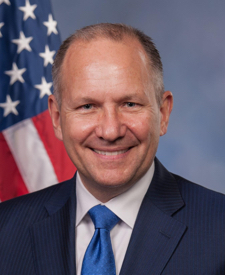
See how Lloyd Smucker actually votes — against your values.
DeepSyte scores Lloyd Smucker's record on the issues you care about — not party, not press releases. Take the 2-minute values quiz to see your personal alignment.
Sign in and take the values quiz to see how Lloyd Smucker's votes line up with your views.
Prediction track record
How often we called Lloyd Smucker's passage votes correctly, from their stated positions on each bill's tagged topics. Excludes “unclear” calls and abstentions.
No paired statements and votes yet for Lloyd Smucker
We haven't yet found statement/vote pairs on the same topic for Lloyd Smucker. This usually means either the rep hasn't taken public positions on bills that have come to a passage vote, or those bills haven't been tagged yet. The checker runs as new press releases and votes come in.
Pro analysis
AI rep analysis — Pro
Get an AI-narrated read on Lloyd Smucker's full voting record against your stated values — aligned themes, conflicts, notable votes, and what to watch for.
We haven't extracted campaign positions for Lloyd Smucker yet. Once their campaign website or position pages are processed, this card will track what they said vs how they voted.
Crossing the aisle
No party-break passage votes recorded for Lloyd Smucker. Either they've voted with Republicans on every substantive passage vote in the corpus, or their tenure overlaps few high-threshold party-line votes so far.
ICYMI: Rep. Smucker in York Daily Record: From Main Street to family farms, small businesses power region
Position: Rep. Smucker advocates for permanent tax deductions for pass-through businesses, arguing that the Section 199A deduction ensures small businesses are not disadvantaged relative to larger corporations taxed at the 21% corporate rate.
WASHINGTON – In case you missed it, Rep. Smucker (PA-11), Vice Chairman of the House Budget Committee and senior member of the tax-writing Ways and Means Committee, published an op-ed in recognition of Small Business Week in the York Daily Record, highlighting the ways small businesses bolster our economy.
“As our nation approaches its 250th anniversary, it's worth remembering that America has always depended on people willing to bet on themselves. That same spirit is alive today in the small business owners across our region.”
Rep. Smucker was the lead sponsor of the Main Street Tax Certainty Act, legislation to make permanent the 20 percent deduction of qualified income for passthrough businesses. First enacted under the landmark 2017 Tax Cuts and Jobs Act (Section 199A), the deduction was made permanent through the Working Families Tax Cuts.
“Many small businesses are structured as "pass-through" entities, meaning their business income is reported on the owner's personal tax return rather than being taxed as a corporation. The deduction helps ensure those businesses are not placed at a disadvantage compared to larger corporations benefitting from the 21% corporate tax rate.”
Read the full Op-Ed here.
Small Business Week is a chance to recognize the hard work of the people across York and Lancaster counties who built the businesses that anchor our communities. Our communities are built by people who take a chance on themselves to open a business, hire their neighbors, and keep Main Street moving.
As our nation approaches its 250th anniversary, it's worth remembering that America has always depended on people willing to bet on themselves. That same spirit is alive today in the small business owners across our region.
From manufacturers to restaurants, farms, and service providers, small businesses are the backbone of our local economy. They create jobs, support local charities, and help define the character of our towns.
For me, this isn’t just policy. It’s personal.
I grew up in Lancaster County as the 10th of 12 children born into an Old Order Amish family. I was the first in my family to attend high school, paying my tuition by hanging drywall for an older brother's small company. After graduating, I bought that small business for $1,000. Over the next 25 years, we grew it to employ more than 150 people. I know firsthand how hard it is to run a business and how much the right policies matter.
That’s why I’ve focused on delivering real results for small businesses.
Last year, legislation I introduced, the Main Street Tax Certainty Act, was signed into law. It makes the small business tax deduction (Section 199A) permanent. This provision was designed to ensure small businesses are treated fairly in the tax code.
Many small businesses are structured as "pass-through" entities, meaning their business income is reported on the owner's personal tax return rather than being taxed as a corporation. The deduction helps ensure those businesses are not placed at a disadvantage compared to larger corporations benefitting from the 21% corporate tax rate.
For years, business owners faced uncertainty about whether this deduction would expire. Now they can plan and invest with confidence.
That certainty makes a difference.
I think of Marci and Wendy Bittner, sisters-in-law who own a small construction business in Spring Grove. Like many entrepreneurs, they reinvest what they earn back into their business. With the help of tax relief, they were able to replace an old company vehicle, known as “Stinky” after years on the road, with a new one that will help them keep serving customers across the region.
It’s a simple example, but it shows how small businesses operate. When they get relief, they put it to work.
The same is true for our farmers. I spoke with a dairy farmer in Manor Township, Lancaster County, who milks about 200 cows. In a business with tight margins, the small business tax deduction provides about $75,000 each year for his family-run operation. That kind of support helps keep the farm running and makes it more likely it can be passed on to the next generation. Across Pennsylvania's 11th District, more than 6,000 family farms depend on policies like this to stay viable.
We see the impact on manufacturing as well. At a roundtable I hosted in southern York County, Eric Paules of Crescent Industries in New Freedom shared how the small business tax deduction has saved his company more than $380,000 over the past several years. He told me those savings went right back into the business. They invested in new equipment, raised their wages, and redeveloped a long-vacant building into a modern facility that now supports additional local businesses. His company employs about 150 people and has never laid off a moldmaker in its 75-year history.
Policies like immediate expensing for manufacturing capital investments will make it easier for businesses to invest in themselves. It allows companies to upgrade equipment, stay competitive, and keep and grow jobs here.
Stories like these are common across York and Lancaster counties. Small and mid-sized businesses, especially in manufacturing and agriculture, drive our local economy. They often operate on tight margins, and predictable tax policy can make the difference between hiring and investing or standing still.
Just as important is making sure businesses can find workers. Employers across our region tell me the same thing I experienced growing my own business: finding skilled, reliable people isn't always easy. We need to strengthen workforce development, expand training opportunities, and help more people reenter the workforce and build careers.
Supporting small businesses means creating an environment where hard work pays off and growth is possible.
During Small Business Week, we recognize the people who take that risk every day. In Congress, our responsibility is to make sure they have the tools they need to succeed.
I will continue working to make sure Washington understands what Main Street needs, because when our small businesses succeed, our communities do too.
U.S. Rep. Lloyd Smucker is a Republican representing Pennsylvania's 11th Congressional District, including Lancaster County and southern York County.
Issues:Tax Reform
Position: Rep. Smucker supports the FY26 Budget Resolution, which he characterizes as prioritizing national security, law enforcement funding, and fiscal responsibility through a 3 percent deficit-to-GDP target.
WASHINGTON —Rep. Smucker (PA-11), Vice Chair of the House Budget Committee, voted in support of S. Con. Res. 33 – FY26 Budget Resolution, which passed the House by a vote of 215-211, 1.
Rep. Smucker made the following statement after voting in support of the measure:
“This resolution fulfills Congress’s number one duty—to ensure the safety and security of all Americans.
For over 70 days, Democrats refused to provide the resources our brave law enforcement officers need to keep us safe. Republicans have consistently voted to support our troops, fund border patrol, and pay our law enforcement officers who put their lives on the line every single day to protect our communities.
Supporting this resolution puts Americans’ safety first and is a step in the right direction toward achieving fiscal responsibility. This resolution includes a 3 percent deficit-to-GDP target—a responsible and achievable goal to restore fiscal balance and address our nation’s growing debt.
We’ve secured our border, passed historic tax relief, and are advancing our pro-growth agenda to help American families. We cannot let Democrats risk American lives for political purposes any longer. Republicans are committed to using every tool in the toolbox to continue delivering on our promise to Americans.”
Issues:Budget
Rep. Smucker Joins President Trump for Signing of Executive Order on Expanding Access to Retirement Benefits
Position: Rep. Smucker supports the executive order expanding access to private IRA retirement savings options for workers without employer-sponsored plans, and calls on Congress to pass legislation making similar retirement savings tools more widely available.
WASHINGTON – On Thursday, Rep. Lloyd Smucker (PA-11) joined President Donald J. Trump for the signing of an executive order to expand access to retirement benefits for Americans.
The order will direct the Treasury Department to launch a website where workers without employer retirement plans can find and enroll in private IRA options.
“I am grateful to see President Trump take action to expand access to savings and wealth-building opportunities for hardworking Americans who lack employer-sponsored retirement plans,”said Rep. Smucker. “This is an important step toward helping millions retire with dignity. Americans deserve modern, accessible tools to build financial stability for the future. I thank the President for his commitment to supporting working Americans and I urge my colleagues in Congress to build on this effort and support my Retirement Savings for Americans Act to make retirement a reality for the millions of Americans who have worked hard to keep our country running.”
Image
House Passes Rep. Smucker’s Sexual Assault Survivor Justice Legislation
WASHINGTON – Today, the House of Representatives passed H.R. 2347, the Survivor Justice Tax Prevention Act, bipartisan legislation introduced by Rep. Lloyd Smucker (PA-11) and Rep. Gwen Moore (WI-04).
The Survivor Justice Tax Prevention Act would amend the nation’s tax code to ensure survivors of sexual abuse and unwanted, illegal sexual contact do not have to pay taxes on settlement income when they prevail legally against their abuser.
“Thank you to my House colleagues for supporting this commonsense bill that ensures survivors of sexual assault receive justice—not a tax bill from the IRS,”said Rep. Lloyd Smucker (PA-11). “I am proud to have worked with Rep. Moore to provide survivors the justice, dignity, and support they deserve. Physical injury doesn’t always reflect the unimaginable trauma survivors endure, and it shouldn’t be required for them to receive the compensation they deserve. I urge my Senate colleagues to take up this meaningful measure and stand with survivors.”
“I am beyond thrilled that the House passed the Survivor Justice Tax Prevention Act,” said Rep. Gwen Moore (WI-04). “As we recognize Sexual Assault Awareness Month, it is a timely moment to advance this legislation. I thank Rep. Smucker for his partnership on this bipartisan bill. This marks a major step toward securing tax parity for survivors of abuse.”
“Survivors of sexual assault face a long road to recovery without having to battle with the IRS over keeping the compensatory damages or settlements they receive,”said Ways and Means Committee Chairman Jason Smith (MO-08). “Unfortunately, current law ignores the fact that sexual assault victims often do not have the same observable, documented physical injuries that other victims of assault might have in order to satisfy the burden of proof demanded by the IRS. The Survivor Justice Tax Prevention Act provides a clarification in law that is desperately needed, and I commend Representative Smucker for his compassion in fighting for victims of sexual assault.”
Under current law, settlement income for personal physical injuries is excluded from federal taxable income, but the IRS generally requires these taxpayers to provide evidence of a visible physical injury prior to allowing tax-free treatment. This standard can be particularly burdensome for sexual assault victims who have not sustained a visible injury.
H.R. 2347, the Survivor Justice Tax Prevention Act, is co-sponsored by Rep. Gwen Moore (WI-04), Rep. Gregory Meeks (NY-05), and Rep. Claudia Tenney (NY-24).
Watch Rep. Smucker’s floor speech urging the House to pass the Survivor Justice Tax Prevention Act:
Image
Reps. Smucker and Davids Introduce Bipartisan ‘Accountable Produce is Medicine Act’
Position: Representatives Smucker and Davids introduced legislation directing the Center for Medicare and Medicaid Innovation to test a bundled payment model integrating nutrition-based interventions and produce prescriptions into chronic disease care, with the goal of improving health outcomes and reducing healthcare costs.
WASHINGTON — Representatives Lloyd Smucker (PA-11) and Sharice Davids (KS-03) introduced the bipartisan Accountable Produce is Medicine Act (H.R. 8355), legislation aimed at modernizing the U.S. health care system by incorporating proven nutrition-based interventions to prevent and manage chronic disease.
This legislation would direct the Center for Medicare and Medicaid Innovation (CMMI) to test a new bundled payment model that integrates “produce prescriptions” interventions into care for patients with chronic diseases. Through this “food is medicine” approach, eligible individuals would gain access to nutrition-focused support, including healthy foods, care coordination, and monitoring services, with the goal of improving health outcomes and reducing overall health care costs.
More than 75 percent of adults in the United States live with at least one chronic disease, many of which are diet related. Research shows that preventive, nutrition-based interventions can play a critical role in addressing this growing epidemic.
“Diet related chronic disease is one of our nation’s most pressing health challenges and a main driver of rising health care costs,” saidRep. Lloyd Smucker (PA-11). “Our system can and must do more to prevent disease—not just treat it. I’m grateful for Rep. Davids’ partnership to advance preventive health measures that will improve the lives of Americans, including proven food is medicine interventions, and I look forward to working closely with Secretary Kennedy to make it possible.”
“Kansas families know that good health doesn’t start in a doctor’s office — it starts at home, with what’s on the table,”said Rep. Sharice Davids (KS-03).“In too many rural and underserved communities, people are managing serious conditions like diabetes and heart disease without reliable access to healthy food. This bipartisan bill I'm leading with Representative Lloyd Smucker helps change that by bringing together doctors, care teams, and local food systems so patients can get the nutrition they need to stay healthier and out of the hospital.”
During a Ways and Means Committee hearing on the Department of Health and Human Service’s proposed budget with Secretary Robert Kennedy, Rep. Smucker announced the introduction of this bill:
Image
What They Are Saying: On the Accountable Produce Is Medicine Act
Position: Representatives Smucker and Davids introduced the Accountable Produce is Medicine Act, which incorporates nutrition-based interventions to prevent and manage chronic disease through produce prescriptions and food-as-medicine approaches integrated into healthcare delivery.
WASHINGTON – Representatives Lloyd Smucker (PA-11) and Sharice Davids (KS-03) introduced the bipartisan Accountable Produce is Medicine Act. This legislation would incorporate proven nutrition-based interventions to prevent and manage chronic disease.
Organizations supporting the measure include FreshRx Oklahoma, National Produce Prescription Collaborative, Kellyn Foundation, the Accountable Food is Medicine Alliance, School of Global Health, Hunger Free Kansas, Texas Health Resources, Coalition for Metabolic Health, National Alliance to Impact Social Determinants of Health, Healthcare Partnerships, Mosaic Life Care, the Sunflower Foundation, the International Fresh Produce Association, and Penn State Health
READ THE FULL PRESS RELEASE HERE.
Here is what they are saying:
"The National Produce Prescription Collaborative (NPPC) commends Reps. Smucker and Davids for their introduction of the Accountable Produce is Medicine Act which builds on what we already know: prescribing fruits and vegetables at the point of care improves health outcomes and leads to lower healthcare costs. With its focus on regenerative agriculture, this important legislation addresses rising chronic illness in the United States while also strengthening connections to local farms. Rep. Smucker has been a champion for this work for some time, pushing to modernize Medicare Advantage guidance so that food-based interventions are recognized as “primarily health related” supplemental benefits. We are deeply grateful for his longstanding commitment to integrating healthy food into healthcare for Americans.” — NPPC Coalition Director Sam Hoeffler
“FreshRx Oklahoma has proven that when patients receive the right food, education, and support, they get healthier—and the entire health system benefits. The Accountable Produce Is Medicine bill is a big step in the right direction. It’s time to elevate Food is Medicine from fragmented pilots to permanent health care infrastructure—with national standards that ensure accountability, quality, and measurable impact, while still allowing for local innovation and success.” — Erin Martin Hollingworth, MASM,Founder & CEO, FreshRx Oklahoma
“The Accountable Food Is Medicine Alliance believes this legislation marks a major milestone in the national drive to reduce the cost of health care, improve patient outcomes and promote the work of farmers and ranchers who are providing the nutrient dense foods that are the “medicines” everyone needs. Representatives Smucker and Davids are to be commended for their leadership on an issue that really is the future of health care in the United States.” — The Accountable Food Is Medicine Alliance
“Advocate Health strongly supports the Accountable Food Is Medicine Bundled Payment Model as a scalable, evidence-based approach to improving chronic disease outcomes and reducing total cost of care—especially in underserved communities. The bill aligns with Advocate’s metabolic health strategy by integrating nutrition and lifestyle support, remote monitoring, and care coordination to help patients achieve greater health and reduce dependence on high-cost medications. Too often, patients lack coverage for these proven interventions. Making fruits and vegetables, nutrition counseling, and remote monitoring covered benefits will enable nutrition to function as medicine and significantly expand access to effective, prevention-focused care. The bill’s preference for locally and regeneratively produced food also reinforces our Smart Farm work. This is a smart investment that benefits patients, providers, health systems, and local food economies.” — J. Nwando Olayiwola, MD, MPH, FAAFP, President, Advocate National Center for Clinical & Community Impact (CCI) Senior Vice President, Advocate Health
“Too often, we treat the consequences of chronic disease while overlooking the root causes. One of the most powerful foundations of good health is optimal nutrition. Empowering the Center for Medicare and Medicaid Innovation (CMMI) to test bundled ‘food is medicine’ models can improve outcomes, enhance quality of life, and reduce costs. This is a practical, evidence-based step toward a more effective healthcare system that prioritizes whole-person health.” — Meagan L. Grega, MD, FACLM, Co-Founder, Chief Medical Officer, Kellyn Foundation
“Representatives Lloyd Smucker and Sharice Davids are trailblazing a new path for health care by introducing an accountable bundled payment model for food is medicine. This historic first for Medicare would align incentives and payments while empowering patients with the tools to advance wellbeing and tackle preventable chronic diseases through nutritious food that is locally grown. Healthcare is truly local, and it starts with the healthy food our local farmers and ranchers provide for communities across the country.” — Winjie Miao, President, Texas Health Resources
“The Coalition for Metabolic Health strongly supports the bipartisan Accountable Produce is Medicine Act of 2026 and its focus on integrating nutrition into care for chronic disease, and encourages its implementation to reflect the full range of nutrient-dense foods and evidence-based dietary approaches.
As food is medicine models are implemented, it is essential they reflect current nutrition science and allow for individualized, clinically appropriate approaches. Nutrition interventions should include a broad range of whole, minimally processed, nutrient-dense foods, including fruits and vegetables; dairy; and animal and plant protein sources (including eggs, poultry, seafood, meat, beans, peas, lentils, legumes, nuts, seeds, and soy), to support diverse patient needs and cultural preferences.
A growing body of evidence—including recommendations reflected in the Dietary Guidelines for Americans, 2025-2030—supports therapeutic carbohydrate reduction, including low-carbohydrate and ketogenic interventions, as effective tools for improving ‘metabolic health and reducing health care costs, particularly for conditions like diabetes, obesity, and related comorbidities.’
We encourage the Center for Medicare and Medicaid Innovation to ensure flexibility for clinicians and to evaluate outcomes across different dietary approaches. This will help maximize the model’s impact on improving health outcomes and reducing costs.
We applaud Representatives Smucker and Davids for their leadership.” — Coalition for Metabolic Health
“NASDOH applauds the introduction of the Accountable Produce is Medicine Act, which would require the CMS Innovation Center to test a bundled payment model that includes nutrition-focused interventions—such as produce prescriptions and nutrition counseling—in Medicare, Medicaid, and CHIP programs. The CMS Innovation Center has an important role in testing and implementing innovative payment and service delivery models to improve health outcomes and reduce costs. For this reason, it is critical that these value-based care efforts incorporate efforts to address the root causes of health, including nutrition.” — National Alliance to Impact Social Determinants of Health
"We’re grateful to Representatives Smucker and Davids for their continued leadership on commonsense solutions that better align our health care system with real outcomes. This legislation reinforces a simple truth: what people eat directly shapes their health, and fruits and vegetables must be central to the solution. Produce prescriptions are a proven, effective way to help prevent and manage chronic disease, and scaling these approaches is critical to improving the health of more Americans.” — Cathy Burns, CEO of the International Fresh Produce Association
“At Morrissey Market, we've built a national network of regional suppliers to deliver medically tailored groceries to patients managing chronic disease — because we believe locally grown food and clinical nutrition intervention go hand in hand. The Accountable Produce is Medicine Act gets this right, prioritizing local and regional producers while creating the federal infrastructure to scale food is medicine programs through Medicare and Medicaid. We applaud Rep. Smucker's leadership and are proud to support this legislation.” — Emily Roach, VP Healthcare Partnerships, Morrissey Market
“Our mission at Mosaic Life Care is to put the needs of the patient first by empowering a culture where caregivers bring their best, ensuring a healthier future for generations to come. The Food Is Medicine program reflects that commitment in a real way. We know that access to healthy food can be a barrier to better health. When patients are struggling to manage chronic conditions or recover from illness without reliable nutrition, clinical care alone isn’t enough. By addressing food insecurity as part of care, we are meeting patients where they are while investing in the long‑term health of our region.” — CEO Mike Poore, Mosaic Life Care, St. Joseph, Missouri
“As a statewide health foundation in Kansas with an interest in whole person care and systems change, the Sunflower Foundation has been investing in Food is Medicine implementation and evaluation for nearly five years. To take Food is Medicine from the “innovation” state to widespread best practice, the health care system needs multiple payment pathways that reflect the varied ways in which people seek, receive, and pay for care. Taking FIM to scale should also consider the existing assets and future potential of local farmers, growers, grocers, and other food businesses that require new markets and avenues for growth and are passionate about improving the health of their communities. This legislation marks a solid start to this important work by addressing two critical elements: payment pathways and local food sourcing.” — Brandon Skidmore, CEO & President, Sunflower Foundation
“Hunger Free Kansas commends Representative Davids and her colleagues for this bipartisan effort to scale proven solutions that improve health outcomes while reducing costs. Through the Blueprint for a Hunger-Free Kansas, we are advancing Food is Medicine as a strategy at the intersection of health, agriculture, and community. Kansas is positioned to be a nationwide leader in Food is Medicine, and we are proud to support the Accountable Produce is Medicine Act of 2026.” — Erika Debrick Kelly, Executive Director of Hunger Free Kansas
“Penn State Health commends Congressman Lloyd Smucker for sponsoring the Accountable Food Is Medicine legislation, an important step toward advancing a more comprehensive, patient-centered approach to health care. Nutrition is foundational to preventing and managing chronic disease, and clinically integrated food-based interventions have demonstrated the ability to improve outcomes, reduce hospitalizations, and lower overall health care costs. Penn State Health is proud to support policies that address the social drivers of health, strengthen collaboration among health care providers, community organizations, and local food systems and expand access to the nutritious foods patients need to live healthier lives.” — Amber Coleman, Director of Community Health, Penn State Health
Issues:Health Care
Rep. Smucker: This Tax Day, Americans Are Keeping More of What They Earn
Position: Rep. Smucker advocates for the Working Families Tax Cuts, stating they allow Americans to keep more earnings and have delivered tax relief to 20 million Americans. He opposes Democratic efforts to increase taxes on workers and families, characterizing such increases as harmful to middle-income Americans.
WASHINGTON -- Rep. Smucker (PA-11), Vice Chair of the House Budget Committee, is delivering a message to the American people this Tax Day: Americans are keeping more of what they earn thanks to Republicans’ policies in the Working Families Tax Cuts.
During a Budget Committee hearing on Wednesday with Office of Management and Budget (OMB) Director Russ Vought, Smucker stated that 20 million Americans have benefited from the No Tax on Overtime provision, and pointed out that Democrats voted against these policies.
Rep. Smucker also penned an Op-Ed in TheLancaster Independence, highlighting how every day Pennsylvanians are benefiting from the Working Families Tax Cuts and saving, on average, $3,500 in refunds.
Additionally, Rep. Smucker delivered a speech on the House floor, doubling down on Republican efforts to prevent the largest tax increase in history for American workers and families.
Read the Op-Ed here.
Watch full Committee remarks here.
Watch House floor speech here.
Rep. Smucker on Republicans delivering for American workers:
“We are now in a period of time when wage growth is outpacing the increase in the cost of goods…over time, people are feeling like they are in a better position due to the policies of this administration.”
…
“We [Republicans] prevented what would have been the largest tax increase on middle-income Americans when we passed the One Big Beautiful Bill, and every Democrat here voted against that policy. The Republican Party, through that bill and other things that we’ve done under this administration, is the party that is working to improve the lives of working Americans all across the country. They’re feeling better because of that and I’m very proud of the work we have done.”
Rep. Smucker on Democrats opposing these successful policies:
“We [Republicans] put in place provisions that prevented illegal immigrants from accessing taxpayer dollars. Democrats voted against that. They don’t care that some of those literally are individuals who are here illegally in the U.S. and taking hard-earned taxpayer dollars for their benefit. Democrats don’t care about that. They voted against that.”
…
“Democrats don’t seem to care that our policies have moved people from relying on government policies and they’ve entered the workforce and probably have better health care through their employers... Democrats don’t care about that. They’ve voted against every one of these policies that are helping working Americans.”
Rep. Smucker on the impact of the WFTC on the national debt:
“In regard to adding to the national debt, I know you care about the debt, I care a lot about the debt…we’ve made progress on that… Our deficit last year was lower than the year before for the first time in a long time due to the policies of [the Working Families Tax Cut] and we have increased revenue.”
OMB Director Russ Vought on the Working Families Tax Cuts:
“We are trying to get the word out to the American people. Congress did so much in that bill, so much that helps the American people, and we want to explain that Working Families Tax Cuts in every opportunity we possibly can so that they are aware of what they are going to see in their tax returns.”
Watch Rep. Smucker’s Budget Committee remarks here
Watch Rep. Smucker’s floor speech here
BY THE NUMBERS:
In households across America, over 53 million filers claimed at least one of President Trump's signature new tax cuts.
The average refund this filing season is over $3,500 for Pennsylvanians, an increase of 11 percent compared to last filing season.
Over 6 million filers have claimed No Tax on Tips, with an average deduction of over $7,100.
Over 25 million filers have claimed No Tax on Overtime, with an average deduction of over $3,100.
Over 30 million seniors have claimed the Enhanced Deduction for Seniors, with an average deduction of over $7,500.
Over 1 million filers have deducted No Tax on Car Loan Interest on their new American vehicles, with an average deduction of over $1,800.
5 million Trump Accounts have been opened, with 1.2 million eligible for the $1,000 pilot program contribution.
Over 34 million families have claimed the enhanced Child Tax Credit, which is permanently doubled and expanded by the Working Families Tax Cuts.
Over 105 million filers have claimed the permanently doubled standard deduction, simplifying tax filing for millions across America.
###
Issues:Budget
ICYMI: Smucker Calls for Bipartisan Effort to Reduce Deficits and Stabilize Debt
Position: Rep. Smucker advocates for a bipartisan effort to reduce the federal deficit to 3 percent of GDP by fiscal year 2036, arguing that deficit reduction is necessary to stabilize the economy, avert a debt crisis, and reduce the burden on future generations.
Vice Chair Smucker during House Budget Committee hearing on 3% resolution: “We’ve got to somehow work through the differences we have in policy to begin to address this, to do what’s right for the American people”
WASHINGTON –Rep. Lloyd Smucker (PA-11), vice chair of the House Budget Committee, emphasized the need for bipartisanship in establishing a clear tangible goal to stabilize the nation’s debt: reducing the federal deficit to 3 percent of GDP or less by fiscal year 2036.
On Thursday, the House Budget Committee hosted a hearing, “The Best Metric to Reverse the Curse: A 3% Deficit-to-GDP Path to Fiscal Sustainability.” The hearing examined the nation’s unsustainable debt and the urgent need to adopt a 3% deficit-to-GDP framework—a clear, achievable target to put America on a path to balance.
The 3% deficit-to-GDP benchmark is widely cited by financial experts from both sides of the aisle as a key threshold for fiscal sustainability. Achieving the 3% deficit-to-GDP goal would cut the current deficit—roughly 6 percent of GDP—in half and establish a credible path toward improving the nation’s long-term fiscal outlook.
Rep. Smucker delivered the following remarks during the hearing:
“But the real value here today, if we’re able to do this, is that we could reach a point where, on a bipartisan basis, we advance something like this out of the Budget Committee. It may be the first time a bipartisan group of members of Congress put forward a resolution, all coming together and recognizing: ‘We do have a problem. We get it,’ as the chairman said. Both parties have contributed to it. We get it that all solutions have to be on the table.
“If we could just come together and say, ‘We’ve got to somehow work through the differences we have in policy to begin to address this, to do what’s right for the American people, to stabilize our economy, to avert a debt crisis that would hurt the poor we want to help.’ If we can make that statement as a committee on a bipartisan basis and then pass that on the House floor, I think that would be a huge first step...
“If we stay together as a committee and recommend moving this to the floor, recommend that the House take this up, hopefully the Senate takes it up, and we as a body finally realize that when you’re spending a trillion in debt—if you want to help people—think about that. That’s a trillion dollars that could be going to other people. And consider the risk we’re putting ourselves in as a country to be able to address the challenges we have, and the burden we’re placing on future generations.”
Watch Rep. Smucker’s full remarks here.
Issues:Budget
Smucker Legislation Supporting Sexual Assault Victims Advanced by Ways and Means Committee
Position: The release supports H.R. 2347, which would amend the tax code to allow survivors of sexual assault to exclude settlement and damage income from federal taxation without requiring evidence of visible physical injury.
WASHINGTON – Today, the Ways and Means Committee advanced Rep. Lloyd Smucker’s bipartisan legislation, H.R. 2347, the Survivor Justice Tax Prevention Act, during a committee markup.
The Survivor Justice Tax Prevention Act would amend the nation’s tax code to ensure survivors of sexual abuse and unwanted and illegal sexual contact do not have to pay taxes on settlement income when they prevail legally against their abuser.
Under current law, settlement income for personal physical injuries is excluded from federal taxable income, but the IRS generally requires these taxpayers to provide evidence of a visible physical injury prior to allowing tax-free treatment. This standard can be particularly burdensome for sexual assault victims who have not sustained a visible injury.
This bill would allow survivors to receive tax-free compensation without the need to demonstrate visible physical injuries.
“I want to thank my Ways and Means colleagues for advancing this bill and for standing with survivors of sexual assault,” said Rep. Smucker (PA-11). “This legislation brings greater clarity and fairness to our tax code. Survivors have endured unimaginable trauma, and eliminating this unjust tax burden is an important step toward providing them with the peace and fairness they deserve. I look forward to continuing to work with my colleagues to deliver justice for these survivors.”
“The Survivor Justice Tax Prevention Act is a much-needed change in tax policy to ensure survivors of sexual assault and sexual abuse are able to exclude damages or settlements when they file taxes,”said Ways and Means Committee Chairman Jason Smith (MO-08). “Representative Smucker has been a champion of this effort to provide relief for those who have already had to endure a horrendous crime. I commend him for his compassion and for his work to build bipartisan support for survivors and end unnecessary and unreasonable IRS red tape.”
H.R. 2347, the Survivor Justice Tax Prevention Act, is co-sponsored by Rep. Gwen Moore (WI-04), Rep. Gregory Meeks (NY-05), and Rep. Claudia Tenney (NY-24).
Issues:Tax Reform
Rep. Smucker Introduces the Protecting American Streaming and Innovation Act
Position: Rep. Smucker supports legislation to initiate a Section 301 investigation into Canada's Online Streaming Act and authorize retaliatory trade action if the law is found to discriminate against U.S. streaming companies and digital services.
WASHINGTON – As first reported in Politico, Rep. Lloyd Smucker (PA-11), a member of the Ways and Means Trade Subcommittee, introduced the Protecting American Streaming and Innovation Act, legislation to counter Canada’s digital trade barriers targeting American streaming companies and content producers.
Under Canada’s Online Streaming Act, the Canadian Radio-television and Telecommunications Commission (CRTC) imposed costly financial and regulatory burdens on U.S.-based digital services while exempting Canadian competitors.
The Protecting American Streaming and Innovation Act would launch a Section 301 investigation into Canada’s Online Streaming Act to determine if Canada’s implementation of the law discriminates against or burdens American commerce. If so, the United States Trade Representative (USTR) is directed to take necessary retaliatory action to combat Canada’s policies.
“Digital trade plays a critical role in America’s economy, supporting high-paying jobs and exporting American values. Canada’s unfair policies stack the deck against U.S. companies, creators, and workers. This bill would protect American creators and companies while permitting mutually beneficial competition and innovation,” said Rep. Smucker.
Cosponsors of this bill include Reps. Greg Steube (FL-17), Nicole Malliotakis (NY-11), Nathaniel Moran (TX-01), Mike Kelly (PA-16), and Carol Miller (WV-01).
Outside groups supporting this bill include the Computer and Communications Industry Association (CCIA), Digital Media Association (DIMA), Information Technology and Innovation Foundation (ITIF), and Motion Picture Association (MPA).
“We commend Representative Smucker for his leadership in pushing back against discriminatory international digital trade music and video service laws. The Protecting American Streaming and Innovation Act is a necessary and timely step to ensure that U.S. core trade rules are enforced and that digital markets remain open, competitive, and innovation-friendly.” Brian McMillan, Vice President, Federal Affairs, Computer and Communications Industry Association
“DIMA applauds Congressman Smucker’s introduction of the Protecting American Streaming and Innovation Act. Implementation of Canada’s Online Streaming Act continues to be a significant source of concern to our members, as it discriminates against non-Canadian, and especially U.S. companies, jeopardizes investments, and imposes new and undue burdens on music streaming services. DIMA appreciates Congressman Smucker’s leadership on this issue, including his commitment to ensuring compliance with the terms of the USMCA and discouraging copycat efforts by other countries.” Graham Davies, President and CEO, Digital Media Association
“Canada’s Online Streaming Act disproportionately targets American streaming platforms, violates the spirit of the USMCA, and sets a troubling precedent for other countries. If left unchallenged, American streaming platforms may face a barrage of protectionist digital policies in foreign markets designed to extract revenue from them and privilege non-American content. We welcome timely and necessary Congressional efforts to challenge this legislation and curb this expansion of digital protectionism.” Rodrigo Balbontin, Associate Director on IP, Trade, and Digital Technology Governance, Information Technology and Innovation Foundation
“Fair market access is essential to maintaining a strong film and television industry. Canada and its audiences are important to our member studios and the broader industry. However, Canada’s Online Streaming Act disadvantages American companies and undermines competitiveness by requiring streaming companies to subsidize and promote Canadian content over their own productions through discriminatory obligations that Canadian broadcasters do not face. We applaud Rep. Smucker’s commitment to addressing this unfair trade practice that’s impacting film and television production in America.” Charles Rivkin, Chairman and CEO, Motion Picture Association
Read more about this bill in Politico’s exclusive coverage here.
Background:
Rep. Smucker led a letter with broad Ways and Means Committee support to President Trump and U.S. trade officials in July 2025 highlighting the negative impacts of the Online Streaming Act on American industry, and a bipartisan letter in November 2025 to Canadian trade officials requesting that the law be rescinded.
###
Issues:Trade
Source: open-data mirrors of the Senate eFD and House Clerk financial-disclosure systems. Disclosure within 30 days of trade is required by law (45 for spouse/dependent trades).
Top PAC donors · 2026 cycle
Political action committees that gave the most to this rep's principal campaign committee this cycle. PAC giving is direct organizational support — industry, ideological, or leadership.
1.AMERICAN ISRAEL PUBLIC AFFAIRS COMMITTEE POLITICAL ACTION COIdeological5 contributionsPAC arm of the American Israel Public Affairs Committee, federalized in 2021. Backs candidates of both parties who support U.S.-Israel security and economic ties.AI$45,452
2.NATIONAL AUTOMOBILE DEALERS ASSOCIATION POLITICAL ACTION COM5 contributions$25,000
3.JOHN BOLTON PAC2 contributions$10,000
4.UBS AMERICAS INC. POLITICAL ACTION COMMITTEE (UBS PAC)Finance2 contributionsFinancial-services PAC for UBS Americas — backs candidates and policies supporting banking, investment, and capital-markets regulation.AI$10,000
5.NATIONAL ASSOCIATION OF REALTORS POLITICAL ACTION COMMITTEEReal Estate2 contributionsTrade association PAC for U.S. real estate agents and brokers — backs candidates supporting property-rights protections, mortgage-lending access, and tax incentives for homeownership.AI$10,000
6.NATIONAL BEER WHOLESALERS ASSOCIATION PAC (NBWA PAC)2 contributions$10,000
7.HUCK PACLeadership2 contributionsMember-of-Congress leadership PAC — directs contributions to allied candidates, likely associated with a member using the nickname or surname Huck.AI$10,000
9.THE WILLIAMS COMPANIES INC. POLITICAL ACTION COMMITTEE2 contributions$10,000
10.NATIONAL MULTIFAMILY HOUSING COUNCIL PAC (NMHC PAC)2 contributions$10,000
Source: OpenFEC (api.open.fec.gov) Schedule A receipts where contributor type is “committee.” Aggregated by contributing committee. Self-transfers from joint-fundraising / victory committees are excluded.
Top individual contributors · 2026 cycle
Itemized individual contributions over $200 to this rep's campaign committee, aggregated by donor employer. PAC giving is shown above; this section is people, not organizations.
1.INFORMATION REQUESTED PER BEST EFFORTS$22,725
2.ROCKERBOX$8,562
3.BLESSINGS OF HOPE$7,500
4.WAGMAN INC$7,250
5.REPUBLICAN NATIONAL COMMITTEE$7,000
6.QR JOY INC$7,000
7.KREIDER FARMS$7,000
8.RUTTER'S$7,000
9.SCENIC RIDGE$7,000
10.ADAPTIVE CONSTRUCTION SOLUTIONS$7,000
Source: OpenFEC Schedule A receipts where contributor type is “individual,” aggregated by the donor's self-reported employer. This is a geographic / industry correlation, not a corporate endorsement.