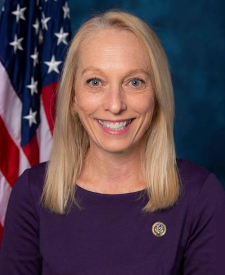
See how Mary Gay Scanlon actually votes — against your values.
DeepSyte scores Mary Gay Scanlon's record on the issues you care about — not party, not press releases. Take the 2-minute values quiz to see your personal alignment.
Sign in and take the values quiz to see how Mary Gay Scanlon's votes line up with your views.
Prediction track record
How often we called Mary Gay Scanlon's passage votes correctly, from their stated positions on each bill's tagged topics. Excludes “unclear” calls and abstentions.
No paired statements and votes yet for Mary Gay Scanlon
We haven't yet found statement/vote pairs on the same topic for Mary Gay Scanlon. This usually means either the rep hasn't taken public positions on bills that have come to a passage vote, or those bills haven't been tagged yet. The checker runs as new press releases and votes come in.
Pro analysis
AI rep analysis — Pro
Get an AI-narrated read on Mary Gay Scanlon's full voting record against your stated values — aligned themes, conflicts, notable votes, and what to watch for.
We haven't extracted campaign positions for Mary Gay Scanlon yet. Once their campaign website or position pages are processed, this card will track what they said vs how they voted.
Crossing the aisle
Passage votes where Mary Gay Scanlon broke ranks with ≥75% of Democrats. Threshold catches substantively partisan splits; unanimous-ish or close votes are excluded.
Congresswoman Scanlon Introduces Legislation to Help Americans Fight Back Against Corporate Price Fixing
Position: Rep. Scanlon introduced legislation to strengthen federal antitrust enforcement by making it easier to hold corporations accountable for illegal price fixing and collusion, addressing court decisions that have limited enforcement agencies' and private parties' ability to sue for antitrust violations.
Washington, D.C. — Congresswoman Mary Gay Scanlon (PA-05) this week introduced the Competitive Prices Act, legislation that would make it easier to hold companies accountable for illegally raising prices, restricting wages, or creating artificial shortages of goods and services. The bill works to remedy the impact of misguided court decisions over the past 20 years, which have undermined the ability of both federal enforcement agencies and private parties to sue corporations for violating antitrust laws.
Rep. Scanlon has been a staunch advocate for legislative reform to address predatory business practices that boost corporate profits at the expense of consumers. Proving illegal collusion between corporations historically required evidence that two or more firms had explicitly agreed to coordinate price changes. However, with more industries becoming dominated by just a few firms, companies are able to coordinate price increases to match those of their competitors without the presence of an explicit agreement.
“Americans already struggle to afford groceries, rent, and home appliances. While the President’s disastrous economic policies are partially to blame, corporate greed and price fixing are also central to the growing cost of living crisis Americans face,” said Rep. Scanlon. “Limited competition allows big business to informally conspire to raise prices on consumers. Congress must use its power to correct caselaw that has prevented effective antitrust enforcement that would stop this illegal behavior. The Competitive Prices Act would increase accountability for companies that manipulate markets to soak consumers.”
"When the entire marketplace is rigged to allow competitors to charge the same inflated price, that's not competition. That's coordination," said Lee Hepner, Senior Legal Counsel at the American Economic Liberties Project. "What the law used to condemn as illegal price fixing has been supplanted by covert data exchanges and shared pricing algorithms that conceal rather than expose the root cause of higher prices and artificial shortages. The Competitive Prices Act re-establishes guardrails to prevent a culture of casual collusion. Americans shouldn't need a smoking-gun email to prove they're being ripped off."
"This is about whether families have a fair shot, either in the marketplace itself or in court," Hepner continued. "When companies can coordinate to raise the price of putting food on your table or keeping a roof over your head, and the law says there's nothing anyone can do about it, something is broken. This bill starts to fix it."
"All too often, complaints alleging price fixing are dismissed prematurely. Decades of harmful caselaw has allowed anticompetitive behavior to go unchecked, raising prices for consumers and stifling entrepreneurship in consolidated markets,” said Deborah Elman, President of the Committee to Support the Antitrust Laws. “We applaud Representative Scanlon for introducing the Competitive Prices Act, which will further empower public and private enforcers to bring cases against illegal price fixing and make markets fairer for consumers and small businesses."
As pricing algorithms continue to proliferate at grocery stores, e-commerce websites, and among landlords, the Competitive Prices Act takes an important step to undo the harmful precedent of Bell Atlantic Corp. v. Twombly, removing legal barriers that block meritorious lawsuits by DOJ, FTC, and American consumers affected by artificially high prices.
Enter your email address to get the latest updates straight to your inbox.
Use the form below to sign up for my newsletter and get the latest news and updates directly to your inbox.
Scanlon Reintroduces Bill To Strengthen Congress’s Workplace Harassment and Discrimination Rules
Washington, D.C. – Congresswoman Mary Gay Scanlon (PA-05) today announced the reintroduction of the Congressional Accountability Act (CAA) Enhancement Act to expand upon the CAA Reform Act passed in 2018. Officially filed on March 26, 2026, the bill requires Members of Congress, not taxpayers, to foot the bill for discrimination or retaliation against staff, and requires that victims be on the same footing as Members when filing a claim. Joining Rep. Scanlon as a co-lead of the bill is Rep. Lauren Underwood (IL-14).
“All workers deserve a safe and respectful workplace — and public servants employed by Congress are no exception,” said Rep. Scanlon. “The CAA Enhancement Act combats discrimination in Congress by codifying and expanding the legal protections our staff deserve. By requiring that members of Congress be held personally liable for discrimination and harassment, this bill ensures that taxpayers do not foot the bill for holding lawmakers accountable.”
In December 2018, Congress took action to address workplace harassment and discrimination by passing the CAA Reform Act. It was one of Scanlon’s first votes after being sworn in on a special election following the resignation of her predecessor, after it was revealed he used taxpayer dollars to settle a sexual harassment case. Thanks to those changes, victims of harassment and discrimination are no longer subject to time-consuming administrative hurdles; interns and fellows have the same rights as permanent staff; and taxpayers no longer foot the bill for Members’ harassing behavior. A separate resolution also created the House Office of Employee Advocacy to provide legal representation for victims and mandated that offices adopt anti-harassment and anti-discrimination policies.
The CAA Enhancement Act builds on that progress by:
Requiring Members of Congress be held personally liable for discrimination and related retaliation they personally commit. The CAA Reform Act made Members reimburse Treasury for awards and settlements for harassment and related retaliation, but not other forms of discrimination. This new bill would require that if a Member commits an act of discrimination, the Member must pay, not taxpayers.
Requiring other legislative branch offices to repay Treasury for related retaliation. The CAA Reform Act required other legislative branch offices to repay the Treasury for awards and settlements in all employment discrimination cases. However, it did not require repayment of amounts paid in connection with retaliation; this bill corrects that.
Requiring the Office of Congressional Workplace Rights (OCWR) to give claimants 10 days to cure deficient claims after the issuance of a preliminary report and prior to dismissal. Such a notice rule and right to amend are standard in other employment adjudicative forums.
Enabling the Office of Employee Advocacy to have jurisdiction in federal court. This change will level the playing field by allowing the Office that represents victims in the CAA administrative process to also represent victims in court, just as the Office of House Employment Counsel (OHEC) is allowed to represent Member offices in court.
The CAA Enhancement Act is endorsed by: National Employment Law Project, National Women’s Law Center Action Fund, Equal Rights Advocates, National Partnership for Women and Families, Women Employed, and Institute for Women’s Policy Research.
Enter your email address to get the latest updates straight to your inbox.
Use the form below to sign up for my newsletter and get the latest news and updates directly to your inbox.
Scanlon Introduces Legislation to Block Dismissal of Criminal Charges Against Political Cronies
Position: Rep. Scanlon advocates for amending Federal Rule of Criminal Procedure 48(a) to give federal judges explicit authority to reject prosecutorial motions to dismiss criminal charges when dismissals appear motivated by political considerations rather than the interests of justice.
Washington, D.C. — Congresswoman Mary Gay Scanlon (PA-05) today introduced the No Free Passes for Cronies Act, a bill that seeks to prevent politically-motivated dismissals of criminal charges by amending the Federal Rules of Criminal Procedure. Last week, the Trump Justice Department moved to erase the convictions of the Proud Boys and Oath Keepers who planned and led the violent insurrection and attempt to overthrow the U.S. government on January 6th. The President had commuted their sentences when he pardoned more than 1500 other participants in that attack, but the leaders’ convictions remained intact. This new move would erase those criminal convictions.
Rule 48(a) of the Federal Rules of Criminal Procedure governs the method by which a federal prosecutor may dismiss criminal prosecution. The legislative history of the rule explicitly sought to prevent the government from dismissing charges against powerful or well-connected defendants. However, case law has created uncertainty about whether a judge can reject the government’s motion to dismiss a case in the interest of justice when the dismissal may be motivated by corrupt political concerns.
“Since the start of his second term, Trump and his Justice Department have abused our justice system and its prosecutorial discretion to advance the President’s personal and political interests, rather than to assure accountability and the interests of justice or the American people,” said Rep. Scanlon. “Reforming Rule 48(a) to ensure that federal judges have appropriate oversight over problematic prosecutorial decisions will reinforce an important check and balance to ensure the integrity of our justice system.”
The No Free Passes for Cronies Act would amend Rule 48(a) of the Federal Rules of Criminal Procedure to clarify that federal judges have the authority to accept or reject the government’s motion to dismiss “in the interests of justice.” The revised standard would clarify that the court has the power to review the facts and context surrounding such a motion to determine if a dismissal is not in the public interest.
This administration has repeatedly abused the DOJ's prosecutorial power to deliver “get out of jail free” cards to the President’s friends. During the first Trump Administration, the White House moved to dismiss criminal charges against Michael Flynn, after he pled guilty to making false statements to the FBI during Special Counsel Mueller’s investigation of Russian interference in the 2016 presidential election. More recently, Trump’s Justice Department has moved to dismiss criminal cases against well-connected individuals and associates, including former New York City mayor Eric Adams and Trump’s long-time ally Steve Bannon, in exchange for political favors.
After Trump’s DOJ dropped the charges against Flynn, he sued the federal government for damages, and the DOJ gave him a $1.25 million payoff. The DOJ’s dismissal of charges against the Proud Boys and Oath Keepers could clear the way for them to pocket similar payoffs at taxpayer expense.
Enter your email address to get the latest updates straight to your inbox.
Use the form below to sign up for my newsletter and get the latest news and updates directly to your inbox.
Scanlon, Davids Introduce Bill to Stop Social Security Cuts for Seniors, People with Disabilities
Position: The representatives introduce legislation to eliminate Supplemental Security Income (SSI) rules that reduce benefits for seniors and people with disabilities when they receive in-kind support such as food or housing from family, friends, or caregivers.
Washington, D.C. — Congresswoman Mary Gay Scanlon (PA-05) and Rep. Sharice Davids (KS-03) today introduced new legislation to change an outdated Supplemental Security Income (SSI) rule that can reduce benefits for seniors and people with disabilities simply because they receive basic help like food or housing from family, friends, or caregivers.
“Social Security provides a critical social safety net for seniors, people with disabilities, and families with children,” said Rep. Scanlon. “SSI’s rules disfavoring in-kind support and maintenance punish people receiving basic assistance from friends and family. At a time when the cost of living has skyrocketed, it is critical that we update rules which penalize people who are getting by with help from their communities. I’m grateful for Rep. Davids’ partnership in making SSI more accessible for those who need it.”
“In Kansas, we take care of our neighbors — whether that’s a parent helping their child get through a tough month or a family making sure a loved one has a place to stay,” said Rep. Davids. “But right now, federal rules can actually punish seniors and people with disabilities for receiving that kind of support. That’s wrong. My new bill, which I’m leading with my colleague Rep. Scanlon, fixes it so people don’t lose out on their Social Security just because of the way Kansans naturally look out for each other.”
SSI is a federal program that provides monthly financial support to seniors and people with disabilities with very low incomes. Under the current rule, their benefits can be reduced if they receive basic help, such as food or housing, from family or others. The rule also makes the program more complicated to administer and harder for beneficiaries to understand.
The bill would eliminate these reductions so that seniors and people with disabilities do not lose SSI benefits simply because they receive support to meet basic needs. The legislation aims to simplify the program, reduce administrative complexity, and ensure more consistent and fair access to the full benefits people rely upon.
"The SSI Savings and Efficiency Act of 2026 takes a long-overdue step to fix one of SSI’s most outdated and harmful policies,” said Heather Sachs, Policy & Advocacy Co-Director, National Down Syndrome Congress. “The current ISM rules punish people with disabilities for receiving basic help like food or housing — support that keeps people stable and connected to their communities. Eliminating ISM is a commonsense reform that promotes fairness, reduces bureaucracy, and ensures SSI works the way it should.”
“ANCOR applauds Representatives Davids and Scanlon for their common-sense approach to tearing down barriers that for far too long have kept people with disabilities and older adults from accessing the support they need to remain in their homes and communities,” said Barbara Merrill, Chief Executive Officer, American Network of Community Options and Resources (ANCOR). “By removing SSI’s in-kind support and maintenance rules, the SSI Savings & Efficiency Act would take us closer to an SSI program that is fairer, simpler, and more responsive to the daily realities facing people with intellectual and developmental disabilities. ANCOR is proud to support this legislation and grateful for the leadership of Representatives Davids and Scanlon.”
Social Security plays a crucial role in the lives of millions, from birth to retirement. In Pennsylvania’s Fifth District, there are 142,514 Social Security recipients, including 106,713 retirees, 8,566 children, and 16,270 disabled workers. Yet, both President Donald Trump and Elon Musk have made damaging comments about Social Security. Musk called the program a "Ponzi scheme," and Trump referred to it as a "scam."
The bill is endorsed by the American Network of Community Options and Resources (ANCOR), Autism Speaks, the National Down Syndrome Congress (NDSC), the National Organization of Social Security Claimants’ Representatives, Access Ready Inc., and Justice in Aging.
Enter your email address to get the latest updates straight to your inbox.
Use the form below to sign up for my newsletter and get the latest news and updates directly to your inbox.
Congresswoman Scanlon, Senator Murphy Introduce Legislation to Provide Legal Protections for Health Care Whistleblowers
Position: The release advocates for legislation that would extend federal whistleblower protections to healthcare workers who report patient safety concerns, addressing what the sponsors describe as a gap in legal protections against employer retaliation.
Washington, D.C. — Congresswoman Mary Gay Scanlon (PA-05) today introduced legislation to provide legal protections for health care whistleblowers who speak out publicly on patient safety concerns. The Patient Safety and Whistleblower Protections Act is a response to a growing crisis driven by private equity’s takeover of health care providers across the country. The bill’s Senate counterpart is led by Senator Chris Murphy (D-CT).
The Patient Safety and Whistleblower Protections Act would provide the same legal protections for healthcare whistleblowers from retaliation as federal employees and contractors. Currently, no protections exist for healthcare workers who sound the alarm on threats to patient safety at healthcare facilities. This legislation addresses a dangerous gap in legal protections at a time when the Trump administration continues to cut health care and private equity takeover of hospitals and nursing homes reveals negligence and misconduct.
“Americans should be able to count on our hospitals and healthcare workers to prioritize patient care and safety,” said Rep. Scanlon. “At a time when the Trump administration continues to prioritize corporate profits over Americans’ health, healthcare workers should feel safe from employer retaliation when protecting patient care. I value Senator Murphy’s partnership in introducing the Patient Safety and Whistleblower Protections Act to provide legal protections to hospital workers who prioritize patient safety concerns.”
“When I was investigating the conditions at three Connecticut hospitals bought by a private equity firm, I relied on the nurses, doctors, and support staff to share the truth about what was happening inside those facilities,” said Senator Murphy. “ As Donald Trump’s health care cuts push more hospitals and nursing homes into the arms of private equity, we need to make sure that workers feel safe coming forward and calling out the greed and corruption that is destroying their ability to care for patients.”
Since taking office in 2018, Rep. Scanlon has led a continuing effort to sound the alarm on private equity’s takeover of medicine. The Patient Safety and Whistleblower Protections Act is part of a larger effort to address private equity in healthcare. In March 2026, Rep. Scanlon and Senator Murphy introduced the Take Back Our Hospitals Act, which would ban private equity ownership of hospitals and nursing homes
The Patient Safety and Whistleblower Protections Act is endorsed by Community Catalyst and the American Academy of Emergency Medicine.
Find the full bill text for the Patient Safety and Whistleblower Protections Act here.
Enter your email address to get the latest updates straight to your inbox.
Use the form below to sign up for my newsletter and get the latest news and updates directly to your inbox.
Congresswoman Scanlon, Senator Murphy Introduce Legislation to Ban Private Equity Ownership of Hospitals and Nursing Homes
Position: The release advocates for legislation that would prohibit private equity firms from owning hospitals and skilled nursing facilities, arguing that private equity ownership has led to higher prices, worse care, facility closures, and bankruptcies that harm communities and patients.
Washington, D.C. — Congresswoman Mary Gay Scanlon (PA-05) and Senator Chris Murphy (D-CT) this week introduced the Take Back Our Hospitals Act, legislation that would prohibit private equity firms from owning hospitals and skilled nursing facilities. The bill responds to a growing crisis driven by private equity’s takeover of health care providers across the country—a model that has produced higher prices, worse care, mass layoffs, and a record wave of health care bankruptcies, stripping communities of the hospitals they depend on.
Rep. Scanlon has led a continuing effort to sound the alarm on private equity’s takeover of medicine. Shortly after she took office, Rep. Scanlon raised concerns over the financial practices of Leonard Green & Partners that placed Prospect Medical Holdings facilities and patients at risk, and has continued to criticize reductions in service, facility closures, and harmful business practices. She raised the issue in oversight hearings with the Federal Trade Commission, and in June 2024, she led House and Senate colleagues in submitting a detailed response to a landmark cross-government inquiry by the Federal Trade Commission, the Department of Justice, and the Department of Health and Human Services on consolidation and corporate greed in health care markets. Rep. Scanlon’s submission detailed the damage inflicted on Crozer Health and Hahnemann University Hospital by their respective private equity owners, and called on regulators to treat long-term financial viability as a factor in antitrust review of health care mergers.
“What happened to Crozer Health is a cautionary tale for communities all over the country. Prospect Medical Holdings, a private equity firm, acquired the Crozer Health system, promising increased investment and better care. Instead, it drove Crozer into bankruptcy, closing four hospitals, laying off 2,600 health care professionals, and leaving Delaware County with just two hospitals to serve its 585,000 residents,” said Rep. Scanlon. “This is what happens when private equity treats our hospitals as cash cows. We cannot allow Wall Street’s race for profits to shutter more hospitals and nursing homes. The Take Back Our Hospitals Act will ensure that hospitals and nursing homes exist to serve patients, not Wall Street investors.”
“Private equity’s general business model is pretty simple: find hospitals that are in dire financial straits, make promises to fix things and then squeeze every cent they can out of patients before leaving communities to deal with the wreckage," said Senator Murphy. “I saw this happen in Connecticut and it was devastating for patients and for the doctors and nurses who were desperately trying to take care of people as facilities were falling apart and supplies ran short. Patient care, not profit, should be the priority in hospital and nursing home care, and my legislation would get these firms out of health care and allow hospitals and nursing homes to put care first.”
“We didn’t just witness the devastating consequences of private equity ownership during the collapse of Crozer Health in Delaware County—we were on the ground and at the bedside, living through it in real time. We saw what happens when profit is prioritized over patient care: Patients, frontline healthcare workers, and entire communities pay the price in the moment, and they continue to pay the price for years afterward," said Maureen May, RN, president of PASNAP, the Pennsylvania Association of Staff Nurses and Allied Professionals, which represents more than 11,000 frontline caregivers across Pennsylvania. "Private equity used Crozer as a piggy bank, ruthlessly and systematically draining what was once a four-hospital health system of every penny, and healthcare in Delaware County is still destabilized today, a year after Crozer's doors closed. Surrounding hospitals are still struggling to deal with the flood of patients, and community members are still struggling to access care. The Take Back Our Hospitals Act is a critical step toward ensuring this doesn't happen anywhere else, ever again, and PASNAP is proud to support this effort to protect our patients, our hospitals, and our healthcare system.”
The Take Back Our Hospitals Act would bar hospitals and skilled nursing facilities from receiving Medicare funds if they are owned by a private equity company, effectively prohibiting private equity ownership of these providers. To protect patients and ensure continuity of care, the bill provides a three-year transition period for private equity-owned providers to complete a sale or transfer.
Private equity investment in health care has grown from $5 billion in 2000 to an estimated $104 billion in 2024. The consequences have been severe: studies show private equity ownership leads to higher prices, staffing cuts, and worse patient outcomes, and 2023 set a record for private equity-owned health care bankruptcies. The Take Back Our Hospitals Act would close the door on this failed model and ensure that patient care remains the primary obligation of hospitals and nursing homes.
The legislation is endorsed by the American Economic Liberties Project, Public Citizen, Private Equity Stakeholder Project, Center for Health and Democracy, Pennsylvania Association of Staff Nurses and Allied Professionals, Service Employees International Union, National Consumer Voice for Quality Long-Term Care, Community Catalyst, National Nurses United, and the Committee to Protect Health Care.
Enter your email address to get the latest updates straight to your inbox.
Use the form below to sign up for my newsletter and get the latest news and updates directly to your inbox.
Scanlon, Judiciary Democrats Demand DHS and ICE Rescind Memo Authorizing Warrantless Home Raids
Position: The representatives call for DHS and ICE to rescind a memorandum authorizing warrantless home entries by federal immigration agents, arguing the practice violates Fourth Amendment protections and citing specific cases of unlawful raids.
Washington, D.C. — Congresswoman Mary Gay Scanlon, Ranking Member of the Subcommittee on the Constitution and Limited Government, today joined Reps. Jamie Raskin, Ranking Member of the House Judiciary Committee; Pramila Jayapal, Ranking Member of the Subcommittee on Immigration Integrity, Security, and Enforcement; and Lucy McBath, Ranking Member of the Subcommittee on Crime and Federal Government Surveillance on a letter to Department of Homeland Security (DHS) Secretary Kristi Noem and Acting Immigration and Customs Enforcement (ICE) Director Todd Lyons demanding that the agencies immediately rescind a memorandum authorizing federal agents to enter homes without a judicial warrant, in violation of the Fourth Amendment.
Earlier this month, whistleblowers within the agency provided Congress with a May 12, 2025, memorandum signed by Acting Director Lyons that purports to allow federal immigration enforcement officers to violate the Fourth Amendment and forcibly enter homes without review or permission from a federal judge. The memo has led to unlawful, forced home entries in Minnesota and across the country.
“ICE does not have the authority to overturn any law, let alone one of the foundational constitutional rights enshrined in the Bill of Rights. You must rescind this memo and adhere to the requirements of the Fourth Amendment by ensuring your agents obtain a judicial warrant prior to making any non-consensual entry into a private residence,” wrote the Ranking Members.
During recent enforcement operations in Minnesota’s Twin Cities, federal agents have repeatedly forced their way into private homes without judicial warrants or consent.
In one disturbing case, masked agents broke into the home of U.S. citizen ChongLy “Scott” Thao in St. Paul, refused to review his identification, held him at gunpoint, and removed him from his home in freezing temperatures while he was wearing only sandals and underwear. After realizing they had entered the wrong home and that Mr. Thao was a citizen with no criminal record, agents returned him and left without apology. The man ICE intended to arrest in this operation was already in prison.
In another incident, agents forcibly entered the home of Garrison Gibson, a Liberian man, without producing a warrant. A federal judge later ruled that his arrest violated his Constitutional rights and ordered his release.
ICE’s own training materials acknowledge that warrantless home entries typically violate the Fourth Amendment and that administrative warrants do not require criminal probable cause.
DHS General Counsel Jimmy Percival has pushed unsubstantiated claims that non-citizens are not protected by the Fourth Amendment. No precedent has held or even suggested such a reading of the Fourth Amendment, and the amendment’s text specifically refers to the rights of “people” rather than “citizens.”
“The law is clear: ICE does not have the authority to overturn any legal precedent, let alone ignore one of the foundational constitutional rights enshrined in the Bill of Rights,” concluded the Ranking Members.
The Ranking Members are demanding that DHS and ICE immediately rescind the May 12 memo and ensure that agents obtain judicial warrants before entering private residences without consent.
You can read the full letter here.
Enter your email address to get the latest updates straight to your inbox.
Use the form below to sign up for my newsletter and get the latest news and updates directly to your inbox.
Congresswoman Scanlon’s Bipartisan Bill to Support Firefighters with Service-Related Cancers Heads to the President’s Desk
Washington, D.C. – Congresswoman Mary Gay Scanlon (PA-05) today applauded the final passage of her bipartisan bill that will expand access to federal death and disability benefits for families of firefighters and other first responders who contract service-related cancers. The Honoring Our Fallen Heroes Act, which now heads to the President's desk for signature, will expand the Public Safety Officer’s Benefits Program (PSOB) to cover specific cancers linked to firefighting and emergency response, and make the expansion retroactive, so that families can claim PSOB benefits for deceased loved ones.
Today, cancer is the leading cause of death for America’s firefighters. Currently, firefighters are only eligible for support under the Public Safety Officer Benefits (PSOB) program for physical injuries sustained in the line of duty or for deaths from duty-related heart attacks, strokes, mental health conditions such as post-traumatic stress disorder, and 9/11-related illnesses. But this program does not cover service-related cancer deaths, despite a wealth of evidence linking first responder service to developing cancer.
The bill is endorsed by the International Association of Fire Fighters (IAFF), the Congressional Fire Services Institute (CFSI), the Fraternal Order of Police (FOP), and 10 other organizations representing first responders. The bill is co-led by Representatives Carlos Gimenez (FL-28), Brian Fitzpatrick (PA-01), and Gabe Amo (RI-01). Its Senate counterpart is led by Senators Amy Klobuchar (D-MG) and Kevin Cramer (R-ND).
“Every day, firefighters and police officers face exposure to deadly carcinogens that take a devastating toll long after the flames are out,” said Rep. Scanlon. “I have had many conversations with the families of fallen firefighters who not only have to deal with the pain of losing a loved one, but who also face the struggle of supporting themselves financially when the primary breadwinner is gone. When first responders develop cancer because of their service, they and their families deserve our full support. That’s why I spent the better part of this year working to advance my bill to close this benefits gap. In the end, we brought together 175 Democrats and Republicans over shared values: respect for service, care for grieving families, and the belief that our country must honor sacrifice not just in remembrance, but through tangible support. I am grateful to my colleagues who joined me in building bipartisan consensus for this bill, which required setting aside partisanship and focusing on our fundamental obligations to one another as a nation.”
“I also want to extend a special thanks to the International Association of Fire Fighters for bringing the experiences of firefighters and their families to the forefront, ensuring that this work stayed grounded in real lives and real sacrifice," Rep. Scanlon continued. “Lastly, I’m deeply grateful to the families, advocates, and colleagues whose voices and perseverance helped turn loss into lasting change.”
On December 3, 2025, Scanlon and Gimenez led a bipartisan coalition of 36 lawmakers urging congressional leadership to ensure the inclusion of the Honoring Our Fallen Heroes Act (H.R. 1269 / S. 237) in the final Fiscal Year 2026 National Defense Authorization Act (NDAA). A week later, on December 10, it passed the House, teeing it up for the Senate to clear and send to the President’s desk today.
“The IAFF is thankful for the leadership demonstrated by Representatives Scanlon and Gimenez in leading the House’s passage of the Honor Act. When enacted into law, the survivors of fallen fire fighters will receive the benefits that they have been denied for decades,” said IAFF General President Edward A. Kelly.
More about the Honoring Our Fallen Heroes Act:
The Honoring Our Fallen Heroes Act would expand the Public Safety Officer’s Benefits Program (PSOB) to cover certain cancers and cancer-related deaths. The PSOB program provides death, disability, and educational benefits to first responders who are killed or injured in the line of duty and their survivors. Firefighters are frequently exposed to carcinogens during their service and are more likely to develop and die from cancer as a result. Currently, the PSOB program does not cover cancer-related disabilities or death. The Honoring Our Fallen Heroes Act would expand the PSOB program to cover specific cancers linked to firefighting and emergency response, and it would make this expansion retroactive so that families can claim PSOB benefits for deceased loved ones.
The Public Safety Officers' Benefits (PSOB) program provides benefits to the survivors of firefighters, law enforcement officers, and other first responders who are killed as a result of injuries sustained in the line of duty. The program also provides disability benefits for first responders who become permanently or totally disabled. The Public Safety Officers' Educational Assistance (PSOEA) program, a component of the PSOB program, provides higher-education assistance to the children and spouses of public safety officers killed or permanently disabled in the line of duty. The PSOB and PSOEA programs are administered by the Department of Justice’s Bureau of Justice Assistance (BJA).
Complete list of endorsing organizations: International Association of Fire Fighters (IAFF), Association of State Criminal Investigative Agencies (ASCIA), Congressional Fire Services Institute (CFSI), Federal Law Enforcement Officers Association (FLEOA), Fraternal Order of Police (FOP), International Association of Fire Chiefs (IAFC), Major County Sheriffs of America (MCSA), Metropolitan Fire Chiefs Association (Metro Chiefs), National Association of Police Organizations (NAPO), National Fallen Firefighters Foundation (NFFF), National Fire Protection Association (NFPA), National Narcotics Officers’ Associations’ Coalition (NNOAC), and National Volunteer Fire Council (NVFC).
“Being a law enforcement officer is a dangerous job, and our members not only expose themselves to physical threats, but threats from hazardous environments as well. This bill finally recognizes the dangers that our officers place themselves in every day. The FOP is grateful to our allies in the House and Senate who supported our efforts,” said Patrick Yoes, National President of the Fraternal Order of Police.
“The Congressional Fire Services Institute (CFSI) is pleased to see the Honoring Our Fallen Heroes Act become law as part of the National Defense Authorization Act. Occupational cancer—a leading cause of firefighter deaths—will now be recognized under the Public Safety Officers' Benefits Program, helping to align federal policy with the realities of the job and ensure that firefighters and their families receive the support they need,” said CFSI Executive Director Bill Webb. “CFSI thanks Senators Klobuchar and Cramer, Representatives Scanlon and Gimenez, and all members of Congress who helped to pass this legislation. This marks a critical step forward in addressing the occupational cancer risks faced by our nation’s firefighters.”
“The IAFC is grateful to see the Honoring Our Fallen Heroes Act included in the NDAA and on its way to being signed into law,” said Fire Chief Trisha L. Wolford, the President and Board Chair of the International Association of Fire Chiefs. “This long overdue reform ensures that the families of fire, law enforcement, and EMS personnel who die or become disabled from occupational cancer receive the federal benefits they deserve. By including occupational cancers in the Public Safety Officers’ Benefits program, Congress is honoring the sacrifices made by our fallen heroes and standing firmly with the families they leave behind. We commend the bipartisan champions, including Representatives Mary Gay Scanlon and Carlos A. Gimenez, the bill’s House sponsors, and Senators Amy Klobuchar and Kevin Cramer, the bill’s Senate sponsors, who advanced this critical measure and thank lawmakers in both chambers for their commitment to our nation’s fire and EMS personnel,” said Fire Chief Trisha L. Wolford, the President and Board Chair of the International Association of Fire Chiefs.
“On behalf of the National Fallen Firefighters Foundation, I applaud the House for passing this important bipartisan legislation. I especially would like to thank Congresswoman Mary Gay Scanlon and Congressman Carlos Gimenez for leading this effort,” said Victor Stagnaro, CEO of the National Fallen Firefighters Foundation. “Firefighters put their lives on the line every day to keep their communities safe. By recognizing fire service–related cancers under the PSOB program, we ensure that those who risk their health for others receive the support they and their families deserve. I especially want to thank our brave Fire Hero Families who tirelessly advocated for the passage of this vital legislation. Their dedication, passion, and tenacity are why this bill will soon become law.”
“I applaud the leadership of Representatives Scanlon and Gimenez along with Senators Klobuchar and Cramer in getting the Honoring Our Fallen Heroes Act signed into law. This vital legislation will do a great deal to help the families of first responders who are too often left struggling after their loved ones are killed or permanently disabled after battles with occupation related cancer,” said Steve Hirsch, Chair, National Volunteer Fire Council.
“Our nation’s law enforcement and public safety officers put their lives at risk each day. This certainly includes officers pulling families from polluted flood waters or rescuing children from house fires or responding to chemical spills. These acts of heroism often have long-term consequences for the officers, including exposure-related cancers. The passage of the Honoring Our Fallen Heroes Act recognizes these cancers as line-of-duty injuries under the Public Safety Officers’ Benefits Program and ensures that these officers and their families are protected. We thank Representatives Scanlon and Gimenez for championing this important issue and working with us in support of our nation’s officers,” said Bill Johnson, Executive Director, National Association of Police Organizations.
“On behalf of our law enforcement officers across the nation, I want to commend Representative Scanlon for securing the inclusion of the Honoring Our Fallen Heroes Act in the NDAA,” said National President Mathew Silverman of the Federal Law Enforcement Officers Association (FLEOA). “Its passage is a vital step in ensuring law enforcement officers who develop cancer due to their service receive the support and benefits they deserve. We are grateful for Representative Scanlon’s leadership and proud to stand with her in advancing this essential protection for our nation’s officers.”
“The passage of the ‘Honoring Our Fallen Heroes Act’ is a tremendous victory for the families of law enforcement officers, firefighters, and other public safety personnel who succumb to job-related cancers,” said President Vincent Vallelong of the NYPD Sergeants Benevolent Association. “The 9/11 health crisis has made us well aware of the serious health risks that our members face from exposures to known carcinogens. The SBA is grateful for the leadership of Rep. Scanlon, and proud of our collaborative, bipartisan effort to ensure the inclusion of this important legislation in the final National Defense Authorization Act.”
Enter your email address to get the latest updates straight to your inbox.
Use the form below to sign up for my newsletter and get the latest news and updates directly to your inbox.
Ranking Member Scanlon’s Opening Statement at Subcommittee Hearing on Republicans’ Misguided Balanced Budget Amendment Push
Position: Ranking Member Scanlon opposes a balanced budget constitutional amendment, arguing that Republicans use fiscal responsibility rhetoric while enacting tax cuts for the wealthy that increase the deficit. She contends that tax increases on high earners, combined with spending discipline, are necessary for sound fiscal policy.
Washington, D.C. — Congresswoman Mary Gay Scanlon (PA-05), Ranking Member of the Subcommittee on the Constitution and Limited Government, today delivered opening remarks at a subcommittee hearing on Republicans’ misguided attempt to advance a balanced budget amendment, just as they add trillions of dollars to the national debt by gifting their billionaire buddies generous handouts on the backs of hardworking Americans.
Below are Ranking Member Scanlon’s remarks, as prepared for delivery, at today’s hearing.
WATCH Ranking Member Scanlon’s opening statement.
“Good morning, and thank you to our witnesses for testifying today.
The decisions that Congress makes about the economy, about taxes, spending, and budgets, are, or should be, decisions about values—who we’re fighting for, what kind of country we are, or want to be, and the future we’re trying to create for our children.
That brings us to the topic of today’s hearing, a balanced budget constitutional amendment—a misguided proposal about how to address the often competing values and interests that must be taken into account when crafting our national budget.
Of course, we all share the goal of developing smart, efficient fiscal policy and budgets, but for decades, Republican presidents and members of Congress have talked a big game about “fiscal responsibility” while enacting policies that have exploded the federal deficit and the national debt.
It wasn't that long ago, about 25 years, when under the Clinton administration the US had a balanced budget, fueled in part by a combination of tax increases, spending cuts and reduced military spending. But since then, in the early 2000s and again during the first Trump administration, Republicans have handed the ultrawealthy huge tax breaks, eroding the federal government’s revenue base and threatening our ability to fund essential programs that Americans rely on.
Time and again, these policies have failed to produce the broader benefits for all Americans that the advocates of “trickle down economics” have promised. And instead, they exploded the deficit, adding $10 trillion to the national debt.
Despite this, this summer Republicans once again doubled down, permanently extending tax giveaways to the wealthy in their One Big Ugly Bill, further expanding the deficit and ballooning the national debt. Now, after voting for that policy, our Republican colleagues think it’s time for them to turn around and make a show of caring about fiscal responsibility.
But, don’t be fooled. Today’s hearing is just part of a decades-long, orchestrated political effort to help corporations and the wealthiest people avoid paying their fair share, a theory that tries to convince people that reckless tax giveaways to corporations and billionaires somehow stimulate investment and economic growth for everyone, for the greater good—a lie that’s been debunked again and again for more than 50 years, and one that’s led to sky-high income inequality and the enshrinement of a corporate oligarchy in our society.
These tax policies, these giveaways, have fueled the greatest rise in income inequality that our country has ever known, resulting in a continuing transfer of wealth from working and middle class Americans to the wealthiest people in our country. And we need look no further than the fact that the top 1% in our country pay a lower tax rate than all other Americans.
This pathological dedication to trickle-down economics is outrageous. It betrays the values that this country should stand for, and which our budgets should reflect.
If we want to shrink the deficit and lower the nation’s debt, we should be talking about a tax policy that gives relief to working families and makes the rich and corporations pay their fair share, rather than allowing them to reap even more profits by imposing the costs of their businesses on the American people by paying substandard wages or poisoning the environment. This isn’t a radical idea.
A tax policy that makes sure that everyone pays their fair share should be the starting point of any serious discussion about bringing the two sides of the budget equation: taxes and revenue on the one hand and spending, including military spending on the other. But, it takes a different kind of politics than what we’re hearing today—one that believes the purpose of government is to serve all Americans, not just the wealthy and well-connected.
And the programs that our Republican colleagues have been only too ready to slash, in their Big Ugly Bill and with political scam “balanced budget amendment” they are pushing in this hearing, are critical to the health and well-being of the American people.
The majority of our yearly spending is mandatory—that is, funds not subject to Congressional appropriations and which must be paid, including: Medicare, Medicaid, Social Security, veterans’ benefits, and retirement programs for military service members and federal employees. These are vital programs that help our government keep its promises to the American people.
Less than half of our budget goes to discretionary spending, which is spending Congress appropriates each year, and half of that money goes to defense spending.
We can make sure our national debt is on a sustainable path by investing wisely in the American people and taxing fairly. We can work to build an economy that grows from the middle out, not the top down. We can provide affordable health care and child care, affordable housing, and make sure that every child in America gets a world-class public education.
But, that’s not what our Republican colleagues want to focus on today. Instead, their solution to the deficit problem they helped create is to propose Constitutional amendments that force Congress to balance the budget on the backs of working and middle-class families—forcing cuts to essential benefits like Medicare and Social Security.
House Republicans have introduced at least six different proposed amendments. Though they don’t all share the same features, they all have the same common goal: to continue to put their thumb on the scale to favor big business and billionaires over working and middle-class people, seniors, and our most vulnerable Americans.
A balanced budget amendment would shackle Congress and limit our flexibility to respond to changing economic conditions or crises with appropriate fiscal and budgetary policies. Tellingly, many of our Republican colleagues’ proposals would require a supermajority in Congress to raise revenue or the debt limit, but not to cut spending.
The framers of our Constitution rejected the principle of requiring a supermajority for basic government functions because they believed it would shift power away from the American people’s popular will to a determined minority. Balanced budget proposals requiring a supermajority would allow an extremist minority to hold our nation’s economy and financial stability hostage.
You only need to look at the chaos of the current Republican majority to see what might be in store under a proposed amendment.
We’ve seen political brinksmanship over the debt ceiling and government funding. We’ve seen Speakers dethroned and federal budgets that slash health care and food assistance for Americans, while giving more handouts to the ultrawealthy.
A balanced budget amendment would only make things worse, and this dysfunction would be baked into our Constitution and democracy forever. That’s not what the American people want, or need.
The bottom line is, we don’t need to amend the Constitution to balance the federal budget. Our colleagues need to get their heads out of the sand and be willing to look at the revenue side of the equation. During the 1990s, under a Democratic president and a Republican controlled Congress, the federal government ran budget surpluses without a balanced budget amendment.
Our Republican colleagues control the House, the Senate, and the White House. If they wanted to do this, they could.
But, instead, they’ve chosen to make their number one legislative priority this term a trillion-dollar handout to their billionaire buddies. Our budget is not just numbers on a spreadsheet. It’s the choices we make: To invest in our neighbors and communities, to provide opportunities for young people, to take care of the elderly and the most vulnerable, and to invest in American prosperity.
If we want a truly prosperous economy where everyone can get ahead, we need to abandon the misguided orthodoxy of trickle-down economics. Instead, we need to focus on policies that support children, families, communities, and working people.
We don’t need a balanced budget amendment. We just need to do the job the American people sent us to do.
Thank you, Mr. Chairman. I yield back.”
Enter your email address to get the latest updates straight to your inbox.
Use the form below to sign up for my newsletter and get the latest news and updates directly to your inbox.
Scanlon, Huffman, Bonamici, McBath, DeSaulnier Urge Department of Education To Halt Transfer of Special Education Programs To HHS
Position: The members oppose the Department of Education's efforts to transfer special education programs under the Individuals with Disabilities Education Act (IDEA) to the Department of Health and Human Services, arguing that such a transfer lacks statutory authority, violates congressional intent, and threatens students with disabilities' access to appropriate public education.
Washington, D.C. — Congresswoman Mary Gay Scanlon (PA-05) last week led Reps. Jared Huffman (CA-02), Suzanne Bonamici (OR-01), Lucy McBath (GA-07), Mark DeSaulnier (CA-10) and 37 House Democrats in urging the Department of Education to halt efforts to transfer special education programs under the Individuals with Disabilities Education Act (IDEA) to the U.S. Department of Health and Human Services (HHS). Relocation of IDEA programs would violate congressional intent and threaten to further upend the lives of millions of students with disabilities and their families. The members’ inquiry is a follow up to an April 21 letter to address similar questions and concerns.
“As we discussed in our April 21 letter, students with disabilities across the country rely on IDEA to access the free appropriate public education to which they are legally entitled. Shifting IDEA oversight to HHS without congressional authorization is not only illegal, but it also jeopardizes federal investments in and oversight over special education programs,” the members wrote.
“Despite this Administration’s previous attempt to eliminate nearly the entire staff at the OSERS, the Department of Education remains the only federal agency with expertise, institutional knowledge, and established relationships with state and local education agencies to properly administer IDEA. We remain concerned that moving IDEA to HHS would improperly shift special education toward a medical model rather than an educational right,” the members continued.
The members requested answers to the following questions by December 22, 2025:
What steps has the Department taken towards transferring IDEA administration to another federal agency?
What statutory authority do you have to move IDEA programs to another agency?
What evidence do you have that such a transfer will not negatively affect students with disabilities’ access to a free appropriate public education?
If you were to move forward with a transfer despite lacking the necessary authority, what office within HHS would assume responsibility for IDEA?
What other programs within the Office of Special Education and Rehabilitative Services is the Department considering relocating, and what agencies and offices would receive those programs?
How has the staffing level in these offices changed since the beginning of this year?
Has HHS notified you that it will implement to guarantee that the full intent and legal obligations of IDEA are upheld?
Are you aware of any concrete steps that HHS will take to ensure that states and local education agencies receive the necessary support and guidance to comply with federal special education requirements? If so, what are those steps?
Has the Administration consulted with stakeholders, including disability rights advocates and special education professionals, regarding this transfer? If so, how were those consultations conducted, and what concerns were raised?
“We remain strongly opposed to efforts to transfer IDEA to HHS and urge you to properly consider the effects this change will have on millions of students with disabilities and their families,” the members concluded.
Find full text of the letter here.
Enter your email address to get the latest updates straight to your inbox.
Use the form below to sign up for my newsletter and get the latest news and updates directly to your inbox.
Articles from a curated list of national outlets that mention Mary Gay Scanlon.
No recent news mentions yet.
Source: GDELT 2.0 GKG, filtered to a curated list of national outlets. Inclusion is not endorsement; opinion pieces and reported news are mixed.
Recent stock activity
Periodic transaction reports filed under the STOCK Act — disclosed by the rep, sourced from public filings.
No disclosed trades on record.
Source: open-data mirrors of the Senate eFD and House Clerk financial-disclosure systems. Disclosure within 30 days of trade is required by law (45 for spouse/dependent trades).
Top PAC donors · 2026 cycle
Political action committees that gave the most to this rep's principal campaign committee this cycle. PAC giving is direct organizational support — industry, ideological, or leadership.
1.INTERNATIONAL BROTHERHOOD OF ELECTRICAL WORKERS POLITICAL ACTION COMMITTEE (IBEW PAC)7 contributions$35,000
2.COMCAST CORPORATION & NBCUNIVERSAL POLITICAL ACTION COMMITTEE - FEDERAL7 contributions$35,000
3.MACHINISTS NON PARTISAN POLITICAL LEAGUE OF THE INTERNATIONAL ASSOCIATION OF MACHINISTS &Labor7 contributionsTrade-union PAC for the International Association of Machinists & Aerospace Workers — backs candidates supporting union organizing, prevailing wages, and aerospace manufacturing jobs.AI$35,000
4.FAB FOUR PAC3 contributions$30,084
5.INTERNATIONAL UNION OF PAINTERS AND ALLIED TRADES POLITICAL ACTION TOGETHER IUPAT5 contributions$25,000
6.D.R.I.V.E. - DEMOCRAT, REPUBLICAN, INDEPENDENT VOTER EDUCATION (THE PAC OF THE INTERNATIONAL BROTHERHOOD OF TEAMSTERS)Labor4 contributionsTrade-union PAC of the International Brotherhood of Teamsters — supports candidates across party lines who back labor-friendly policies including wages, benefits, and workplace protections.AI$20,000
7.INT'L UNION OF BRICKLAYERS AND ALLIED CRAFTWORKERS PACLabor4 contributionsTrade-union PAC for bricklayers and allied construction workers — backs prevailing-wage protections, federal infrastructure funding, and project labor agreements.AI$20,000
8.UNITE HERE TIP CAMPAIGN COMMITTEELabor3 contributionsTrade-union PAC for hospitality and food-service workers — backs candidates supporting union organizing, workplace standards, and worker protections in the service industry.AI$15,000
9.NATIONAL ASSOCIATION OF REALTORS POLITICAL ACTION COMMITTEEReal Estate3 contributionsTrade association PAC for U.S. real estate agents and brokers — backs candidates supporting property-rights protections, mortgage-lending access, and tax incentives for homeownership.AI$15,000
10.AMERIPAC: THE FUND FOR A GREATER AMERICAIdeological3 contributionsIdeological PAC with a nationalist or patriotic framing — specific policy positions not clearly signaled by the name.AI · low$15,000
Source: OpenFEC (api.open.fec.gov) Schedule A receipts where contributor type is “committee.” Aggregated by contributing committee. Self-transfers from joint-fundraising / victory committees are excluded.
Top individual contributors · 2026 cycle
Itemized individual contributions over $200 to this rep's campaign committee, aggregated by donor employer. PAC giving is shown above; this section is people, not organizations.
1.SELF$19,947
2.BALLARD SPAHR LLP$10,250
3.UNIVERSITY OF PENNSYLVANIA$8,990
4.COZEN O'CONNOR$7,590
5.BALLARD SPAHR$7,250
6.BEECHTREE CAPITAL PARTNERS, INC.$7,000
7.BARRACK RODOS & BACINE$4,600
8.VILLANOVA UNIVERSITY$4,200
9.SHRAGER SACHS & BLANCO$3,500
10.SUPPORT CENTER CHILD ADVOCATES$3,500
Source: OpenFEC Schedule A receipts where contributor type is “individual,” aggregated by the donor's self-reported employer. This is a geographic / industry correlation, not a corporate endorsement.