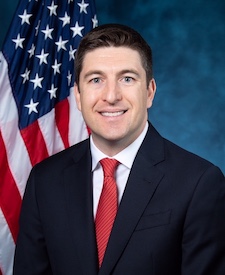
See how Bryan Steil's votes line up with your values.
DeepSyte scores Bryan Steil's record on the issues you care about — not party, not press releases. Take the 2-minute values quiz to see your personal alignment.
Sign in and take the values quiz to see how Bryan Steil's votes line up with your views.
Prediction track record
How often we called Bryan Steil's passage votes correctly, from their stated positions on each bill's tagged topics. Excludes “unclear” calls and abstentions.
17 predictions on record · none have been resolved by a passage vote yet. Check back as bills move.
Proposing an amendment to the Constitution of the United States relating to the authority of Congress and the States to regulate contributions and expenditures intended to affect elections and to enact public financing systems for political campaigns.
No paired statements and votes yet for Bryan Steil
We haven't yet found statement/vote pairs on the same topic for Bryan Steil. This usually means either the rep hasn't taken public positions on bills that have come to a passage vote, or those bills haven't been tagged yet. The checker runs as new press releases and votes come in.
Pro analysis
AI rep analysis — Pro
Get an AI-narrated read on Bryan Steil's full voting record against your stated values — aligned themes, conflicts, notable votes, and what to watch for.
We haven't extracted campaign positions for Bryan Steil yet. Once their campaign website or position pages are processed, this card will track what they said vs how they voted.
Crossing the aisle
Passage votes where Bryan Steil broke ranks with ≥75% of Republicans. Threshold catches substantively partisan splits; unanimous-ish or close votes are excluded.
Rep. Steil & DOE Secretary Wright Announce Major Energy Investment in Beloit
Position: Congressman Steil supports a $5.1 billion federal loan package to Alliant Energy to expand firm power generation and grid reliability, arguing it will lower electricity costs for Wisconsin families.
BELOIT, WI—Congressman Bryan Steil (WI-01) and the U.S. Department of Energy Secretary, Chris Wright, announced a $5.1 billion loan package to Alliant Energy to lower electricity costs, expand firm power generation, and strengthen grid reliability. The investments will add more than 2.6 gigawatts (GW) of new or upgraded power generation capacity and deliver more than $1 billion in electricity cost savings for American families.
“Affordable, reliable energy infrastructure for products like natural gas increases supply and lowers costs for Wisconsin families,” said Steil. “This investment will unleash American energy to pass along nearly $1 billion in energy savings directly to Wisconsin families through lower energy bills. Thank you to Secretary Wright, and the Department of Energy, for helping lower costs for Wisconsin families.”
Image
House Passes Steil's Congressional Stock Trading Ban
Position: The release supports H.R. 7008, the Stop Insider Trading Act, which would bar Members of Congress, their spouses, and dependent children from purchasing publicly traded stocks, require advance public notice of sales, and impose penalties for violations. It urges the Senate to take up the bill.
(July 22, 2026) Washington, D.C. – Congressman Bryan Steil (WI-01) issued the following statement after the House of Representatives passed H.R. 7008, the Stop Insider Trading Act.
“The Stop Insider Trading Act is a major step forward for ethics reform on Capitol Hill. It ensures no lawmaker can profit off of insider information,” said Steil. “I urge my Senate colleagues to quickly take it up and send it to President Trump’s desk.”
The Stop Insider Trading Act bill prohibits Members of Congress, spouses, and dependent children from purchasing publicly traded stocks. The bill also requires public notice 7 days before a lawmaker, spouse, or dependent child may sell a stock. Finally, the bill institutes strict penalties for any violation.
Watch Chairman Steil’s closing remarks on the House Floor in support of the bill here.
Background:
In January 2026, Chairman Steil introduced the Stop Insider Trading Act.
The legislation:
Bans Members, their spouses, and their dependent children from purchasing a security issued by a publicly traded company.
Requires Members of Congress to file a public notice at least 7 days, but no more than 14 days, in advance for each intended sale with the Clerk of the House of Representatives or Secretary of the Senate.
Penalties for a violation:
Requires the respective ethics committees to issue a fee equal to $2,000 or 10% of the value of the covered investment, whichever is greater.
Also requires forfeiture of any realized profit from a sale.
The Stop Insider Trading Act passed the House on a bipartisan vote of 232-198.
###
Position: The release applauds a proposed CMS rule (91 FR 46562) that would change Medicaid reimbursement formulas to treat Wisconsin providers equivalently to those in other states, and credits the Wisconsin congressional delegation with securing approximately $1 billion in additional federal Medicaid funding.
Washington, DC – Today, Congressmen Bryan Steil (WI-01), Derrick Van Orden (WI-03), Scott Fitzgerald (WI-05), Glenn Grothman (WI-06), Tom Tiffany (WI-07), and Tony Wied (WI-08), applauded the Center for Medicare and Medicaid Services’(CMS) proposed rule 91 FR 46562, ensuring Wisconsin receives fairness in the Medicaid reimbursement formula and delivering historic Medicaid funding to WI.
Wisconsin’s Republican delegation has been working directly with CMS and the Trump Administration to ensure that Wisconsin providers receive the same treatment in the Medicaid reimbursement system as providers in other states. Recent changes resulted in an additional $1 billion in federal healthcare funding for Wisconsin. This funding will help ensure high-quality care for patients in Wisconsin.
“For years, Wisconsin providers have been reimbursed at a lower rate than other states. Under the Working Families Tax Cuts, Wisconsin will now be treated fairly, protecting Medicaid for the people it was designed for - children, pregnant women, and disabled Americans,” said the Representatives. “Wisconsin’s Republican congressional delegation worked closely with the State Legislature and Centers for Medicare and Medicaid Services to guarantee fair treatment, implement meaningful reforms, and deliver affordable, high-quality healthcare for families and seniors."
Background:
Wisconsin will receive historic Medicaid funding under the Working Families Tax Cuts (WFTC), the 2025 Wisconsin Biennial Budget, and CMS proposed rule 91 FR 46562.
Wisconsin will receive an estimated $9.6 billion in federal Medicaid funding, a $1 billion increase over FY25.
Wisconsin’s Republican delegation worked directly with CMS and the State Legislature to ensure that Wisconsin providers receive the same treatment as providers in other states under the Medicaid reimbursement system.
Wisconsin hospitals have historically received a lower reimbursement rate for care provided to Medicaid patients, passing on costs to private insurers and potentially reducing additional service offerings.
In addition, states impose provider assessments to increase funding for state Medicaid programs. Previously, Wisconsin’s provider assessment was less than 1.8%.
Wisconsin’s lower Medicaid reimbursement rate, combined with its responsible provider assessment rate, puts Wisconsin at a funding disadvantage compared to other states.
The WFTC, Wisconsin biennial budget, and CMS proposed rule 91 FR 46562 brings Wisconsin closer to parity with other states in federal Medicaid funding.
For a fact sheet on this rule, click here.
Steil Leads WI Republican Delegation, Requests EPA Hold Canada Accountable for Wildfire Pollutants
Position: Six Wisconsin Republican representatives asked the EPA to review available actions under the U.S.-Canada Air Quality Agreement to address wildfire smoke from Canada and to press Canada to prevent future wildfires from affecting Wisconsin.
Janesville, WI – Today, Congressmen Bryan Steil (WI-01), Derrick Van Orden (WI-03), Glenn Grothman (WI-06), Tom Tiffany (WI-07), Scott Fitzgerald (WI-05), and Tony Wied (WI-08) wrote to EPA Administrator Lee Zeldin, requesting the department review available actions under the U.S.-Canada Air Quality Agreement (AQA) to help address ongoing wildfire smoke in Wisconsin originating from Canada.
“Record-breaking wildfire smoke is inflicting real harm on Wisconsin families. We cannot allow this to continue. Canada must meet its clean air promise and prevent future wildfires from impacting Wisconsin families,” wrote the Representatives. "We write to respectfully request that the Environmental Protection Agency (EPA) take all appropriate measures under the U.S.-Canada AQA to address the impact of Canadian wildfire smoke on families in the Great Lakes Region and the Northeast."
Read the letter here.
Background:
Smoke from recent wildfires, including those originating in Canada, has drifted into the United States, creating hazardous air quality ratings across Wisconsin.
On Thursday, July 16, 5 of the 10 worst areas for air quality in the world were in southern Wisconsin.
Air Quality Index ratings exceeded 500 in many portions of Wisconsin, including Brown, Waukesha, and Kenosha Counties.
Milwaukee saw its worst air quality on record, with an AQI of 566 - significantly higher than cities like Beijing (73) and Delhi (160).
Wildfires like those originating in Canada are a source of significant pollutants including carbon monoxide, nitrogen oxides, and particulate matter.
The U.S.-Canada Air Quality Agreement was signed by the U.S. and Canada in 1991 and expanded in 2000. The agreement is designed to help reduce toxic air pollutants including ozone and particulate matter.
Under the agreement, the U.S. can raise concerns surrounding particulate emissions to force consultations with Canadian officials within 30 days.
If a resolution is not reached, the U.S. can refer the dispute to a third party or enter formal negotiations.
The letter requests that the EPA utilize this mechanism to address the impacts of ongoing wildfires and help mitigate future occurrences.
###
ICYMI - Steil-Led Housing Affordability Bill Becomes Law
Position: The release supports the 21st Century ROAD to Housing Act (H.R. 6644), which it describes as increasing housing supply and reducing regulation, and highlights the Accelerating Home Building Act's grant program for pattern zoning. The release characterizes the enacted package as a step toward more affordable housing.
Washington, DC – On Saturday, July 11, the 21st Century ROAD to Housing Act (H.R. 6644) became law. This package of bills increases housing supply, reduces government regulation, cuts red tape for building and lending, and addresses high housing costs. It includes the Accelerating Home Building Act (H.R. 5907), a bill co-led by Congressman Bryan Steil (WI-01) and Congresswoman Janelle Bynum (OR-05).
“Red tape and bureaucratic delays have put homeownership out of reach for many Wisconsin families," said Steil. "The 21st Century ROAD to Housing Act is a step forward to increase housing supply and reduce burdensome regulations to help make housing more affordable. I appreciate the strong bipartisan support to move this bill forward and help make life more affordable for working families.”
CLICK HERE to read the 21st Century ROAD to Housing Act.
CLICK HERE for a one pager on the bill.
Background:
Housing costs continue to rise due to a lack of supply, workforce shortages, and costly government regulations. These costs have put homeownership out of reach for many families.
The 21st Century ROAD to Housing Act boosts housing supply by modernizing standards, cutting red tape to reduce the cost of manufactured homes by approximately $3,000. It updates federal permitting to ensure that projects without environmental impacts do not need to undergo additional environmental reviews.
This is the first meaningful housing reform package to pass Congress in over 30 years.
The bill passed the House on Tuesday, June 23rd, on a bipartisan vote of 358-32 and the Senate on Monday, June 22nd, on a vote of 85-5.
Steil's Accelerating Home Building Act creates a grant program within the Department of Housing and Urban Development to help towns and cities implement pattern zoning, a process for architects and local governments to develop "pattern books" full of pre-approved, standardized plans and designs for use in their communities. This process tackles housing affordability by reducing red tape, lowering design costs, streamlining zoning approvals, and accelerating construction timelines.
###
Steil Joins VP Vance and CMS Administrator Oz in Wisconsin to Discuss Combatting Waste, Fraud, and Abuse in Government Programs
Position: The release describes an event in which federal officials discussed efforts to eliminate fraud in federal programs, citing DOJ figures on Medicaid fraud losses in Wisconsin and nationwide.
MILWAUKEE, WI. – Today, Congressman Bryan Steil (WI-01), Vice President JD Vance, and Dr. Mehmet Oz, Administrator of the Centers for Medicare and Medicaid Services (CMS), highlighted their work to eliminate fraud within critical federal programs. According to US Department of Justice (DOJ), fraudsters cost Wisconsin Medicaid more than $15.5 million between 2019 and 2022 and more than $6.5 billion nationwide.
Image
Steil Introduces Resolution to Recognize Survivors of Scams and Prevent Future Scams
Position: The release introduces a resolution to designate May 14 as National Scam Survivor Day, encouraging survivors to share their stories and urging a collaborative approach among government, the private sector, and nonprofits to support victims and prevent scams.
WASHINGTON, D.C. – Congressmen Bryan Steil (WI-01), Josh Harder (CA-09), Dan Meuser (PA-09), Jamie Raskin (MD-08), Zach Nunn (IA-03), Jefferson Shreve (IN-06), and Gabe Amo (RI-01) this week introduced a resolution to designate May 14th as National Scam Survivor Day.
“Each year, scammers exploit millions of Americans and defraud them of their hard-earned savings," said Steil. "I commend every American who speaks out to raise awareness after being victimized by scammers. By sharing their experiences, scam survivors help break the stigma scam victims can face while ensuring our communities have the tools to identify, disarm, and report emerging scams. I will continue working to prevent families and seniors from falling victim to scams."
The National Scam Survivor Day resolution encourages scam survivors to tell their stories combat the stigma that may prevent individuals from seeking the guidance and assistance they deserve. Additionally, the legislation urges a collaborative approach to support scam survivors and prevent future scams among government, the private sector, and nonprofit organizations.
“Scams are more than just an annoying robocall – these organized attacks rob working families of their hard-earned savings and financial stability,” said Harder. “Cracking down on these criminals starts with raising awareness of the nationwide scam crisis, and I'm proud to support designating May 14 as National Scam Survivor Day. Bringing our community together around prevention will lead to more arrests, fewer robocalls, and less financial theft, and I look forward to working across the aisle to get this bill signed into law.”
"As Subcommittee Chairman on Oversight and Investigations, I am working with the Trump Administration, law enforcement, and the private sector to stop financial fraud and scams before they start," said Meuser. "Scammers stole more than $21 billion from hardworking Americans in 2025, targeting seniors, veterans, small business owners, and young adults. National Scam Survivor Day is about supporting victims, raising awareness, and educating consumers as scammers and fraudsters become increasingly sophisticated. Thank you to Rep. Steil for once again leading this important resolution."
“Millions of Americans have lost hundreds of billions of dollars at the hands of hucksters, fraudsters and rip-off artists,” said Raskin. “By designating May 14, 2026, as National Scam Survivor Day, we remind our neighbors that there’s no shame in reporting these terrible crimes, and we put scammers everywhere on notice that we’ll never stop pursuing justice and accountability. I want to thank my constituent—Judith Boivin of Rockville—for bravely sharing her story with me and for working to help others avoid what she has endured at the hands of criminal scammers.”
“A central Iowa man spent months building what he believed was a genuine online relationship, only to lose $164,000 to fraud. A woman from Des Moines fell victim to a romance scam and lost $15,000. These are just two of the stories behind the $96 million Iowans lost to financial fraud in 2025,” said Nunn. “Iowans shouldn’t have to worry about scammers robbing them of their life savings through fake investment schemes and online fraud. On National Scam Survivor’s Day, I’m proud my bipartisan GUARD Act is moving forward to give law enforcement stronger tools to track down criminals, crack down on fraud, and protect Iowans’ hard-earned money.”
“Scams devastate families, drain savings, and leave survivors feeling like they did something wrong,” said Shreve. “As Chair of the Stop Scams Caucus, I’m pleased to cosponsor this resolution designating May 14 as National Scam Survivor Day. When survivors come forward, they help break the stigma surrounding these crimes and remind other victims that they are not to blame. I’ll keep working across the aisle to ensure these bad actors face real consequences.”
“Scammers don’t care if you’re a Democrat or a Republican — they just want to steal your money and exploit your trust. That’s why I’m proud to support designating May 14th as National Scam Survivor Day, to stand with the millions of Americans targeted by scams, raise awareness, and reduce the stigma that can discourage people from reporting these crimes,” said Amo. “Together, we can stop fraudsters from scamming Americans out of their hard-earned dollars.”
This resolution is supported by the International Better Business Bureau.
Original cosponsors of this resolution include Representatives Josh Harder (CA-09), Dan Meuser (PA-09), Jamie Raskin (MD-08), Zach Nunn (IA-03), Jefferson Shreve (IN-06), and Gabe Amo (RI-01)
CLICK HERE to read the resolution.
###
Position: Chairman Steil introduces two bills to strengthen campaign finance transparency and security by requiring donor identity verification, removing reporting thresholds, and prohibiting foreign nationals from funding election-related activities.
WASHINGTON, D.C. – Today, Committee on House Administration Chairman Bryan Steil (WI-01) introduced the Campaign Finance Transparency Act and the Preventing Foreign Interference in American Elections Act. Together, these comprehensive campaign finance reforms will increase transparency and ensure fraudulent and foreign donations cannot influence political campaigns, individual candidates, or electoral outcomes.
Both bills will be marked up by the Committee on House Administration later this week.
“My investigation into ActBlue has demonstrated that the current campaign finance laws weren’t drafted for the modern era we live in. The major gaps we’ve uncovered are being exploited by fraudsters and foreign nationals to make illegal political donations. For example, right now an individual could make a fraudulent donation online in someone else’s name and avoid getting caught. That’s an unacceptable vulnerability that bad actors are taking advantage of,” said Chairman Steil. “We must increase transparency and update the rules to reflect the technological advances of the 21st century.”
The Campaign Finance Transparency Act will:
Require the name on a credit or debit card to match the name of the donor
Remove the de minimis reporting threshold for donors
Require political contributions via credit or debit card to include CVV/CVC number and billing ZIP code
Require document verification for donors without U.S. mailing addresses
Prohibit contributions via gift cards
Prohibit knowingly directing, helping, or assisting any person in making a contribution in the name of another person
Require suspected straw donations schemes to be reported to the Federal Election Commission
The Preventing Foreign Interference in American Elections Act will:
Prohibit foreign nationals from donating for specified election-related activities, including:
Voter registration drives;
Ballot harvesting;
Voter research and polling;
Get Out the Vote initiatives;
Administration of elections by state or local officials (i.e. Zuckerbucks);
Prohibit aiding or facilitating assistance to foreign nationals in making campaign contributions;
Prevent federal agencies from collecting or disclosing tax-exempt donor information, subject to specified exceptions (e.g. IRS, House/Senate lobbying disclosures, in certain situations).
To read the Campaign Finance Transparency Act click here.
To read the Preventing Foreign Interference in American Elections Act click here.
Steil and Wisconsin Congressmen Introduce Fair Air Standards Act, Addressing Ozone Nonattainment, Vehicle Emissions Testing
Position: The congressmen introduced legislation to address ozone nonattainment in Southeastern Wisconsin through revised air quality standards and vehicle emissions testing procedures.
HALES CORNERS, WI – Today, Congressman Bryan Steil (WI-01), Scott Fitzgerald (WI-05), Glenn Grothman (WI-06), and Tom Tiffany (WI-07), introduced the Fair Air Standards Act addressing Southeastern Wisconsin’s classification as an Ozone Nonattainment Area.
Image
Steil Introduces Legislation to Rein in the Proxy Advisor Duopoly
Position: Congressman Steil introduces legislation to impose transparency requirements and conflict-of-interest restrictions on proxy advisory firms, arguing that current practices prioritize political agendas over retirees' economic interests.
Washington D.C. - Today, Congressman Bryan Steil (WI-01), introduced the Protecting Americans’ Retirement Savings from Politics Act. This legislation will impose new rules on the proxy advisor duopoly that require strong transparency disclosures and prevent conflicts of interest that have tarnished proxy advice and corrupted corporate governance. Congresswoman Ann Wagner (MO-02) is an original cosponsor of this bill.
“Too often, proxy advisors have encouraged votes that run counter to the economic interests of retirees and seniors. Investment advisors and pension funds should be focused on securing your retirement, not advancing their political agenda,” said Steil. “My bill will bring accountability and transparency to the proxy advisor duopoly and help end the politicization of Americans’ retirement funds. I’d like to thank Congresswoman Wagner in joining me on this important legislation."
The Protecting Americans’ Retirement Savings from Politics Act will:
Provide transparency and accountability to the proxy advisory industry, prohibit robo-voting, prohibit the inherent conflict of interest associated with consulting services, and require proxy advisory firm clients to issue annual public reports on their proxy voting.
Require large asset managers to explain how they use proxy advisor recommendations and put their customers’ economic interests first.
CLICK HERE for a section by section of the bill.
CLICK HERE to read the full bill text.
CLICK HERE to watch Steil discuss conflict-of-interest issues in existing securities laws.
Background:
Roughly 70% of the outstanding shares in publicly traded U.S. companies are held by institutional investors such as mutual funds and pension funds. American families depend on these institutional investors to manage their retirement savings, including voting their shares. However, to save costs, many institutional investors rely on proxy advisory firms for recommendations on how to vote the shares under their control.
The market for proxy advice is dominated by two firms, Glass Lewis and Institutional Shareholder Services (ISS), which jointly have 97% market share. ISS is a German-owned company and Glass Lewis is owned by Peloton Capital, a private equity fund. Often, these two proxy advisory firms successfully pressure institutional investors to vote contrary to shareholder economic interests and in support of woke political initiatives.
Steil previously introduced similar legislation in the 118th Congress, where it passed by a vote of 215-203.
Source: GDELT 2.0 GKG, filtered to a curated list of national outlets. Inclusion is not endorsement; opinion pieces and reported news are mixed.
Recent stock activity
Periodic transaction reports filed under the STOCK Act — disclosed by the rep, sourced from public filings.
No disclosed trades on record.
Source: open-data mirrors of the Senate eFD and House Clerk financial-disclosure systems. Disclosure within 30 days of trade is required by law (45 for spouse/dependent trades).
Top PAC donors · 2026 cycle
Political action committees that gave the most to this rep's principal campaign committee this cycle. PAC giving is direct organizational support — industry, ideological, or leadership.
1.DELOITTE PAC3 contributions$15,000
2.BAKER PAC3 contributions$12,500
3.TENACIOUS PAC2 contributions$10,000
4.INVESCO HOLDING COMPANY (US) INC. PAC2 contributions$10,000
5.BMI POLITICAL ACTION COMMITTEE2 contributions$10,000
6.AMERICAN REVIVAL PACIdeological2 contributionsSingle-issue or ideological PAC — specific positions not clearly inferable from the name alone.AI · low$10,000
7.PATRIOTS IN ACTIONIdeological2 contributionsSingle-issue or ideological PAC — specific positions not clearly inferable from the name alone.AI · low$10,000
10.DEFENDING THE AMERICAN DREAM PAC2 contributions$10,000
Source: OpenFEC (api.open.fec.gov) Schedule A receipts where contributor type is “committee.” Aggregated by contributing committee. Self-transfers from joint-fundraising / victory committees are excluded.
Top individual contributors · 2026 cycle
Itemized individual contributions over $200 to this rep's campaign committee, aggregated by donor employer. PAC giving is shown above; this section is people, not organizations.
1.SELF$91,366
2.KLONDIKE CHEESE$42,000
3.COINBASE$31,500
4.CAPITAL GROUP$25,205
5.KKR$21,000
6.NASDAQ$20,287
7.ANDREESSEN HOROWITZ$16,000
8.BLACKROCK$15,894
9.PARADIGM$14,667
10.WINKLEVOSS CAPITAL MANAGEMENT$14,000
Source: OpenFEC Schedule A receipts where contributor type is “individual,” aggregated by the donor's self-reported employer. This is a geographic / industry correlation, not a corporate endorsement.