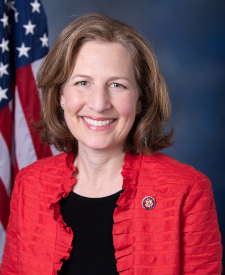
See how Kim Schrier actually votes — against your values.
DeepSyte scores Kim Schrier's record on the issues you care about — not party, not press releases. Take the 2-minute values quiz to see your personal alignment.
Sign in and take the values quiz to see how Kim Schrier's votes line up with your views.
Prediction track record
How often we called Kim Schrier's passage votes correctly, from their stated positions on each bill's tagged topics. Excludes “unclear” calls and abstentions.
28 predictions on record · none have been resolved by a passage vote yet. Check back as bills move.
A bill to provide for appropriate cost-sharing for insulin products covered under private health plans, and to establish a program to support health care providers and pharmacies in providing discounted insulin products to uninsured individuals.
Based on 1 data point across public statements and recorded votes · AI analysis of public records
119-hr-3668·Notable gap
Improving Interagency Coordination for Pipeline Reviews Act
15/100
What they said
Apr 29, 2026
Congresswoman Schrier introduced legislation to suspend the federal gas tax through the end of 2026 to provide immediate relief from rising gas prices, which she attributes to the Trump administration's military actions in Iran.
Congresswoman Schrier's statement advocates for immediate gas price relief through a federal gas tax suspension, framing the issue as addressing economic hardship from geopolitical conflict. The bill she voted against expedites environmental review and permitting for natural gas pipelines and LNG terminals—infrastructure that would increase domestic gas supply and potentially moderate prices over time. While both address gas prices broadly, Schrier's position emphasizes temporary tax relief and criticizes military actions driving prices up, whereas the bill she opposed facilitates expanded natural gas infrastructure development. A no vote on pipeline permitting legislation is inconsistent with introducing a gas price relief bill, as pipeline expansion is a standard policy mechanism for increasing gas supply and moderating prices—the opposite direction from her stated goal of immediate relief.
Pairs with ambiguous language and high uncertainty are withheld until more data is available. Procedural, cloture, and amendment votes are excluded — they don't cleanly signal substantive support or opposition.
Pro analysis
AI rep analysis — Pro
Get an AI-narrated read on Kim Schrier's full voting record against your stated values — aligned themes, conflicts, notable votes, and what to watch for.
We haven't extracted campaign positions for Kim Schrier yet. Once their campaign website or position pages are processed, this card will track what they said vs how they voted.
Crossing the aisle
Passage votes where Kim Schrier broke ranks with ≥75% of Democrats. Threshold catches substantively partisan splits; unanimous-ish or close votes are excluded.
Congresswoman Schrier Joins Colleagues to Advance Bipartisan Farm Bill
Position: Congresswoman Schrier voted for the 2026 Farm Bill despite concerns about Republican opposition to protecting nutrition assistance programs. She supports the legislation because it provides agricultural support for specialty crops, forestry, conservation, and trade competitiveness in her district.
WASHINGTON, D.C. – Today, Congresswoman Kim Schrier, M.D. released the following statement after joining her colleagues to pass a bipartisan Farm Bill out of the U.S. House of Representatives:
“Washington’s farmers and producers are facing a number of pressing challenges, from high costs and market uncertainty to extreme weather patterns. While this year’s Farm Bill is far from perfect, it is a needed step forward to help us meet the challenges we face in the Eighth District. Farm Bills are strongest when they are created with wide bipartisan support, and I am deeply disappointed that Republicans failed to work with us to undo disastrous cuts to nutrition assistance and protect other vital programs.
“However, I ultimately voted for this package because it secures key wins for the Eighth District’s agricultural community at a time when they are in dire need of support, including help for our specialty crop growers, the forestry industry, and conservation efforts. Additionally, the package supports wins for agricultural trade and global competitiveness.
“Washington’s agriculture is critical to our local economies, and our farmers feed us and the rest of the world. We cannot continue to lose family farms. I will continue to ensure our farmers, agriculture sector, and rural communities across America have the support and certainty they need to continue to feed our country.”
BACKGROUND:
The Farm Bill was enacted into law in 2018 and was originally due for reauthorization in 2023, but has now been extended twice. This essential package of legislation authorizes and funds several important agricultural, food, and forestry programs over several years, all of which are critical to Washington’s Eighth District.
Key provisions in the 2026 Farm Bill from Schrier-led legislation include:
Agriculture Export Promotion Act to increase funding for U.S. Department of Agriculture (USDA) export promotion programs, the Market Access Program (MAP) and Foreign Market Development Program (FMDP). These programs help farmers around the country stay competitive in a global marketplace and ensure there are markets for their agriculture products.
ENABLE Conservation Act to support farmers who voluntarily participate in conservation programs. Of particular interest to Washington state is the Conservation Reserve Program’s (CRP) State Acres for Wildlife Enhancement (SAFE) initiative.
Watch Congresswoman Schrier’s floor remarks on this legislation here.
RNGR Support Act to strengthen Washington State’s wildfire resiliency and the national reforestation pipeline by formalizing the United States Forest Service’s Reforestation, Nurseries, and Genetic Resources program.
Allowing USDA to waive the matching funds requirement for the Specialty Crop Research Initiative, a program that provides crucial support for Washington specialty crop growers by helping finance key agricultural research projects.
Transparency in Legacy Road and Trail Remediation Act to improve transparency of the Legacy Road and Trail Remediation (LRTR) Program. This legislation requires the U.S. Forest Service to publish annually, for each region, a list of projects eligible for funding under the program.
Forest Data Modernization Act to modernize the FIA program to meet the rapidly growing market demand for standardized, high-quality data to support sustainable forest management decisions.
###
Issues:Agriculture Congress
Congresswoman Schrier Introduces Bill to Immediately Lower Gas Prices
Position: Congresswoman Schrier introduced legislation to suspend the federal gas tax through the end of 2026 to provide immediate relief from rising gas prices, which she attributes to the Trump administration's military actions in Iran.
WASHINGTON, D.C. – Congresswoman Kim Schrier, M.D. (WA-08), introduced the Gas Prices Relief Act, legislation to help lower gas prices through the end of the year as they continue to climb due to President Trump’s reckless war in Iran. The Gas Prices Relief Act of 2026 would suspend the federal gas tax to cut nearly 20 cents per gallon for the rest of the year, ensuring temporary relief lasts long enough for gas prices to come back down permanently. Congresswoman Schrier is joined in introducing this legislation by Congressman Josh Harder (CA-09).
“At a time when President Trump’s Middle East war is skyrocketing gas prices and making life even more unaffordable, Congress needs to do all it can to bring down costs for American families,” said Congresswoman Schrier. “Washingtonians need immediate relief, and cannot wait until the war ends to see gas prices fall. I am proud to introduce this much-needed bill to bring immediate relief, and I will continue to be laser-focused on lowering the cost of living.”
“Valley commuters are facing a runaway rollercoaster of prices at the pump that have been out of control for weeks, and our families need some immediate relief,” said Congressman Harder. “$100 just to fill up your tank is unacceptable - we need the war in Iran to end, but we can’t wait months for prices to come down. That’s why I’m pushing to suspend the federal gas tax and lower gas prices right now.”
Two months after the start of the war, gas prices continue to rise:
Nationwide, gas prices have risen to over a dollar per gallon since the war in Iran began.
Washington state gas prices passed the $5.50 mark this spring, while Seattle-area prices are the highest they’ve ever been on average.
Issues:CongressEconomy
Congresswoman Schrier Introduces Legislation to Improve Medicare Advantage, Protect Care for Seniors
Position: Congresswoman Schrier and co-sponsors support legislation to strengthen Medicare Advantage oversight, reduce prior authorization delays, standardize coverage criteria with traditional Medicare, and hold insurance companies accountable for denials and cost increases.
WASHINGTON, D.C. – Today, Congresswoman Kim Schrier, M.D. (WA-08), introduced the bipartisan Medicare Advantage Improvement Act (MAIA), legislation aimed at strengthening the Medicare Advantage program to protect healthcare for seniors. Congresswoman Schrier is joined in introducing this legislation by Reps John Joyce, M.D. (PA-13), Ami Bera, M.D. (CA-06), Greg Murphy, M.D. (NC-03), Jimmy Panetta (CA-19), Beth Van Duyne (TX-24), and Mariannette Miller-Meeks, M.D. (IA-01).
“Health insurance companies have abused Medicare Advantage plans for too long, and they continue to skyrocket costs, deny coverage, and force taxpayers to pay the price. We need increased oversight into the Medicare Advantage program so that all seniors get the care they were promised,” said Congresswoman Schrier. “I am extremely proud to have worked on these much-needed Medicare Advantage reforms, which will hold insurance companies accountable and get patients timely, quality care.”
This bill will implement sweeping Medicare Advantage reforms aimed at:
Protecting patients from unnecessary delays and denials.
Standardizing coverage criteria between MA and traditional Medicare.
Penalizing plans that fail to meet oversight and compliance benchmarks.
Reducing administrative burdens through real-time and automated systems.
Strengthening patient access to post-acute care providers.
“Medicare is a promise to America’s seniors that they will have dependable access to quality healthcare in their later years. However, that promise has been undermined by unnecessary barriers to care—particularly through excessive use of prior authorization and inappropriate coverage denials in Medicare Advantage,” said Rep. John Joyce, M.D. (PA-13). “As a physician, I have seen firsthand how these delays harm patients and take valuable time away from the doctor-patient relationship. The Medicare Advantage Improvement Act will restore accountability, reduce unnecessary barriers, and ensure that seniors receive timely, high-quality care.”
"Medicare Advantage should work for seniors, not enable health insurers to deny life-saving care. The Medicare Advantage Improvement Act is a commonsense step to rein in excessive prior authorization abuse, ensure timely access to care, and restore accountability in a system that too often delays or denies needed treatment. I'm proud to help lead this effort to strengthen Medicare Advantage and uphold the promise we’ve made to America’s seniors," said Congressman Greg Murphy, M.D. (NC-03).
“For too long, cases of abuse have crept into Medicare Advantage, pulling it away from its core mission of serving America’s seniors,” said Congresswoman Mariannette Miller-Meeks, M.D. (IA-01). “As a physician, I’ve seen how these practices delay care, create unnecessary barriers, and increases the cost of healthcare. This bill restores accountability, cracks down on bad actors, and ensures Iowa seniors can access the care they need, without delay, without denial, and without interference from bureaucratic red tape.”
“Medicare Advantage can play an important role in helping seniors access quality, affordable care, but that only works if plans are holding up their end of the bargain,” said Congressman Ami Bera, M.D. (CA-06). “Right now, too many seniors are running into barriers that delay treatment and create confusion for patients and providers alike. This legislation is about bringing more accountability and oversight to Medicare Advantage so plans better serve the people they are supposed to serve. I’m proud to join this bipartisan effort to strengthen the program and protect our seniors.”
“Medicare Advantage plans too often leave seniors fighting their health insurance companies to obtain lifesaving care in a timely manner,” said Congressman Jimmy Panetta (CA-19). “Our bipartisan bill would make critical reforms to avoid lengthy prior authorization delays and opaque denials of coverage, while improving transparency, expediting payments for previously authorized services, and holding irresponsible actors accountable. I’ll always work with my colleagues across the aisle to make sure Congress does its part to get working families in the 19th Congressional District the affordable, accessible healthcare they need when they need it.”
“Seniors in North Texas who rely on Medicare Advantage did not sign up to navigate a maze of bureaucracy, fight inconsistent coverage standards, or wait for care their doctors already approved,” saidCongresswoman Beth Van Duyne (TX-24). “The Medicare Advantage Improvement Act cuts through the red tape, holds insurance companies accountable, and ensures American seniors get the care they deserve.”
CLICK HERE to view the full text of the Medicare Advantage Improvement Act (MAIA).
CLICK HERE to view the section-by-section.
Support from Stakeholders:
“Medicare Advantage was intended to provide more options and improve outcomes for seniors, but in too many cases it is creating new barriers,” said Eduardo Conrado, President and CEO of Ascension. “Our physicians and care teams see it every day. Prior authorizations and inappropriate denials delay care and create confusion when patients need clarity and support most. We are committed to being part of the solution. This legislation is an important step toward strengthening the doctor-patient relationship, improving transparency, and helping Medicare Advantage better serve seniors and the clinicians who care for them."
“On behalf of our 800+ inpatient rehabilitation hospital members, the American Medical Rehabilitation Providers Association (AMRPA) applauds Dr. Joyce and his colleagues for introducing the Medicare Advantage Improvement Act (MAIA),” said Kate Beller, President of AMRPA. “AMRPA member hospitals help patients maximize their health, functional ability, and independence following serious illness or injury. This legislation will provide timely and essential reforms to ensure that Medicare beneficiaries enrolled in the Medicare Advantage program are able to access the critical services provided by inpatient rehabilitation providers and, in turn, return to their home or community at higher rates than any other post-acute care setting. As AMRPA’s recent member survey shows, far too many seniors currently face unnecessary delays and erroneous denials after getting a referral for medically necessary inpatient rehabilitation care. This bill takes a critical step forward in accelerating determination timeframes, increasing plan transparency and oversight, and reducing administrative burdens for patients, caregivers, and providers. This commonsense legislation will strengthen Medicare Advantage and provide immediate protections to the patients served by the program, particularly those in need of inpatient rehabilitation. We look forward to working with our Congressional champions and allied organizations to get this vital bill signed into law.”
“I want to commend Dr. Joyce and his colleagues for introducing the Medicare Advantage Improvement Act. Dr. Joyce, along with many of his physician colleagues in Congress, understand the daily challenges our patients face. While Medicare Advantage promises many benefits, its current form presents significant obstacles to care, causes confusion and delays, and limits provider choice. It is not the optimal solution for everyone,” said Anthony Misitano, President and CEO of PAM Health. “However, with more than half of all Medicare beneficiaries enrolled in a Medicare Advantage plan, we recognize the program’s importance and strongly support legislation to improve it so it can fulfill its goal of providing seniors with timely, efficient access to high-quality medical care and services. On behalf of our patients nationwide, I thank Dr. Joyce and his colleagues for safeguarding patient care and working to strengthen this critical program.”
“Across the communities we serve, we see too many seniors enrolled in Medicare Advantage struggling to get the care they need -- facing delays, unexpected denials, and confusion at moments when they should be focused on their health,” said Kevin Hammons, CEO of Community Health Systems. “When care becomes unpredictable, it creates stress and uncertainty for patients and their families and can stand in the way of timely treatment. We thank Dr. Joyce and his colleagues for their leadership in introducing the Medicare Advantage Improvement Act. By improving prior authorization processes, reducing unnecessary administrative barriers, and increasing transparency, this legislation will help create a more consistent, dependable experience for seniors and strengthen Medicare Advantage for the long term.”
“Medicare Advantage has grown rapidly, and we are proud of our ability to meet the needs of many patients who are covered by the program,” said Mark Tarr, President and Chief Executive Officer of Encompass Health. “However, Medicare Advantage prior authorization and patient access issues persist. With the introduction of the Medicare Advantage Improvement Act, we are excited that policymakers in Congress are now closer to making much-needed changes to strengthen oversight for plans that fail to meet compliance standards, and expand access to Inpatient Rehabilitation Facilities, ensuring patients can receive the care they need without unnecessary barriers.”
###
Issues:CongressHealth
Position: Congresswoman Schrier supports legislation to expand the Vaccines for Children Program by increasing eligibility, improving vaccine access in primary care settings, and enhancing vaccine counseling and education reimbursement to reduce barriers to childhood immunizations.
WASHINGTON, D.C. – Congresswoman Kim Schrier, M.D. (WA-08), reintroduced the bipartisan Strengthening the Vaccines for Children Program Act, which would strengthen the Vaccines for Children Program by expanding the program and reducing barriers to routine vaccinations. Congresswoman Schrier is joined in introducing this legislation by Congressman John Joyce, M.D. (PA-13).
“As a pediatrician, I’ve seen how immunizations keep children safe and healthy,” said Congresswoman Schrier. “At a time when our public health infrastructure is under threat, it is more important than ever that we work to protect access to lifesaving vaccines. In its three decades, the Vaccines for Children Program has ensured that all children, regardless of their family’s financial situation, can be protected from vaccine-preventable diseases. This bill will improve this program, increasing access to vaccines and keeping our kids safe.”
The Vaccines for Children (VFC) Program was first established in 1994 to ensure that all children could receive their recommended vaccines, regardless of their family’s financial status. Since its creation, the program has helped prevent approximately 508 million illnesses and has saved over 1.1 million lives.
However, it can still be a challenge for children to access primary care. This legislation would address this issue by bolstering the pediatric vaccine delivery system and supporting primary care physicians who participate in the program.
The Strengthening the Vaccines for Children Program Act will:
Improve patient access and care by expanding program eligibility to cover more children at more locations
Expand vaccine counseling and education reimbursement to combat vaccine hesitancy
Track immunizations to better understand disparities and find pockets of under-vaccination
"This legislation represents a critical opportunity to improve payment to frontline physicians and healthcare providers and better incentivize the physician-patient relationship when making sensitive decisions about children's health. For the past thirty years, the VFC Program has provided eligible families across the United States with access to life-saving immunizations at no cost. This bill will expand necessary counselling services to ensure that families are well informed about their approach to their children's health,” said Congressman Joyce.
“Seattle Children’s is proud to support this bill and believes vaccines are the simplest, most effective way to keep kids healthy and in the classroom,” said Seattle Children’s Chief Executive Officer Dr. Christopher Longhurst. “We’re grateful to Congresswoman Schrier and her commitment to cutting through the bureaucracy that often stands between a child and their health. By making vaccines more accessible and ensuring pediatricians have the support they need to guide parents through those decisions, we are protecting the health of the entire community.”
“Vaccines have changed our lives. And we know that most parents value the opportunity to protect their children through vaccination. Since 1994, the Vaccines for Children (VFC) program has been instrumental in ensuring that all families have that opportunity. Yet, we also know that for many reasons, children can be missing one or more vaccinations. By further improving access to and efficiency of the VFC program, not only will more children be protected, but our communities will be healthier as well. Thank you to Congresswoman Schrier and Congressman Joyce for working to protect our children, our families, and our communities against these life-altering tragedies of the past that, without ready access to vaccines, will become tragedies of the present, “ said Director Paul A. Offit and Co-Director Charlotte A. Moser, Vaccine Education Center at Children’s Hospital of Philadelphia.
“Vaccines work to keep children and our communities healthy. The Vaccines for Children Program was designed to ensure all children can have access to vaccines, but the program must be strengthened so that it can better meet the needs of children and families across the country. The American Academy of Pediatrics (AAP) is proud to support the Strengthening the Vaccines for Children Program Act at a time when families deserve clear, evidence-based guidance about their health, the opportunity to have any of their vaccine questions answered and consistent access to lifesaving vaccinations. The AAP applauds Rep. Kim Schrier (D-Wash.) and Rep. John Joyce (R-Pa.) for their leadership on this bipartisan legislation, and calls on Congress to advance it without delay,” said American Academy of Pediatrics President Andrew D. Racine, MD, PhD, FAAP.
“As a family physician, I see every day how vaccines protect children from serious, preventable diseases. This bill takes important steps to make vaccines more accessible, support the time we spend counseling families, and ensure more children get the care they need. Expanding and supporting immunization programs like Vaccines for Children is one of the most effective ways we can keep our communities healthy,” said Sarah C. Nosal, MD, FAAFP, President, AAFP.
This legislation is supported by the American Academy of Pediatrics, Seattle Children’s Hospital, the Children’s Hospital of Philadelphia, Vaccinate Your Family, and the American Academy of Family Physicians.
###
Issues:CongressHealth
ICYMI: Congresswoman Kim Schrier, M.D. Slams RFK Jr. For His Refusal to Recommend Vitamin K Shots, Vaccine Skepticism
Position: Congresswoman Schrier opposes HHS Secretary Kennedy's vaccine skepticism and his statements undermining confidence in routine pediatric care, including vitamin K shots. She argues his messaging has created vaccine hesitancy that endangers children's health and calls for his resignation or removal.
ICYMI: Yesterday, at an Energy and Commerce Health Subcommittee hearing, Congresswoman Kim Schrier, M.D. (WA-08), the first pediatrician elected to Congress and chair of the Democratic Doctors Caucus, blasted Health and Human Services (HHS) Secretary Robert F. Kennedy Jr. for his refusal to take accountability for growing distrust in vitamin K shots for newborns, and his undermining of vaccine efficacy and safety.
“Vitamin K prevents catastrophic brain bleeds, and now that you’ve made parents distrust doctors and shots, some parents are now refusing the vitamin K shot and other routine care, putting these babies at risk for bleeding out. This has a name, it’s called the ‘RFK Jr. Spillover Effect’: You spread misinformation, you scare parents and confuse them, parents don’t immunize their children or give them other routine care and then the kids get sick and they might even die,” Congresswoman Schrier said.
She continued: “This is going to be your legacy: The HHS Secretary that caused kids to die. You’re secretary of HHS, your job is to protect us and you are putting kids in danger and I believe you should resign or you should be fired.”
To watch Congresswoman Schrier’s full remarks, click here.
###
Issues:CongressHealth
Congresswoman Schrier Introduces Bill to Address Housing Affordability Crisis
Position: Congresswoman Schrier supports legislation to increase affordable homeownership through shared equity models that allow nonprofits, states, and local governments to sell homes at affordable prices with resale restrictions to maintain affordability and prevent institutional investor acquisition.
WASHINGTON, D.C. – Today, Congresswoman Kim Schrier, M.D. (WA-08), introduced the Permanent Housing Affordability Act, legislation aimed at addressing the ongoing housing affordability crisis and increasing access to home ownership. Companion legislation was introduced in the United States Senate by Senator Lisa Blunt Rochester (D-DE).
“Home ownership has become unaffordable and unattainable for millions of Americans, especially for young people here in Washington State,” said Congresswoman Schrier. “Throughout this district, constituents tell me that, especially at a time when prices for groceries, gas, and healthcare are skyrocketing, they can’t fathom saving enough to purchase a home. This legislation bolsters an important tool in the toolkit to stand against Wall Street interests and help families achieve home ownership.”
The average age for purchasing a first home is now 40. For many families, home ownership is simply out of reach. Research shows that a typical homebuyer in 2024 would need to spend about 45 percent more of their income on mortgage payments than in 2019. A sharp increase in home purchases by institutional investors – including private equity firms and Wall Street investors – has also contributed significantly to rising home costs.
This bill would address the housing affordability crisis by supporting entities like nonprofits, states, and local governments that sell homes to qualifying homebuyers at an affordable price. These homeowners then agree to a resale formula in order to keep those homes affordable in perpetuity for future buyers. These projects allow homeowners to build meaningful wealth while still allowing subsequent homebuyers to afford a home. They also ensure that public investments are impactful and long-lasting, and stay with the housing unit for generations. This model also helps keep housing out of the hands of institutional investors by reserving housing inventory strictly for affordability purposes.
To read more about this legislation, click here.
“For too many Americans, the idea of owning a home is a pipe dream – unaffordable and out of reach,” said Senator Blunt Rochester. “Through an innovative concept called shared equity ownership, my Permanent Housing Affordability Act will break down barriers to accessible homeownership, putting more families on the path toward generational wealth. As I’ve said before, it’s time for the federal government to get off the sidelines and help make housing more affordable, accessible, and attainable for all. I’m proud to have written this bill to bring us one step closer to accomplishing that goal.”
"Grounded Solutions Network congratulates Senator Blunt Rochester and Representative Schrier on their introduction of the Permanent Housing Affordability Act,” said Doug Ryan, vice president of housing policy at Grounded Solutions Network. “This bill, which would advance the development of shared equity homeownership, would make homeownership possible for families across the country who are now priced out. Shared equity homeownership is a proven tool, one that uses funds efficiently, and ensures future generations of families can own homes. We have a worsening homeownership crisis. The Permanent Housing Affordability Act will help our nonprofit members and local leaders develop affordable homes that meet their communities’ needs."
“Community land trusts across Washington State see every day that permanently affordable homeownership requires more than one tool—it takes access to land, flexible capital, and long-term stewardship working together,” said Kathleen Hosfeld at Washington State Community Land Trust Coalition. “The Permanent Housing Affordability Act reflects this reality. By investing in the full ecosystem needed to create and preserve affordable homes, it expands the supply of homeownership opportunities while ensuring those homes remain within reach for future generations. This is the kind of federal partnership that allows our work to scale and serve communities more effectively over time.”
Endorsements: Habitat for Humanity Seattle-King & Kittitas Counties, Washington State Community Land Trust Coalition, Washington Affordable Cooperative Housing Network, Grounded Solutions Network, National Housing Conference, American Planning Association, NeighborGood Partners, Community Legal Aid Society, Inc., The WRK Group, Delaware National Association of Housing and Redevelopment Officials (NAHRO), National NeighborWorks Association, Congress for the New Urbanism (CNU), Incremental Development Alliance, National Community Stabilization Trust (NCST), Wilmington Land Bank, Habitat for Humanity of New Castle County, Habitat for Humanity of Central Delaware, Sussex County Habitat for Humanity, Virginia Statewide Community Land Trust, and North Carolina Community Land Trust Coalition.
###
Issues:CongressEconomy
Congresswoman Schrier Presses Trump Administration for Answers on Deteriorating Forest Service Trail Conditions
Position: Congresswoman Schrier and colleagues express concern that Forest Service budget cuts and staffing reductions have led to deteriorating trail maintenance, threatening visitor safety and outdoor recreation access, and call on the Trump Administration to address the decline in trail conditions.
Conditions Come as U.S. Forest Service (USFS) Struggles with Insufficient Staffing and Budget Cuts
WASHINGTON, D.C. – Congresswomen Kim Schrier, M.D. (WA-08), and Andrea Salinas (OR-06) led 21 of their colleagues in demanding answers from the Trump Administration on deteriorating Forest Service trail conditions due to insufficient maintenance by the U.S. Forest Service (USFS), which has threatened visitor safety and outdoor recreation access for millions of Americans.
“We write with serious concern that, despite your stated intent to prioritize outdoor access and improve visitor experiences, the USFS trail maintenance operations have been hamstrung by layoffs, hiring restrictions, budget cuts and other policies that make it harder for staff to do their jobs and meet agency objectives,” the letter states.
The letter continues, “The USFS manages over 164,000 miles of trails, more than any other land management agency. Americans cherish the USFS trail network, which serves 84 million visitors annually. Public lands recreation contributes $128 billion to our national economy. Despite the clear value of trails and the agency’s stated focus on outdoor access, conditions on the ground are deteriorating.”
“A December 2025 Trail Program Status Report details that trail maintenance suffered dramatically in 2025. Total miles of USFS trails maintained in 2025 fell by 22%. Neglecting our recreational assets increases the long-term costs of maintaining these facilities,” the letter continues.
In response to this drop, the letter calls on USFS leadership to answer specific questions on their plan to address the deterioration in outdoor access and better maintain trails this year. To read the full letter, click here.
###
Issues:CongressDistrictEnvironment
Congresswoman Schrier Helps Advance Key Legislation to Protect Children Online During Energy and Commerce Markup
Position: Congresswoman Schrier supports legislation requiring social media companies to cooperate with third-party watchdog apps to alert parents of harmful content exposure (Sammy's Law) and opposes a weakened version of the Kids' Online Safety Act that removes duty-of-care provisions and preempts stronger state laws.
WASHINGTON, D.C. – This week, Congresswoman Kim Schrier, M.D. (WA-08), helped advance key legislation to protect children online during a House Committee on Energy and Commerce markup. Congresswoman Schrier’s bill, Sammy’s Law, passed during the hearing. This legislation would improve kids’ online safety by requiring social media companies to cooperate with third-party watchdog apps that would alert parents if their children have been exposed to harmful messages or interactions online.
"As a pediatrician, I’ve seen firsthand how social media and online threats have compromised children’s health and well-being,” said Congresswoman Schrier, M.D. “I’ve also witnessed how social media companies have refused to put responsible guardrails on their platforms to keep our kids safe, instead choosing to prioritize profits. This week’s Energy and Commerce markup was an important step in advancing my bill, Sammy’s Law, that would empower parents and protect our children online. I also fought against legislation that would roll back protections for children online and fail to hold social media companies accountable for promoting harmful content.”
During the markup, Congresswoman Schrier voted against the watered-down version of the Kids’ Online Safety Act (KOSA), a traditionally bipartisan, comprehensive piece of legislation intended to protect children from harmful content online. Congresswoman Schrier was a lead sponsor on this legislation last Congress, and it passed through committee with support from both parties. However, the version of KOSA reintroduced this year is significantly weaker. Specifically, this year’s bill has completely banned the duty of care provision found in previous iterations of this legislation, which required social media companies to actively prevent or mitigate harms to children on their platforms and held them legally responsible if they failed to do so. This version of KOSA also would have overridden more protective state online safety laws, actually decreasing children’s safety in many states.
To view Congresswoman Schrier’s remarks on Sammy’s Law, click here, and to view her remarks on KOSA, click here.
Issues:Congress
Source: GDELT 2.0 GKG, filtered to a curated list of national outlets. Inclusion is not endorsement; opinion pieces and reported news are mixed.
Recent stock activity
Periodic transaction reports filed under the STOCK Act — disclosed by the rep, sourced from public filings.
No disclosed trades on record.
Source: open-data mirrors of the Senate eFD and House Clerk financial-disclosure systems. Disclosure within 30 days of trade is required by law (45 for spouse/dependent trades).
Top PAC donors · 2026 cycle
Political action committees that gave the most to this rep's principal campaign committee this cycle. PAC giving is direct organizational support — industry, ideological, or leadership.
4.EDW HOLD THE HOUSE FUND - UNITEMIZEDLeadership2 contributionsMember-of-Congress leadership PAC — directs contributions to allied candidates, likely focused on House races.AI$26,023
5.CARPENTERS LEGISLATIVE IMPROVEMENT COMMITTEE UNITED BROTHERHOOD OF CARPENTERS AND JOINERSLabor3 contributionsTrade-union PAC for the United Brotherhood of Carpenters and Joiners — backs prevailing-wage protections, federal infrastructure funding, project labor agreements, and worker safety standards.AI$15,000
6.M-PAC3 contributions$15,000
7.WOMEN'S POLITICAL COMMITTEEIdeological3 contributionsWomen's advocacy PAC — supports candidates and policies advancing women's representation, rights, and economic interests.AI$15,000
8.DEMOCRACY DEFENDERSIdeological1 contributionIdeological PAC — supports candidates and causes aligned with democratic governance, voting rights, and institutional integrity.AI$12,000
9.HOLD THE HOUSE FRONTLINE FUND - UNITEMIZEDLeadership2 contributionsMember-of-Congress leadership PAC — supports House Democrats in competitive districts and coordinates party fundraising.AI$11,362
10.PAC TO THE FUTURELeadership2 contributionsMember-of-Congress leadership PAC — specific affiliations and policy positions not inferable from the name.AI · low$10,000
Source: OpenFEC (api.open.fec.gov) Schedule A receipts where contributor type is “committee.” Aggregated by contributing committee. Self-transfers from joint-fundraising / victory committees are excluded.
Top individual contributors · 2026 cycle
Itemized individual contributions over $200 to this rep's campaign committee, aggregated by donor employer. PAC giving is shown above; this section is people, not organizations.
1.UNIVERSITY OF WASHINGTON$27,240
2.MICROSOFT$17,867
3.D4 LLC$14,000
4.AMAZON$11,640
5.KAISER PERMANENTE$10,600
6.PIVOTAL VENTURES$8,000
7.FRIEDMAN RUBIN PLLP$7,000
8.ARNOLD VENTURES$7,000
9.SEATTLE JAZZED$7,000
10.SEATTLE GENETICS$7,000
Source: OpenFEC Schedule A receipts where contributor type is “individual,” aggregated by the donor's self-reported employer. This is a geographic / industry correlation, not a corporate endorsement.