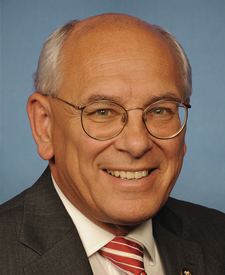
See how Paul Tonko's votes line up with your values.
DeepSyte scores Paul Tonko's record on the issues you care about — not party, not press releases. Take the 2-minute values quiz to see your personal alignment.
Sign in and take the values quiz to see how Paul Tonko's votes line up with your views.
Prediction track record
How often we called Paul Tonko's passage votes correctly, from their stated positions on each bill's tagged topics. Excludes “unclear” calls and abstentions.
To prohibit the disclosure of records by the Secretary of Housing and Urban Development of individuals for the purposes of immigration enforcement, and for other purposes.
We haven't yet found statement/vote pairs on the same topic for Paul Tonko. This usually means either the rep hasn't taken public positions on bills that have come to a passage vote, or those bills haven't been tagged yet. The checker runs as new press releases and votes come in.
Pro analysis
AI rep analysis — Pro
Get an AI-narrated read on Paul Tonko's full voting record against your stated values — aligned themes, conflicts, notable votes, and what to watch for.
Positions Paul Tonko took during their campaign, scored against their subsequent record — public statements cross-checked with related votes. “Kept” means 80%+ of those statement-vs-vote pairs aligned; “Broken” means 30% or fewer.
0 kept0 broken0 mixed0 no action yet
Paul Tonko has 3 tracked positions but no scored statement-vs-vote pairs touching them yet. Verdicts will appear here as related statements and votes accumulate.
No action yetSupports
The government should set legally enforceable limits on greenhouse gas emissions.
“Fighting climate change is our top global security threat as identified by the Pentagon, it will also bring stable and good paying jobs”
Voters should be required to show photo ID, with the same rule in every state.
“Republicans continue their all-out assault on voting rights, making it more difficult to vote with fewer early voting days, fewer polling places, reduced hours, hurdles to mail-in voting”
Passage votes where Paul Tonko broke ranks with ≥75% of Democrats. Threshold catches substantively partisan splits; unanimous-ish or close votes are excluded.
1
Cross-aisle vote
118-hr-2670·Dec 14, 2023·78% of D voted YES
National Defense Authorization Act for Fiscal Year 2024
Tonko, Schumer & Gillibrand Announce Nearly $8.2 Million For Communities Across Capital Region to Strengthen Roadway Safety
Position: The release announces $8.18 million in federal Safe Streets and Roads for All grant funding from the Bipartisan Infrastructure and Jobs Law for roadway safety projects across nine Capital Region counties in New York. The lawmakers credit the funding with supporting safety analyses and pilot programs, and express support for continued investment in roadway safety.
ALBANY, NY — U.S. Congressman Paul D. Tonko and U.S. Senate Democratic Leader Chuck Schumer and U.S. Senator Kirsten Gillibrand today announced $8,180,000 from the Bipartisan Infrastructure & Jobs Law in Safe Streets and Roads For All (SS4A) grant funding to improve safety at major roadways throughout the Capital Region. The lawmakers explained that this funding will fund safety analyses and launch pilot programs for emergency vehicle alerts, prehospital blood delivery, and more to improve roadway safety outcomes in Albany, Columbia, Fulton, Greene, Montgomery, Rensselaer, Saratoga, Schenectady, and Schoharie counties.
“Before the investments made with our Bipartisan Infrastructure Law, our communities faced many hazards from crumbling road and water infrastructure, legacy pollution, and other serious threats to safety,” Congressman Tonko said. “Thanks to our historic law, we’re seeing meaningful action that makes our Capital Region a better, safer place to call home. I look forward to seeing our New York communities continue to reap the benefits of this investment, and pledge to not stop in my effort to deliver for our Capital Region and beyond.”
“The Bipartisan Infrastructure & Jobs Law we passed is paving the way for safer roads in the Capital Region. I am proud to deliver this $8.2 million federal investment to help give communities across the Capital Region the tools they need to improve street safety,” said Senator Schumer. “These grants will help improve road safety and save lives by developing comprehensive action plans. I will continue fighting to deliver funding for safer streets in every corner of New York.”
“Programs like Safe Streets and Roads for All are vital to preventing traffic tragedies in our communities,” said Senator Gillibrand. “This $8.2 million investment will allow the Capital Region to develop and implement targeted safety plans where they are needed most. I am proud to deliver these federal dollars, and I will keep fighting to ensure New Yorkers can travel safely.”
The lawmakers explained that the nearly $8.2 million will be divided between three projects serving nine counties:
Position: The release announces the introduction of H.R. 10611, the TIME Act, which would direct USDA to develop a risk-based framework for the temporary import of elite competition and racehorses aligned with international standards, while maintaining equine health and biosecurity protections.
WASHINGTON, DC — U.S. Representatives Paul Tonko (D-NY) and Kat Cammack (R-FL) today introduced H.R. 10611, the Temporary International Movement of Equines (TIME) Act of 2026, bipartisan legislation that modernizes federal requirements governing the temporary international movement of elite competition and racehorses.
The TIME Act directs the U.S. Department of Agriculture (USDA) to develop a science-based, risk-based regulatory framework that reflects internationally recognized standards while maintaining strong protections for equine health and biosecurity.
“Aligning with international safety standards benefits fans, athletes, economies, and the sport as a whole, which is what drove me to introduce the TIME Act,” Congressman Tonko said. “This bill prioritizes equine health and safety while pushing venues like my district’s own Saratoga Racetrack and its athletes further onto the international stage. I thank Congresswoman Cammack for joining me to champion this bill, and urge my colleagues to join us in this effort.”
“Marion County is the Horse Capital of the World, and the best horses on the planet should be able to come here and compete without getting tangled up in red tape. The TIME Act brings our rules in line with proven international standards and keeps strong protections in place for the horses already here. I’m proud to partner with Congressman Tonko on this bill and to keep working with the American Horse Council to get it across the finish line,” said Congresswoman Cammack.
“We applaud Representatives Tonko and Cammack for their bipartisan leadership in advancing the TIME Act. Their willingness to listen to the equine community and champion this issue marks an important step toward ensuring the United States remains a leading destination for international equine competition for years to come,” said Julie Broadway, President of the American Horse Council.
The United States is a major destination for international equestrian sport and racing, a role that will become even more visible as the country prepares to host the 2028 Olympic and Paralympic Games in Los Angeles and other major international competitions. Current U.S. import requirements, however, can create obstacles for international horses traveling temporarily to compete in the United States.
Elite international competition horses are subject to rigorous health, identification, traceability, and biosecurity protocols. The TIME Act recognizes those safeguards and directs USDA to establish requirements appropriate to the health profile and temporary nature of their entry into the United States.
The legislation draws on the World Organisation for Animal Health (WOAH) High Health, High Performance (HHP) framework, an internationally recognized approach to the temporary movement of elite competition horses. The approach also has support within the U.S. animal-health community. The United States Animal Health Association (USAHA) has formally urged USDA to recognize HHP horses as a distinct subpopulation and use the WOAH framework to implement the concept in the United States for qualified competition and racehorses.
Specifically, the TIME Act would:
AHC spearheaded an industry coalition working to advance the policy, bringing together organizations from across the equine sector around the shared goal of facilitating international competition while protecting the health of the domestic horse population. Early supporters of the TIME Act include the U.S. Equestrian Federation (USEF), American Association of Equine Practitioners (AAEP), The Jockey Club, and other industry stakeholders.
With the bill now introduced, AHC will continue working with congressional leaders, federal policymakers, and stakeholder organizations to build support for the legislation and advance the initiative through Congress.
“The US Equestrian Federation looks forward to working collaboratively with the USDA to improve policies for international movement of high-performance horses. In our capacity as a national governing body via the Ted Stevens Act, we recognize the complexities that come with temporary international travel overseas and similar challenges for competitors from other countries. The United States has become one of the largest international competition hosts in the world. Our goal is to keep all horse populations safe and healthy, and the proposed joint partnership between government and private resources is a big step in the right direction.” David O’Connor, Olympic medalist and US Equestrian Chief of Sport
“Modernizing these requirements means a reduction in quarantine time and post-arrival restrictions for the temporary entry of competition and racehorses that are already among the healthiest and most closely monitored in the world. That’s a win for equine welfare and for the health of horses.” Dr. Sarah Reuss, AAEP President
“The TIME Act recognizes that modern identification, traceability, and biosecurity tools can support both horse welfare and international competition. By creating a framework for the temporary movement of high-health, high-performance horses, this legislation would reduce unnecessary barriers to international participation in U.S. racing while maintaining rigorous animal health safeguards. As the United States prepares to host some of the world’s premier racing and equestrian events, a science-based approach to equine movement helps ensure our entire equine industry remains competitive on the global stage while protecting the health and welfare of horses.” Kristin Werner, Vice President of Thoroughbred Strategy & Industry Initiatives; The Jockey Club
“The Breeders’ Cup World Championships are built on bringing together the best horses and their connections from around the globe, and efficient international movement is essential to making that possible. The world’s elite horses are also among the most rigorously tested, health-certified, and examined equine athletes, with extensive veterinary oversight surrounding their international movement and participation.
“We support the TIME Act’s effort to modernize the process for high-performance horses while maintaining rigorous protections for equine health and biosecurity. A science-based framework that reflects the realities of international competition will help strengthen the United States’ position as a destination for world-class racing and other equestrian sports.” Drew Fleming, President & CEO, Breeders’ Cup Limited
Tonko Demands Answers on Buffalo Detention Center Expansion
Position: Congressman Tonko is demanding transparency from DHS and ICE on the planned 100-bed expansion of the Buffalo Federal Detention Facility, citing alleged overcrowding, delayed medical care, and excessive solitary confinement, and is calling for the expansion to be paused.
WASHINGTON, DC — In a follow-up to his August visit to the Buffalo Federal Detention Facility in Batavia, U.S. Congressman Paul D. Tonko today is demanding answers and transparency on facility operations, namely on the facility expansion announced earlier this year.
The first letter — sent to Department of Homeland Security (DHS) Secretary Markwayne Mullin, as well as the Acting Director for Immigration and Customs Enforcement (ICE) and Acting Field Director for the Buffalo facility — requests answers on facility practices as well as the planned construction of the new 100-bed facility. The second letter — sent to Akima Infrastructure Protection, LLC, the construction company that received the federal contract for overseeing the facility expansion — asks for details on the construction and other information.
Federal records show that ICE awarded the contract for construction just one day after public notice, a clear violation of the statutorily required minimum of 15 days of public notice for federal contracts.
“In July 2026, ICE announced that it would be constructing a 100-bed facility to expand the Buffalo Federal Detention Facility,” the first letter reads. “ICE intends to use taxpayer dollars for this expansion and says that it will operate “in accordance with applicable National Detention Standards,” yet ICE has failed to answer basic questions about what this expansion might look like, estimated construction timelines, and who would be housed in such an expansion. During my visit to the Buffalo Federal Detention Facility, I followed up for further detail on these questions and was extremely disappointed by the lack of transparency and detail in the responses I received.”
The letter continues, “This expansion is especially concerning given the conditions that have been alleged by current and former detainees, including many of my constituents, at the Buffalo Federal Detention Facility. Detainees have alleged overcrowding, issues with accessing medical care in a timely fashion, and excessive use of solitary confinement as punishment.”
“As an agency, your practices and standards, as well as the behavior and actions of your employees, have been appalling. For the safety of our communities and my constituents, I demand that you take immediate action to correct the horrific and dehumanizing behavior that your employees have exhibited and pause the plans for this expansion.”
The full letter to Secretary Markwayne Mullin, Acting Director Venturella, and Acting Director Kurzdorfer can be read HERE and below.
The letter to Akima Infrastructure Protection President, Laura Mitchell can be read HERE.
Dear Secretary Mullin, Acting Director Venturella, and Acting Director Kurzdorfer:
I am writing today to follow up after my visit to the Buffalo Federal Detention Facility in Batavia, New York, on August 3, 2026. My visit to this facility came amid increased Immigration and Customs Enforcement (ICE) activity and arrests in New York’s Capital Region, as well as across the country, and after I was illegally denied entry to this same facility in August 2025.
In July 2026, ICE announced that it would be constructing a 100-bed facility to expand the Buffalo Federal Detention Facility. ICE intends to use taxpayer dollars for this expansion and says that it will operate “in accordance with applicable National Detention Standards,” yet ICE has failed to answer basic questions about what this expansion might look like, estimated construction timelines, and who would be housed in such an expansion. During my visit to the Buffalo Federal Detention Facility, I followed up for further detail on these questions and was extremely disappointed by the lack of transparency and detail in the responses I received. Now, federal records show that after just a single day of public notice, ICE awarded a contract for the construction and operation of the expansion of this facility, a decision that was made in clear violation of the statutorily required minimum of 15 days of public notice for federal contracts. I am following up to demand proper and substantive responses to my questions below and requesting that you send my office all records related to the decision to construct the facility, including official memos, cost estimates, and communications with any contractors.
1. What is the full construction timeline for this expansion?
2. Have you completed the environmental review for this planned expansion?
3. What does “hard-sided” mean? Will these structures be able to safely house detainees during a Buffalo winter? If yes, provide relevant data to back this assertion. Does the facility have an emergency winterization plan?
4. Will the facility be for temporary or permanent lodging of detained individuals? What is the expected sleeping arrangement? Will detainees be provided individual sleeping quarters? Will the bathrooms in the facility have running water? Will this facility be equipped with air conditioning and heating?
5. Does ICE plan to detain any women or children at the new facility? Do you expect to detain members of the same family at this facility? Do you expect that individuals detained in this facility will interact with individuals detained in the main facility?
6. Please provide all information that allowed you to make the determination that “only Akima Infrastructure Protection, LLC can meet the requirement in the required timeframe without unacceptable risk to ERO operations.” Are the costs of the construction and operation of this expansion included in Akima Infrastructure Protection, LLC’s existing contract with ICE? Will you be hiring additional staff for this facility? Will prior contracts for the original facility, including those for security, health, and food preparation, be in force for this new facility?
7. What does your organization determine to be an “unacceptable risk to ERO operations?” Please provide all relevant materials that led you to make this determination.
This expansion is especially concerning given the conditions that have been alleged by current and former detainees, including many of my constituents, at the Buffalo Federal Detention Facility. Detainees have alleged overcrowding, issues with accessing medical care in a timely fashion, and excessive use of solitary confinement as punishment. My own constituents have also alleged overcrowding at this facility, including being forced to sleep on the floor, and during my visit I witnessed staff wheeling additional cots inside the facility. I was also particularly struck that you were shackling a detainee at the wrists and ankles even though he was designated as a non-criminal and non-violent detainee, and upon further inquiry was told that this behavior was standard practice for detainees when leaving the facility. This is deeply disturbing and dehumanizing behavior, and I am angered that it is taking place under the federal government’s watch.
8. How often has solitary confinement been utilized at this facility? Please provide the documented reasons for and length of each placement, including whether an individual’s classification (non-criminal, criminal/non-violent, violent).
9. Your most recent publicly available data shows that you are detaining 699 people in the Buffalo Federal Detention Facility, which is over your 650-bed capacity. However, your publicly shared data has not been updated in months. How many people are currently detained in Batavia? Do you track the daily population of this facility? How many times in the past six months has this facility been over capacity? How many individuals are sleeping on cots on any given night? Are individuals ever forced to sleep on the floor? Please provide all data for the population of this facility during fiscal year 2026.
10. Do you ever move large numbers of detainees in and out of the facility at a time? Did you move more than 100 detainees out of the facility in advance of my visit? If so, where were those 100 detainees moved during my visit?
11. During fiscal years 2024 and 2025, detention statistics for this facility were updated approximately 22 times. As of September 4, 2026, they have been updated approximately 8 times in fiscal year 2026. Why have these numbers not been updated more regularly over the past fiscal year?
12. Is it standard practice to shackle non-criminal, non-violent detainees at the wrists and ankles when they are leaving the facility? Please provide the relevant statute that directs this behavior.
As an agency, your practices and standards, as well as the behavior and actions of your employees, have been appalling. For the safety of our communities and my constituents, I demand that you take immediate action to correct the horrific and dehumanizing behavior that your employees have exhibited and pause the plans for this expansion. Your agency is operating with little regard for human life and dignity, and you have repeatedly refused to cooperate with lawful Congressional oversight. As an agency, you report that at least 22 people have died while detained in facilities across the United States this year, which is an unprecedented and horrifying increase. At the same time, my colleagues and I have serious concerns regarding the reliability and accuracy of your data on deaths in custody. Your recent actions, coupled with my visit to the Buffalo Federal Detention Facility have raised serious questions, and I demand that you respond with the transparency the American people require before September 30, 2026.
Tonko, Kiggans Introduce Bipartisan Resolution to Recognize Pharmacy Workforce Suicide Awareness Day
Position: Representatives Tonko and Kiggans introduced a bipartisan resolution designating September 20 as Pharmacy Workforce Suicide Awareness Day and calling for reduced mental health stigma and improved access to mental health services for pharmacy workers.
| U.S. Representative Paul Tonko
facebook
twitter
instagram
bluesky
Home
About
Constituent Services
Academy Nominations
Community Project Funding
Congressional Art Competition
Congressional App Challenge
Congressional Commendation
Event Invitation
Grants
Help with a Federal Agency
Internships
Immigration: Family Support Plan
Request a Meeting
Request Surplus Books
Presidential Greeting
Visit Washington D.C.
Issues & Legislation
Key Issues
Legislative Accomplishments
Voting Record
News
Press Releases
Op-Eds
Newsletters
20th District
Contact
Menu
facebook
twitter
instagram
bluesky
search
Submit
X
Open search form
news
Home |
news |
Press Releases
Press Releases
Tonko, Kiggans Introduce Bipartisan Resolution to Recognize Pharmacy Workforce Suicide Awareness Day
Resolution acknowledges the critical role of pharmacy workforce, raises awareness on mental health challenges of profession
Share on Facebook
Share on X
Print this Page
Share by Email
Washington,
September 18, 2026
WASHINGTON, DC — Representatives Paul D. Tonko (NY-20) and Jen Kiggans (VA-2) announced the introduction of a bipartisan resolution designating September 20th as “Pharmacy Workforce Suicide Awareness Day” and recognizing the need to reduce mental health stigma and improve access to mental health services.
Across the United States, nearly 800,000 pharmacists and pharmacy technicians provide essential care and medication services to patients across community pharmacies, hospitals, and other healthcare settings. The pharmacy workforce experiences significant levels of occupational fatigue given systemic staffing shortages, administrative hurdles, and workplace threats and violence. Suicide rates amongst pharmacists are 20 per 100,000, which is greater than the general population of 12 per 100,000.
“Our pharmacists work hard each day to ensure we are delivered the treatment and care we need,” Congressman Tonko said. “They deserve to have their needs met, and that must include addressing any mental health challenges they may experience. I’m proud to be joined by Congresswoman Kiggans to designate September 20th National Pharmacy Workforce Suicide Awareness Day. I’ll keep pushing to ensure our healthcare workforce receives the same support, dedication, and compassion that they provide to their patients.”
“The men and women working in the healthcare space are tasked with long and trying schedules, and pharmacists are no exception. As a geriatric nurse practitioner, I understand how important it is to ensure healthcare professionals have the mental and emotional support they need to do their jobs effectively,” said Rep. Kiggans. With over 30% of the pharmacy workforce experiencing significant levels of distress leading to depression, anxiety, and fatigue, I’m proud to join Congressman Tonko in recognizing September 20th as National Pharmacy Workforce Suicide Awareness Day. Our pharmacists dedicate their careers to helping others and we have a responsibility to make sure they have the resources they need to care for themselves.”
“APhA is deeply grateful to Reps. Tonko and Kiggans for introducing this resolution and elevating the mental health and well-being of the pharmacy workforce,” said Michael Hogue, PharmD, FAPhA, FNAP, FFIP, executive vice president and CEO of APhA. “Every death by suicide is a heartbreaking loss to families, colleagues, patients, and our profession. This resolution challenges all of us to look more broadly at the conditions contributing to burnout, psychological distress, and isolation. APhA is committed to working with congress and our partners across pharmacy to create environments where pharmacists and pharmacy professionals feel supported and can thrive.”
"We are grateful for the leadership of Reps. Tonko and Kiggans for introducing this resolution. Today marks an important step in broadening awareness of the mental health needs and prevalence of death by suicide within our profession. ASHP is proud to partner with members of Congress and other pharmacy organizations in prioritizing the well-being of our workforce,” said Samuel V. Calabrese, MBA, RPh, CPEL, FASHP, Executive Vice President and CEO of ASHP
The bill is endorsed by the American Pharmacists Association (APhA) & American Society of Health-System Pharmacists (ASHP).
Representatives Hayley Stevens (MI-11), Buddy Carter (GA-1), Jonathan Jackson (IL-1), Diana Harshbarger (TN-1), Seth Moulton (MA-6), and Don Bacon (NE-2) joined the Congressman as original cosponsors.
The text of the resolution can be viewed HERE.
Stay Connected
First Name
Last Name
Email
Sign Up
Tonko Introduces Slate of Affordability Bills to Lower Energy Costs
Position: The release argues that federal action is needed to lower household energy and utility costs and introduces bills to provide utility bill relief and an energy affordability agenda, including H.R. 10466, the End Energy Hardship Act, which would help wipe out utility payment debts and strengthen bill protections. It also urges support for existing programs such as LIHEAP and WAP.
WASHINGTON, DC — U.S. Congressman Paul D. Tonko (NY-20), Ranking Member of the Energy & Commerce Subcommittee on Environment, introduced several new bills that would help address the cost-of-living crisis for American households by delivering urgently-needed utility bill relief and establishing a comprehensive energy affordability agenda. The legislation authored by Tonko includes:
“There’s a lot of talk in Washington about skyrocketing energy costs; but the American people don’t want more discussion about rising utility bills — they need action,” Congressman Tonko said. “This slate of legislation I’m introducing responds to that need with near-term utility bill relief that provides tangible savings for consumers and puts us on a path to a more affordable energy system. When it comes to lowering energy costs, there’s no time to waste. I urge my colleagues in Congress to support this legislation that will deliver relief for countless Americans struggling to pay their energy bills.”
Since President Trump took office, household electric bills have gone up on average 18% nationally, with estimates expecting that number to continue to rise. Tens of millions of U.S. households have reported difficulty paying their energy bills, often reducing or forgoing food or medicine to keep the lights and heat on.
These latest bills build upon Congressman Tonko’s track record as a leader in the national energy affordability policy conversation. Tonko is a long-time champion of existing federal energy affordability programs, including the Low-Income Home Energy Assistance Program (LIHEAP) and the Weatherization Assistance Program (WAP). He is the author of H.R. 1355, the bipartisan Weatherization Enhancement and Readiness Act, which would reauthorize and strengthen WAP.
Additional details, including supporting organizations, bill text, and section-by-section summaries on each of Tonko’s bills can be found below.
H.R.10466: The End Energy Hardship Act
This bill is supported by the American Council for an Energy-Efficient Economy (ACEEE) and the American Economic Liberties Project (AELP).
Alexander Ratner, senior federal policy counsel at the American Council for an Energy-Efficiency Economy, said “No one should have to choose between paying an energy bill and buying groceries. Rep. Tonko’s bill would help wipe out utility payment debts and put stronger protections in place so bills stay affordable. This is a smart way to give families relief today and more stability tomorrow.”
"It is absolutely unacceptable that American families are having to choose between keeping the lights on and putting food on the table because of how unaffordable essential utility services have become in our for-profit monopoly utility system," said Marissa P. Gillett, Senior Fellow at the American Economic Liberties Project and former Chairman of the Connecticut Public Utilities Regulatory Authority. "Rep. Tonko's bill is an important first step in delivering real relief from skyrocketing utility bills. We look forward to continuing working with him and others in the fight for structural change that addresses the roots of the affordability crisis, including excess utility profit."
H.R.10467: The Data Center Fairness Fee Act
H.R.10468: The State Energy Oversight Act
This bill is supported by Evergreen Action, the Federation of American Scientists (FAS), and the Future of Heat Initiative.
“At a time when Americans are paying historically high energy costs, the State Energy Oversight Act will help ease their burden by giving states the resources and funding they need to hold utilities accountable for the rates they charge, while putting consumers first,” said Evergreen Action Federal Affairs Director Dani Hupper. “Keeping the lights on at home should not come at the expense of paying for other basic needs. Families deserve affordable energy and a government that will stand up to the utility companies profiting off of them.”
“State public utility commissions are the peoples’ best defense against skyrocketing bills and exploding data center energy use. Unfortunately these commissions are outdated, underfunded, and understaffed, and families and businesses are paying the price. This bill would strengthen states’ affordability arsenal through much-needed funding and technical support for commissions,” said Arjun Krishnaswami, FAS Senior Advisor.
“Utilities come to rate cases with teams of lawyers and expert witnesses. State regulators often have a few staff and a mountain of filings. When they don’t have the capacity to scrutinize a spending request, families absorb the difference on their energy bills. The State Energy Oversight Act gives regulators the support they need and it gives consumer advocates a real seat at the table. We’re glad to support it,” said Jamie Van Nostrand, Policy Director, The Future of Heat Initiative, and former Chair of the Massachusetts Department of Public Utilities.
H.R.10469: The Regional Energy Hubs Act
This bill is supported by the National Association of State Energy Officials (NASEO).
Tonko, Heinrich & Budzinski Introduce Good Energy Jobs Act
Position: The release describes legislation that would require financial assistance delivered by the Department of Energy to include labor standards, community benefits, domestic manufacturing support, and investment in small and disadvantaged communities. The sponsors state the bill would build on prior federal clean energy investment programs.
WASHINGTON, DC — U.S. Representatives Paul D. Tonko (NY-20), Nikki Budzinski (IL-13), and U.S. Senator Martin Heinrich (D-NM) today introduced the Good Energy Jobs Act, legislation that would codify labor and community benefit requirements, mandating that financial assistance delivered by the Department of Energy (DOE) supports high-quality jobs, broad community benefits, domestic manufacturing, and investment in small and disadvantaged communities
During the Biden administration, the Department of Energy delivered significant financial assistance contingent on strong labor standards, including support for disadvantaged communities and more. The result was a boom in private sector energy investments, resulting in massive growth in high-quality construction and energy technology manufacturing jobs throughout the county. The Good Energy Jobs Act would build upon this progress.
“I’ve always believed that investing in people and communities is the surest way to strengthen our economy,” Congressman Tonko said. “Our Good Energy Jobs Act takes that principle to heart, building on the successes of our Inflation Reduction Act and Infrastructure Investment and Jobs Act with strong labor standards that create good-paying, union jobs and drive community development. Our legislation envisions a future where the Department of Energy isn’t just an ATM for project developers, but a partner in building a more prosperous economy for everyone. I’m thankful to my colleagues for standing with me to introduce this legislation, and urge Congress to join us in advancing this commonsense bill.”
"If we want to build the next generation of American energy infrastructure, we need to empower the union men and women who are going to build it,” Congresswoman Budzinski said. “This legislation ensures that workers are paid family-sustaining wages and have a fair shot at organizing, while also ensuring that projects drive local economic development on the front-end through clear, binding commitments. I’m honored to lead this bill with Congressman Tonko and Ranking Member Heinrich and proud to have the support of so many labor unions who see the impact this bill will have on America's workforce and the communities their members call home.”
“My dad was an IBEW lineman, and he spent his career helping keep the lights on for our community. His union job gave him the ability to provide for our family, buy a home, and give my siblings and me opportunities that neither of my parents had growing up. That's what a good energy job can do: it doesn’t just power our homes and our economy — it can power the American dream,” said Heinrich. “That’s why, when we invest taxpayer dollars in America’s energy future, those investments should create good-paying jobs, strengthen American manufacturing, and deliver real benefits to the communities where projects are built.”
This legislation is endorsed by several of the nation’s leading labor and environmental organizations, including: BlueGreen Alliance, Communications Workers of America; International Association of Sheet Metal, Air, Rail and Transportation Workers (SMART); International Brotherhood of Electrical Workers; International Brotherhood of Teamsters; Iron Workers International; Laborers' International Union of North America; League of Conservation Voters; National Wildlife Federation; ReImagine Appalachia; Sierra Club; and United Steelworkers.
Quotes from supporting organizations can be found HERE.
A fact sheet of the bill can be found HERE.
A section by section summary can be found HERE.
Text of the bill can be found HERE.
Position: Representative Tonko and 35 House colleagues urge the National Science Foundation to rescind its proposed revisions to its grant policy guide, arguing the changes would politicize scientific funding and undermine scientific integrity.
| U.S. Representative Paul Tonko
facebook
twitter
instagram
bluesky
Home
About
Constituent Services
Academy Nominations
Community Project Funding
Congressional Art Competition
Congressional App Challenge
Congressional Commendation
Event Invitation
Grants
Help with a Federal Agency
Internships
Immigration: Family Support Plan
Request a Meeting
Request Surplus Books
Presidential Greeting
Visit Washington D.C.
Issues & Legislation
Key Issues
Legislative Accomplishments
Voting Record
News
Press Releases
Op-Eds
Newsletters
20th District
Contact
Menu
facebook
twitter
instagram
bluesky
search
Submit
X
Open search form
news
Home |
news |
Press Releases
Press Releases
Tonko Demands NSF Withdraw Proposal Politicizing Science
Author of Scientific Integrity Act leads 30+ members in letter to reverse proposed revisions to agency funding process
Share on Facebook
Share on X
Print this Page
Share by Email
Washington,
September 3, 2026
Tags:
Science, Space, and Technology
WASHINGTON, DC — Today, U.S. Representative Paul Tonko (D-NY-20) led 35 House colleagues in a letter to the National Science Foundation (NSF) calling for the agency to rescind its planned revisions for the Proposal and Award Policies and Procedures Guide, now titled Guidance on Financial Assistance (GFA).
The proposed revisions significantly change the policy framework that governs how researchers and institutes apply for NSF funding, how proposals are reviewed, and what federal funds can be used for. These changes follow an onslaught of attacks by the Trump administration against science and scientists.
“At its core this proposal threatens America’s scientific leadership by undermining scientific integrity and allowing political ideology rather than evidence to drive research,” the letter reads. “Since Trump came into office, his administration has taken a sledgehammer to federal funding of science. These cuts are a violation of clear direction from Congress, which, on a bipartisan basis, unambiguously rejected the Administration’s destructive budget request for NSF.”
The letter continues, “The consequences are already clear with three in four U.S. based researchers overall having considered leaving the country for countries where science is still valued. We are at risk of losing both an entire generation of researchers and the discoveries they would have made.”
The letter concludes, “Genuine scientific progress demands sustained investment in people, infrastructure, and the freedom to follow the evidence wherever it leads, without censorship, coercion, or fear. America became a scientific powerhouse by trusting and funding our scientists. We will only remain a global leader if we continue to do so. We urge you to withdraw this revision and focus on supporting policies that meaningfully uphold the independence, integrity, and funding of American science — not just in rhetoric, but in practice.”
Tonko has long pushed to keep politics out of public science. He authored and champions the bipartisan Scientific Integrity Act, legislation that sets clear, enforceable standards for federal agencies and federally-funded research to keep public science independent from meddling by political and special interests.
The full letter can be read HERE and below.
September 3, 2026
Mr. Brian Stone
Chief of Staff, Performing the Duties of the Director
National Science Foundation
401 Dulany Street
Alexandria, VA 22314
Dear Mr. Stone:
We write in opposition to the proposed changes to NSF’s Proposal and Award Policies and Procedures Guide, now titled Guidance on Financial Assistance (GFA). At its core this proposal threatens America’s scientific leadership by undermining scientific integrity and allowing political ideology rather than evidence to drive research.
This revision would prematurely align NSF policy with the Office of Management and Budget’s (OMB) proposed revisions to federal financial assistance regulation 2 CFR 200. These efforts, along with aligning with Trump Executive Orders, threaten to decimate our federal scientific enterprise and inflict real harm on our nation’s scientific experts. We urge NSF to rescind these proposed revisions.
An unprecedented attack on American science
Since Trump came into office, his administration has taken a sledgehammer to federal funding of science. In 2025, NSF had over 1,300 grants cut, totaling over $700 million. In June, reporting showed that NSF has cut basic science programs across its directorates by an average of 20 to 30%, according to an internal memo from the agency received by the publication. These cuts are a violation of clear direction from Congress, which, on a bipartisan basis, unambiguously rejected the Administration’s destructive budget request for NSF.
Cancellation of NSF grants does more than stifle scientific progress, it destabilizes the entire research pipeline. Uncertainty in program funding leaves laboratories with fewer resources to support the next generation of scientists, while making it increasingly difficult for early-career researchers to build a future in American science. The consequences are already clear with three in four U.S. based researchers overall having considered leaving the country for countries where science is still valued. We are at risk of losing both an entire generation of researchers and the discoveries they would have made.
Scientific merit and integrity must come before political priorities
Guide 8 of the GFA eliminates guardrails that protect merit-based review. The summary of the draft states that “no significant changes are made” and that grant reviews will continue to be led by NSF Program Directors. However, authorities derived from 2 CFR 200 ultimately govern the GFA where applicable. OMB’s proposed changes to 2 CFR 200 takes a dangerous step in the science-based merit review process by empowering senior political appointees to make ultimate grantmaking decisions based on politics and requiring discretionary awards to advance the President’s policy priorities. The scientific merit of innovative, fundamental, high-risk, and emerging technology research should be determined through rigorous peer review by scientific experts without political interference. Authorizing senior political staff to oversee the merit review process will systematically destroy American science as we know it and is a mistake our research communities will take generations to recover from.
Guide 13 states that “NSF expects the highest standards of scientific rigor, integrity and adherence to the tenets of Gold Standard Science in proposals” but gives no operational framework for how it will be implemented or whether a proposal or award meets the standard. Executive Order 14303 “Restoring Gold Standard Science” weakens scientific integrity policies, removes safeguards, and leaves our scientific enterprise more vulnerable to the ever-changing political whims of the White House. Scientific Integrity means protecting the independence of science from external manipulation. This administration has been relentless in its attacks on science with more than 562 unique instances documented since January 20, 2025. When scientific integrity is undermined and expert voices are pushed aside for political priorities, the repercussions for our environment, technological advancement, public health and safety, will be disastrous.
Guide 25 on Suspensions, Terminations and Research Misconduct creates another dangerous avenue for political interference. Guide 25, to align with OMB’s proposed changes to 2 CFR 200, enables NSF to suspend or terminate an award when it believes it is necessary to “protect the interests of the government.” NSF has already terminated awards under the vague auspices of no longer effectuating agency priorities. Guide 25 language for these authorities are concerningly broad, and in effect, codifies the requirement for NSF to comply with the political whims of the White House without regard for merit. Researchers should not have to ask whether their work is politically acceptable before they pursue it. NSF has not had a Congressionally confirmed leader since Director Panchanathan resigned last year, meaning that these proposed rule changes, including the expanded termination authority, will be exercised by unknown political actors with no accountability to Congress or the taxpayer. Ambiguous authority to terminate awards invites political interference and creates uncertainty that our research institutions cannot afford.
Barriers to communication and collaboration will slow scientific progress
Attending conferences is an essential part of the scientific process and an invaluable opportunity for early-career scientists to connect with other researchers, build collaborations, and receive feedback on their work. Guide 12, in alignment with OMB’s proposed changes to 2 CFR 200, adds restrictions and layers of bureaucracy for researchers to get approval to attend conferences. This proposed change limits researchers’ opportunities to build upon their research by finding new collaborators and unlocking new perspectives for interdisciplinary problems. Real scientific progress only happens when researchers can openly share ideas, challenge one another, and collaborate. NSF should be breaking down barriers to discovery rather than building new ones.
Guide 12 also restricts federal funds from being utilized for publication of research. Publication of science is not just how scientists are able to communicate their findings with each other but how American taxpayers can access the research that they have funded. Restricting opportunities for researchers to present and disseminate their research will diminish the impact of American research and erode the United States’ position as a global leader in science.
The actions in this proposed revision will weaken America’s scientific credibility and further erode trust with our international allies. Genuine scientific progress demands sustained investment in people, infrastructure, and the freedom to follow the evidence wherever it leads, without censorship, coercion, or fear.
America became a scientific powerhouse by trusting and funding our scientists. We will only remain a global leader if we continue to do so. We urge you to withdraw this revision and focus on supporting policies that meaningfully uphold the independence, integrity, and funding of American science — not just in rhetoric, but in practice.
Sincerely,
Paul D. Tonko
Related News
Tonko Honors 2025 NY-20 Congressional App Challenge Winner at Guilderland High School
January 30, 2026 | Posted in Press Releases
Tonko, Huffman Lead Push to Restore USGS Scientific Integrity Amidst Trump Administration Cuts
March 26, 2025 | Posted in Press Releases
Tonko Introduces Bipartisan Scientific Integrity Act
February 6, 2025 | Posted in Press Releases
Tonko Honors 2024 NY-20 Congressional App Challenge Winners at Guilderland High School
December 16, 2024 | Posted in Press Releases
Stay Connected
First Name
Last Name
Email
Sign Up
Tonko, Schumer, Gillibrand Raise Alarm Amid Impending Closure of Schenectady Veterans Affairs Community Based Outpatient Clinic
Position: The lawmakers call on the VA Secretary to halt the planned closure of the Schenectady VA Community Based Outpatient Clinic and to provide detailed information on how care for affected Capital Region veterans will be maintained.
| U.S. Representative Paul Tonko
facebook
twitter
instagram
bluesky
Home
About
Constituent Services
Academy Nominations
Community Project Funding
Congressional Art Competition
Congressional App Challenge
Congressional Commendation
Event Invitation
Grants
Help with a Federal Agency
Internships
Immigration: Family Support Plan
Request a Meeting
Request Surplus Books
Presidential Greeting
Visit Washington D.C.
Issues & Legislation
Key Issues
Legislative Accomplishments
Voting Record
News
Press Releases
Op-Eds
Newsletters
20th District
Contact
Menu
facebook
twitter
instagram
bluesky
search
Submit
X
Open search form
news
Home |
news |
Press Releases
Press Releases
Tonko, Schumer, Gillibrand Raise Alarm Amid Impending Closure of Schenectady Veterans Affairs Community Based Outpatient Clinic
Closure Would Jeopardize Care for 1,500+ Capital Region Veterans Who Rely on the Schenectady VA Clinic
Share on Facebook
Share on X
Print this Page
Share by Email
New York,
August 24, 2026
NEW YORK, NY — Today, U.S. Representative Paul Tonko (D-NY-20), Senate Democratic Leader Charles Schumer (D-NY), and U.S. Senator Kirsten Gillibrand (D-NY), following continued concern from local Capital Region veterans, called on Secretary of Veterans Affairs Doug Collins to provide more information about the planned closure of the Schenectady Veterans Affairs (VA) Community Based Outpatient Clinic (CBOC) at the end of the month. When the closure was announced in March 2026, the lawmakers immediately called on the VA to halt the closure and provide immediate answers to ensure that healthcare for the over 1,500 Capital Region veterans who rely on this clinic would not be disrupted. Now, five months following their original letter and with the closure looming, few questions have been answered.
In the letter, the members addressed the lack of communication from the VA and the confusion that Capital Region veterans are experiencing with little to no guidance as to the future of their care. They wrote, “Since the closure was announced this past spring, vanishingly little detail or communication has been made available to veterans or the broader public in the Capital Region. The lack of communication has raised concerns about the burden this disruption will place on veterans with ongoing care. Five months since the announcement of the closure, we continue to hear from veterans and non-profit organizations working to cover gaps in care and transportation for veterans, who find themselves less informed, more confused, and in greater precarity.”
The members noted that this would be the second CBOC closure in the Capital Region in five years, forcing veterans to seek out alternative care in places that may be even farther from their homes. They continued, “The communities we represent have expressed significant doubt regarding the VA’s claim that transportation time to the new clinics will be shorter for 80% of veterans. Many older veterans in the area are reliant on public transportation, ride-share services, and friends, family, and their communities for transportation to VA appointments. We are especially concerned that the decision to shift care away from the Schenectady CBOC does not account for the additional bus routes, ride-share costs, and time commitments from friends and families to ensure that veterans have regular access to care at a different facility.”
In a series of questions, the members demanded immediate transparency and requested that the VA release concrete data and outreach plans regarding the facility's closure by August 27th. The inquiry pushes the VA to detail its justification for the closure and the projected impact on veterans in the region, as well as the VA’s plans for ensuring that patients maintain their access to high-quality care.
The lawmakers stressed that not a single local veteran or advocacy group had reached out to their offices to voice support for the clinic’s closure. They concluded, “The lack of clear communication and proper planning has caused significant anxiety for veterans in the Schenectady region who place their trust in the VA to manage their care. We urge the VA to listen to the community that would be most immediately affected by this plan, halt the closure of this clinic until all the questions posed in this letter can be properly addressed, and work with us to rebuild trust among veterans in the Capital Region.”
The full letter can be read HERE.
Stay Connected
First Name
Last Name
Email
Sign Up
Tonko Cheers $12.8 Million+ in Affordable Housing Grants for Capital Region Communities
Position: Congressman Tonko applauds federal grants for affordable housing projects in the Capital Region and states he cast a vote in favor of the 21st Century ROAD to Housing Act and will continue promoting housing affordability policies.
ALBANY, NY — Today, Congressman Paul D. Tonko applauded the awarding of $12,823,732 in grants from the Federal Home Loan Bank of New York (FHLBNY) to create, rehabilitate, or preserve 619 affordable housing units across seven projects in Albany, Ballston Spa, Guilderland, and Schenectady. These grants, awarded through the FHLBNY’s Affordable Housing Program (AHP), form part of a larger announcement of $70.9 million in total grants to fund 47 projects across New York, New Jersey, Puerto Rico, California, New Hampshire, and Pennsylvania.
“One of the primary drivers of our nation’s growing affordability crisis has been the rising cost of housing,” Congressman Tonko said. “That’s why I’ve been working tirelessly in Congress to address this issue that impacts families across the nation — including by proudly casting my vote in favor of the 21st Century ROAD to Housing Act, the first major housing legislation passed by Congress in a generation. I’m thrilled to celebrate these awards that will increase the supply of housing here in our Capital Region, and I’ll continue fighting to promote policies and initiatives that every family has a safe, stable, and affordable place to call home.”
“At the Federal Home Loan Bank of New York, our reliability is at the center of everything we do — from the certainty of our funding to our consistent support for housing efforts across our region,” said Randolph C. Snook, President and CEO of the FHLBNY. “As communities nationwide continue to face housing affordability and supply challenges, we are proud to serve as a proven and trusted partner, leveraging the full strength of our cooperative to help create and preserve housing opportunities for households across the Capital Region and throughout our District.”
The Capital Region affordable housing awards announced today include:
· $2,500,000 for Steamboat Square Revitalization-Phase 2 in Albany, sponsored by the Albany Housing Authority and consisting of 343 units
· $2,500,000 for the City Mission ARK Center in Schenectady, sponsored by City Mission of Schenectady and consisting of 72 units
· $2,500,000 for the Mansion Initiative in Albany, sponsored by The Community Builders and consisting of 63 units
· $2,500,000 for Harbor House at the YWCA in Schenectady, sponsored by Young Women’s Christian Association of Schenectady and consisting of 96 units
· $1,223,732 for CFDS Residence Renovation Phase I in Guilderland, sponsored by Center for Disability Services Inc and consisting of 25 units
· $960,000 for the City Mission Family Life Center in Schenectady, sponsored by City Mission of Schenectady and consisting of 12 units
· $640,000 for Manufactured Housing Replacement for Low-Income Homeowners in Ballston Spa, sponsored by Rebuilding Together Saratoga County and consisting of 8 units
The AHP was created by Congress in 1989, and the Federal Home Loan Banks have awarded more than $9 billion in AHP funds since the first awards in 1990. At the FHLBNY, the AHP has supported 2,240 projects with more than $1.17 billion grants, helping to create or preserve nearly 113,000 units of affordable housing.
You can read more about today’s announcement HERE.
Tonko, Whitehouse, Coons & Peters Reintroduce Carbon Dioxide Removal Bill
Position: The release supports reintroduced legislation (the Carbon Dioxide Leadership Act) directing the Department of Energy to invest in carbon dioxide removal technologies to address climate change and create jobs.
| U.S. Representative Paul Tonko
facebook
twitter
instagram
bluesky
Home
About
Constituent Services
Academy Nominations
Community Project Funding
Congressional Art Competition
Congressional App Challenge
Congressional Commendation
Event Invitation
Grants
Help with a Federal Agency
Internships
Immigration: Family Support Plan
Request a Meeting
Request Surplus Books
Presidential Greeting
Visit Washington D.C.
Issues & Legislation
Key Issues
Legislative Accomplishments
Voting Record
News
Press Releases
Op-Eds
Newsletters
20th District
Contact
Menu
facebook
twitter
instagram
bluesky
search
Submit
X
Open search form
news
Home |
news |
Press Releases
Press Releases
Tonko, Whitehouse, Coons & Peters Reintroduce Carbon Dioxide Removal Bill
Legislation requires DOE to make investments in CDR to support innovative technology development, combat climate change
Share on Facebook
Share on X
Print this Page
Share by Email
Washington,
July 30, 2026
Tags:
Energy & the Environment
,
Climate Change
WASHINGTON, DC — U.S. Representatives Paul D. Tonko (NY-20) and Scott Peters (CA-52) and U.S. Senators Sheldon Whitehouse (D-RI) and Chris Coons (D-DE) reintroduced the Carbon Dioxide Leadership Act to curb climate change by investing in carbon dioxide removal (CDR) technologies.
“We must use every tool at our disposal to tackle the climate crisis; that includes removing harmful legacy emissions from our atmosphere,” said Tonko, Ranking Member of the House Subcommittee on Environment. “Our bill takes needed action to address carbon dioxide emissions while also creating good-paying jobs, supporting innovation, and investing in a clean energy economy. I’m proud to join my colleagues in championing this smart, meaningful legislation.”
“The fight against climate change will not succeed without carbon removal. Our bill would invest in promising carbon removal technologies and help put the planet on a pathway to climate safety,” said Whitehouse, Ranking Member of the Senate Environment and Public Works Committee.
“Investing in cutting-edge technology like carbon capture is key to growing our economy and protecting our nation and planet from climate change,” said Coons. “This bicameral bill will ensure the United States is the global leader in carbon capture, protecting our communities and creating jobs.”
This Carbon Dioxide Leadership Act would leverage federal procurement to create a market for carbon dioxide removal. Specifically, the bill would:
Require the Department of Energy (DOE) to remove an increasing amount of carbon dioxide using direct air capture or other durable technology-based removal solutions;
Ensure high standards for measurement, monitoring, reporting, and verifying carbon removals and for robust public engagement;
Set a declining per-ton price ceiling to incentivize cost reductions over time and give flexibility for DOE to invest in nascent technologies with high potential;
Create a set-side for newer CDR technologies to promote a broad portfolio of technologies; and
Prioritize domestic job creation, environmental justice, innovative technologies, and community benefits.
A fact sheet of the bill is available HERE.
Related News
Tonko Introduces Slate of Affordability Bills to Lower Energy Costs
September 17, 2026 | Posted in Press Releases
Tonko, Heinrich & Budzinski Introduce Good Energy Jobs Act
September 16, 2026 | Posted in Press Releases
Tonko Visits Johnsonville Home Undergoing Weatherization Upgrades
May 7, 2026 | Posted in Press Releases
Tonko Introduces Power for the People Act to Shield Consumers from Rising Energy Costs
April 9, 2026 | Posted in Press Releases
Stay Connected
First Name
Last Name
Email
Sign Up
Source: GDELT 2.0 GKG, filtered to a curated list of national outlets. Inclusion is not endorsement; opinion pieces and reported news are mixed.
Recent stock activity
Periodic transaction reports filed under the STOCK Act — disclosed by the rep, sourced from public filings.
No disclosed trades on record.
Source: open-data mirrors of the Senate eFD and House Clerk financial-disclosure systems. Disclosure within 30 days of trade is required by law (45 for spouse/dependent trades).
Top PAC donors · 2026 cycle
Political action committees that gave the most to this rep's principal campaign committee this cycle. PAC giving is direct organizational support — industry, ideological, or leadership.
1.NATIONAL GRID USA PAC2 contributions$10,000
2.CARPENTERS' LEGISLATIVE IMPROVEMENT COMMITTEELabor2 contributionsTrade-union PAC for the United Brotherhood of Carpenters — backs prevailing-wage protections, infrastructure funding, and project labor agreements.AI$10,000
3.AMERICAN FEDERATION OF TEACHERS AFL-CIO COPE2 contributions$10,000
6.BALL CORPORATION PACBusiness2 contributionsCorporate PAC for Ball Corporation, a major packaging and beverage-container manufacturer — backs candidates supporting business-friendly regulatory and tax policies.AI$10,000
7.AMERICAN SOCIETY OF HEALTH SYSTEM PHARMACIST - PAC2 contributions$10,000
8.AMERICAN FEDERATION OF STATE, COUNTY AND MUNICIPAL EMPLOYEES PEOPLE4 contributions$10,000
9.ASTRO-PAC4 contributions$10,000
10.AMERICA'S ELECTRIC COOPERATIVES PAC9 contributions$10,000
Source: OpenFEC (api.open.fec.gov) Schedule A receipts where contributor type is “committee.” Aggregated by contributing committee. Self-transfers from joint-fundraising / victory committees are excluded.
Top individual contributors · 2026 cycle
Itemized individual contributions over $200 to this rep's campaign committee, aggregated by donor employer. PAC giving is shown above; this section is people, not organizations.
1.ARNOLD VENTURES$10,500
2.NOT-EMPLOYED$7,000
3.POET PAC$7,000
4.GUIDE CONSULTING SERVICES$5,000
5.OPEN SPACE INSTITUTE$2,500
6.GOLUB CORPORATION$2,250
7.PLUG POWER, INC.$2,250
8.HIPPO'S HOME ENTERTAINMENT$2,000
9.NY STATE BROADCASTERS ASSOCIATION$2,000
10.NYS PUBLIC EMPLOYEES FEDERATION$1,630
Source: OpenFEC Schedule A receipts where contributor type is “individual,” aggregated by the donor's self-reported employer. This is a geographic / industry correlation, not a corporate endorsement.