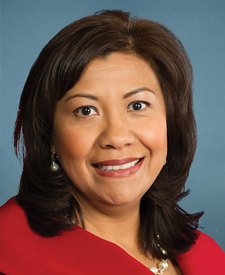
See how Norma J. Torres's votes line up with your values.
DeepSyte scores Norma J. Torres's record on the issues you care about — not party, not press releases. Take the 2-minute values quiz to see your personal alignment.
Sign in and take the values quiz to see how Norma J. Torres's votes line up with your views.
Prediction track record
How often we called Norma J. Torres's passage votes correctly, from their stated positions on each bill's tagged topics. Excludes “unclear” calls and abstentions.
156 predictions on record · none have been resolved by a passage vote yet. Check back as bills move.
To prohibit the disclosure of records by the Secretary of Housing and Urban Development of individuals for the purposes of immigration enforcement, and for other purposes.
No paired statements and votes yet for Norma J. Torres
We haven't yet found statement/vote pairs on the same topic for Norma J. Torres. This usually means either the rep hasn't taken public positions on bills that have come to a passage vote, or those bills haven't been tagged yet. The checker runs as new press releases and votes come in.
Pro analysis
AI rep analysis — Pro
Get an AI-narrated read on Norma J. Torres's full voting record against your stated values — aligned themes, conflicts, notable votes, and what to watch for.
We haven't extracted campaign positions for Norma J. Torres yet. Once their campaign website or position pages are processed, this card will track what they said vs how they voted.
Crossing the aisle
Passage votes where Norma J. Torres broke ranks with ≥75% of Democrats. Threshold catches substantively partisan splits; unanimous-ish or close votes are excluded.
4
Cross-aisle votes
119-hconres-108·Jun 30, 2026·90% of D voted YES
Directing the President pursuant to section 5(c) of the War Powers Resolution to remove United States Armed Forces from hostilities in Lebanon.
Rep. Norma Torres Leads Congressional Delegation Visit to Riverside County Registrar of Voters | U.S. Congresswoman Norma Torres of California's 35th District
Position: The release supports secure, transparent, and accessible election administration and the provision of resources to local election officials, and encourages voters to know their rights and report intimidation.
RIVERSIDE, CA – Today, Congresswoman Norma Torres (CA-35), a member of the House Administration Committee, joined Representatives Mark Takano (CA-39) and Raul Ruiz (CA-25) for a visit to the Riverside County Registrar of Voters ahead of the November 3 general election.
During the visit, Members toured the county's ballot processing center and met with Registrar of Voters Art Tinoco and Assistant Registrar Matthew Ceballos to learn about election administration procedures, ballot processing operations, and safeguards designed to protect the integrity of the voting process.
The delegation also discussed the importance of transparency in election administration, the role of local election officials in providing accurate information to the public, and efforts to address misinformation about voting and ballot counting.
“Every eligible voter deserves to know their ballot will count and that they can vote without intimidation or interference," said Congresswoman Norma Torres. “Today, we saw firsthand the careful preparation and dedication of Riverside County’s election workers. As a member of the House Administration Committee, which oversees federal elections, I take seriously our responsibility to ensure local election officials have the resources and support they need to conduct secure, transparent, and accessible elections. That starts with listening to the people doing this work every day. With Election Day approaching, I am encouraging voters to use our Know Your Rights voter cards to understand their rights and know where to report intimidation.”
"I encourage every Californian to stay informed, use official resources, ask questions, and participate confidently in our democracy,” said Rep. Takano. "Our elections are strongest when voters have access to accurate information, election officials can do their jobs without interference, and every eligible voter knows their voice matters. Let us reject fear and misinformation, stand firm in protecting our democratic institutions, and ensure that every eligible Californian has the opportunity to make their voice heard.”
“Our elections are safe, fair and secure. We strengthen our democracy by building confidence in our elections. Today, I visited the ballot processing center and saw firsthand the care and professionalism that go into protecting every ballot and ensuring that every voter has an equal opportunity to participate in our democracy. My message to every voter is very simple: know your rights, have a plan, and vote early. If you have concerns about your voting rights or need election information, call the California Secretary of State’s voter hotline at (800) 345-VOTE (8683),” said Congressman Dr. Raul Ruiz.
Riverside County Supervisors Karen Spiegel (District 2) and Yxstian Gutierrez (District 5) also participated in the visit.
Following the tour, Members held a press conference to discuss their observations and answer questions from reporters about the visit.
The Riverside County Registrar of Voters is responsible for administering elections throughout Riverside County, including processing ballots, maintaining voter registration records, and conducting election-related operations in accordance with state and federal law.
Congresswoman Torres Secures $172.5 Million for Local Projects in Water Resource Development Act | U.S. Congresswoman Norma Torres of California's 35th District
Position: The release announces that the House-passed Water Resources Development Act of 2026 includes increased federal water infrastructure authorizations for the Inland Empire and states Congresswoman Torres supports federal assistance for local water, wastewater, and flood protection projects.
Washington D.C. — Congresswoman Norma Torres (CA-35) announced that she had secured numerous wins for communities in the 35th Congressional district in the Water Resources Development Act (WRDA) of 2026. The bill, which recently passed the House of Representatives, includes $172.5 million in new and increased authorizations for Inland Empire water infrastructure in the 35th Congressional District. The legislation prioritizes federal assistance for local priorities submitted by Torres to improve water reliability, upgrade wastewater systems, and protect local communities from flooding.
“Families should be able to trust the water coming out of their taps and know their neighborhoods are protected when severe storms hit,” said Congresswoman Torres. “As we face a Super El Niño this year, I pushed to address aging pipelines, inadequate sewer service, and flood risks across the Inland Empire. These authorizations are a major step toward delivering those improvements and supporting the infrastructure and water supplies that our growing communities need. I will continue working to get this legislation across the finish line and secure funding to turn these priorities into completed projects.”
The House-passed WRDA 2026 includes:
$60 million in additional authorization for San Bernardino County, increasing the existing authorization from $24 million to $84 million and expanding eligible uses to include water supply and stormwater management.
A new $67.5 million authorization for San Bernardino and Riverside Counties for water and wastewater infrastructure, including water supply, distribution systems, stormwater management, and environmental restoration.
$40 million in additional authorization for Fontana, increasing the existing authorization from $16 million to $56 million and expanding eligible uses to include wastewater infrastructure, stormwater management, and water supply and distribution systems.
$5 million in additional authorization for the Inland Empire, increasing the existing authorization from $60 million to $65 million.
Advancing Local Water and Flood Protection Priorities:
In addition to securing increased funding authorizations for the Inland Empire, Torres submitted five environmental infrastructure priorities totaling more than $90.7 million. The bill’s expanded regional authorizations provide a pathway to pursue federal assistance for these projects:
Arrow Route Wastewater Treatment Phase III: Extend sewer service to an underserved, unincorporated area of Fontana, reducing reliance on failing septic systems that threaten groundwater quality.
Prado Regional Park Water Supply Project: Upgrade water storage, pumps, and irrigation infrastructure to maintain the park’s lake, protect natural resources, and preserve a valued community space in Chino.
West State Street Storm Drain Segments IIIB and IIIC: Improve drainage capacity in Montclair and Ontario to better protect homes, businesses, and roads from severe flooding.
Palo Verde Pipeline Replacement Project: Replace aging water lines in Montclair to improve water quality, reduce water loss, and strengthen water delivery and fire protection.
Lytle Creek Penstock: Rehabilitate a historic pipeline serving regional water supply and hydropower infrastructure to improve safety and long-term reliability.
Supporting Inland Empire Jobs Through Reliable Port Infrastructure
The bill also includes funding changes to help major ports, including the Port of Los Angeles and Port of Long Beach, receive fairer, more predictable harbor maintenance funding. Nearly 40 percent of all imported U.S. consumer goods flow into these two ports and the Inland Empire, so ensuring donor ports can continue to invest in port infrastructure helps the Inland Empire workers in trucking, logistics, and manufacturing.
Ensuring Local Control of San Jose Creek Near Pomona
The bill would return local control of the San Jose Creek segment near Pomona to the Los Angeles County Public Works from the Army Corps of Engineers, helping the Los Angeles County Flood Control District manage the broader flood control system more efficiently. Reducing duplicative federal permitting requirements will help advance critical improvements that protect communities, revitalize and improve public safety in areas near the creek, and support water conservation.
Congresswoman Torres Introduces the Streamlining Affordable Housing Act To Lower Costs and Build Homes Faster | U.S. Congresswoman Norma Torres of California's 35th District
Position: Introduces legislation authorizing $90 million annually for fiscal years 2027 through 2029 for federal grants to help states consolidate affordable housing financing programs and create a universal application process.
Washington D.C. — Today, Congresswoman Norma Torres introduced the Streamlining Affordable Housing Act, legislation to help states simplify affordable housing financing so projects can move forward faster and at lower cost. The bill would provide federal grants to help states consolidate their financing programs and establish one-stop shops where builders can access state funding through a single, universal application process.
Affordable housing developers must often stitch together funding from multiple public programs, each with separate requirements and timelines. Research from UC Berkeley’s Terner Center found that in California, each additional public funding source was associated with roughly four additional months in the development timeline and approximately $20,460 more in development costs per home.
To address this issue, Rep. Torres’ legislation authorizes $90 million annually for fiscal years 2027 through 2029 to help states have the resources to reorganize fragmented financing systems, better coordinate programs, and make it easier for builders by creating a universal application for affordable housing financing. This past year, California took steps to create a new consolidated housing agency and a one-stop application process to reduce the delays and costs of navigating separate funding programs. Torres’ Streamlining Affordable Housing Act would help these and similar efforts, and support those already making progress.
“Families in the Inland Empire need homes they can afford, but too many affordable housing projects get stuck in a maze of applications and bureaucracy before construction can even begin,” said Congresswoman Norma Torres. “I’ve heard from developers who had to piece together nineteen sources of financing just to get one project off the ground. Every delay adds costs while families keep waiting. My bill would give states the resources to bring their financing programs together, create one application process, and get more affordable homes built so families can benefit.”
“We appreciate Congresswoman Torres’ longstanding advocacy for affordable housing and her willingness to listen to those working to build and preserve it. Her continued attention to the challenges facing our industry helps keep the need for affordable homes a priority.” — National CORE President Michael Ruane
“We applaud Representative Torres’ efforts to streamline access to affordable housing financing and support more efficient pathways to housing development. Reducing barriers and complexity in the funding process can help communities accelerate the development of much-needed affordable housing.” — Maria Razo, Executive Director, Housing Authority of the County of San Bernardino
The Streamlining Affordable Housing Act would establish a grant program at the Department of Housing and Urban Development that states and territories can opt into. The formula grants would help states:
Consolidate state financing entities and functions under one entity.
Create a one-stop shop by simplifying access to funding through a single, universal application process and technical assistance for builders.
The grants would reward states that undertake or complete both consolidation and application streamlining, unlocking additional flexibility for funds to also help improvements to permitting, zoning, regulatory processes, build state capacity, and access to low income Housing Tax Credits.
Participation would be voluntary, with formula funding, subject to appropriations, allocated among states that opt in based on a base grant of $500,000 and an additional amount based on the state’s population.
The bill would also require HUD to report to Congress on states’ use of the funding, identify best practices, and recommend further improvements.
Representatives Torres and Fleischmann Lead Bipartisan Bill to Build America’s Advanced Manufacturing Workforce | U.S. Congresswoman Norma Torres of California's 35th District
Position: Representatives Torres and Fleischmann introduced the bipartisan Advanced Manufacturing Jobs in America Act of 2026, which would direct the Department of Labor to establish pilot projects linking community colleges, workforce boards, manufacturers, and MEP centers to provide advanced manufacturing education, training, and apprenticeships, prioritizing dislocated and unemployed workers.
Washington, D.C. – Today, during National Manufacturing Month, Representatives Norma Torres (CA-35) and Chuck Fleischmann (TN-03) introduced the bipartisan Advanced Manufacturing Jobs in America Act of 2026, legislation to help workers train for and connect with advanced manufacturing careers. The legislation, which was inspired by the successful public-private partnership that created the InTech Center at Chaffey College in Fontana, would direct the Department of Labor to initiate pilot projects between local community colleges, state and tribal colleges, local boards, advanced manufacturers, and Manufacturing Extension Partnership (MEP) centers that are focused on education, training, and apprenticeship programs for advanced manufacturing jobs.
“Manufacturing is a cornerstone of the Inland Empire’s economy, and we need to make sure our workforce is prepared for the jobs of tomorrow,” said Congresswoman Torres. “The Advanced Manufacturing Jobs in America Act will bring manufacturers, community colleges, and workforce partners together to give workers the skills they need to secure good-paying careers while helping American manufacturers find the talent they need to grow. Investing in American manufacturing means investing in American workers, and I am proud to partner with Congressman Fleischmann on this bipartisan effort.”
“Manufacturing is the backbone of America, driving our economy, creating jobs, and building the foundation of our nation’s prosperity. East Tennessee is leading the way in America’s reindustrialization, showing how innovation and hard work can revitalize our manufacturing sector. This legislation is vital to keeping America competitive and strong. I am honored to champion this effort in Congress and remain committed to supporting American manufacturing and the dedicated people who power it,” said Congressman Fleischmann.
The Advanced Manufacturing Jobs in America Act would amend the Workforce Innovation and Opportunity Act to establish pilot projects focused on advanced manufacturing education and training. The bill would support partnerships between advanced manufacturers and community colleges, workforce development boards, Manufacturing Extension Partnership centers, local educational agencies, and other eligible organizations. Programs could include classroom and hands on learning, on-the-job training, and registered apprenticeships and pre-apprenticeships.
The legislation would prioritize dislocated and unemployed workers. Eligible recipients must demonstrate their capacity to teach the skills needed for advanced manufacturing jobs and provide workers with a recognized postsecondary credential.
The bill is inspired by the public-private partnership at the InTech Center at Chaffey College, a regional training center that trains and upskills students and employed workers for in-demand technical careers at no cost. In 2014, the Chaffey College and the Inland Empire Regional Training Consortium (IERTC) received a $15 million grant from the Department of Labor, which resulted in the 2016 opening of the InTech Center, a partnership between Chaffey College and California Steel Industries (now Nucor-CSI). The center was California's first public-private workforce training partnership in advanced manufacturing. Located in Fontana, CA, the center now works with more than 70 employers in the region and is an example of how federal funding can jumpstart successful public-private workforce development programs in advanced manufacturing.
Earlier this month, Reps. Torres and Fleischmann led a bipartisan resolution recognizing National Manufacturing Day and the contributions of manufacturers and workers across the country. In 2022, Reps. Torres & Fleischmann also secured the inclusion of their bicameral, bipartisan National MEP Supply Chain Database Act in the CHIPS and Science Act (Public Law 117-167) to help manufacturers prepare for future supply chain challenges.
Rep. Torres Introduces the Improving Access to WIC Act to Ease Access to Nutrition Support for Moms and Children | U.S. Congresswoman Norma Torres of California's 35th District
Position: Introduces legislation to establish a federal grant program that would improve enrollment, participation, and retention in the WIC nutrition program, including integration with healthcare providers and SNAP and Medicaid enrollment. The release supports expanding access to WIC for eligible families.
Washington, D.C. – Today, Congresswoman Norma Torres (CA-35) introduced the Improving Access to WIC Act, legislation to make it easier to enroll in and stay connected to the Special Supplemental Nutrition Program for Women, Infants, and Children (WIC). As families struggle with the ongoing affordability crisis, WIC helps feed mothers from the moment they find out they are pregnant to when their children are five years old. WIC not only helps moms access free, healthy foods, but also helps with breastfeeding support, nutrition education, and health resources.
Nearly 25,000 mothers, infants, and children benefit from WIC in California’s 35th Congressional District. Nationwide, in fiscal year 2025, WIC served 6.9 million participants every month. The program is proven to save lives and improve lifetime health outcomes. Despite this, the most recent data show that more than 4 in 10 eligible individuals do not participate in WIC, and WIC utilization is lower for pregnant mothers and 1- to 4-year-olds. This legislation will tackle this participation gap.
The Improving Access to WIC Act would establish a federal grant program for states, tribes, and territories to improve access to, participation in, and retention in WIC. States that opt into the program would receive flexible funding to help strengthen partnerships between WIC agencies and healthcare providers, modernize the enrollment experience, improve community outreach, and help enroll mothers and children on SNAP and Medicaid who already qualify for WIC but do not yet participate.
“WIC provides critical nutrition assistance to moms, babies, and young children, and getting enrolled should not mean jumping through unnecessary hoops,” said Congresswoman Torres. “Moms are already juggling doctor’s appointments, work, child care, and countless responsibilities. We should be making it easier, not harder, for eligible families to access the support they need. My Improving Access to WIC Act will help states integrate WIC enrollment with healthcare providers, reduce duplicative appointments and paperwork, and make it easier for families to enroll and stay on WIC.”
“Despite the incredible public health benefits of WIC, we are still reaching only a little more than half of eligible families. Investing in targeted outreach, data sharing, and healthcare linkages will make it easier for families who qualify to connect with WIC. We thank Rep. Torres for her leadership and support for WIC.” Georgia Machell, President & CEO, National WIC Association
“WIC is an evidence-based, time-limited program with proven positive outcomes for families and communities, yet there is a significant portion of eligible families not connected to services. Supporting innovative outreach methods and healthcare linkages to improve access to the program is an important investment. We appreciate Rep. Torres’s support for WIC and young families.” Megan Esparza, Executive Director, California WIC Association
“The Special Supplemental Nutrition Program for Women, Infants and Children (WIC) is one of the most critical tools pediatricians have to ensure infants and young children can receive proper nutrition support in their earliest years. The Improving Access to WIC Act would provide states with resources to make enrolling eligible families in WIC easier, more efficient, and more effective. The American Academy of Pediatrics thanks Representative Torres for introducing this important legislation and calls on Congress to advance it,” said Andrew D. Racine, MD, PhD, FAAP, President of the American Academy of Pediatrics.
“The American College of Obstetricians & Gynecologists has a long history of supporting the WIC program and is proud to endorse the Improving Access to WIC Act,” said ACOG President Camille A. Clare, MD, MPH, CPE. “Families are facing growing financial pressure, and putting healthy food on the table can be especially difficult during pregnancy and after a baby is born. With significant changes to SNAP under H.R. 1, making WIC easier to access is more important than ever. This bill would help eligible families get the nutrition support they need instead of getting stuck in red tape. ACOG thanks Rep. Norma Torres for her leadership and commitment to strengthening the WIC program.”
"WIC is a proven intervention that supports the health of women, babies, and young children. Yet far too many eligible families are missing out on the many benefits of the program. We applaud Rep. Torres for introducing the Improving Access to WIC Act. Establishing a federal grant program to help states improve access to and participation in WIC would make it easier for eligible families to connect with this critical support. We urge Members of Congress to co-sponsor this legislation, so more families are connected to the nutrition they need to thrive." - Crystal FitzSimons, President of the Food Research & Action Center (FRAC).
The bill is supported by: National WIC Association (NWA), California WIC Association (CWA), American Academy of Pediatrics (AAP), American College of Obstetricians and Gynecologists (ACOG), Food Research and Action Center (FRAC), Alliance to End Hunger, Coalition on Human Needs.
The Improving Access to WIC Act authorizes $50 million for Fiscal Years 2027 through 2031 for the grant program. States, tribes, and territories that choose to opt in would receive, to the maximum extent practicable, $200,000 and an additional amount based on each participating state’s national share of WIC participants.
The bill also requires the U.S. Department of Agriculture to publicly report on the program’s outcomes, including its impact on WIC participation and retention, and share best practices that states can use to improve enrollment and access.
Under the legislation, participating states could use grant funding to:
Connect more eligible families with WIC by:
Improving outreach in clinical settings and building up systems to make it easier for doctors and health care providers to directly refer patients to WIC, including through statewide referral systems, and
Expanding outreach in trusted community settings, including at Head Start and Early Head Start programs, preschools, schools, and other places to meet WIC-eligible families where they are.
Improve secure data sharing between health care providers and WIC agencies to streamline WIC referrals and certification, while protecting privacy, requiring individual consent, and maintaining federal confidentiality protections.
Reduce duplicative appointments and paperwork by making it easier for health care providers, consistent with applicable laws and with individuals’ consent, to securely provide WIC agencies with information such as height, weight, hemoglobin measurements (blood tests), and other documentation needed for WIC certification.
Modernize the enrollment process, including by establishing or expanding online WIC applications.
Help reach and enroll moms and children on Medicaid (Medi-Cal) or SNAP (CalFresh) who already qualify for WIC, but are not participating.
Original Cosponsors: Nanette Barragán (CA-44); Suzanne Bonamici (OR-01); Yvette Clarke (NY-09 ); Jim Costa (CA-21); Jasmine Crockett (TX-30); Chris Deluzio (PA-17); Debbie Dingell (MI-06); Sylvia Garcia (TX-29); Jesús “Chuy” García (IL-04); Adelita S. Grijalva (AZ-07); Glenn Ivey (MD-04); Pramila Jayapal (WA-07); Sydney Kamlager-Dove (CA-37); Robin Kelly (IL-02); Tim Kennedy (NY-26); Kelly Morrison (MN-03); Eleanor Holmes Norton (DC-00); Chellie Pingree (ME-01); Lateefah Simon (CA-12); Melanie Stansbury (NM-01); Juan Vargas (CA-52);
Rep. Norma Torres Secures $25 Million For State Route -71 Gap Closure Project in Pomona | U.S. Congresswoman Norma Torres of California's 35th District
Position: The release announces $25 million in federal INFRA grant funding for Phase 2 of the State Route 71 Gap Closure Project in Pomona and states support for the project's expansion.
Washington, D.C. – Today, Congresswoman Norma Torres (CA-35), a member of the Appropriations Subcommittee that oversees all federal transportation funding, announced that the Los Angeles County Metropolitan Transportation Authority (LA Metro) will receive $25 million in federal funding from the U.S. Department of Transportation (DOT) for Phase 2 of the State Route 71 (SR-71) Gap Closure Project in Pomona.
The funding, awarded through the DOT’s Fiscal Year 2026 Nationally Significant Multimodal Freight and Highway Projects (INFRA) Grant Program, will help upgrade the existing four-lane expressway between Interstate 10 (I-10) and Mission Boulevard into an eight-lane freeway. The project will add one high-occupancy vehicle lane and one mixed-flow lane in each direction, construct auxiliary lanes, replace aging railroad bridges, install soundwalls, and construct an ADA-compliant pedestrian overcrossing at 9th Street.
Congresswoman Torres previously wrote to U.S. Department of Transportation Secretary Sean Duffy in support of LA Metro’s application, emphasizing the project’s importance to commuters, public safety, the regional economy, and the movement of goods throughout Southern California.
“Anyone who drives the 71 knows how badly these improvements are needed,” said Congresswoman Torres. “I urged the Department of Transportation to support this project because families in Pomona and across the Inland Empire deserve safer roads, shorter commutes, and infrastructure that can keep up with our growing region. This $25 million investment will help eliminate a major bottleneck, improve the movement of goods, and strengthen a corridor that our communities and economy depend on every day. I am thrilled to see federal dollars coming home to move this critical project forward.”
“Metro is pleased to be receiving a $25 million INFRA grant from the U.S. Department of Transportation for the State Route 71 Gap Closure Project,” said Metro CEO Stephanie Wiggins. “We are grateful for the remarkably strong support for this project from Congresswoman Norma Torres, a senior member of the House Committee on Appropriations, Subcommittee on Transportation, Housing and Urban Development. This Measure M voter-approved project will significantly reduce congestion and travel times, improve safety and connectivity – all while enhancing the movements of goods and people across our region. I welcome this infusion of federal funding that will help complete this project and express my appreciation to the local, state, and federal stakeholders whose collaboration are making this project a reality.”
The SR-71 corridor connects communities across Los Angeles, San Bernardino, and Riverside counties and serves as an important route for commuters and freight movement. Phase 2 will address approximately two miles between I-10 and Mission Boulevard and help create consistent improvements along SR-71 from SR-91 to I-10.
The INFRA program provides competitive federal funding for highway and freight projects of national and regional significance that improve the safety, efficiency, and reliability of moving people and goods.
Congresswoman Torres Calls for Immediate Action After California is Left Out of Federal Manufacturing Funding for Second Year in a Row | U.S. Congresswoman Norma Torres of California's 35th District
Position: Congresswoman Torres calls on the Department of Commerce and NIST to immediately restore California's Manufacturing Extension Partnership center and criticizes the state being left out of federal MEP funding for a second consecutive year.
Washington, D.C. – Today, Congresswoman Norma Torres (CA-35), a member of the House Appropriations Committee and longtime advocate for manufacturing jobs in the Inland Empire, called on the Department of Commerce’s National Institute of Standards and Technology (NIST) to immediately restore California’s Manufacturing Extension Partnership (MEP) Center after the state was left without federal MEP funding for the second year in a row.
MEP centers play a critical role in helping manufacturers secure their supply chains, expand connections with domestic suppliers, and develop their workforces by creating good-paying, high skill jobs. California has not had an active MEP Center since fall 2025. NIST’s choice to leave out California yet again, despite numerous applicants, means that the largest manufacturing state in the nation and the world’s 4th largest economy will now go more than two years without the expertise, support, and guidance that MEP centers and their networks provide.
On September 15, 2025, the Department of Commerce’s National Institute of Standards and Technology (NIST) awarded more than $30 million to support MEP centers in 11 states and Puerto Rico as part of the Fiscal Year 2026 MEP Center State Competition. At that time, California and Alaska were the only eligible states where no selection was made. NIST’s July funding opportunity anticipated up to $15.6 million annually for a California MEP Center. Now, more than a year later, California’s manufacturers are again being ignored by the Trump Administration.
“California manufacturers should not have to wait another year for resources that businesses across the country are already receiving,” said Congresswoman Torres. “I have repeatedly called for the Department of Commerce to restore California’s MEP Center because I know how important these resources are to manufacturers in the Inland Empire and across our state. Every month of delay means missed opportunities to help small and midsize businesses adopt new technology, strengthen our supply chains, create jobs, and compete in a rapidly changing global economy. This delay cannot become the new normal. The Department of Commerce must work with California stakeholders and ensure a strong MEP Center is restored as quickly as possible. As the largest manufacturing state in the nation, supporting American manufacturing means supporting California manufacturing.”
Earlier this year, Torres led members of the California Congressional delegation in encouraging Commerce Secretary Howard Lutnick to restore California’s MEP Center after the state was left out of a December 2025 MEP Center funding opportunity. The lawmakers warned that leaving California without an MEP center would deny manufacturers access to technical assistance and resources that help strengthen domestic production and workforce development.
As a member of the Appropriations Committee, Torres has pushed for strong funding and safeguards for the MEP program, and is a longtime supporter of the program, including getting her bill, the National Supply Chain Database Act, signed into law as part of the CHIPS and Science Act . NIST’s latest decision to leave out California does not comply with the Commerce, Justice, Science; Energy and Water Development; and Interior and Environment Appropriations Act, 2026 (Public Law 119-74) signed into law in January 2026, which directed the Department to fund the MEP at fiscal year 2024 levels, and to “rapidly execute funding competitions” in order to minimize “the periods of time when no MEP Center is active in any State or Puerto Rico.
Congresswoman Torres and Senator Padilla Introduce BASIC Act to Ensure No Student Has to Choose Between College and Basic Needs | U.S. Congresswoman Norma Torres of California's 35th District
Position: The release supports reintroduction of the BASIC Act, which would establish a $1 billion competitive grant program to help colleges address students' unmet basic needs such as food, housing, healthcare, childcare, and transportation.
Washington, D.C. – Today, Congresswoman Norma Torres and U.S. Senator Alex Padilla reintroduced the Basic Assistance for Students In College (BASIC) Act, legislation to help community colleges and four-year institutions address the unmet basic needs of their students by establishing a $1 billion competitive grant program to better connect students with the resources they need to stay in school and complete their degrees.
Amidst the ongoing affordability crisis, college students across America are struggling to afford food, safe housing, healthcare, childcare, transportation, and other necessities. Nearly one in four college students across the country experience food insecurity, a rate twice that of all other U.S. households, and 1 in 10 students experience homelessness. Research from The Hope Center for Student Basic Needs at Temple University shows that 3 in 5 students do not have enough to eat or a safe place to live.
Students with limited income or access to opportunities, such as Pell Grant recipients, parenting students, first-generation students, veterans, former foster youth, students with disabilities, and students at community colleges, Historically Black Colleges and Universities (HBCUs), and Hispanic-Serving Institutions, typically experience the highest levels of basic needs insecurity.
Since Fiscal Year 2021, Rep. Torres and Senator Padilla have secured over $43 million for the Basic Needs for Postsecondary Students Program (“Basic Needs Grants”) grants nationwide, including $10 million in FY2026. Basic Needs grants now reach schools in 22 states and Puerto Rico, including both rural and urban areas in Alabama, Arizona, California, Colorado, Florida, Indiana, Kansas, Louisiana, Massachusetts, Maryland, Minnesota, North Carolina, New Jersey, New Mexico, Nevada, New York, Ohio, Oregon, Tennessee, Texas, Virginia, and Wisconsin, and the program has received applications from many more states. The BASIC Act would build upon this progress and ensure students have access to basic needs.
“No student working toward a college degree should have to wonder where their next meal will come from or whether they can keep a roof over their head,” said Congresswoman Torres. “Our students are doing everything we ask of them, pursuing an education, and building a better future, but rising costs are making it harder just to stay in school. The BASIC Act will help colleges step up, connect students with resources they already qualify for, and make sure food, housing, child care, or transportation are never the reason a student has to give up on their education. When our students succeed, our communities and our economy succeed with them.”
“Higher costs fueled by the Trump Administration’s policies are making it harder for millions of students to afford basic needs like housing, healthcare, and nutritious food,” said Senator Padilla. “No student should have to choose between meeting their everyday needs and pursuing higher education. The BASIC Act will help bridge these gaps by providing resources to universities to support students not having to skip a meal or sacrifice their mental or physical health in pursuit of their higher education goals.”
"The California State University (CSU) is proud to support Senator Alex Padilla and Congresswoman Norma Torres in advancing a comprehensive approach to meeting students’ basic needs. We know that student success extends beyond the classroom. When students have reliable access to nutritious food, safe housing, childcare, transportation and technology, they are better positioned to stay enrolled, focus on their education and make meaningful progress toward their degrees. Through the CSU’s Basic Needs Initiative, we have seen the importance of addressing these needs as an integral part of supporting the whole student. The BASIC Act builds on that commitment and aligns with CSU Forward’s focus on creating the conditions for every student to thrive and earn a degree. By strengthening this work at colleges and universities across the country, this legislation has the potential to expand educational opportunity and create lasting benefits for students, their families and their communities." said Dr. Dilcie Perez, Vice Chancellor for Strategic Enrollment Management and Student Success.
“The University of California (UC) is committed to addressing students’ academic and essential needs through its Basic Needs Initiative, a multi-prong effort to identify and address key factors that contribute to food and housing insecurity so that students can succeed and thrive,” said University of California Vice President and Vice Provost for Graduate, Undergraduate, and Equity Affairs Yvette Gullatt. "That is why UC is proud to support the Basic Assistance for Students in College (BASIC) Act, which would establish a grant program allowing institutions of higher education to address basic needs insecurity on campuses by providing additional resources to ensure that students can complete their degrees. UC has long advocated for federal support for basic needs and is grateful to Representative Norma Torres and Senator Alex Padilla for their continued work on this vitally important issue.”
Authorize a $1 billion competitive grant program to help institutions of higher education identify and meet the basic needs of students through:
$40 million for planning grants to help institutions identify unmet needs and develop strategies to combat food and housing insecurity and homelessness.
$960 million for implementation grants to help institutions provide direct housing, food, and child care assistance, connect students with public benefits, partner with community organizations, and strengthen basic-needs services.
Grants will prioritize institutions with 25% of higher federal Pell Grant enrollment.
At least 25 percent of grant funding must go to community colleges, and another 25 percent must go to HBCUs, Tribal Colleges and Universities, and other minority serving institutions (such as HSIs, AANAPISIs).
Improve coordination and data sharing to help identify students who may qualify for programs such as SNAP, WIC, Medicaid, housing assistance, child care assistance, tax credits, while protecting student data and privacy.
Require a national report on student food, housing, and basic-needs insecurity to better understand the challenges facing students and identify effective solutions.
The legislation authorizes $1 billion annually from fiscal years 2027 through 2033 to support planning and implementation grants for colleges and universities nationwide.
The BASIC Act of 2026 is endorsed by: American Association of Community Colleges (AACC); American Association of University Women (AAUW); American Council on Education (ACE); California Community Colleges Chancellor's Office; California State University (CSU); EdTrust; Excelencia in Education; Institute for Higher Education Policy (IHEP); National Association for College Admission Counseling; National Association of Independent Colleges and Universities; National Education Association ; New America Higher Education Policy Program; The Hope Center for Student Basic Needs; The Institute for College Access & Success (TICAS); Today's Students Coalition; University of California (UC); Youth Law Center; Achieve Atlanta; Cedar Crest College; Church Women United in New York State; FoodShare South Carolina ; Hunger Free America; LeadMN;
Original Cosponsors: Representatives Wesley Bell (MO-01); Yvette Clarke (NY-09); J. Luis Correa (CA-46); Jasmine Crockett (TX-30); John Garamendi (CA-08); Lucy McBath (GA-06); Gwen Moore (WI-04); Seth Moulton ((MA-06)); Eleanor Holmes Norton (DC-00); Scott Peters (CA-50); Linda T. Sánchez (CA-38); Mary Gay Scanlon (PA-05); Lateefah Simon (CA-12); Shri Thanedar (MI-13); Juan Vargas (CA-52);
Congresswoman Torres Joins Democratic Women’s Caucus Members in Calling Out HHS Secretary For Proposed Plan to Gut Head Start | U.S. Congresswoman Norma Torres of California's 35th District
Position: The release opposes a proposed HHS rule that would remove approximately 90% of Head Start Program Performance Standards, arguing it would reduce program quality, raise costs for families, and override Congressional intent. The letter calls on the Secretary to withdraw the proposed rule.
Washington, D.C. – Congresswoman Norma Torres (CA-35) joined Democratic Women’s Caucus Chair Teresa Leger Fernández (NM-03), DWC Whip Kristen McDonald Rivet (MI-08), DWC Senate Liaison and Caregiving Task Force Co-Chair Debbie Dingell (MI-06), and Caregiving Task Force Co-Chairs Brittany Pettersen (CO-07) & Lateefah Simon (CA-12) in sending a letter to Health and Human Services (HHS) demanding HHS Secretary Robert F. Kennedy Jr. withdraw their proposed rule to gut 90% of Head Start Program Performance Standards (HSPPS) that would increase costs for families and eliminate educational resources women and families rely on. The letter was signed by 87 House Democrats.
For 60 years, Head Start has served over 40 million families and children with accessible social services, healthcare, and improved early learning standards. The program provides low-income children, children with disabilities, dual language learners, and children experiencing homelessness with the resources needed to succeed in school. Even after six decades, Head Start remains popular, with four in five Americans saying they’re in support of the program evidence that Trump’s efforts to gut it are out of step with what Americans want.
The proposed rule would diminish the quality of Head Start services and undermine its ability to develop evidence-based programs that improve education, health, nutrition, parental involvement, and social services forcing families to either lose these resources or turn to more expensive options elsewhere. Head Start could no longer connect families to jobs, education, and housing opportunities or effectively help children succeed in school.
In the letter, Members highlighted how the proposed rule would undermine Congressional authority and intent:
“The administration claims to be removing red tape and saving money. In reality, this proposed rule would override Congressional intent by removing standards that make Head Start the program that it is today and that Congress explicitly directed HHS to create based on research and consultation with experts.”
The Members also explained how the elimination of National Head Start Standards for education would be detrimental to the programs success:
“Rigorous research has found that Head Start generates substantial long-term economic benefits, including an estimated $1.86 in benefits for every dollar invested. That return depends on strong teachers, strong ratios, and strong services—qualified staff, appropriate classroom size and teacher to child ratios that support learning, developmental screening and follow-up, health and mental health services, family engagement and support services, and evidence-based early learning—not a patchwork of state requirements that would create different standards throughout the country.”
The Members also warned the proposed cuts would erode the safety and the quality of the program and possibly put students in danger:
“The proposed rule would eliminate Head Start’s specific federal requirement that children be supervised at all times, reduce mandatory annual staff training on preventing abuse and neglect, repeal the prohibition on corporal punishment, shaming, humiliation, and seclusion practices, and remove the timelines that ensure a child’s developmental, dental, and medical needs are actually screened and followed up on.”
Lastly, the Members explain how the cuts would roll back its strict student support systems that keep children in school:
“This proposed rule would strip Head Start’s ban on expelling children and its strict limits on suspension which is deeply concerning. These protections exist because preschoolers are already suspended and expelled at rates far above K-12 students. Additionally, disparities in suspension and expulsion are already significant for children of color, boys, and children with disabilities. Federal data show that children of color account for a disproportionate share of preschool suspensions, while children served under Individuals with Disabilities Education Act (IDEA) make up 23 percent of enrollment but 74 percent of expulsions.7 Removing these federal protections will not close those gaps. It will widen them.”
The letter was signed by: Amo, Gabe; Ansari, Yassamin; Balint, Becca; Barragán, Nanette; Beatty, Joyce; Bonamici, Suzanne; Brownley, Julia; Brown, Shontel; Budzinski, Nikki; Carbajal, Salud; Carson, André; Castor, Kathy; Chu, Judy; Clarke, Yvette; Craig, Angie; Crockett, Jasmine; Davids, Sharice; Dean, Madeleine; DeGette, Diana; DelBene, Suzan; Dexter, Maxine; Dingell, Debbie; Elfreth, Sarah; Escobar, Veronica; Foushee, Valerie; Frankel, Lois; Friedman, Laura; Garcia, Sylvia; Goodlander, Maggie; Grijalva, Adelita; Hayes, Jahana; Horsford, Steven; Houlahan, Chrissy; Hoyle, Val; Jacobs, Sara; Jayapal, Pramila; Johnson, Julie; Kamlager-Dove, Sydney; Kaptur, Marcy; Kelly, Robin; Lee, Summer; Leger Fernandez, Teresa; Matsui, Doris; McBath, Lucy; McBride, Sarah; McClain Delaney, April; McClellan, Jennifer; McCollum, Betty; McDonald Rivet, Kristen; McIver, LaMonica; Mejia, Analilia; Meng, Grace; Moore, Gwen; Moskowitz, Jared; Ocasio-Cortez, Alexandria; Omar, Ilhan; Pelosi, Nancy; Pettersen, Brittany; Pingree, Chellie; Pou, Nellie; Pressley, Ayanna; Ramirez, Delia; Randall, Emily; Rivas, Luz; Ross, Deborah; Salinas, Andrea; Scanlon, Mary Gay; Schakowsky, Janice; Scholten, Hillary; Schrier, Kim; Sewell, Terri; Simon, Lateefah; Stansbury, Melanie; Stevens, Haley; Strickland, Marilyn; Sykes, Emilia; Titus, Dina; Tlaib, Rashida; Tokuda, Jill; Torres, Norma; Trahan, Lori; Underwood, Lauren; Velázquez, Nydia; Wasserman Schultz, Debbie; Watson Coleman, Bonnie; Williams, Nikema; Wilson, Frederica
Torres Encourages FAA for More Federal Investment at Ontario International Airport, Support for Aviation Workers. | U.S. Congresswoman Norma Torres of California's 35th District
Position: Congresswoman Torres urges the FAA to increase federal investment in Ontario International Airport, reclassify its air traffic control facility to reflect operational complexity, and withdraw a proposal to override state and local meal and rest break laws for aviation workers.
Washington, D.C. – Today, Congresswoman Norma Torres (CA-35) a member of the House Appropriations Subcommittee on Transportation, Housing and Urban Development, and Related Agencies (THUD), encouraged Federal Aviation Administration (FAA) Administrator Bryan Bedford during a hearing to support the Ontario International Airport (ONT), provide its air traffic controllers with the pay and resources they need, and stood up for California’s labor laws requiring rest and meal breaks for the hard-working pilots, flight attendants, and aviation workers that keep Americans safe. She also invited Administrator Bedford to visit ONT and see its operations first hand
Torres highlighted ONT’s growth since 2016, when she helped pass federal legislation returning to local control. In the decade since, passenger numbers have nearly doubled to more than 7 million passengers and ONT now supports more than 24,000 jobs, contributes $5 billion to the regional economy,and has grown to be one of the nation’s busiest cargo airports. In this past year alone, Torres has helped secure $33 million in federal funding for ONT over the past year.
“Ontario International Airport is an economic engine for the Inland Empire, and its continued growth is something we should be proud of,” said Congresswoman Torres. “But as ONT grows, we need to make sure the federal resources supporting it grow too. That means investing in our infrastructure and ensuring the air traffic controllers who keep passengers safe have the staffing and resources they need.”
Torres also called on the FAA to work with her to reclassify ONT’s air traffic control facility, which is currently designated as a Level 5 facility, which results in less pay, worse training outcomes, and lower priority for technology upgrades. Torres noted that the current classification does not adequately reflect ONT’s complex operations, which include 24 hour operations, complicated overnight traffic and cargo demands, and having to operate in Southern California’s busy airspace. She also stated concerns with the fiscal year 2026 Workforce Plan that lowers the previous staffing target at ONT from 21 fully certified controllers to just 15.
“Our air traffic controllers make split-second decisions every day to keep the flying public safe,” continued Torres. “Their resources and staffing should reflect the complexity and demands of the work they are doing at ONT. I will continue working with the FAA to make sure they have the support they deserve.”
Lastly, the Congresswoman called on the FAA Administrator to withdraw its harmful proposal to override all state and local meal and rest break laws, including those in California. Congress explicitly did not grant FAA the authority for the proposal and multiple court rulings and Supreme Court precedent have protected California’s state laws. Limiting flight crews' or flight attendants’ ability to be well-rested, utilize state-based benefits like meal and rest breaks, or even state-based family or sick leave does not make our aviation system safer. It in fact does the opposite and would harm pilots and flight attendants’ ability to be well-rested and alert.
Source: GDELT 2.0 GKG, filtered to a curated list of national outlets. Inclusion is not endorsement; opinion pieces and reported news are mixed.
Recent stock activity
Periodic transaction reports filed under the STOCK Act — disclosed by the rep, sourced from public filings.
No disclosed trades on record.
Source: open-data mirrors of the Senate eFD and House Clerk financial-disclosure systems. Disclosure within 30 days of trade is required by law (45 for spouse/dependent trades).
Top PAC donors · 2026 cycle
Political action committees that gave the most to this rep's principal campaign committee this cycle. PAC giving is direct organizational support — industry, ideological, or leadership.
1.AIPAC PAC(AMERICAN ISRAEL PUBLIC AFFAIRS COMMITTEE PAC)14 contributions$57,570
2.AMERICAN FEDERATION OF TEACHERS COPELabor3 contributionsTrade-union PAC for the American Federation of Teachers — backs candidates supporting public education funding, teacher compensation, and collective-bargaining rights.AI$15,000
3.AMERICAN CRYSTAL SUGAR COMPANY PACAgriculture2 contributionsAgricultural company PAC for a major sugar producer — backs candidates supporting farm subsidies, tariff protections, and agricultural trade policies.AI$10,000
4.ATU COPE VOLUNTARY ACCOUNT- AMALGAMATED TRANSIT UNION LOCAL 12775 contributions$10,000
5.SHEET METAL AIR RAIL TRANSPORTATION WORKERS INT'L ASSN. POLITICAL ACTION LEAGUE (SMART)4 contributions$10,000
6.DELOITTE PAC4 contributions$10,000
7.AMERICAN FED. OF STATE, COUNTY & MUNICIPAL EMPLOYEES -AFSCME PEOPLE4 contributions$10,000
8.HONEYWELL INTERNATIONAL PACDefense4 contributionsDefense and aerospace contractor PAC — backs candidates supporting federal defense spending, military modernization, and aerospace manufacturing.AI$9,000
9.IBEW PAC VOLUNTARY FUNDLabor2 contributionsTrade-union PAC for the International Brotherhood of Electrical Workers — backs candidates supporting union organizing, prevailing wages, and infrastructure investment.AI$7,500
10.ALLIED PILOTS ASSN. PAC3 contributions$7,500
Source: OpenFEC (api.open.fec.gov) Schedule A receipts where contributor type is “committee.” Aggregated by contributing committee. Self-transfers from joint-fundraising / victory committees are excluded.
Top individual contributors · 2026 cycle
Itemized individual contributions over $200 to this rep's campaign committee, aggregated by donor employer. PAC giving is shown above; this section is people, not organizations.
1.ROUTE 66 SHOOTING SPORTS PARK$14,000
2.MILLER BARONDESS$8,000
3.BROWN & BROWN INSURANCE$7,000
4.HACKMAN CAPITAL$7,000
5.LA SALLE MEDICAL$6,000
6.RED CHAMBER CO.$5,500
7.BGR GROUP$5,250
8.CHINO VALLEY MEDICAL CENTER$4,500
9.DAVIS POLK & WARDWELL LLP$4,000
10.RK LAW$4,000
Source: OpenFEC Schedule A receipts where contributor type is “individual,” aggregated by the donor's self-reported employer. This is a geographic / industry correlation, not a corporate endorsement.