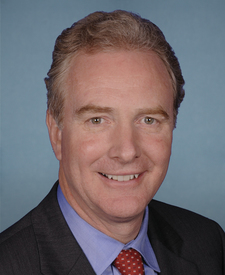
See how Chris Van Hollen actually votes — against your values.
DeepSyte scores Chris Van Hollen's record on the issues you care about — not party, not press releases. Take the 2-minute values quiz to see your personal alignment.
Sign in and take the values quiz to see how Chris Van Hollen's votes line up with your views.
Prediction track record
How often we called Chris Van Hollen's passage votes correctly, from their stated positions on each bill's tagged topics. Excludes “unclear” calls and abstentions.
53 predictions on record · none have been resolved by a passage vote yet. Check back as bills move.
Pending vote119-sjres-123
A joint resolution to direct the removal of United States Armed Forces from hostilities within or against the Islamic Republic of Iran that have not been authorized by Congress.
To prohibit the disclosure of records by the Secretary of Housing and Urban Development of individuals for the purposes of immigration enforcement, and for other purposes.
No paired statements and votes yet for Chris Van Hollen
We haven't yet found statement/vote pairs on the same topic for Chris Van Hollen. This usually means either the rep hasn't taken public positions on bills that have come to a passage vote, or those bills haven't been tagged yet. The checker runs as new press releases and votes come in.
Pro analysis
AI rep analysis — Pro
Get an AI-narrated read on Chris Van Hollen's full voting record against your stated values — aligned themes, conflicts, notable votes, and what to watch for.
We haven't extracted campaign positions for Chris Van Hollen yet. Once their campaign website or position pages are processed, this card will track what they said vs how they voted.
Crossing the aisle
No party-break passage votes recorded for Chris Van Hollen. Either they've voted with Democrats on every substantive passage vote in the corpus, or their tenure overlaps few high-threshold party-line votes so far.
Recent votes
No recorded votes yet.
Recent statements
June 26, 2026press_release_senate
Maryland Congressional Delegation and Governor Wes Moore Meet to Discuss State Priorities | U.S. Senator Chris Van Hollen of Maryland
Position: Maryland's congressional delegation and governor oppose the current administration's cuts to SNAP, Medicaid, and Medicare, and support protecting these programs and investing in infrastructure, economic opportunity, and environmental protection for the state.
WASHINGTON – Yesterday, members of Maryland’s Congressional Delegation and Maryland Governor Wes Moore held a meeting at the United States Capitol to discuss their work on a range of issues important to Marylanders, including infrastructure, health care, affordability, economic opportunity, the Chesapeake Bay, and more. Video of the members’ press availability following the meeting is available here.
“Team Maryland’s top priority is delivering for our communities, and yesterday’s meeting was an opportunity to discuss the ways that we continue to work together for our great state. Even as this Administration attempts to dismantle critical programs for working families and attacks our communities, we will not stop fighting to ensure Marylanders have the health care, economic opportunity, and infrastructure they deserve to thrive,” said Senator Van Hollen.
“Maryland’s federal delegation is strong, and together we are showing up as a united front to ensure no Marylander is left behind. Yesterday’s meeting was a testament to what we can get done when we work together on behalf of communities across our state. We are advancing solutions to rebuild the Francis Scott Key Bridge safely, quickly, and cost-effectively; protect SNAP benefits so families can put food on the table; strengthen Medicaid implementation to ensure health care is accessible and affordable; invest in our lighthouse industries to build a more competitive economy and expand access to work, wages, and wealth; and protect our environment so Maryland’s natural resources are secure for generations to come,” said Governor Wes Moore.
"It's no joke when I say Team Maryland is one of the strongest state delegation's in the country. We remain united against attacks on our civil servants, including scientists and researchers at the FDA and NIH, we are fighting back to ensure Marylanders can get food on the table and the health care they need despite this Administration's slashing of SNAP, Medicaid, and Medicare, and we are continuing to invest in our communities so Maryland's economy can thrive," said Senator Angela Alsobrooks.
"Marylanders are struggling in Trump's failing economy, and they're looking to their state and federal leaders for help as the Administration continues to impose drastic cuts to affordable health care, food assistance, and other critical services. That is why I joined my colleagues in the Maryland Congressional Delegation, Governor Wes Moore, and state leaders yesterday to discuss strategies to address these top priorities for our state's working families. From tackling the affordability crisis to protecting key investments in our state, we remain committed to providing real solutions and delivering real results at this critical moment for Maryland," said Congressman Steny Hoyer.
“It was a productive meeting with Governor Moore and my fellow members of Maryland’s congressional delegation,” said Congressman Kweisi Mfume. “It was a great opportunity to discuss our shared priorities, from advancing public transportation to resolving the ongoing affordability crisis, and collaborate on how we can best improve life for all Marylanders. I am proud to be a part of a Team Maryland that will never stop fighting to on behalf of working families across our state.”
“While President Trump fumbles his disastrous and illegal war of choice in Iran, prosecutes his perceived political enemies and sends masked federal agents into our communities, Team Maryland is fighting to defend our freedom and to make progress for our communities. Our delegation is hanging tough and working to lower food, gas and housing costs, to strengthen our infrastructure, to stand up for our dedicated federal workers and to defend our democracy against the authoritarians and oligarchs of our time,” said Congressman Jamie Raskin.
"Marylanders expect us to fight for the jobs, research institutions, and basic freedoms that help families thrive, and that's exactly what our federal delegation is doing. I'm proud to stand alongside Senators Alsobrooks, Van Hollen and my House colleagues as we push back against the Administration's illegal, draconian, deeply misguided, and harmful attacks on high-performing federal programs in my district and across the State. I commend Governor Moore’s leadership in keeping Maryland focused on helping families through these tough times. When Maryland's workers, scientists, and communities are under threat, we work together to help our neighbors throughout the Free State,” said Congressman Glenn Ivey.
“Team Maryland has always been a force in Washington thanks to the persistent leadership and tenacity of great legislators and champions, like Senator Mikulski, Senator Cardin, Congressman Cummings, Leader Hoyer, and so many others. As the actions of the Trump Administration disproportionately and acutely impacted our state, collaboration and teamwork are all the more important. I look forward to continuing to work closely with Governor Moore and all of our state and local partners to deliver for Maryland families back home,” said Congresswoman Sarah Elfreth.
“In Maryland, we leave no one behind. The challenges facing America are unfolding right here in Maryland, where the rising cost of living—driven by the Administration’s failed economic policies—is hurting families, farmers, and small businesses. I’m committed to a Costs Down, Opportunity Up affordability agenda, and under Governor Moore’s leadership, together with the full strength of Maryland’s Congressional Delegation, we can build an economy that works for everyone—not just those at the top,” said Congresswoman April McClain Delaney.
“Maryland has always been at its best when we work together. Yesterday’s meeting was an important opportunity to coordinate our efforts and ensure Team Maryland is speaking with one voice on the issues that matter most, from ensuring the Key Bridge is rebuilt as quickly as possible, to protecting the federal workers and facilities who call our state home. I look forward to continuing the partnerships needed to build a stronger Maryland for all,” said Congressman Johnny Olszewski.
Congressman Harris additionally attended the meeting.
Van Hollen, Murkowski, Foster Reintroduce Bipartisan, Bicameral Bill to Create National Fab Lab Network, Spur Innovation | U.S. Senator Chris Van Hollen of Maryland
Position: The release advocates for legislation to establish a national network of digital fabrication laboratories (Fab Labs) to expand access to advanced manufacturing tools, workforce development, and STEM education across the country.
Legislation aims to boost innovation and training, expanding Fab Labs across the country
WASHINGTON – U.S. Senators Chris Van Hollen (D-Md.) and Lisa Murkowski (R-Alaska) and U.S. Representative Bill Foster (D-Ill.) have reintroduced the National Fab Lab Network Act, bipartisan legislation to expand Fab Labs across the country. Fab Labs, or digital fabrication laboratories, provide access to and training with digitally-controlled tools – including laser cutters and 3D printers. This legislation creates a nonprofit organization to serve as a central funding source for Fab Labs across the country and to help foster public-private partnerships to create more Fab Labs. This network would encourage the growth and expansion of new and current Fab Labs and help more innovators access these resources to support America’s advanced manufacturing and workforce development.
“Just as the creation of the public library system opened a new world of knowledge to many Americans, a national Fab Labs network would provide more Americans access to cutting-edge technology, advanced manufacturing techniques, and workforce development tools right in their backyards. This bipartisan legislation will help keep our country on the forefront of innovation – connecting students and entrepreneurs with new technologies, spurring small-scale, local businesses and manufacturing, and ultimately helping to foster an economy that works for all Americans,” said Senator Van Hollen.
“Fab Labs allow students of all ages to take a hands-on approach to developing their STEM and problem-solving skills, setting the stage for Alaska’s next generation of innovators and entrepreneurs. Giving students early access to design, programming, and electronic tools, as well as the equipment to bring their ideas to life, offers boundless opportunities for the personal and intellectual development of our young people. Broadening access to Fab Labs is how the United States remains on the cutting edge of innovation and technology,” said Senator Murkowski.
“Fab Labs are a proven way to give students of all ages an opportunity to explore STEM fields in a hands-on and interactive way, encouraging new ideas through curiosity and creativity. As emerging technologies like artificial intelligence continue to transform our economy, a National Fab Lab Network will help expose more Americans of all backgrounds to STEM, ensuring our nation has the skilled workforce needed to stay at the forefront of scientific and technological innovation,” said Congressman Foster.
The National Fab Lab Network Act would create a nonprofit organization consisting of a national network of local Fab Labs to provide universal access to advanced manufacturing tools for workforce development, education, and entrepreneurship. The goal of the Network would be to establish at least one Fab Lab for every 700,000 people, or roughly one lab in every Congressional district.
Senator Van Hollen has long worked to expand access to Fab Labs in our communities. In 2024, Senator Van Hollen fought to secure $2,000,000 for the Maryland-based Open Works to expand its makerspace – including a Fab Lab and educational programming to West Baltimore as part of a partnership with Coppin State University. With this expansion, there will be seven Fab Labs in Maryland, including the first Open Works Fab Lab located on Greenmount Avenue in East Baltimore, Fab Lab Baltimore in Baltimore City, the Community College of Baltimore County Fab Lab in Catonsville, Bullis BITlab in Potomac, St. James Fab Lab in Hagerstown, and the Maryland NanoCenter Fab Lab in College Park. Alaska is home to CITC Fab Lab in Anchorage, and Illinois is also home to several Fab Labs. Overall, there are currently over 310 Fab Labs across the United States.
The text of the bill is available here.
Van Hollen Statement on the U.S. Court of Appeals for the Federal Circuit Granting Full Review of DOJ Firing of Immigration Judges | U.S. Senator Chris Van Hollen of Maryland
Position: Senator Van Hollen opposes the Merit Systems Protection Board's decision allowing the attorney general to fire immigration judges at will, arguing it violates the Civil Service Reform Act and threatens federal worker protections across the government.
Initial ruling threatens independence of federal workers across the government
Today, U.S. Senator Chris Van Hollen (D-Md.) released the following statement on a federal appeals court granting en banc review for two immigration judges challenging their firing by the Trump administration. The decision follows an amicus brief led by Senator Van Hollen and joined by five of his colleagues, urging the court to grant a hearing en banc, outlining their concerns with the Merit Systems Protection Board’s (MSPB) ruling that allowed the immigration judges to be fired at will and requesting that the Court reverse the decision of the MSPB and cancel the removals of Jackler and Jaroch.
“The Merit Systems Protection Board’s decision which allowed the attorney general to fire immigration judges at will is not only wrong on its merits, but it also sets a dangerous precedent that could threaten employees across the federal workforce. That’s why I led an amicus brief calling for a full bench hearing on this important issue. I’m glad to see the U.S. Court of Appeals for the Federal Circuit grant this request. Our immigration judges must have full protection under the law and the removals of Jackler and Jaroch are in clear violation of the Civil Service Reform Act. I will continue pressing their case and fighting to preserve critical safeguards for our civil servants across the federal government. These men and women answer to the American people and the Constitution – not the political whims of an Administration.”
Van Hollen Statement on Senate Foreign Relations Votes on Amendments to Hold UAE and Others Accountable for Fueling Civil War in Sudan | U.S. Senator Chris Van Hollen of Maryland
Position: Senator Van Hollen advocates for using U.S. arms sales leverage to pressure the UAE and other countries to stop supplying weapons to Sudanese armed groups prolonging the civil war. He proposes halting U.S. arms sales to the UAE until it ceases materiel support to the RSF, and prohibiting major arms sales to any country supplying either the RSF or SAF.
Today, U.S. Senator Chris Van Hollen (D-Md.) released the following statement regarding the Senate Foreign Relations Committee’s vote on amendments he offered during the Committee’s legislative markup to use U.S. leverage to help bring the civil war in Sudan to an end. The Senator’s first amendment, mirroring his Stand Up for Sudan Act, would prevent U.S. arms sales to the United Arab Emirates (UAE) until the UAE is no longer providing materiel support to the Rapid Support Forces (RSF) – a paramilitary group in Sudan that has committed genocide and is prolonging the country’s civil war and fueling the current humanitarian catastrophe. The Senator offered an additional amendment that would prohibit major arms sales to any country that supplies materiel to the RSF or the Sudanese Armed Forces (SAF). The Senator’s amendments received bipartisan support and backing from a majority of the Democrats on the Committee.
“For more than three years, death and destruction have torn apart Sudan. The ongoing violence and dire humanitarian situation on the ground in Sudan demand immediate U.S. action. We should be using all our leverage to help bring this war to an end – and that includes holding accountable those external actors who are aiding and abetting it, most notably the UAE, who have been consistently arming the RSF. That’s why today, I offered two amendments that would halt U.S. support to the UAE or any actor that is arming the RSF or SAF. While these proposals did not advance, it’s notable that my colleagues did not argue with the objective of my amendments. It’s clear we must be doing more, and I will continue fighting to pass this legislation.”
The Senator’s amendments are available here and here.
Van Hollen Joins Merkley, Murkowski in Bipartisan Push to Protect U.S. Ocean Monitoring Systems | U.S. Senator Chris Van Hollen of Maryland
Position: Senators Van Hollen, Merkley, Murkowski, and colleagues urge the National Science Foundation to reverse its plan to dismantle the Ocean Observatories Initiative, a network of 900 ocean monitoring instruments that provides data for coastal safety, emergency preparedness, and marine research.
Today, U.S. Senator Chris Van Hollen (D-Md.) joined Senators Jeff Merkley (D-Ore.) and Lisa Murkowski (R-Alaska) and their colleagues to demand the National Science Foundation (NSF) halt its plans to dismantle the vital Ocean Observatories Initiative (OOI), a complex system of 900 ocean monitoring instruments that provides crucial data for coastal communities, fishermen, and nationwide emergency preparedness.
“Eliminating most of this complex ocean monitoring system threatens the safety of our coastal communities while undermining our nation’s ability to monitor coastal environments, marine currents, and extreme weather events,” the bipartisan group of Senators wrote to NSF Acting Director Brian Stone.
The NSF’s dismantling of OOI would impact the collection of real-time, publicly available data off the coasts of Alaska, North Carolina, the Pacific Northwest, Massachusetts, and Greenland, making it harder to track changing ocean conditions and extreme weather events such as El Niño.
“Federal funding for the NSF and OOI is crucial for the survival of coastal communities and economies. We urge NSF to abide by congressional intent and legal direction, which is clearly to maintain the operation of this cost-effective research system,” they continued. “Additionally, consistent with recommendations provided by the National Academy of Sciences in its Decadal Survey of Ocean Sciences for NSF report, we request that NSF conduct a thorough evaluation of OOI – including engagement with the marine science community and other impacted stakeholders – before any decision is made regarding potential changes to this important program.”
The Senators directed, “The OOI system delivers crucial information about our ocean patterns and weather, reaching and touching all Americans. The effort to dismantle this vital network, jeopardizing decades of prior research, must be reversed in order to prioritize public safety.”
In addition to Van Hollen, Merkley, and Murkowski, the letter was signed by U.S. Senators Sheldon Whitehouse (D-R.I.), Tammy Baldwin (D-Wis.), Patty Murray (D-Wash.), Ron Wyden (D-Ore.), Edward J. Markey (D-Mass.), Elizabeth Warren (D-Mass.), Maria Cantwell (D-Wash.), and Jack Reed (D-R.I.).
Full text of the letter can be found by here and below.
We write today to urge you to reverse course on the proposal to dismantle the National Science Foundation’s (NSF) vital Ocean Observatories Initiative (OOI). Eliminating most of this complex ocean monitoring system threatens the safety of our coastal communities while undermining our nation’s ability to monitor coastal environments, marine currents, and extreme weather events.
For the past decade, the OOI has provided critical ocean data. This complex monitoring network – comprised of over 900 unique deep-sea buoys and other instruments – provides insights into changing ecosystem conditions and extreme weather events, which are increasing in frequency and intensity. This publicly available, real-time data is crucial for our coastal communities, fishermen, and nationwide emergency preparedness.
This summer, the world is bracing for a severe El Niño event, a weather pattern known to disrupt regional climates, exacerbate drought and heavy rainfall, and increase heatwaves both on land and in the ocean. The loss of this deep-water observation system would threaten our ability to prepare for and monitor future El Niño events, leaving public safety officials, natural disaster responders, coastal communities, and industries without the vital information they need to safely participate in a wide range of maritime activities.
Federal funding for the NSF and OOI is crucial for the survival of coastal communities and economies. We urge NSF to abide by congressional intent and legal direction, which is clearly to maintain the operation of this cost-effective research system. Additionally, consistent with recommendations provided by the National Academy of Sciences in its Decadal Survey of Ocean Sciences for NSF report, we request that NSF conduct a thorough evaluation of OOI – including engagement with the marine science community and other impacted stakeholders – before any decision is made regarding potential changes to this important program.
The OOI system delivers crucial information about our ocean patterns and weather, reaching and touching all Americans. The effort to dismantle this vital network, jeopardizing decades of prior research, must be reversed in order to prioritize public safety.
Thank you for your attention to this matter.
Van Hollen, Castro Lead Over 40 Lawmakers in Demanding Transparency on U.S. Enforcement of Laws Regarding Aid to Israel | U.S. Senator Chris Van Hollen of Maryland
Position: The lawmakers demand that the State Department comply with existing U.S. law requiring transparency on Israeli settlement expenditures and proper reduction of loan guarantee amounts, and call for enforcement of these provisions in any future loan guarantee extensions.
Today, U.S. Senator Chris Van Hollen (D-Md.), a member of the Senate Foreign Relations Committee, and Congressman Joaquin Castro (D-Texas-20), a senior member of the House Foreign Affairs Committee and the House Intelligence Committee, led 42 lawmakers in demanding that the State Department comply with U.S. law to provide transparency on how much Israel is spending on settlement activity.
For over twenty years, U.S. law has required conditions on loan guarantees to Israel, limiting this assistance to within Israel's pre-1967 borders, and reducing amounts made available for loan guarantees by the amount of Israel's public expenditures on illegal settlements in the West Bank, which the State Department is required to report to the Congress.
The lawmakers wrote, “To enforce the prohibition of the use of the loan guarantees for settlement activity, the statute further provides that the amount of guarantees available ‘shall be reduced by an amount equal to the amount extended or is estimated to have extended by the Government of Israel during the previous year for activities which the President determines are inconsistent with the objectives of this section or understandings reached between the United States Government and the Government of Israel regarding the implementation of the loan program.’”
The lawmakers highlighted the State Department’s failure to comply with reporting requirements, noting, “The annual reports submitted by the Department of State under this provision have not, for at least a decade, provided the specific calculated figure the statute requires…The substitution of a categorical assertion for a specific figure has deprived Congress of information it is legally entitled to receive and rendered the deduction mechanism opaque for over a decade.”
The lawmakers also raised concerns about the Trump Administration’s possible extension of the loan guarantee program without making necessary reductions from settlements, writing, “If the administration is considering issuing new sovereign loan guarantees, including to Israel, it is essential that existing provisions in law, including the requirement to report on Israeli expenditures on settlements in the West Bank and the requirement to deduct those amounts from the loan guarantee authorities made available to Israel be followed.”
In addition to Van Hollen and Castro, the letter was signed by Senators Jeff Merkley (D-Ore.) and Bernie Sanders (D-Vt.) and Representatives Becca Balint (D-Vt.), André Carson (D-Ind.), Greg Casar (D-Texas), Sean Casten (D-Ill.), Steve Cohen (D-Tenn,), Danny Davis (D-Ill.), Madeleine Dean (D-Pa.), Chris Deluzio (D-Pa.), Mark DeSaulnier (D-Calif.), Maxine Dexter (D-Ore.), Lloyd Doggett (D-Texas), Veronica Escobar (D-Texas), Jesús G. “Chuy” García (D-Ill.), Adelita Grijalva (D-Ariz.), Val Hoyle (D-Ore.), Jared Huffman (D-Calif.), Jonathan Jackson (D-Ill.), Sara Jacobs (D-Calif.), Pramila Jayapal (D-Wash.), Ro Khanna (D-Calif.), Stephen Lynch (D-Mass.), Seth Magaziner (D-R.I.), Betty McCollum (D-Minn.), James McGovern (D-Mass.), Kweisi Mfume (D-Md.), Eleanor Holmes Norton (D-D.C.), Ilhan Omar (D-Minn), Chellie Pingree (D-Maine), Mark Pocan (D-Wis.), Delia Ramirez (D-Ill), Jamie Raskin (D-Md.), Deborah Ross (D-N.C.), Janice Schakowsky (D-Ill.), Lateefah Simon (D-Calif.), Rashida Tlaib (D-Mich.), Paul Tonko (D-N.Y.), Derek Tran (D-Calif.), Nydia Velázquez (D-N.Y.), Maxine Waters (D-Calif.), and Bonnie Watson Coleman (D-N.J.)
The full text is available here and below.
We write to raise a concern about the Department of State's lack of compliance with the annual reporting requirement first established in 1992 under 22 U.S.C. § 2186, governing the Israel Loan Guarantee Program.
The Israel Loan Guarantee Program was later expanded in 2003 to provide an additional $9 billion in loan guarantees for Israel. The availability of these funds have been subsequently extended through annual appropriations legislation, most recently through FY2031.
Under the law, the proceeds may be used only within the “geographic areas subject to the administration of the Government of Israel before June 5, 1967.” To enforce the prohibition of the use of the loan guarantees for settlement activity, the statute further provides that the amount of guarantees available “shall be reduced by an amount equal to the amount extended or is estimated to have extended by the Government of Israel during the previous year for activities which the President determines are inconsistent with the objectives of this section or understandings reached between the United States Government and the Government of Israel regarding the implementation of the loan program.”
To ensure congressional visibility into how that deduction mechanism is being applied, 22 U.S.C. § 2186 requires that "the President shall submit a report to Congress no later than September 30 of each fiscal year during the pendency of the program specifying the amount calculated under this subsection and that will be deducted from the amount of guarantees authorized to be issued in the next fiscal year."
The annual reports submitted by the Department of State under this provision have not, for at least a decade, provided the specific calculated figure the statute requires. Instead, the Department's reports have contained the following language:
"The Department of State acknowledges the requirement to withhold from the total remaining loan guarantee authority an amount that will be sufficient to reflect the Government of Israel's actual and estimated expenditures for activities that are inconsistent with the objectives and understandings reached between the United States and the Government of Israel. We estimate the withholdings exceed the amount of the overall remaining loan guarantee authority, which has been the case since December 2013."
This response does not meet the requirements of the statute. Congress did not require the Department to assert that aggregate withholdings exceed remaining authority — it required the President to specify the amount calculated, year by year. The substitution of a categorical assertion for a specific figure has deprived Congress of information it is legally entitled to receive and rendered the deduction mechanism opaque for over a decade.
The practical consequence of this opacity is significant. According to the Congressional Research Service (CRS), which relies on publicly available information, Israel had, as of 2025, issued approximately $4.1 billion in U.S.-backed bonds under the program. After accounting for the reductions applied in FY2003 ($289.5 million) and FY2005 ($795.8 million), CRS has estimated that there may be approximately $3.814 billion in remaining authority for additional bonds. However, CRS appropriately flags uncertainty about whether additional settlementrelated reductions would apply to any new bond issuances under the extended program. Congress cannot evaluate that question without the specific annual figures the statute requires.
The President's FY27 budget request for the State Department includes $3 million in Diplomatic Programs funding to increase the capacity of the State Department to manage the existing sovereign loan guarantee portfolio and issue new sovereign loan guarantees. If the administration is considering issuing new sovereign loan guarantees, including to Israel, it is essential that existing provisions in law, including the requirement to report on Israeli expenditures on settlements in the West Bank and the requirement to deduct those amounts from the loan guarantee authorities made available to Israel be followed.
In light of the foregoing, we respectfully request the following:
1. The specific dollar amount calculated pursuant to 22 U.S.C. § 2186 for each fiscal year from 2013 to the present, including the breakdown of actual versus estimated Israeli expenditures on “activities that the President determines are inconsistent with the objectives and understandings reached between the United States and the Government of Israel regarding the implementation of the program,” which has been interpreted by successive U.S. administrations to refer to Israeli expenditures on Israeli settlement construction,;
2. An explanation of the methodology to determine the dollar amounts pursuant to 22 U.S.C. § 2186 for each fiscal year from 2013 to the present;
3. A detailed description of the "objectives and understandings reached between the United States and the Government of Israel" referenced in the statute, including the dates, form, and substance of any agreements, exchanges of letters, or diplomatic understandings that constitute or inform those objectives;
4. An explanation of why the Department's annual reports have substituted a categorical assertion for the specific calculated figure the statute requires, as well as any documents 3 related to the decision or directives to not provide a calculated figure, and what steps the Department will take to bring future reports into compliance with 22 U.S.C. § 2186; and
5. A current accounting of the total amount of loan guarantees authorized but not yet issued under the program, including the current remaining balance after all reductions applied to date, and the Department's legal analysis of whether any future bond issuances by Israel would be subject to further reduction based on cumulative expenditures for settlement activity since FY2005.
Please provide a response no later than July 1, 2026.
Effective congressional oversight of this program, including any future bond issuances under the extension authorized through FY2031, is not possible without the information the law requires.
Van Hollen Joins Markey, McGovern, Colleagues in Pressing for Reestablishment of Medical Evacuation Corridor from Gaza | U.S. Senator Chris Van Hollen of Maryland
Position: The lawmakers urge the U.S. Administration to press the Israeli government to reestablish a medical evacuation corridor allowing Palestinian cancer patients in Gaza to access treatment in East Jerusalem and the West Bank, and to ensure hospitals and medical infrastructure in Gaza are rebuilt and protected.
Today, U.S. Senators Chris Van Hollen (D-Md.) and Ed Markey (D-Mass.) and U.S. Representatives Jim McGovern (D-Mass.), Maxine Dexter (D-Ore.), Madeleine Dean, (D-Pa.), and 57 of their colleagues sent a letter to Secretary of State Marco Rubio demanding the Administration take immediate action to alleviate the humanitarian crisis facing cancer patients in Gaza.
In their letter, the lawmakers called on the Administration to press the Israeli government to reestablish a medical corridor that would allow Palestinian cancer patients in Gaza to obtain life-saving medical care in East Jerusalem and the West Bank. The lawmakers also demanded that the Administration ensure hospitals and medical infrastructure in Gaza are rebuilt and protected.
“Cancer diagnoses have become death sentences in Gaza,” wrote the lawmakers in their letter. “It is imperative that the United States and its regional partners urge the Israeli government to reestablish a medical pathway for cancer patients in Gaza to receive life-saving treatment in East Jerusalem and the West Bank.”
The letter highlighted a six-year-old boy named Ghazal, who was diagnosed with leukemia and died while waiting for his evacuation request to be approved by the Israeli government. The lawmakers noted that more than 18,500 Palestinians require urgent medical care that is unavailable in Gaza, including approximately 11,000 cancer patients.
The lawmakers provided five recommendations for Administration action:
The full text of the letter is available here and below.
We write with concern regarding the perilous situation of cancer patients trapped in Gaza without access to appropriate medical treatment. It is imperative that the United States and its regional partners urge the Israeli government to reestablish a medical pathway for cancer patients in Gaza to receive life-saving treatment in East Jerusalem and the West Bank. In addition, the United States must ensure that Palestinians are able to rebuild and protect hospitals and medical infrastructure in Gaza.
More than 18,500 Palestinians require urgent medical care that is currently unavailable in Gaza, approximately 11,000 of whom are cancer patients. According to the World Health Organization (WHO), 94 percent of Gaza’s hospitals have been damaged or destroyed. The near-complete collapse of Gaza’s health systems included the destruction of its only specialized cancer treatment facility, the Turkish-Palestinian Friendship Hospital, which became inoperative early in the war and was subsequently destroyed by the Israeli military on March 21, 2025. Other health facilities have been unable to fill the gap, and access to diagnostic services, chemotherapy, radiation, and most types of surgery is virtually nonexistent. The Israeli government has permitted a limited number of medical evacuations to third countries, but that mechanism has been insufficient to meet the needs of Palestinians in Gaza.
As a result, cancer diagnoses become death sentences in Gaza, where doctors estimate that cancer deaths have tripled since October 2023. An illustrative example is the story of Ghazal, a six-year-old boy who was diagnosed with leukemia. His family requested that he receive a medical evacuation to seek treatment, which can result in survival rates of up to 92 percent for some types of pediatric leukemia. The approval never came. Ghazal died after two months of waiting.
More than 1,200 people have, like Ghazal, died while waiting for evacuation. In November 2025, five Israeli organizations filed a High Court petition with expert affidavits calling these "preventable deaths, nothing less." Despite the overwhelming humanitarian imperative, the Israeli government has largely refused to permit medical evacuations to the West Bank due to “security concerns” since 2023. While the Israeli government has a responsibility to ensure the safety of its residents, it is also obligated under international law to “ensur[e] and maintain…[medical] services, public health and hygiene” for the people of Gaza, insofar as it exercises control over the territory, and to refrain from collective punishment.
Before October 2023, an established medical referral corridor regularly allowed patients from Gaza to seek medical care less than an hour away in East Jerusalem and the West Bank. We welcome the news of the first such transfer since the start of the war following an order of the Jerusalem District Court, and urge that the medical corridor now be permanently reestablished to prevent further loss of life.
Hospitals across East Jerusalem and the West Bank stand ready to receive patients. Augusta Victoria Hospital, the only facility providing comprehensive radiation services to Palestinians in the occupied territories, and several West Bank hospitals with oncology departments, possess the capacity to treat every child with cancer in Gaza. With the support of the Patriarchs and Heads of Churches in Jerusalem, Augusta Victoria Hospital can cover all costs related to the transportation and treatment of pediatric leukemia patients. An Israeli humanitarian organization, Gisha, has long handled the logistics of medical evacuations and is prepared to resume operations immediately. The only obstacle between these patients and the treatment they desperately need is the Israeli government’s approval of their evacuation requests.
In response to this crisis, we urge the Administration to take the following steps:
1. Engage the Governments of Qatar, Egypt, and Türkiye in a coordinated diplomatic effort to secure medical evacuations for every pediatric cancer patient and their caregivers in Gaza to Augusta Victoria Hospital and other appropriate medical facilities in East Jerusalem and the West Bank.
2. Facilitate the reestablishment of the medical corridor between Gaza and East Jerusalem and the West Bank, such that all patients in need of medical evacuation from Gaza may be granted it in accordance with humanitarian principles.
3. Attain assurances from the Israeli government that all patients and caregivers who are evacuated from Gaza will be permitted to return to Gaza when they are able.
4. Ensure that Palestinians are able to rebuild and protect hospitals and medical infrastructure in Gaza.
5. Provide responses to the questions posed in the November 24, 2025 letter sent to you by Senator Markey and Representative Dexter.
Thank you for your attention to this critical issue. We respectfully request a response by June 24, 2026.
Van Hollen, Colleagues File Amicus Brief Urging Federal Appeals Court to Reverse Decision on Trump Administration Attack on the Merit-Based Federal Workforce | U.S. Senator Chris Van Hollen of Maryland
Position: Senators Van Hollen and colleagues filed an amicus brief opposing a Merit Systems Protection Board decision that allows the attorney general to fire immigration judges without civil service protections, arguing the ruling violates the Civil Service Reform Act and unconstitutionally shifts power from Congress to the Executive Branch.
U.S. Senator Chris Van Hollen (D-Md.) was joined by Senators Michael Bennet (D-Colo.), Mark Warner (D-Va.), Mazie Hirono (D-Hawaii), Tim Kaine (D-Va.), Gary Peters (D-Mich.), Andy Kim (D-N.J.), and Angela Alsobrooks (D-Md.) in submitting an amicus brief to the United States Court of Appeals for the Federal Circuit urging the Court to reverse a prior decision that erodes protections for immigration judges and jeopardizes the greater integrity of the merit-based federal civil service. The lawmakers’ amicus, filed in the case of Jackler and Jaroch v. Department of Justice, follows the Merit Systems Protection Board’s (MSPB) recent ruling that the attorney general has constitutional authority under Article II to fire immigration judges at will, potentially limiting those judges’ ability to appeal their terminations. The decision arose from the 2025 firings of two judges and marks a significant shift in precedent that would allow agencies to argue that certain employees who are deemed “inferior officers” are not entitled to traditional civil service protections. In the amicus brief, the Senators outline their concerns with the ruling and the possibility that it will open the door to broader constitutional challenges to protections for employees broadly across the federal workforce. The Senators requested that the Court reverse the decision of the MSPB and cancel the removals of Jackler and Jaroch. This brief follows the amicus Senator Van Hollen led in the same case asking the court to hear the case en banc.
The Senators began in the brief, “The Merit Systems Protection Board’s decision was incorrect. Article II does not permit the President to override Congress’s constitutional power to pass laws governing the federal civil service. Upholding the final administrative decision would fundamentally alter the balance of power between the Executive and Legislative branches. Millions of federal workers would become removable at will—the civil service merit system would functionally cease to exist.”
They go on to say, “The position of Immigration Judge was created by Congress pursuant to its power to “establish a uniform rule of naturalization.” As employees defined under 5 U.S.C. § 7511, Immigration Judges are entitled to the procedural protections set forth in 5 U.S.C. § 7513. The removals of Jackler and Jaroch without the protections of 5 U.S.C. § 7513 is therefore contrary to the will of Congress. And the President’s removal power under Article II cannot ‘disable’ Congress from enacting a reasonable restriction on the removal of employees whose duties mirror tremendous swaths of the civil service.”
“That the President now asserts this authority under Article II does not change the fact that the removals of Jackler and Jaroch are in violation of the Civil Service Reform Act, and accordingly against the will of Congress,” the senators stressed.
Full text of the argument in the brief can be viewed here and below.
The Merit Systems Protection Board’s decision was incorrect. Article II does not permit the President to override Congress’s constitutional power to pass laws governing the federal civil service. Upholding the final administrative decision would fundamentally alter the balance of power between the Executive and Legislative branches. Millions of federal workers would become removable at will—the civil service merit system would functionally cease to exist.
“Patronage practice is not new to American politics. It has existed at the federal level at least since the Presidency of Thomas Jefferson, although its popularization and legitimation primarily occurred later, in the Presidency of Andrew Jackson.” Elrod v. Burns, 427 U.S. 347, 353 (1976). The levels of corruption occurring during apex of the spoils system in the late 1800s compelled Congress to enact legislative reforms laying the foundation of the civil service for over 140 years. During post- reconstruction America, appointments in the federal executive government were not given based on merit: “....federal employees came and went, depending upon party service and changing administrations, rather than meritorious performance[.]” United States Civ. Serv. Comm’n v. Nat’l Ass’n of Letter Carriers, 413 U.S. 548, 557 (1973).
The pitfalls of the spoils system were countless. Corruption and fraud at the expense of the taxpayer were the norm. Officials would regularly take home more than two or three times their government salary in bribes and exactions. See William B. Wedgwood, CIVIL SERVICE REFORM 9-11 (1883). Indeed, “[t]he avenues to bribery were open wide by these practices, and the lapse from a gratuity to a bribe was easy. Many shifted their fealty from the government they professed to serve to the merchants or brokers who paid them a larger compensation.” Id. at 58 (abridged statement of Silas W. Burt, Naval Officer of the Port of New York before the Committee on Civil Service and Retrenchment, Feb. 11, 1882).
Instances of this corruption resulted in significant financial losses to the federal government. See Carl Russel Fish, THE CIVIL SERVICE AND PATRONAGE 137-140 (1905) (discussing the various schemes and frauds resulting in significant losses of public funds). “These vast losses of revenue, this demoralization of the service, these great scandals, were rendered possible and easy by the methods of appointment. Each one attended sedulously to his partisan work, paid large political assessments cheerfully, and re-imbursed himself from plunder from the merchant or the government.” Wedgwood, supra at 59.
The government simply did not function efficiently, and the federal employee was less qualified: “[a] spoils system does not drive ability from the civil service. […] The really deleterious change that the spoils system does make is to throw open the doors of office to a very inferior class of men, and to lower the minimum of capacity required.” Fish, supra at 135. Employees worked in “fear of arbitrary changes…the same thing occurs every time there is a change of administration or Secretary…It is a continued system of terrorism and demoralization.” Wedgwood, supra at 75 (abridged statement of Edward O. Graves, Senior Official at the Treasury Department before the Committee on Civil Service and Retrenchment).
An early legislative effort to curtail the spoils system was the Tenure of Office Act in 1867. The Act required Senate concurrence before the President could remove certain executive officials. See Raines v. Byrd, 521 U.S. 811, 826 (1997). In the floor debate on the bill, Senator Charles Sumner articulated that the actions of President Andrew Johnson and his administration were the primary motivation for this legislation:
Andrew Johnson, who came to supreme power by a bloody accident, has become the successor of Jefferson Davis in the spirit by which he is governed and in the mischief he is inflicting on his country…. He is a usurper, who promising to be a moses, has become a Pharoah.
Do you ask for evidence? It is found in public acts which are beyond question. It is already written in the history of our country. And now in the maintenance of his usurpation he has employed the power of removal from office. Some, who would not become the partisans of his tyranny, he has, according to his own language, ‘kicked out.’
Others are left, but silenced by this menace…. wherever any vacancy occurs, whether in the loyal or the rebel states, it is filled by the partisans of his usurpation. Other vacancies are created to provide for these partisans. I need not add that just in proportion as we sanction such nominations or fail to arrest them, according to the measure of our power, we become parties to his usurpation.
Fish, supra at 194-95 (quoting Congressional Globe, 39 Cong. 2 sess. 542) (ellipses in original). “The Tenure-of-Office Bill of 1867 marked the first definite success that the Senate had obtained in its contest with the president for the control of the patronage[.]” Id. at 197. The Act was ultimately repealed in 1887. Raines, 521 U.S. at 826. But Congress continued to combat the patronage system.
In 1883, Congress passed the Pendleton Act, the precursor to the modern Civil Service Reform Act (CSRA). During consideration of the bill, Edward Graves, an official at the Treasury Department, testified before the Committee on “Civil Service and Retrenchment” and articulated: “in the treasury department at Washington, clerks suspected of being Democrats were ruthlessly slaughtered. One of my best book- keepers was discharged on that ground, although he was appointed under the civil service rules. I have no doubt, from general information, that the same system prevails in all departments of the Government.” Wedgwood, supra at 7, 13 (emphasis in original). The Act created the Civil Service Commission which could investigate and adjudicate violations of civil service rules promulgated by the President. See Letter Carriers, 413 U.S. at 558.
Congress once again made strides in the battle against patronage via the Lloyd-LaFollette Act of 1911. The Act “provided that ‘no person in the classified civil service of the United States shall be removed therefrom except for such cause as will promote the efficiency of said service and for reasons given in writing….’” Bush v. Lucas, 462 U.S. 367, 383 (1983) (quoting HOUSE COMMITTEE ON THE POST OFFICE AND CIVIL SERVICE, History of the Civil Service Merit Systems of the United States and Selected Foreign Countries, 94th Cong., 2d Sess., 202-203 (1976)) (ellipses in original). The Act also codified the right of employees to disclose information to members of Congress. Id. at 384.
Then, the Civil Service Reform Act of 1978 transformed the “outdated patchwork of statutes and rules built up over almost a century.” S. Rep. No. 95-989, at 3; Pub. L. No. 95-454, 92 Stat. 1111 (1978). The CSRA stands today as the chief line of defense between an independent civil service and a return to the spoils system.
Congress acted squarely within its constitutional authority when creating the position of Immigration Judge and placing it under the protection of the Civil Service Reform Act. This is the will of Congress— that Immigration Judges are entitled to the protections of 5 U.S.C. § 7513. By removing Megan Jackler and Brandon Jaroch without those protections, the President acted against the will of Congress. That action is sustainable “only by disabling the Congress from acting upon the subject[.]” Youngstown Sheet & Tube Co. v. Sawyer, 343 U.S. 579, 637 (1953) (Jackson, J., concurring). Article II does not allow the President such power.
These removals run counter to centuries of historical Congressional practice affirmed by the courts. The consequences are dire. And the Board’s decision must be reversed.
The position of Immigration Judge was created by Congress pursuant to its power to “establish a uniform rule of naturalization[.]” U.S. CONST. ART. I, § 8., cl. 4; 8 U.S.C. § 1229a(a)(1). As employees defined under 5 U.S.C. § 7511, Immigration Judges are entitled to the procedural protections set forth in 5 U.S.C. § 7513. ECF 001, at 18. The removals of Jackler and Jaroch without the protections of 5 U.S.C. § 7513 is therefore contrary to the will of Congress. The President’s removal power under Article II cannot “disabl[e]” Congress from enacting a reasonable restriction on the removal of employees whose duties mirror tremendous swaths of the civil service. Youngstown Sheet & Tube Co. v. Sawyer, 343 U.S. 579, 637-38 (1953) (Jackson, J., concurring).
The Constitution vests Congress with the power to “establish a uniform rule of naturalization” and to enact all laws that are “necessary and proper for carrying into execution” that power. U.S. CONST. ART. I, § 8., cl. 4, 18. The naturalization power is understood as a power “exclusively in Congress[.]” Chirac v. Lessee of Chirac, 15 U.S. 259, 269 (1817). “[The Supreme Court] has repeatedly emphasized that ‘over no conceivable subject is the legislative power of Congress more complete than it is over’ the admission of aliens.” Fiallo v. Bell, 430 U.S. 787, 792 (1977) (quoting Oceanic Steam Navigation Co. v. Stranahan, 214 U.S. 320, 339 (1909)). In Federalist No. 42, James Madison stated that “[t]he dissimilarity in the rules of naturalization has long been remarked as a fault in our system.” THE FEDERALIST No. 42 (James Madison). “By granting Congress the exclusive power to fashion rules of naturalization, the Constitution removes these dissimilarities.” United States v. Vazquez-Ramirez, 163 F.4th 706, 715 (9th Cir. 2026). Additionally, “[a]t the founding, the word ‘naturalization’ meant ‘[t]he act of investing aliens with the privileges of native subjects.’” Zivotofsky v. Kerry, 576 U.S. 1, 46 (2015) (Thomas, J., dissenting) (quoting 2 S. Johnson, A Dictionary of the English Language 1293 (4th ed. 1773)).
“[T]he Necessary and Proper Clause makes clear that the Constitution’s grants of specific federal legislative authority are accompanied by broad power to enact laws that are ‘convenient, or useful’ or ‘conducive’ to the authority’s ‘beneficial exercise.’” United States v. Comstock, 560 U.S. 126, 133-134 (2010) (quoting McCulloch v. Maryland, 17 U.S. 316, 413, 418 (1819)). Indeed, “Congress is permitted to determine for itself what is necessary and what is proper.” Ex parte Curtis, 106 U.S. 371, 372 (1882). This is not a demanding standard: “[i]n determining whether the Necessary and Proper Clause grants Congress the legislative authority to enact a particular federal statute, we look to see whether the statute constitutes a means that is rationally related to the implementation of a constitutionally enumerated power.” Comstock, 560 U.S. at 134. (citing Sabri v. United States, 541 U.S. 600, 605 (2004)).
In Ex Parte Curtis, the Supreme Court upheld a law prohibiting government employees from contributing or soliciting money for political purposes. 106 U.S. at 374. The Court analogized to several other laws where Congress set restrictions on government employees, such as a law “which makes it unlawful for certain officers of the Treasury Department to engage in the business of trade or commerce” and a law “which makes it an offence for a clerk in the same department to carry on trade or business in the funds or debts of the States or of the United States, or in any kind of public property[.]” Id. at 372. Justifying the law at issue, the Court stated: “[t]he evident purpose of Congress in all this class of enactments has been to promote efficiency and integrity in the discharge of official duties, and to maintain proper discipline in the public service. Clearly such a purpose is within the just scope of legislative power[.]” Curtis, 106 U.S. at 373.
Congress explicitly set forth the position and duties of Immigration Judges by statute. As defined, “[t]he term ‘immigration judge’ means an attorney whom the Attorney General appoints as an administrative judge within the Executive Office for Immigration Review, qualified to conduct specified classes of proceedings, including a hearing under section 1229a of this title.” 8 U.S.C. § 1101(b)(4). Further, “[a]n immigration judge shall be subject to such supervision and shall perform such duties as the Attorney General shall prescribe[.]” Id. The central function of an Immigration Judge is to “conduct proceedings for deciding the inadmissibility or deportability of an alien.” 8 U.S.C. § 1229a(a)(1). These proceedings are “the sole and exclusive procedure for determining whether an alien may be admitted to the United States or, if the alien has been so admitted, removed from the United States.” 8 U.S.C.
§ 1229a(a)(3). This statutory scheme and Congress’s decision to apply civil service adverse action procedures to Immigration Judges, is more than fairly “rationally related” as a necessary and proper exercise of Congress’s “exclusive” power to establish a uniform rule of naturalization. Comstock, 560 U.S. at 234; Chirac, 15 U.S. at 269. It is further consistent with Congress’s Constitutional legislative authority to promote efficiency and integrity in the discharge of immigration judges’ official duties and to maintain proper discipline in the immigration court system. See Curtis, 106 U.S. at 373-374.
The Civil Service Reform Act provides certain procedural protections for employees in the executive branch. See Pub. L. 95-454, 92 Stat. 1113 (1978); 5 U.S.C. § 7513. Specifically, an employee subjected to an adverse action is entitled to “at least 30 days’ advance written notice” and “a reasonable time, but not less than 7 days, to answer orally and in writing” as well as “a written decision and the specific reasons therefor[e] at the earliest practicable date.” 5 U.S.C. § 7513(b). If the action is sustained, the employee may appeal to the Merit Systems Protection Board. 5 U.S.C. § 7513(d).
Jackler and Jaroch are employees within the meaning of the CSRA. See 5 U.S.C. § 7511; ECF 001, at 18 (“the agency asserts that the appellants met the definition of ‘employee’ under 5 U.S.C. § 7511 and thus were entitled to appeal certain adverse actions to the Board”). Accordingly, Congress has provided that adverse action may be taken against them “only for such cause as will promote the efficiency of the service” and in accordance with the procedures providing for notice and an opportunity to be heard. 5 U.S.C. § 7513(a).
“When the President takes measures incompatible with the expressed or implied will of Congress, his power is at its lowest ebb, for then he can rely only upon his own constitutional powers minus any constitutional powers of Congress over the matter.” Youngstown Sheet & Tube Co. v. Sawyer, 343 U.S. 579, 637 (1953) (Jackson, J., concurring). “Courts can sustain exclusive presidential control in such a case only by disabling the Congress from acting upon the subject.” Id. at 637-38. The President is in “the least favorable of possible constitutional postures” under these circumstances. Id. at 640.
The Board’s decision styles this case as one controlled by Article II of the Constitution, holding that “Article II abrogates the removal protections 5 U.S.C. § 7513 otherwise provide[d] to employees covered under 5 U.S.C. § 7511[.]” ECF 001, at 17s. That ignores the work and power of Congress.
Indeed, Congress “determine[d] for itself” that Immigration Judges, along with the rest of the positions falling under § 7511, are entitled to the procedural protections of the CSRA. Curtis, 106 U.S. at 372. Doing so is necessary and proper to ensure a uniform rule of naturalization untainted by political pressure or fear of reprisal, as well as a civil service built on “efficiency and integrity[.]” Id; 5 U.S.C. § 2301(8)(A) (“Employees should be—protected against arbitrary action, personal favoritism, or coercion for partisan political purposes”); Curtis, 106 U.S. at 373. This is the will of Congress. Removing Jackler and Jaroch is contrary to the will of Congress because they were not afforded the procedural guarantees of 5 U.S.C. § 7513. The only way to sustain this action is to hold that the “exclusive presidential control” over the position of Immigration Judge “disabl[es]” Congress from acting. Youngstown, 343 U.S. at 637-38. In other words, the removal power would disable Congress from enacting laws necessary and proper to establish a uniform rule of naturalization, an area of “exclusive” Congressional control. Chirac, 15 U.S. 269. Under such an interpretation, Congress becomes subordinate to the President’s whims if it wishes to exercise its constitutional power. This result contradicts the text of the constitution and unduly cedes Congressional power to the President.
Moreover, this is not a case where Congress seeks to reserve the removal power for itself, a fact pattern the Supreme Court has viewed with intense skepticism. In Bowsher v. Synar, the Court struck down a removal scheme providing that the Comptroller General was removable only by impeachment or joint resolution of Congress. 478 U.S. 714, 728- 32 (1986). In short, “Congress cannot reserve for itself the power of removal of an officer charged with the execution of the laws except by impeachment.” Id. at 726. Two years later, in Morrison v. Olson, the Court distinguished the scheme in Bowsher to a Special Counsel removable only for “good cause” by the Attorney General. 487 U.S. at 654, 695-697 (1988). The Court upheld this removal provision because “this case simply does not pose a ‘dange[r] of congressional usurpation of Executive Branch functions.’” Id. at 694 (quoting Bowsher, 478 U.S. at 727).
Congress, in the CSRA or Immigration and Nationality Act, does not “reserve for itself” the power to remove employees of the Executive Branch. Bowsher, 478 U.S. at 726. The opposite is true. The CSRA created the Merits Systems Protection Board, an “independent body” designed to “adjudicate cases of alleged violation of the merit system, enforce compliance with its decisions and orders, order stays of personnel actions in cases where it determines that such relief is justified, and conduct studies of the civil service and other merit systems.” S. Rep. No. 95-989, at 6 (1978). Congress has no role in the functions of the Board other than Senate confirmation of members of the Board. Id.
Congress was acutely aware of the perception that it was too difficult to fire employees under the prior Civil Service System: “Many managers and personnel officers complain that the existing procedures intended to assure merit and protect employees from arbitrary management actions have too often become the refuge of the incompetent employee.” S. Rep. No. 95-989, at 3. And “[o]ne of the central tasks of the civil service reform bill is simple to express but difficult to achieve: Allow civil servants to be able to be hired and fired more easily, but for the right reasons.” S. Rep. No. 95-989, at 4.
Congress had no designs to hinder the Executive Branch in the performance of its duties. If the performance of Jackler and Jaroch was unsatisfactory or if they had engaged in misconduct, there is no outright prohibition on their removal. Congress only requires that the employee be given a chance to defend themselves before action is taken. See 5 U.S.C. § 7513. Delaying the ultimate removal of an employee for a short time to ensure they have received due process is a more than tolerable guardrail on the President’s obligation to “take care that the laws be faithfully executed.” U.S. CONST. ART. II, §3.
The Supreme Court has upheld removal restrictions in cases where Congress acts upon far weaker footing than it does here. See Morrison, 487 U.S. at 660; United States v. Arthrex, 594 U.S. 1, 23-26 (2021). If those restrictions are permissible, then Congress can certainly employ the CSRA’s restrictions to a position created pursuant to a power that is “exclusive[]” and “complete[.]” Chirac, 15 U.S. at 269; Fiallo, 430 U.S. at 792 (quoting Oceanic Steam, 214 U.S. at 339).
The necessary and proper clause allows Congress to enact laws that are “essential to the beneficial exercise of the [enumerated] power, but not indispensably necessary to its existence.” McCulloch, 17 U.S. at 417; see also Comstock, 560 U.S. at 146. For instance, Congress executes “the power “to establish post offices and post roads’…by the single act of making the establishment,” but this also gives Congress “the power and duty of carrying the mail along the post road, from one post office to another. And, from this implied power, has again been inferred the right to punish those who steal letters from the post office, or rob the mail.” McCulloch, 17 U.S. at 417. But the more degrees of separation a particular law is from the enumerated power, the more it becomes attenuated and subject to being struck down as an unconstitutional exercise of Congressional power. See Comstock, 560 U.S. at 146 (quoting United States v. Lopez, 514 U.S. 549, 567 (1995)) (“Invoking the cautionary instruction that we may not ‘pile inference upon inference’ in order to sustain congressional action under Article I”).
There is an exceptionally close connection between creating the position of Immigration Judge and Congress’s power under the Naturalization Clause. The text reads that Congress has the power to “establish a uniform rule of naturalization[.]” U.S. CONST. ART. I, § 8., cl.4. Creating the position of a Judge obligated to make rulings and decisions concerning naturalization is “indispensably necessary” to “establish a uniform law of naturalization[.]” McCulloch, 17 U.S. at 417; U.S. CONST. ART. I, § 8., cl. 4. And setting the removal conditions for that position is undoubtedly “essential to the beneficial exercise” if not “indispensably necessary” to effectuating that power. McCulloch, 17 U.S. at 417. This connection is far less attenuated than other removal cases with Congressional action based in more general grants of authority, such as the Commerce Clause, yet where the Supreme Court has still upheld removal protections. See U.S. CONST. ART. I, § 8., cl. 7; e.g., Comstock, 560 U.S. at 147-148 (“Congress relies on different enumerated powers (often, but not exclusively, its Commerce Clause power) to enact its various federal criminal statutes”).
For example, Morrison v. Olson involved an Independent Counsel appointed under the Ethics in Government Act of 1978 and given the power “to investigate and, if appropriate, prosecute certain high ranking Government officials for violations of federal criminal laws.” 487 U.S. at 660. The Court held that removal of the Counsel for only “good cause” by the Attorney General was constitutional. Id. at 695-697. The McCulloch- style inferences required to justify this scheme are numerous: the substantive criminal laws at issue would first likely have to pass muster under a Commerce Clause analysis, that the conduct at issue “substantially affect[s]” interstate commerce. See e.g., Gonzales v. Raich, 545 U.S. 1, 17 (2005). Then, from this, Congress has the power to employ people to prosecute these crimes, then the power create a position to specifically prosecute high ranking government officials, and finally, to determine how the Counsel can be removed as a way to further the Counsel’s independence and efficiency. In short, the logic to justify the special prosecutor under the constitutional authority of Congress requires several inferences of the implied power of Congress. McCulloch, 17 U.S. at 417.
Similarly, in United States v. Arthrex, the Court allowed CSRA removal protections to stand for Administrative Patent Judges provided that their decisions would be reviewed by the Director of the Patent and Trademark Office. 594 U.S. 1, 17, 23-26. Similar to Morrison, this scheme requires several analytical leaps to get to the Congressional root: the sale of goods and products affects commerce; patents are necessary to protect people that make those goods and products; some office must issue patents; someone in that office must determine the merits of a patent; and for-cause removal ensures the officials that review patents can do their jobs independently.
In stark contrast, an Immigration Judge, as a neutral, unbiased arbiter of Immigration Laws, is “indispensably necessary” to “establishing a uniform law of naturalization[.]” McCulloch, 17 U.S. at 417; U.S. CONST. ART. I, § 8., cl. 4. Congress would not get far in effecting a uniform law without judges who apply that law. Where the Court has upheld removal protections when Congress has legislated by “inference upon inference” limits of its constitutional power, then removal protections are certainly permissible when Congress legislates directly pursuant to a “complete” and “exclusive[]” power. Comstock, 560 U.S. at 146 (quoting Lopez, 514 U.S. at 549); Fiallo, 430 U.S. at 792 (quoting Oceanic Steam, 214 U.S. at 339); Chirac, 15 U.S. at 269.
Outside of the Article II removal context, Congress has set, and the Supreme Court has affirmed, a variety of safeguards for federal employees. The Fair Labor Standards Act sets forth a minimum wage that certain employees must be paid. See generally 29 U.S.C. § 201, et. seq. In United States v. Darby, the Supreme Court upheld the Fair Labor and Standards Act as a proper exercise of Congressional power under the Commerce Clause. 312 U.S. 100, 122-126 (1941). The act applies to the United States government as an employer and is a congressional restriction upon how the executive branch may pay certain employees. 29 U.S.C. § 203(d), (x).
The Civil Rights Act of 1964 regulates the ways in which the federal government may treat its employees; specifically, the government may not take personnel actions against its employees or applicants on the basis of “race, color, religion, sex, or national origin.” 42 U.S.C. § 2000e-16. In Brown v. GSA, the Court stated: “[a]lthough federal employment discrimination clearly violated both the Constitution, Bolling v. Sharpe, 347 U.S. 497 (1954), and statutory law, 5 U.S.C. § 7151, before passage of the 1972 Act, the effective availability of either administrative or judicial relief was far from sure.” 425 U.S. 820, 825 (1976)(citations in original) (discussing the Equal Employment Opportunity Act of 1972). The Court’s holding dealt with the exclusivity of the remedies under the Civil Rights Act, but the point remains: Congress may, and has, provided protection for the federal workforce against discrimination.
Similarly, the Whistleblower Protection Act makes it unlawful for the government to take certain personnel actions against employees that have disclosed violations of law. See generally 5 U.S.C. § 2302. The Court has acknowledged these protections for public servants, enacted through Congressional action, stating: “the government may certainly choose to give additional protections to its employees beyond what is mandated by the First Amendment, out of respect for the values underlying the First Amendment, values central to our social order as well as our legal system. See, e. g., Whistleblower Protection Act of 1989.” Waters v. Churchill, 511 U.S. 661, 674 (1994).
The Hatch Act broadly prohibits certain federal employees from engaging in partisan political activity both on and off duty. See 5 U.S.C. §§ 7323-7326. The Supreme Court upheld these restrictions on federal employees against a constitutional challenge in United States Civ. Serv. Comm'n v. Nat'l Ass'n of Letter Carriers, 413 U.S. 548 (1973). The Court succinctly stated: “Our judgment is that neither the First Amendment nor any other provision of the Constitution invalidates a law barring this kind of partisan political conduct by federal employees.” Civ. Serv. Comm'n, 413 at 556.
Though these cases have not squarely encountered the intersection between Article II removal authority and the CSRA, or its predecessor, the message is clear: Congress setting protections and guardrails for the federal workforce at-large has been a consistent practice since the founding, the very same principle undergirding the decision in Ex Parte Curtis. 106 U.S. at 372-74 (noting the Congressional purpose to “promote efficiency and integrity in the discharge of official duties, and to maintain proper discipline in the public service”). Upholding the Board’s decision opens the door for a return to the spoils system and the catastrophic consequences of inefficiency, patronage, and corruption.
In permitting the removals, the Board reasons that Immigration Judges exercise “significant policymaking and administrative authority.” ECF 001, at 21. These duties include receiving evidence, issuing subpoenas, conducting hearings, exercising adjudicative authorities, issuing sanctions, and potentially—if the Attorney General does not disagree—making a final decision of the United States. ECF 001, at 21-22. These are simply not unique functions.
Throughout the federal workforce, countless other positions share the same or similar duties as Immigration Judges. The 1895 – Customs and Border Protection job series includes duties such as “mak[ing] informed decisions regarding the admissibility of aliens into the United States and admitting, holding, or releasing merchandise” and “exercis[ing] sound judgment necessary to apprehend, detain, or arrest persons at the point of entry who are violating Federal immigration, customs, agriculture, or other laws.” Positions in the 0967 – Passport and Visa Examining Series are responsible for “managing, supervising, or performing administrative work concerned with adjudicating applications for United States passports or visas, including related work involving determining citizenship or fitness of non-citizens for admission to the United States.” The 1980 – Agricultural Commodity Grading Series is responsible for “examining and evaluating agricultural products to determine their official U.S. grade and/or their acceptability in terms of quality or condition in accordance with official standards and related regulations.”
These are only a few of the many job series that would be swept into the realm of at-will removal and outside of the CSRA if the Board’s decision stands. The danger of a broad impact on swathes of the federal workforce is real—the dividing line on what constitutes an inferior officer is increasingly blurred. See, e.g,. Arthrex, 594 US at 55-57 (Thomas, J., dissent). The potential consequence here is that the CSRA is functionally eliminated and federal employees will no longer have protections against arbitrary removal, reprisal, or the assurance of due process.
That the President now asserts this authority under Article II does not change the fact that the removals of Jackler and Jaroch are in violation of the CSRA, and accordingly against the will of Congress. “Neither the President’s view that he can remove federal executive officials, nor his having done so, change the meaning of the statute or the binding nature of this Court’s interpretation of it.” Margolin v. Nat'l Ass'n of Immigr. Judges, No. 25-767, 2026 U.S. LEXIS 2251, at *7 (May 26, 2026) (Thomas, J., concurring) (internal citation omitted).
Accordingly, amici respectfully ask this Court to reverse the Board’s decision and the removals of Petitioners.
Van Hollen, Kaine, and Merkley Introduce Bill to Strengthen State Department Workforce | U.S. Senator Chris Van Hollen of Maryland
Position: The senators support legislation to strengthen State Department workforce integrity by ensuring senior officials are selected based on merit and professional qualifications rather than political considerations.
Today, U.S. Senators Chris Van Hollen (D-Md.), Tim Kaine (D-Va.), and Jeff Merkley (D-Ore.), members of the Senate Foreign Relations Committee, introduced the State Department Integrity and Transparency Act, legislation to strengthen the State Department workforce and ensure senior State Department officials are selected based on merit. This bill would help ensure positions are staffed by nonpartisan, experienced, and thoroughly vetted foreign policy professionals.
“The civil servants who power our State Department play a critical role in advancing our national security interests and stewarding American diplomacy around the globe. This bill will help ensure the integrity of the State Department as a merit-based institution and will guard our diplomatic corps against politicization,” said Van Hollen.
“From countering an increasingly aggressive China to addressing Russia’s continued war in Ukraine, the State Department plays a critical role in ensuring America’s ability to protect our interests, promote global security, and advance democratic values,” said Kaine. “We must ensure that the State Department remains staffed by qualified individuals. This legislation would ensure that the senior leadership at the State Department has the necessary experience and expertise to address the many challenges we face across the world.”
“A strong, experienced workforce is essential to the success of our federal agencies. In the face of Trump’s never-ending attacks on dedicated public servants across the federal government, this bill ensures the State Department—the face of American diplomacy—will have the best possible foreign policy professionals working to protect our national security and interests overseas,” said Merkley. “As the United States tackles growing global threats, we need to be able to confront these challenges wherever they appear with our best and brightest people.”
Specifically, the State Department Integrity and Transparency Act would:
In addition to Van Hollen, Kaine, and Merkley, the legislation is cosponsored by U.S. Senator Adam Schiff (D-CA).
Full text of the legislation is available here.
Van Hollen, Clyburn, Carson, DeLauro, Johnson, Khanna, Nadler Lead 119 Democrats in Condemning the Anti-Muslim “Sharia-Free America Caucus” and Harmful Legislation | U.S. Senator Chris Van Hollen of Maryland
Position: The signatories oppose the establishment of the 'Sharia-Free America Caucus' and associated legislation that discriminates against American Muslims, arguing such measures violate constitutional protections for religious freedom and equal treatment under law.
Today, U.S. Senator Chirs Van Hollen (D-Md.) and Representatives James E. Clyburn (S.C.-06), Chair of the Democratic Faith Working Group, Andre Carson (Ind.-07), Rosa DeLauro (Conn.-03), Jerry Nadler (N.Y.-12), Hank Johnson (Ga.-07), and Ro Khanna (Calif.-17) led 119 Democratic Members in a letter condemning the establishment of the bicameral, anti-Muslim, self-styled “Sharia-Free America Caucus,” which would promote legislation that discriminates against the faith tradition of American Muslims. Ugly voices are growing louder and threatening to strip away our First Amendment rights to freely practice our faith and to violate the Constitutional prohibition of government picking one religion over another. We must oppose efforts to spread racist and xenophobic misrepresentations that sow more ignorance and hate.
The premise underlying this caucus and the measures associated with it reflects longstanding Islamophobic narratives and anti-Muslim sentiment rather than any demonstrated policy need.
In their letter, the lawmakers denounced the hateful caucus and urged leadership to speak clearly against initiatives that discriminate and stigmatize against any religious community.
The lawmakers wrote, “To be clear, American Muslims serve this nation in every capacity and are entitled to the same constitutional protections as all other Americans. They are guided by both faith and civic responsibility to respect the U.S. Constitution, follow the law, and contribute positively to their communities and to the nation they call home. Congress must not legitimize anti-Muslim proposals that undermine those protections or foster division among the people we represent."
The lawmakers condemned the following legislation associated with the “Sharia-Free America Caucus”:
The lawmakers continued, “These proposals address no identifiable gap in U.S. law and raise serious constitutional concerns. The U.S. Constitution already makes clear that federal and state law govern civil and criminal matters, and courts have repeatedly invalidated measures that single out a particular religion for disfavored treatment.
“Sharia, like Catholic canon law and Jewish Halakha, is a system of personal religious guidance developed through centuries of religious scholarship. For American Muslims, it primarily governs matters of faith and ethics, such as prayer, charity, honesty, family responsibilities, and service to others, and does not supersede U.S. law. Islamic teachings emphasize that Muslims should honor the laws of the country in which one resides.”
The full text of the letter can be found here and below.
Dear Speaker Johnson, Leader Jeffries, Leader Thune, and Leader Schumer:
We write as Members of Congress to express serious concern regarding the establishment of the bicameral, anti-Muslim, self-styled “Sharia-Free America Caucus” and its connection to anti-
Muslim legislation that singles out the faith tradition of American Muslims, one of many faith traditions that have shaped the United States since its founding. The premise underlying this caucus and the measures associated with it reflects longstanding Islamophobic narratives and anti-Muslim sentiment rather than any demonstrated policy need.
Legislation being advanced from members associated with this hateful caucus includes the:
These proposals address no identifiable gap in U.S. law and raise serious constitutional concerns. The U.S. Constitution already makes clear that federal and state law govern civil and criminal
matters, and courts have repeatedly invalidated measures that single out a particular religion for disfavored treatment. In Awad v. Ziriax (2013), the U.S. Court of Appeals for the Tenth Circuit
permanently enjoined Oklahoma’s “Sharia ban” as a violation of the First Amendment. Congress faces urgent national priorities. Devoting floor time to legislation rooted in religious targeting would be a misuse of limited institutional resources. Leadership plays a decisive role in determining what legislation advances, and we respectfully urge that these measures not be scheduled for floor consideration.
We further urge leadership to speak clearly against initiatives that stigmatize a religious community. Legislation explicitly targeting Catholic Canon law or Jewish Halakha would rightly be rejected as discriminatory; proposals aimed at Islamic practices should be treated no differently. Allowing such efforts to proceed risks normalizing religious discrimination within Congress itself.
For these reasons, we respectfully request that House and Senate leadership:
Sharia, like Catholic canon law and Jewish Halakha, is a system of personal religious guidance developed through centuries of religious scholarship. For American Muslims, it primarily governs matters of faith and ethics, such as prayer, charity, honesty, family responsibilities, and service to others, and does not supersede U.S. law. Islamic teachings emphasize that Muslims should honor the laws of the country in which one resides.
To be clear, American Muslims serve this nation in every capacity and are entitled to the same constitutional protections as all other Americans. They are guided by both faith and civic responsibility to respect the U.S. Constitution, follow the law, and contribute positively to their communities and to the nation they call home. Congress must not legitimize anti-Muslim proposals that undermine those protections or foster division among the people we represent.
Thank you for your attention to this matter and for your leadership in upholding the constitutional principles that unite our nation.
Source: GDELT 2.0 GKG, filtered to a curated list of national outlets. Inclusion is not endorsement; opinion pieces and reported news are mixed.
Recent stock activity
Periodic transaction reports filed under the STOCK Act — disclosed by the rep, sourced from public filings.
No disclosed trades on record.
Source: open-data mirrors of the Senate eFD and House Clerk financial-disclosure systems. Disclosure within 30 days of trade is required by law (45 for spouse/dependent trades).
Top PAC donors · 2026 cycle
Political action committees that gave the most to this rep's principal campaign committee this cycle. PAC giving is direct organizational support — industry, ideological, or leadership.
1.NATIONAL MULTIFAMILY HOUSING COUNCIL POLITICAL ACTION COMMITTEEReal Estate2 contributionsReal-estate industry PAC representing apartment and multifamily housing operators — backs policies on housing development, zoning, tax incentives, and regulatory streamlining.AI$10,000
2.BLUE SENATE 2022Leadership1 contributionDemocratic Senate leadership PAC — supports Democratic Senate candidates and coordinates party fundraising for federal races.AI$7,198
3.VAN HOLLEN/GIDEON JOINT FUND 2020Leadership1 contributionMember-of-Congress leadership PAC affiliated with Senator Chris Van Hollen and former Maine gubernatorial candidate Janet Mills — directs contributions to allied Democrats.AI$6,097
4.VAN HOLLEN FOR CONGRESS1 contribution$5,464
5.WAKEFERN FOOD CORP. POLITICAL ACTION COMMITTEEBusiness1 contributionRetail grocery cooperative PAC — supports candidates and policies affecting food distribution, supply-chain regulation, and retail operations.AI$5,000
6.NATIONAL ASSOCIATION OF REALTORS POLITICAL ACTION COMMITTEEReal Estate1 contributionTrade association PAC for U.S. real estate agents and brokers — backs candidates supporting property-rights protections, mortgage-lending access, and tax incentives for homeownership.AI$5,000
7.DEFEND THE DREAM PAC1 contribution$5,000
8.ROCK HOLDINGS INC. PAC1 contribution$5,000
9.NORTHWESTERN MUTUAL FEDERAL PAC1 contribution$5,000
10.U.S. ANESTHESIA PARTNERS, INC. PAC D/B/A/ USAP PAC1 contribution$5,000
Source: OpenFEC (api.open.fec.gov) Schedule A receipts where contributor type is “committee.” Aggregated by contributing committee. Self-transfers from joint-fundraising / victory committees are excluded.
Top individual contributors · 2026 cycle
Itemized individual contributions over $200 to this rep's campaign committee, aggregated by donor employer. PAC giving is shown above; this section is people, not organizations.
1.SELF$46,154
2.SOUTHWEST AIRLINES$22,000
3.EXELON$14,000
4.ZEENA LLC$12,000
5.JOHNS HOPKINS UNIVERSITY$9,750
6.ACTUM LLC$9,000
7.MEI$9,000
8.GALLAGHER LLP$8,750
9.BASHA DIAGNOSTICS$8,000
10.MONUMENTAL SPORTS & ENTERTAINMENT$8,000
Source: OpenFEC Schedule A receipts where contributor type is “individual,” aggregated by the donor's self-reported employer. This is a geographic / industry correlation, not a corporate endorsement.