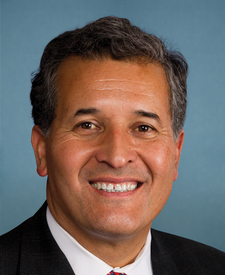
See how Juan Vargas's votes line up with your values.
DeepSyte scores Juan Vargas's record on the issues you care about — not party, not press releases. Take the 2-minute values quiz to see your personal alignment.
Sign in and take the values quiz to see how Juan Vargas's votes line up with your views.
Prediction track record
How often we called Juan Vargas's passage votes correctly, from their stated positions on each bill's tagged topics. Excludes “unclear” calls and abstentions.
To prohibit the disclosure of records by the Secretary of Housing and Urban Development of individuals for the purposes of immigration enforcement, and for other purposes.
Based on 10 data points across public statements and recorded votes · AI analysis of public records
118-hr-5717·Consistent
No Bailout for Sanctuary Cities Act
92/100
What they said
Feb 19, 2026
Rep. Vargas opposes federal contracts with private prison companies, specifically the GEO Group, that he states are facilitating immigration enforcement and detaining immigrants under inhumane conditions. He is boycotting the San Diego Regional Chamber of Commerce until they expel GEO Group as a member.
Rep. Vargas's statement opposes federal contracts with private prison companies that facilitate immigration enforcement and detain immigrants under inhumane conditions. The bill penalizes sanctuary jurisdictions that refuse to cooperate with immigration enforcement by withholding federal funds. These positions are directly aligned: Vargas opposes federal support for immigration enforcement operations, and his NO vote on a bill that would punish jurisdictions for non-cooperation with immigration enforcement is consistent with that opposition.
Rep. Vargas opposes federal contracts with private prison companies, specifically the GEO Group, that he states are facilitating immigration enforcement and detaining immigrants under inhumane conditions. He is boycotting the San Diego Regional Chamber of Commerce until they expel GEO Group as a member.
Rep. Vargas's statement opposes federal contracts with private prison companies that facilitate immigration enforcement and detain immigrants under inhumane conditions. The Laken Riley Act mandates DHS detention of non-U.S. nationals arrested for certain crimes, which would increase demand for detention facilities and likely expand contracts with private prison operators like GEO Group. His NO vote on the bill aligns with his stated opposition to policies that expand immigration detention and private prison profiteering. The consistency is strong on the directional question of whether to expand immigration detention capacity.
Transnational Criminal Organization Illicit Spotter Prevention and Elimination Act
85/100
What they said
Feb 19, 2026
Rep. Vargas opposes federal contracts with private prison companies, specifically the GEO Group, that he states are facilitating immigration enforcement and detaining immigrants under inhumane conditions. He is boycotting the San Diego Regional Chamber of Commerce until they expel GEO Group as a member.
Rep. Vargas opposes federal resources and contracts that facilitate immigration enforcement and detain immigrants. The bill criminalizes conduct that interferes with border control and enhances penalties for immigration-related violations. His NO vote on passage is consistent with his stated opposition to policies that advance immigration enforcement operations, though the bill does not directly address private prison contracts or detention conditions—the specific focus of his statement.
Rep. Vargas opposes federal contracts with private prison companies, specifically the GEO Group, that he states are facilitating immigration enforcement and detaining immigrants under inhumane conditions. He is boycotting the San Diego Regional Chamber of Commerce until they expel GEO Group as a member.
Rep. Vargas's statement opposes federal contracts with private prison companies that facilitate immigration enforcement and detention of immigrants. The Schools Not Shelters Act restricts use of federally-funded school facilities to house undocumented immigrants. His NO vote aligns with his stated opposition to policies that target and restrict immigrants' access to services and shelter. While the bill does not directly address private prison contracts, both the statement and vote reflect consistent opposition to federal policies that restrict resources and support for immigrants.
Rep. Vargas opposes federal contracts with private prison companies, specifically the GEO Group, that he states are facilitating immigration enforcement and detaining immigrants under inhumane conditions. He is boycotting the San Diego Regional Chamber of Commerce until they expel GEO Group as a member.
Rep. Vargas's statement opposes federal contracts with private prison companies that facilitate immigration enforcement and detain immigrants. The bill expands grounds for deportation related to Social Security and identity document fraud. While both touch immigration enforcement, they address different specific mechanisms: the statement targets private prison profiteering from detention, while the bill creates new deportability grounds. A NO vote on expanding deportation grounds is directionally consistent with opposing aggressive immigration enforcement, though the statement does not explicitly address deportation criteria or fraud-based removals.
Rep. Vargas opposes federal contracts with private prison companies, specifically the GEO Group, that he states are facilitating immigration enforcement and detaining immigrants under inhumane conditions. He is boycotting the San Diego Regional Chamber of Commerce until they expel GEO Group as a member.
Rep. Vargas's statement opposes federal contracts with private prison companies facilitating immigration enforcement and detention. The Secure the Border Act expands border security infrastructure and enforcement mechanisms that would likely increase immigration detention demand. His NO vote on passage aligns with his stated opposition to policies that expand immigration enforcement and detention. However, the bill does not explicitly address private prison contracts or the GEO Group specifically, creating some granularity mismatch between the narrow focus of his statement (private prison company partnerships) and the broader immigration enforcement provisions of the bill.
Continuing Appropriations and Border Security Enhancement Act, 2024
75/100
What they said
Feb 19, 2026
Rep. Vargas opposes federal contracts with private prison companies, specifically the GEO Group, that he states are facilitating immigration enforcement and detaining immigrants under inhumane conditions. He is boycotting the San Diego Regional Chamber of Commerce until they expel GEO Group as a member.
Rep. Vargas opposes federal contracts with private prison companies facilitating immigration enforcement and detention. The bill is a continuing appropriations measure that includes provisions restricting DHS use of funds for immigration-related purposes, which aligns with his stated opposition to federal spending that enables immigration enforcement through private contractors. However, the bill is a broad omnibus appropriations package addressing multiple agencies and programs; it does not specifically address private prison contracts or the GEO Group. His NO vote could reflect objections to other provisions in the CR (such as reduced funding for non-defense programs or specific immigration policy changes) rather than—or in addition to—support for the immigration-related restrictions mentioned.
Department of Homeland Security Appropriations Act, 2024
75/100
What they said
Feb 19, 2026
Rep. Vargas opposes federal contracts with private prison companies, specifically the GEO Group, that he states are facilitating immigration enforcement and detaining immigrants under inhumane conditions. He is boycotting the San Diego Regional Chamber of Commerce until they expel GEO Group as a member.
Rep. Vargas opposes federal contracts with private prison companies like GEO Group that facilitate immigration enforcement and detain immigrants under inhumane conditions. The DHS Appropriations Act funds ICE and other immigration enforcement agencies that contract with private prison operators. His NO vote on the bill is generally consistent with his stated opposition to federal funding flowing to agencies that partner with private prison companies. However, the bill is a broad appropriations measure funding multiple DHS functions beyond immigration detention, so the vote may reflect objections to other provisions or overall spending levels rather than solely the private prison contracting issue.
Detain and Deport Illegal Aliens Who Assault Cops Act
75/100
What they said
Feb 19, 2026
Rep. Vargas opposes federal contracts with private prison companies, specifically the GEO Group, that he states are facilitating immigration enforcement and detaining immigrants under inhumane conditions. He is boycotting the San Diego Regional Chamber of Commerce until they expel GEO Group as a member.
Rep. Vargas opposes federal contracts with private prison companies that facilitate immigration enforcement and detain immigrants. The bill mandates DHS custody and detention of non-U.S. nationals arrested for assaulting law enforcement. His NO vote aligns with his stated opposition to immigration enforcement detention practices, though the bill's specific focus (assault on first responders) is narrower than his broader critique of private prison profiteering and inhumane detention conditions. The vote is consistent with his general position against expanded immigration detention authority.
Department of Homeland Security Appropriations Act, 2025
75/100
What they said
Feb 19, 2026
Rep. Vargas opposes federal contracts with private prison companies, specifically the GEO Group, that he states are facilitating immigration enforcement and detaining immigrants under inhumane conditions. He is boycotting the San Diego Regional Chamber of Commerce until they expel GEO Group as a member.
Rep. Vargas opposes federal contracts with private prison companies facilitating immigration enforcement and detention. The DHS Appropriations Act funds ICE and CBP operations, which are the primary federal agencies that contract with private detention facilities like GEO Group. A NO vote on DHS appropriations is directionally consistent with opposition to private prison contracts used in immigration enforcement, as it withholds funding from the agencies that utilize those contracts. However, the bill funds the entire DHS portfolio (TSA, Coast Guard, FEMA, cybersecurity, etc.), not solely immigration enforcement, so the vote may reflect objections to other provisions or overall budget levels rather than specifically targeting private prison contracts.
Pairs with ambiguous language and high uncertainty are withheld until more data is available. Procedural, cloture, and amendment votes are excluded — they don't cleanly signal substantive support or opposition.
Pro analysis
AI rep analysis — Pro
Get an AI-narrated read on Juan Vargas's full voting record against your stated values — aligned themes, conflicts, notable votes, and what to watch for.
We haven't extracted campaign positions for Juan Vargas yet. Once their campaign website or position pages are processed, this card will track what they said vs how they voted.
Crossing the aisle
Passage votes where Juan Vargas broke ranks with ≥75% of Democrats. Threshold catches substantively partisan splits; unanimous-ish or close votes are excluded.
Reps. Vargas, Peters, Jacobs, Levin and Senators Padilla and Schiff Call on DHS to End Immigration Enforcement Activity Around Schools in San Diego County After String of Disturbing ICE Detentions Near Campuses
Position: Lawmakers call on the Department of Homeland Security to end ICE enforcement activity in the immediate vicinity of schools and college campuses in San Diego County, particularly during school arrival and dismissal times.
WASHINGTON - Today, U.S. Representatives Juan Vargas (CA-52), Scott Peters (CA-50), Sara Jacobs (CA-51), and Mike Levin (CA-49) and U.S. Senators Alex Padilla (D-CA) and Adam Schiff (D-CA) called on the Department of Homeland Security (DHS) to end Immigration and Customs Enforcement (ICE) enforcement activity around schools and educational institutions in San Diego County. Since the start of the school year, there have been disturbing incidents where ICE agents have detained parents and students near educational institutions, raising serious concerns about the safety and well-being of students, parents, families, and educators.
“Parents should be able to drop their children off at school without fearing detention, and students should be able to attend class without encountering federal immigration enforcement around their campus,” wrote the lawmakers.
“Schools and institutions of higher education have long been places where students feel safe enough to learn, belong, and achieve their academic dreams without their lives being uprooted. Schools should not become the backdrop for immigration enforcement activity, nor should parents have to choose between bringing their children to school and fearing that they may be detained in the process,” the lawmakers continued. “As back to school season continues, we demand that you end all ICE activity in the immediate vicinity of schools and college campuses, particularly during school arrival and dismissal times.”
The full letter is available HERE and below:
Dear Secretary Mullin,
We write in strong opposition to the recent Immigration and Customs Enforcement (ICE) enforcement activity in and around schools and educational institutions in San Diego County. Over the past several weeks, ICE agents have detained parents and students near multiple educational institutions, raising serious concerns about the safety and well-being of our students, parents, families, and educators. Parents should be able to drop their children off at school without fearing detention, and students should be able to attend class without encountering federal immigration enforcement around their campus.
According to the San Diego Unified School District (SDUSD), on September 9, ICE agents detained two parents after they dropped off their children at John Marshall Elementary School in Chollas Creek. And this is not an isolated incident. During last year’s back-to-school season, several parents were also arrested by ICE or other federal agents while on their way to or from school pick-up and drop-off lines.
These concerns extend to institutions of higher education as well. On September 8, the San Diego Community College District (SDCCD) confirmed that ICE arrested one individual and pursued another near a college campus. College officials confirmed that the driver and passengers were students at San Diego City College. Schools have reported that the presence of ICE officials outside a college campus is highly disruptive and can discourage students from attending classes and accessing campus resources.
These incidents are concerning because immigration enforcement activity near schools can have an impact on all students and families, even when enforcement does not occur directly on school property. ICE activity near schools destabilizes the sense of safety schools offer and places an additional burden on school staff and local communities. The fear among students and families that these incidents cause can also likely negatively impact a student’s educational engagement, mental and physical health, academic performance, and developmental trajectories.
Schools and institutions of higher education have long been places where students feel safe enough to learn, belong, and achieve their academic dreams without their lives being uprooted. Schools should not become the backdrop for immigration enforcement activity, nor should parents have to choose between bringing their children to school and fearing that they may be detained in the process. As back to school season continues, we demand that you end all ICE activity in the immediate vicinity of schools and college campuses, particularly during school arrival and dismissal times.
###
Rep. Juan Vargas Applauds Passage of Major Bipartisan Housing Bill
Position: Rep. Vargas applauds House passage of the 21st Century ROAD to Housing Act, a bipartisan package to increase housing supply and improve affordability, and states that the fight for safe, affordable housing continues.
WASHINGTON – Today, U.S. Representative Juan Vargas (D-CA-52) applauded the House passage of the 21st Century ROAD to Housing Act, which includes one of his bills to allow credit unions more flexibility. The 21st Century ROAD to Housing Act is a bipartisan package aimed at increasing the nation’s housing supply and improving housing affordability, among other priorities. The bill now moves to the President’s desk to be signed into law.
As a senior member of the House Committee on Financial Services, Rep. Vargas helped pass this package and fought to include his bipartisan legislation to update the current requirements for federal credit union board meetings.
“Today, we took a major step forward in tackling our nation’s housing crisis. This legislation will help us boost our housing supply, expand homeownership opportunities, and lower costs,” said Rep. Juan Vargas. “We can build a future where everyone can access housing. This bill represents meaningful progress, but the fight to make sure safe, affordable housing is within reach for families continues. We won’t let up.”
The 21st Century ROAD to Housing Act includes provisions to:
Reduce unnecessary barriers to housing development and increase housing supply
Expand financing for housing and community investment
Support the development of innovative housing like modular homes and accessory dwelling units
Provide new protections for renters
Improve programs to end homelessness
Codify the disaster recovery program to help expedite funds to communities rebuilding after disaster
This package includes Rep. Vargas’s bipartisan Credit Union Board Modernization Act, legislation to update the current requirements for federal credit union board meetings. This bill will allow federal credit union boards in good standing to meet every other month instead of monthly, allowing them to focus their resources on serving consumers, small businesses, and supporting economic activity at the local level.
###
Reps. Vargas, Peters, Levin, Jacobs Call on SBA for Support for Local Businesses Impacted by Tijuana River Pollution
Position: The lawmakers urge the Small Business Administration to continue providing support to South Bay small businesses economically affected by pollution from the Tijuana River, and request information on steps the SBA has taken so far.
WASHINGTON – Today, U.S. Representatives Juan Vargas (D-CA-52), Scott Peters (D-CA-50), Mike Levin (D-CA-49), and Sara Jacobs (D-CA-51) called on the U.S. Small Business Administration (SBA) to provide continued support for small businesses impacted by pollution in the Tijuana River Valley. Additionally, the lawmakers requested further information on what steps the SBA has taken so far to help local businesses.
“As South San Diego County’s beaches continue to be impacted by untreated wastewater, sediment, and trash from the Tijuana River, South Bay businesses have suffered economically,” wrote the lawmakers. “While we continue to work with our Mexican counterparts to address the causes of the pollution, it’s important that we also take steps to support local small businesses impacted by the pollution and the consumers who rely on them.”
“We are writing to ask that the Administration continues to work with us to address this crisis and its impact on South San Diego County communities and businesses,” continued the lawmakers.
Addressing the impacts of Tijuana River Valley pollution is a top priority for Rep. Vargas and the San Diego Congressional delegation.
Rep. Vargas and the San Diego Congressional delegation have secured over $650 million in federal funding – more than half a billion dollars – to combat the pollution and make critical upgrades to the South Bay International Wastewater Treatment Plant.
Additionally, the San Diego Congressional delegation has called for a federal state of emergency due to the pollution.
Read the full letter here.
###
Rep. Juan Vargas Votes Against $70 Billion Blank Check to ICE
Position: Rep. Vargas voted against a Republican budget bill providing an additional $70 billion for ICE and opposes further funding for ICE enforcement and deportation operations.
WASHINGTON – Today, U.S. Representative Juan Vargas (D-CA-52) voted against a Republican budget bill that gives another $70 billion to ICE. This funding is on top of the $170 billion for ICE that was included in their Big Ugly Bill.
“Trump’s ICE agents have terrorized our communities. They have beaten, brutalized, and even murdered innocent people. Instead of demanding accountability, Republicans just voted to send another $70 billion to ICE and Trump’s mass deportation agenda. That’s on top of the $170 billion they sent ICE in their Big Ugly Bill last summer,” said Rep. Juan Vargas. “I've been clear from the start. Not one penny more for Trump’s ICE and the Administration’s violent anti-immigrant crackdown. I voted no on this legislation.”
###
Rep. Juan Vargas, Ranking Member Maxine Waters Statement on DOJ Dropping Baseless Probe into Fed Chair Powell and Senate Banking Confirmation of New Fed Chair
Position: The representatives oppose political interference with Federal Reserve independence, characterizing the DOJ investigation into Chair Powell and attempts to remove Governor Cook as baseless and politically motivated efforts to pressure the Fed into aligning with the Administration's agenda.
WASHINGTON - Today, U.S. Representatives Juan Vargas (D-CA-52), Ranking Member of the Monetary Policy Task Force, and Maxine Waters (D-CA-43), the top Democrat on the House Financial Services Committee, issued the following statement in response to the Senate Banking Committee’s expected approval of Trump’s Fed Chair nominee, Kevin Warsh.
“Trump’s Department of Justice’s criminal investigation into Federal Reserve Chair Jerome Powell was baseless, politically motivated, and an abuse of power from day one, as was the unlawful attempt to fire Governor Lisa Cook. These and other actions were designed to intimidate leaders of the Federal Reserve and bend one of the most important economic institutions in the world to Donald Trump’s will.
And make no mistake, this is far from over. Trump has not dropped his effort to remove Governor Cook or the bogus investigation of her mortgage files. And the threat to reopen the investigation into Chair Powell is still hanging over the Federal Reserve like a cloud, sending a chilling message to any Fed official who refuses to fall in line with this Administration’s political agenda.
At the same time, Republicans are rushing to install a new Federal Reserve Chair who will do exactly what Trump wants. That raises serious questions about whether this entire episode was part of a broader effort to pressure the Fed and hand the keys for monetary policy over to Trump.
Let us be very clear, the Federal Reserve serves the American people, not Donald Trump. That independence is not optional, and it remains under attack. The Administration must immediately drop all efforts targeting any Federal Reserve official, including the continued attacks on Governor Lisa Cook. Committee Democrats will not stand by while this Administration tries to strong-arm our independent financial institutions, undermine economic stability, and put hardworking families at risk. We will continue to fight back and hold the President accountable.”
###
Rep. Juan Vargas Slams Trump Admin Attacks on Minority Serving Institutions
Position: Rep. Vargas opposes the Trump Administration's proposed elimination of federal funding for Minority Serving Institution (MSI) programs and calls for continued federal support for these programs that serve over five million students.
WASHINGTON – Today, U.S. Representative Juan Vargas (D-CA-52) joined U.S. Senator Mazie Hirono (D-HI), U.S. Senator Alex Padilla (D-CA), national education advocates, and students to raise the alarm about the Trump Administration’s deliberate attempts to dismantle the U.S. Department of Education (ED) and defund Minority Serving Institution (MSI) programs created by Congress.
There are over 800 MSIs that serve more than five million students. Even though Congress has funded MSI programs across the nation for decades, the Administration’s proposed FY 2027 budget eliminates funding for MSI programs, which would impact schools across the country, including many higher education institutions in San Diego County.
Watch Rep. Vargas’s remarks HERE.
“Since taking office, Trump has targeted the diversity that helps make our country strong, and Minority Serving Institutions, including Hispanic Serving Institutions, are paying the price. Trump’s plan to end decades of federal support for these programs is an attack on our students, colleges, and universities,” said Rep. Juan Vargas. “We’re going to continue to fight to protect these programs. We’re on the right side of history, and that’s why we need to continue to push.”
Since taking office, Trump has targeted programs that support students across the country, especially ones that serve low-income and first-generation students and MSIs. In September, ED announced that $350 million in federal funding would be redirected from MSIs to other programs. The Trump Administration followed this up in December, announcing that they would be “winding down” MSI programs moving forward.
Rep. Vargas leads an annual appropriations letter in support of Hispanic Serving Institutions (HSIs).
###
Rep. Juan Vargas Leads Request for $100 Million to Combat Cross-Border Pollution
Position: Rep. Vargas is requesting $100 million in federal funding for the U.S.-Mexico Border Water Infrastructure Program to address cross-border pollution affecting communities in the Tijuana River Valley, and is calling for a federal state of emergency declaration.
WASHINGTON – Today, U.S. Representative Juan Vargas (D-CA-52) announced that he is leading a funding request for $100 million for the U.S.-Mexico Border Water Infrastructure Program (BWIP) in the Fiscal Year 2027 appropriations process. This funding can be used to help combat cross-border pollution, including pollution in the Tijuana River Valley.
BWIP helps fund and build critical infrastructure projects along the U.S.-Mexico border to improve water quality in the Tijuana River and other waterways. This program – which focuses on safe water for communities near the U.S.-Mexico border – has so far funded over 140 water and wastewater projects that benefit more than nine million people.
This funding request comes as communities in the South Bay continue to face harmful impacts from pollution in the Tijuana River Valley. Hydrogen sulfide emissions in the area have repeatedly exceeded federal guidelines, including spikes in recent months. Additionally, community members have reported health issues like trouble breathing, headaches, and nausea.
“Cross-border pollution has harmed the health of our communities, our local businesses, and our environment. While we’ve been able to bring home over half a billion dollars in federal funding to help combat it, there’s more work to do,” said Rep. Juan Vargas. “Our communities need relief. We're pushing for more resources and a state of emergency. We won't let up.”
Addressing the impacts of Tijuana River Valley pollution is a top priority for Rep. Vargas.
Rep. Vargas and the San Diego Congressional delegation have secured over $650 million in federal funding – more than half a billion dollars – to combat the pollution and make critical upgrades to the South Bay International Wastewater Treatment Plant.
Additionally, the San Diego Congressional delegation has called for a federal state of emergency due to the pollution.
Read the full letter here.
###
On Tax Day, Rep. Juan Vargas Reintroduces the Donald J. Trump Wealth Tax Act
Position: Rep. Vargas reintroduced legislation proposing a 14.25 percent net worth tax on individuals and trusts with net worth exceeding $10 million, citing deficit reduction and alignment with a 1999 Trump proposal.
WASHINGTON – Today, U.S. Representative Juan Vargas (D-CA-52) reintroduced the Donald J. Trump Wealth Tax Act, a tax plan proposed by Donald Trump to impose a net worth tax of 14.25 percent on all individuals and trusts with a net worth of $10,000,000 or more in an effort to significantly reduce the national debt.
In 1999, then-presidential hopeful Donald J. Trump announced a wealth tax plan to eliminate the national debt in its entirety. His plan would impose a net worth tax of 14.25 percent on all individuals and trusts with a net worth of $10,000,000 or more.
“President Trump was serious when he proposed this wealth tax,” said Rep. Juan Vargas. “I am reintroducing the Donald J. Trump Wealth Tax Act to allow the President to follow through on his original idea of taxing the one percent. If he’s committed to reducing our national debt and staying true to his proposal, then I’m committed to working with him to ensure his wealth tax becomes law.”
At the time, during an appearance on Good Morning America, Trump said, “If I were president, it would be passed. I think if somebody else is president, it probably can't be… This is a tax paid by one percent, but the one percent will be very big beneficiaries with what’s going to happen and the positive forces that would take place in the economy.”
If the Donald J. Trump Wealth Tax Act raises the $5.7 trillion that President Trump expected it would in 1999, it would reduce the debt to GDP ratio from 101 percent to 83 percent.
Read the Donald J. Trump Wealth Tax Act of 2026 HERE.
###
Rep. Juan Vargas, Colleagues Urge HUD Secretary Turner to Withdraw Cruel Rule Targeting Mixed-Status Families
Position: The representatives oppose HUD's proposed rule that would eliminate prorated rental assistance for mixed-status families and require citizenship verification for all household members, arguing it would separate families, increase homelessness, and contradict the agency's mission.
WASHINGTON - Today, U.S. Representatives Juan Vargas (D-CA), Maxine Waters (D-CA), Nydia M. Velázquez (D-NY), and Sylvia Garcia (D-TX) submitted a comment letter to U.S. Department of Housing and Urban Development (HUD) Secretary Turner calling for the immediate withdraw of HUD’s proposed rule, “Housing and Community Development Act of 1980: Verification of Eligible Status.” This proposal would end longstanding prorated assistance for families of mixed immigration status and require new, across-the-board citizenship documentation and verification for tenants in federal housing programs that would separate families and increase eviction and homelessness across the country.
In the letter, the lawmakers underscore that Section 214 of the Housing and Community Development Act already limits assistance to U.S. citizens and eligible non-citizens and has, for decades, allowed mixed-status families to receive partial rental assistance to cover only the eligible family members so children and parents can remain under the same roof—preserving scarce resources and keeping families intact. HUD’s newly proposed changes would end that current practice, eliminating prorated assistance for mixed-status families and requiring each family member to be a U.S. citizen or eligible non-citizen or otherwise face termination of their housing assistance.
“The recent introduction of the proposed rule implementing Section 214 of the Housing and Community Development Act of 1980, the Department of Housing and Urban Development (HUD) has inexplicably revived a cruel and much-maligned desire of the Trump Administration to separate families with mixed immigration status and evict them from the major HUD housing programs,” wrote the lawmakers.
Vargas, Waters, Velázquez, and Garcia go on to raise several concerns with the new plan, including that it would exacerbate the current eviction and homelessness crisis, placing children, seniors, and people with disabilities at a disproportionate disadvantage. The lawmakers also warn against HUD’s reliance on the Department of Homeland Security’s SAVE system to verify citizenship, noting its unreliability and history of inaccurately flagging U.S. citizens as noncitizens. In addition, they criticized that the rule would further strain already limited housing resources by requiring additional documentation from federally assisted households and imposing significant, unfunded compliance costs on public housing authorities, property owners, and tenants at a time when HUD programs are already stretched thin.
“This proposed rule is yet another action from Secretary Turner and the Trump Administration that fundamentally contradicts the agency’s mission ‘to create strong, sustainable inclusive communities and quality affordable homes for all.’ It is also an attempt to go around Congress and re-write existing law by regulation in a way that is inconsistent with congressional intent,” the lawmakers added.
In closing, the lawmakers call on Secretary Turner to withdraw the proposed rule and instead focus on solutions that will effectively address the housing affordability crisis that Americans are being forced to grapple with.
Read the full letter HERE.
###
Rep. Juan Vargas Statement on War Powers Resolution
Position: Rep. Vargas expresses concern about the Administration's approach to Iran while affirming Congress's role under the War Powers Act and supporting operational flexibility for responding to Iranian threats and humanitarian abuses.
WASHINGTON – U.S. Representative Juan Vargas (D-CA-52) released the following statement on the War Powers Resolution.
“Iran is a state sponsor of terrorism. For decades, the Iranian regime has threatened global security and targeted Americans and our allies. Iran and its proxies are responsible for the deaths of U.S. service members and civilians.
“Inside its borders, Iran’s leadership has terrorized its own citizens. The people of Iran have been subjected to systematic human rights abuses under the regime, including torture, arbitrary arrest, deadly crackdowns on freedom of expression, and mass killings. Women, LGBTQ+ individuals, and minorities have faced repression and violence. Earlier this year, the Iranian regime murdered tens of thousands of protestors who dared to call for dignity and freedom, and has continued to hunt down protestors.
“Congress has a critical role to play in military operations, and the Administration must abide by the War Powers Act. While I have serious concerns about the Administration’s decisions and approach, we need to have flexibility when service members are actively engaged and - as we have had in the past - options available to respond to such bad actors and humanitarian abuses.”
###
Source: GDELT 2.0 GKG, filtered to a curated list of national outlets. Inclusion is not endorsement; opinion pieces and reported news are mixed.
Recent stock activity
Periodic transaction reports filed under the STOCK Act — disclosed by the rep, sourced from public filings.
No disclosed trades on record.
Source: open-data mirrors of the Senate eFD and House Clerk financial-disclosure systems. Disclosure within 30 days of trade is required by law (45 for spouse/dependent trades).
Top PAC donors · 2026 cycle
Political action committees that gave the most to this rep's principal campaign committee this cycle. PAC giving is direct organizational support — industry, ideological, or leadership.
1.AMERICAN CRYSTAL SUGAR COMPANY PACAgriculture2 contributionsAgricultural company PAC for a major sugar producer — backs candidates supporting farm subsidies, tariff protections, and agricultural trade policies.AI$10,000
2.AMERICAN ISRAEL PUBLIC AFFAIRS COMMITTEE (AIPAC-PAC)2 contributions$10,000
4.INT'L ASSOC OF SHEET METAL AIR RAIL & TRANSPORTATION WORKERS PAC2 contributions$10,000
5.ERNST & YOUNG PAC4 contributions$10,000
6.AMERICAN INSTITUTE OF CPA'S PAC (AICPA PAC)4 contributions$10,000
7.AMERICAN COUNCIL OF ENGINEERING COMPANIES (ACEC PAC)2 contributions$9,000
8.NAT'L ASSN OF INSURANCE & FINANCIAL ADVISORS PAC (NAIFAPAC)3 contributions$7,500
9.AMERICAN ASSOC. FOR JUSTICE PAC (AAJ PAC)3 contributions$7,500
10.NMHC PAC3 contributions$7,500
Source: OpenFEC (api.open.fec.gov) Schedule A receipts where contributor type is “committee.” Aggregated by contributing committee. Self-transfers from joint-fundraising / victory committees are excluded.
Top individual contributors · 2026 cycle
Itemized individual contributions over $200 to this rep's campaign committee, aggregated by donor employer. PAC giving is shown above; this section is people, not organizations.
1.NATIONAL ENTERPRISES, INC.$8,000
2.LIQUID ENVIRONMENTAL SOLUTIONS$7,000
3.KALSHI INC.$7,000
4.EREBOR BANK, NA$5,300
5.FISHMAN, BLOCK & DIAMOND$3,500
6.HOIST FITNESS SYSTEMS, INC.$3,500
7.CAPITAL GROUP COMPANIES$3,500
8.THE DONNA BENDER COMPANY$3,500
9.BRODIE GENERATIONAL CAPITAL PARTNERS$3,500
10.JAWC III CHARITABLE TRUST$3,500
Source: OpenFEC Schedule A receipts where contributor type is “individual,” aggregated by the donor's self-reported employer. This is a geographic / industry correlation, not a corporate endorsement.