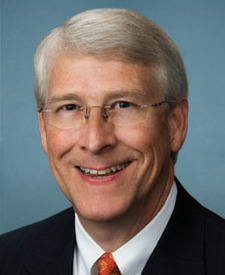
See how Roger F. Wicker actually votes — against your values.
DeepSyte scores Roger F. Wicker's record on the issues you care about — not party, not press releases. Take the 2-minute values quiz to see your personal alignment.
Sign in and take the values quiz to see how Roger F. Wicker's votes line up with your views.
Prediction track record
How often we called Roger F. Wicker's passage votes correctly, from their stated positions on each bill's tagged topics. Excludes “unclear” calls and abstentions.
100%
Accuracy
1
Correct
0
Incorrect
21
Pending
Right119-sjres-184
A joint resolution to direct the removal of United States Armed Forces from hostilities within or against the Islamic Republic of Iran that have not been authorized by Congress.
A joint resolution to direct the removal of United States Armed Forces from hostilities within or against the Islamic Republic of Iran that have not been authorized by Congress.
A joint resolution to direct the removal of United States Armed Forces from hostilities within or against the Islamic Republic of Iran that have not been authorized by Congress.
A joint resolution to direct the removal of United States Armed Forces from hostilities within or against the Islamic Republic of Iran that have not been authorized by Congress.
Based on 1 data point across public statements and recorded votes · AI analysis of public records
119-sjres-184·Notable gap
A joint resolution to direct the removal of United States Armed Forces from hostilities within or against the Islamic Republic of Iran that have not been authorized by Congress.
25/100
What they said
Apr 30, 2026
Chairman Wicker supports President Trump's $1.5 trillion defense budget request and emphasizes the need to modernize U.S. military capabilities, strengthen deterrence, and fortify the defense industrial base in response to threats from China, Russia, Iran, and North Korea.
Voted Nay on A joint resolution to direct the removal of United States Armed Forces from hostilities within or against the Islamic Republic of Iran that have not been authorized by Congress.
Chairman Wicker's statement emphasizes support for President Trump's $1.5 trillion defense budget and strengthening deterrence against Iran (among other threats). The joint resolution directly constrains the President's ability to conduct military operations against Iran without Congressional authorization. Wicker voted NO on a measure that would restrict military action against Iran—a country he explicitly identified as a threat requiring deterrence. This voting direction aligns with his stated support for robust defense posture and deterrence against Iranian threats, making the vote consistent with his public position on Iran policy.
Pairs with ambiguous language and high uncertainty are withheld until more data is available. Procedural, cloture, and amendment votes are excluded — they don't cleanly signal substantive support or opposition.
Pro analysis
AI rep analysis — Pro
Get an AI-narrated read on Roger F. Wicker's full voting record against your stated values — aligned themes, conflicts, notable votes, and what to watch for.
We haven't extracted campaign positions for Roger F. Wicker yet. Once their campaign website or position pages are processed, this card will track what they said vs how they voted.
Crossing the aisle
Passage votes where Roger F. Wicker broke ranks with ≥75% of Republicans. Threshold catches substantively partisan splits; unanimous-ish or close votes are excluded.
1
Cross-aisle vote
118-sjres-117·Nov 21, 2024·80% of R voted YES
A joint resolution relating to the disapproval of the Presidential report with respect to the indebtedness of the Government of Ukraine.
Chairman Wicker Commends Pentagon for Junior Reserve Officers’ Training Corps Program Expansion
Position: Senator Wicker supports the expansion of Junior ROTC programs in schools as authorized through the National Defense Authorization Act, citing their role in developing citizenship, leadership, and service values in youth.
WASHINGTON – U.S. Senator Roger Wicker, (R-MS), Chairman of the Senate Armed Services Committee, today commended Secretary Pete Hegseth and Pentagon leadership for directing the department to increase the number of Junior Reserve Officers' Training Corps (JROTC) programs across the country, as stipulated in the National Defense Authorization Act (NDAA).
The Chairman released the following statement:
"Expanding Junior ROTC programs across our nation's schools has been among my top priorities, and it is one that I was proud to authorize through the NDAA. These programs instill core values of citizenship, leadership, and service in our youth. They also provide structure, mentorship, and opportunity in our communities. I commend Secretary Hegseth and his team for moving forward with implementation and expansion. I look forward to seeing these programs grow and strengthen the next generation of Americans."
Secretary Hegseth recently delegated authority to the Under Secretary for Personnel and Readiness to determine the number of JROTC units established by each military department. This delegation creates a clearer path to scale JROTC across the military services. The FY27 President's budget request reflects renewed funding for JROTC.
Chairmen of the Senate and House Armed Services Committees Release Statement on U.S. Troop Withdrawal from Germany
Position: The chairmen oppose withdrawing U.S. forces from Germany entirely, arguing that premature reduction of forward presence in Europe risks undermining deterrence against Russia. They advocate instead for relocating forces eastward to strengthen NATO's eastern flank while maintaining overall U.S. military presence on the continent.
WASHINGTON – U.S. Senator Roger Wicker, R-Miss., Chairman of the Senate Armed Services Committee, and U.S. Representative Mike Rogers, R-Ala., Chairman of the House Armed Services Committee, issued the following statement:
"We are very concerned by the decision to withdraw a U.S. brigade from Germany. Germany has stepped up in response to President Trump's call for greater burden sharing, significantly increasing defense spending and providing seamless access, basing, and overflight for U.S. forces in support of Operation Epic Fury.
The reality remains even as allies move toward spending 5% of GDP on defense, translating that investment into the military capability needed to assume primary responsibility for conventional deterrence will take time. Prematurely reducing America's forward presence in Europe before those capabilities are fully realized risks undermining deterrence and sending the wrong signal to Vladimir Putin.
Rather than withdrawing forces from the continent altogether, it is in the US interest to maintain a strong deterrent in Europe by moving these 5,000 US forces to the east. Those allies there have made substantial investments to host U.S. troops, reducing costs for the U.S. taxpayer while strengthening NATO's front line to help deter a far more costly conflict from ever beginning.
Finally, any significant change to U.S. force posture in Europe warrants a deliberate review process and close coordination with Congress and our allies. We expect the Department to engage with its oversight committees in the days and weeks ahead on this decision and its implications for U.S. deterrence and transatlantic security."
Chairman Wicker Leads SASC Hearing on the FY27 Budget with Top Pentagon Leadership
Position: Chairman Wicker supports President Trump's $1.5 trillion defense budget request and emphasizes the need to modernize U.S. military capabilities, strengthen deterrence, and fortify the defense industrial base in response to threats from China, Russia, Iran, and North Korea.
Secretary Hegseth, General Caine, and Mr. Jules Hurst III Testify Before the Committee
WASHINGTON – U.S. Senator Roger Wicker, R-Miss., Chairman of the Senate Armed Services Committee, today led a hearing to examine the Department of Defense posture for Fiscal Year 2027, focusing on the most dangerous global security environment since World War II, the accelerating military buildup by the Chinese Communist Party, and coordinated threats posed by China, Russia, Iran, and North Korea. The hearing also addressed ongoing U.S. military operations, defense modernization priorities, allied burden-sharing, and efforts to strengthen American innovation, deterrence, and warfighting readiness.
Secretary Hegseth, Chairman of the Joint Chiefs of Staff General Daniel Caine, and Jules W. Hurst III, Performing the Duties of the Under Secretary of Defense (Comptroller)/Chief Financial Officer, testified before the committee.
In his opening remarks, Chairman Wicker reemphasized his support for President Trump's $1.5 trillion defense budget request. The Chairman also stressed the need to modernize U.S. military capabilities, strengthen deterrence, and fortify the defense industrial base to ensure a ready and capable force.
Read Chairman Wicker's hearing opening statement as delivered.
This hearing will come to order. We completed a productive classified session down in the SCIF, and now we will begin the public portion of this hearing. I welcome back Secretary Hegseth, General Caine, and our acting Comptroller Mr. Jay Hurst, and I thank all of them, including their families, for their service.
For the dozens of Americans that regularly watch our hearings, my next remarks will be no surprise, but for new viewers, I want to reiterate some context from our remarks. I have said this at almost every hearing. We live in the most dangerous security environment since World War II. Every uniformed officer that has come before this committee has agreed with that statement.
First and foremost, we are locked in a competition with Xi Jinping and the Chinese Communist Party. The competition is high stakes, and it is about whether this will be an American-led century or a century defined by authoritarian, autocratic regime that cares little for the needs of their citizens or those in neighboring countries. The Chinese Communist Party has accelerated its historic military buildup and its predatory economic practices against Americans and countries the world over.
Xi Jinping leads not only China but also an Axis of Aggressors. This growing alliance cannot be denied. It includes China, Russia, Iran, and North Korea they're united in their goal to oppose America's interests and the interest of other like-minded democratic countries across the globe.
Vladimir Putin's war of choice in Ukraine has now entered its fifth year. In Putin's objectives we hear echoes of the imperialistic ambitions of World War II's aggressors, including Adolf Hitler. Vladimir Putin has suffered 1.2 million casualties and failed miserably in his military objectives. Along the way he has transformed Russia's economy into one fueled by war, raising the prospect of an even more aggressive Moscow for the foreseeable future.
Most of Iran's leaders are now deceased, but they and those who have survived them have consistently sought violence against America, Israel, our Gulf allies, and the Iranian people. We saw this during the October 7th massacre, during their continued support for Hezbollah and Hamas, and in their desire to engage in nuclear blackmail. Iran's ayatollahs have consistently represented a threat to American interests.
Kim Jong Un has joined Putin's war of aggression. He continues a military and nuclear buildup that threatens South Korea, Japan, and the United States.
Ties have never been closer among these four dictators, among these four dictatorships. They support each other's aggressive endeavors, they prop each other up financially, and they scheme to undermine America's objectives. We should expect them to continue this behavior.
This contest plays out across every dimension of national power — the economy, technology, diplomatic, and more — but today we are here to talk about the military dimension of this competition. These regimes have regularly tried to take by force what they cannot secure through the political process. For that reason, we must be ready to deter conflicts and if necessary to win them. President Trump has used the U.S. military appropriately and effectively for American interests. He has viewed our adversaries as a united bloc and has taken action in light of that reality. In Operation Absolute Resolve and associated statecraft, the President removed an aspiring dictator off the board and set Venezuela up for a future aligned with democratic interests. In Operation Midnight Hammer he sought to eliminate the ayatollahs program. When the Ayatollah chose to double down, the President launched Operation Epic Fury. That mission he has worked to remove their conventional military capabilities and force it back to the table for a permanent solution. While we all mourn the tragic loss of the 14 service members who lost their lives in this conflict, we do so knowing the world is safer without a nuclear Iran.
All of these actions are part of a "peace through strength" strategy. In this approach we seek first to avoid war and take military action when necessary to achieve U.S. interests.
And so, Mr. Secretary, I am pleased that you are here testifying today in support of President Trump's historic $1.5 trillion defense budget request, that sum will go a long way toward rebuilding our military capabilities for a generation. I should say upfront this may be long hearing, there is much to discuss. This $1.5 trillion dollar request is chock-full of important programs and initiatives that are absolutely necessary to secure American interests in the 21st century. I think this funding underpins and accentuates three comparative advantages the United States possesses over the Axis of Aggressors.
The first comparative advantage America enjoys over our adversaries is that we have the best innovation and industry in the world. So, I hope our witnesses today will cover the progress we have made in just the past year rebuilding the American arsenal. Last year, our reconciliation bill, combined with bipartisan appropriations bills, achieved about a trillion-dollar defense budget. This year's request would represent a near-50% increase. Every penny of it should be money well spent making down payments on crucial transformational capabilities, such as drone warfare, low-cost munitions, and missile defense. Also last year Congress and the executive branch achieved historic acquisition reforms, consequently we are well-positioned to make huge gains on efficiency this year and in the years to come. Making it much more flexible and a more timely process. I look forward to discussing how we might accelerate implementation of these actions. In particular, I would like to see the Pentagon do more this year to drive competition in the defense industrial base. Competition absolutely drives better outcomes for our service members and taxpayers.
Of course, our people are the final comparative advantage we have over our adversaries. We have enjoyed significant improvements in recruitment and retention, but we need to solidify a merit-based environment that fully cares for our personnel. I commend you Mr. Secretary over your efforts the past year to do just that. That task will never be finished, of course, but we address it gladly and we salute the progress. We will always be striving to care for and equip American Service Members as much as possible. I look forward to more work between this Committee and the Department this coming year.
Chairman Wicker Leads SASC Hearing on U.S. Indo-Pacific Command and U.S. Forces Korea
WASHINGTON – U.S. Senator Roger Wicker, R-Miss., Chairman of the Senate Armed Services Committee, today led a hearing to examine the posture of U.S. Indo-Pacific Command and U.S. Forces Korea amid growing global instability, including ongoing conflicts in Ukraine and the Middle East, and increasing strategic competition in the Indo-Pacific driven by China's military expansion and coordination among authoritarian adversaries.
Admiral Samuel J. Paparo, Jr., USN, Commander, United States Indo-Pacific Command, and General Xavier T. Brunson, USA, Commander, United Nations Command/Combined Forces Command/United States Forces Korea, appeared before the committee.
In his opening remarks, Chairman Wicker highlighted rising threats in the Indo-Pacific from China, North Korea, and Russia. The Chairman reiterated that the Chinese Communist Party remains our most significant adversary as the leader of the Axis of Aggressors. He also highlighted the importance of getting low-cost munitions and drones at scale to Admiral Paparo as soon as possible as well as the importance of our alliances in the region.
Read Chairman Wicker's hearing opening statement as delivered.
This hearing will come to order. This morning, we hold a hearing on the posture of U.S. Indo-Pacific Command and U.S. Forces Korea. At the outset, I would like to thank Admiral Paparo and General Brunson for their distinguished service to our country. This committee appreciates their service, and we are grateful for the ethos that has long been the defining characteristic of America's general and flag officers. Thank you gentlemen.
We speak today and we meet today at a time of global turmoil. Despite the doubts of our own intelligence community and many others, Ukraine continues to outperform conventional wisdom—now in the fifth year of Putin's illegal war of choice. In the Middle East, President Trump has taken decisive action to end 47 years of aggression by the ayatollahs.
But amid those wars, we must remember this: China is the leader of the Axis of Aggressors. The People's Republic of China intends to and is capable of preventing an American-led 21st century. We cannot ignore the implications of Xi Jinping's aggression.
The Chinese Communist Party and its People's Liberation Army have spent decades studying the American way of war. This has informed their massive military modernization effort. The PLA now fields the world's largest Navy. Its nuclear triad is growing at a breathtaking pace, and it possesses an increasingly capable air force armed with world-class munitions. China's military strategy has transitioned. It has moved from a mostly asymmetric competitive approach to a more comprehensive strategy. Their goal is to achieve decisive advantage over the U.S. and its allies in the Indo-Pacific.
We also recognize the danger posed by a nuclear armed North Korea. Kim Jong Un is a cruel and ruthless despot. Worse, he possesses nuclear weapons and he possesses the means to deliver them. He has demonstrated a high tolerance for risk-taking, and he is backed by his nuclear-armed partners Xi and Putin. The North Korean army has gained valuable insights on modern warfare from its experience supporting Russia's invasion of Ukraine. North Korea will remember what it learned from drone and missile use in Ukraine. It continues to learn lessons. Right now, it is thinking about how to employ these capabilities on the Korean Peninsula.
Russia has repaid Kim for supporting its illegal invasion of Ukraine by providing North Korea with advanced military technology and financial relief. While Vladimir Putin creates mayhem in Europe, it is not lost on this committee that he also actively works to undermine the existing order in the Indo-Pacific. Putin has revitalized his partnership with the Kim regime, and he has deepened Russia's Comprehensive Strategic Partnership with Xi and the Chinese Communist Party.
The growing alignment of our adversaries throws into sharp relief the enduring importance of America's allies and the way they help protect our strategic interests. For decades, our alliance bonds—including NATO—have provided a comparative advantage over authoritarian states like China, North Korea, Russia, and Iran. These alliances continue to pay dividends for the United States. People need to stop saying otherwise. It is not helpful when American leaders speak of our alliances with derision, but we must be clear about the numerous political, strategic, and moral benefits that our country receives from its alliances.
Some have suggested that our allies have become little more than dependents of the United States. These skeptics argue that the United States must shift the burden- and that word, "shift" is what I have a problem with. They argue we must shift the burden of defense and deterrence from the United States and onto our allies in Europe and Asia. I do not agree with the skeptics. Of course, I am glad to see America's allies stepping up, as they are doing all over the world. But there's a difference between burden shifting and burden sharing.
The president has called for increased burden-sharing, and I support that. But the way we execute that vision matters. We Americans have a massive stake in maintaining a favorable balance of power in both Asia and Europe. It remains a vital interest of the United States and cannot yet be delegated to others, not even to our closest allies. Burden shifting suggests that the United States has a limited stake in conflicts that erupt—or could erupt—in these key regions. Burden shifting implies abdication, rather than collective responsibility.
Upholding our interests in the Indo-Pacific requires the cultivation of a robust alliance network—what we call burden sharing. Which I agree with. The western Pacific is far from the American homeland, and that distance has long placed a premium on a strong and persistent forward presence in the region. This presence allows us to defend our interests in the Indo-Pacific and to project power from there into other regions of the world.
It is worth noting that America's alliance network is comprised of like-minded democracies and free-market economies. The importance of this fact cannot be overstated. Unlike our authoritarian countries, the foundation of the U.S. alliance network is built upon the explicit support of its respective electorates. Our alliances depend on each nation's internal, domestic political support. Again, this is crucial. Every military alliance requires negotiation and compromise. Every military alliance requires negotiation and compromise. Alliances are, by definition, a two-way street. They require patience, an appreciation for the political drivers of the parties, and a willingness to undertake political, military, and economic risk on behalf of one another. Popular support from free people gives legitimacy to those necessary compromises.
We must continue to modernize our alliances to match today's threats and capabilities.But any reforms should make us stronger and safer. They should not detract from the strategic imperative of deterring aggression and coercion by China, North Korea, or Russia.
I look forward to hearing how our witnesses are working with our Japanese, South Korean, Filipino, Australian, and Taiwanese allies, among others, to strengthen our strategic position in the Indo-Pacific.
Chairmen of Senate and House Armed Services Committees Release Statement Ahead of President Trump's Meeting With NATO Secretary General Mark Rutte
Washington, D.C. – U.S. Senator Roger Wicker, R-Miss., Chairman of the Senate Armed Services Committee, and U.S. Representative Mike Rogers, R-Ala., Chairman of the House Armed Services Committee, issued the following statement ahead of the April 8 meeting with President Donald Trump and NATO Secretary General Mark Rutte.
"We welcome NATO Secretary General Mark Rutte's visit to Washington. We look forward to hearing how allies are implementing their historic commitment, driven by President Trump, to spend 5% of GDP on defense and what more they will do to respond to Iran's threats. We are also interested in hearing about any positive developments in the UK-led effort to ensure freedom of navigation in the Strait of Hormuz. Free passage and commerce are vital to our shared security and prosperity.
Wicker Hosts Roundtable on Childhood Investment Accounts
Position: Senator Wicker supports childhood investment accounts created under the 2025 Working Families Tax Cut law, which provide seed funding for investment accounts for children, and encourages parents to open accounts for their children.
JACKSON – U.S. Senator Roger Wicker, R-Miss., hosted a roundtable discussion focusing on new childhood investment accounts today in Jackson, Mississippi. The childhood investment accounts were created in the 2025 Working Families Tax Cut law, and they provide a free $1,000 investment account to all Americans born from 2025 through 2028. In Mississippi, when parents open an account for children born from 2014 through 2024, it will come seeded with a $250 contribution, thanks to a generous donation from Michael and Susan Dell.
"Every parent should open a childhood investment account for their child. This money could support a college education, an entrepreneurial dream, or a retirement fund. I thank every panelist who joined me today. I am eager for us all to spread the word about these accounts, which can help set up every child in Mississippi for financial success."
Senator Wicker was joined at the roundtable by John Horhn, Mayor of Jackson, Mississippi; Selena Swartzfager, President of the Mississippi Council on Economic Education; R.K. Moore, Senior Pastor at Stronger Hope Church; Jerome Brown, Executive Vice President at Renasant Bank; Dr. Amanda Nicols, MD, Obstetrician-Gynecologist; Jermesha Spiller, legal secretary at Bradley Arant Boult Cummings LLP; and Dr. Joshua Hendrickson, Professor of Economics at The University of Mississippi.
In March, Senator Wicker wrote a column about these Childhood Investment Accounts.
To learn more about the Childhood Investment Accounts, click here.
Chairmen of Senate and House Armed Services Committees Praise President Trump's $1.5 Trillion Defense Budget Topline
Position: The chairmen express support for President Trump's $1.5 trillion defense budget proposal, arguing it is necessary to address global threats and maintain U.S. military superiority.
Washington, D.C. – U.S. Senator Roger Wicker (R-MS), Chairman of the Senate Armed Services Committee, and U.S. Representative Mike Rogers (R-AL), Chairman of the House Armed Services Committee, issued the following statement praising President Trump's $1.5 trillion defense budget request for fiscal year 2027:
"President Trump's budget release marks a historic $1.5 trillion defense budget proposal, fulfilling his promise to the American people to deliver peace through strength and restore the United States as a manufacturing power. This funding will ensure our military remains the most advanced in the world, supporting an unparalleled force capable of defending our interests in the 21st century.
"America is facing the most dangerous global environment since World War II. Growing threats from adversaries such as China, Russia, Iran, North Korea, Islamic radicals, and narco-terrorists require decisive action and renewed urgency to reinvest in our defenses. This bold commitment provides the resources needed to rebuild American military capability and confront those challenges head-on.
"These funds will drive the U.S. toward a defense budget of 5 percent of GDP–-a benchmark we have long supported as necessary to maintain our national defense. President Trump is also sending a clear signal for our allies and partners to build on recent progress and meet this benchmark alongside us.
"As Chairmen of the Armed Services Committees, we are committed to working with the president and our colleagues to pass this budget into law and continue rebuilding American military superiority."
Source: GDELT 2.0 GKG, filtered to a curated list of national outlets. Inclusion is not endorsement; opinion pieces and reported news are mixed.
Recent stock activity
Periodic transaction reports filed under the STOCK Act — disclosed by the rep, sourced from public filings.
No disclosed trades on record.
Source: open-data mirrors of the Senate eFD and House Clerk financial-disclosure systems. Disclosure within 30 days of trade is required by law (45 for spouse/dependent trades).
Top PAC donors · 2026 cycle
Political action committees that gave the most to this rep's principal campaign committee this cycle. PAC giving is direct organizational support — industry, ideological, or leadership.
1.TEAM WICKER11 contributions$96,375
2.2023 SENATORS CLASSIC COMMITTEELeadership2 contributionsMember-of-Congress leadership PAC — likely affiliated with a senator or senatorial caucus, directs contributions to allied candidates.AI$14,248
5.AIR LINE PILOTS ASSOCIATION PACLabor2 contributionsTrade-union PAC for commercial airline pilots — backs candidates supporting pilot workplace protections, collective bargaining rights, and aviation safety standards.AI$10,000
6.NATIONAL ASSOCIATION OF REALTORS POLITICAL ACTION COMMITTEEReal Estate2 contributionsTrade association PAC for U.S. real estate agents and brokers — backs candidates supporting property-rights protections, mortgage-lending access, and tax incentives for homeownership.AI$10,000
9.MISSISSIPPI FARM BUREAU FEDERATION FURTHERING AGRICULTURE FOR RURAL MISSISSIPPIANS FUND PA2 contributions$10,000
10.2024 SENATORS CLASSIC COMMITTEELeadership1 contributionMember-of-Congress leadership PAC — likely affiliated with a Senate Republican or Democratic leader or caucus, directing contributions to allied candidates.AI$9,300
Source: OpenFEC (api.open.fec.gov) Schedule A receipts where contributor type is “committee.” Aggregated by contributing committee. Self-transfers from joint-fundraising / victory committees are excluded.
Top individual contributors · 2026 cycle
Itemized individual contributions over $200 to this rep's campaign committee, aggregated by donor employer. PAC giving is shown above; this section is people, not organizations.
1.PALANTIR TECHNOLOGIES$12,000
2.SELF$8,000
3.JMA WIRELESS$7,000
4.HUNT BLDG. CORP.$7,000
5.GRANITE TELECOM$7,000
6.1ST FINANCIAL BANK USA$7,000
7.BLUE ORIGIN$5,000
8.KELLER WILLIAMS REALTY$5,000
9.MILITARY PRODUCE GROUP$4,500
10.MEA, PA$3,500
Source: OpenFEC Schedule A receipts where contributor type is “individual,” aggregated by the donor's self-reported employer. This is a geographic / industry correlation, not a corporate endorsement.