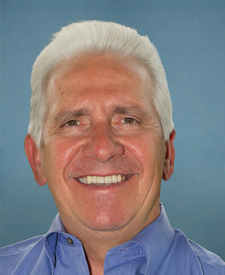
See how Jim Costa's votes line up with your values.
DeepSyte scores Jim Costa's record on the issues you care about — not party, not press releases. Take the 2-minute values quiz to see your personal alignment.
Sign in and take the values quiz to see how Jim Costa's votes line up with your views.
Prediction track record
We haven't made any vote predictions for Jim Costa yet. Predictions are generated for bills with tagged effects; they show up here as soon as the predict-votes job covers this rep's upcoming docket.
Consistency insights
No paired statements and votes yet for Jim Costa
We haven't yet found statement/vote pairs on the same topic for Jim Costa. This usually means either the rep hasn't taken public positions on bills that have come to a passage vote, or those bills haven't been tagged yet. The checker runs as new press releases and votes come in.
Pro analysis
AI rep analysis — Pro
Get an AI-narrated read on Jim Costa's full voting record against your stated values — aligned themes, conflicts, notable votes, and what to watch for.
We haven't extracted campaign positions for Jim Costa yet. Once their campaign website or position pages are processed, this card will track what they said vs how they voted.
Crossing the aisle
Passage votes where Jim Costa broke ranks with ≥75% of Democrats. Threshold catches substantively partisan splits; unanimous-ish or close votes are excluded.
Rep. Jim Costa Seeks to Lead House Agriculture Committee Democrats in 120th Congress
Position: Rep. Costa states that his priorities are keeping farmers farming and families fed, and that he will work to strengthen the farm economy and restore SNAP funding. He is seeking to lead House Agriculture Committee Democrats in the 120th Congress.
WASHINGTON – Congressman Jim Costa (CA-21), a third-generation farmer and senior member of the House Agriculture Committee, announced in a letter to his Democratic colleagues that he is seeking to lead Democrats on the House Agriculture Committee in the 120th Congress.
“Food security is national security. As a third-generation farmer and a member of the Agriculture Committee for more than two decades, I understand the challenges facing our farmers, farmworkers, and families. From rising production costs and uncertainty in agricultural markets to cuts in food assistance, we need experienced leadership with proven results, to deliver real solutions.
My priorities are simple: keep farmers farming, keep families fed, and make this Committee work for every member of our Caucus. I have helped write three Farm Bills that became law and spent my career building bipartisan relationships to deliver for American agriculture. I am ready to put that experience to work to strengthen our farm economy, restore SNAP funding, and ensure that rural and urban communities alike have a voice at the table.
The Agriculture Committee has a responsibility to support both the people who produce our food and the families working to afford it. These are not competing priorities. We must do both.”
A copy of Costa’s letter outlining his priorities is available HERE.
Issues:Agriculture
Rep. Costa, Joined by Rep. Carbajal and Local Leaders, Demands Transparency and Accountability Over ICE Operations
Position: The release calls on ICE and DHS to provide transparency and accountability regarding recent immigration enforcement operations in California, including enforcement priorities, detention data, agent vetting and training, personnel oversight, and due process protections.
FRESNO, Calif. – Congressman Jim Costa (CA-21) was joined by Congressman Salud Carbajal (CA-24), Fresno County Supervisor Luis Chavez, and Nora Zaragoza-Yáñez of Faith in the Valley in a virtual press conference today to address recent immigration enforcement operations across the San Joaquin Valley and Central Coast and demand greater transparency and accountability from U.S. Immigration and Customs Enforcement (ICE) and the Department of Homeland Security (DHS).
During the press conference, Costa highlighted his efforts to lead members of California’s congressional delegation, including U.S. Senators Alex Padilla and Adam Schiff, in demanding answers from federal immigration authorities about enforcement priorities, detention practices, and the impact of recent operations on California communities.
BACKGROUND
Since January 2025, the Trump Administration has expanded federal immigration enforcement operations across the country, including in California's San Joaquin Valley and Central Coast. Recent enforcement activity beginning October 2026, has raised concerns among local families, community advocates, and elected officials about detention practices, enforcement priorities, and access to information about individuals taken into custody.
In response, Congressman Costa led a group of 12 legislators in a letter raising serious concerns about federal immigration enforcement tactics and emphasized the responsibility of federal agencies to operate with transparency, accountability, and respect for the constitutional rights and safety of California residents.
In their letter, the lawmakers requested detailed responses to the following:
Explain the purpose and duration of ICE operations across California, including increased enforcement activity in the San Joaquin Valley beginning October 5, 2026.
Clarify immigration enforcement priorities by identifying the criteria ICE agents use to question, arrest, and detain individuals, including whether operations are targeted or involve broader enforcement activities.
Provide transparency on arrests and detentions by releasing a county-by-county breakdown on individuals detained since October 5, including those prior criminal convictions, pending criminal charges, or no criminal record.
Ensure proper agent vetting and training by detailing background checks, screening requirements, and training standards, including whether any requirements have been modified, shortened, or waived.
Strengthen personnel accountability and oversight by requesting details on ICE officer deployments, professional conduct standards, agent training on constitutional rights and use of force, and procedures for investigating alleged misconduct, including any administrative review or personnel investigation initiated following the October 9 incident involving an off-duty ICE officer in Fresno.
Protect due process and access to essential services by demanding transparency on detention locations, processing and transfer procedures, access to legal counsel, notification of rights, family communication, and necessary medical care following an arrest.
Strengthen coordination with local authorities by clarifying whether state and local law enforcement agencies and elected official were notified or consulted before ICE operations began and outlining protocols to ensure public safety and address community concerns.
The lawmakers also emphasized that enforcing federal immigration law does not diminish the government's responsibility to protect public safety, uphold due process, and ensure accountability for the actions of federal officers.
The Members of Congress and Senators requested a written response from ICE and DHS no later than October 30, 2026.
The letter was signed by: Congressman Jim Costa (CA-21), Senators Alex Padilla (D-CA) and Adam Schiff (D-CA), and Representatives Zoe Lofgren (CA-18), Josh Harder (CA-09), Salud Carbajal (CA-24), Adam Gray (CA-13), Lou Correa (CA-46), Gil Cisneros (CA-31), Robert Garcia (CA-42), Nanette Barragán (CA-44), and Norma Torres (CA-35).
The full text of the letter can be found HERE.
You can watch the full press conference HERE.
Issues:Immigration
Rep. Costa Introduces Bipartisan Bill to Strengthen U.S. Defense Innovation Through Partnership with Ukraine
Position: The release supports introducing H.R. 10772, the bipartisan Frontline Innovation Act, which would authorize the Department of Defense's Defense Innovation Unit to evaluate and invest in Ukrainian defense technologies. It also states that existing U.S.-Ukraine defense research agreements have not kept pace and that legal barriers limit DIU's ability to expand partnerships.
WASHINGTON – Today, Representatives Jim Costa (CA-21), a member of the House Foreign Affairs Committee's Subcommittee on Europe and the Congressional Ukraine Caucus, Don Bacon (NE-02), Wesley Bell (MO-01), and Mike Quigley (IL-05) introduced the bipartisan H.R. 10772 Frontline Innovation Act. This legislation will authorize the Department of Defense’s Defense Innovation Unit (DIU) to evaluate and invest in Ukrainian defense technologies, allowing the United States to benefit directly from innovations developed and refined on the battlefield in Ukraine.
Ukraine has emerged as a leader in developing modern defense technologies as it continues to defend itself against Russia’s invasion. Ukrainian companies are developing advanced drones unmanned systems, and electronic warfare tools that are being tested and improved under real combat conditions against a determined adversary. These innovations offer valuable opportunities to strengthen U.S. defense capabilities while supporting Ukraine’s ongoing efforts to defend its sovereignty.
However, existing U.S. defense cooperation agreements have not kept pace with these technological advancements. The last U.S.-Ukraine agreement on exchanging military research and development information dates back to 2001. Although the Defense Innovation Unit (DIU) has worked with the Ukrainian government and firms since 2023, legal barriers currently limit its ability to expand these partnerships and invest directly in Ukrainian defense technologies.
“Ukraine has demonstrated extraordinary resilience in the face of Russia’s aggression, and Ukrainians are innovating and developing new defense technologies under some of the most challenging conditions imaginable,” said Congressman Costa. “This bipartisan bill will help strengthen our national security by investing in technologies that have been tested on the battlefield, while continuing to support Ukraine’s fight to defend its sovereignty.”
“Ukraine is fighting for its survival against Putin’s illegal invasion, and its forces have been forced to innovate at an extraordinary pace,” said Rep. Bacon. “They are proving new drones, unmanned systems and electronic warfare capabilities against Russia in real combat, and our military should be learning from that experience. I’m joining Rep. Costa in introducing the bipartisan Frontline Innovation Act to help bring battlefield-proven technologies into our own defense innovation system and strengthen our military while continuing to support Ukraine’s fight for freedom.”
"Standing with Ukraine is in America’s own interest, and the Frontline Innovation Act is a smart, practical way to do it. Every day, Ukrainian forces are developing and testing new technologies on the battlefield, providing valuable lessons that can help make our own servicemembers safer and prepared for the challenges of tomorrow,” said Rep. Bell. "As a member of the House Armed Services Committee, I know our military must have the best tools and technology, and after my recent trip to Ukraine, I can see how much Ukrainian battlefield innovation has to offer. I’m proud to cosponsor this bipartisan legislation to learn from our partners’ battlefield experience and help them continue defending their freedom.”
"When Russia launched its full-scale invasion of Ukraine in 2022, the entire world expected Kyiv to fall within days. Instead, the strength, resilience, and innovation of Ukrainians and the Ukrainian military have kept the capitol free for over four years. The United States should learn from Ukraine's battlefield innovation to strengthen and modernize our own military to ensure our forces are prepared for a new generation of threats," said Representative Mike Quigley, a Co-Chair of the Congressional Ukraine Caucus. "The Frontline Innovation Act would enable the U.S. military to accelerate defense innovation while continuing to support Ukraine as a critical ally."
The Frontline Innovation Act would:
Expand defense cooperation by authorizing the Defense Innovation Unit (DIU) to evaluate and invest in Ukrainian defense technologies, notwithstanding any other provision of law.
Strengthen U.S. defense capabilities by directing DIU to ensure the United States benefits from technologies developed and refined through Ukraine’s defense against Russia’s invasion.
Allow technology proven in combat to reach the U.S. military faster while creating new opportunities for the American defense industrial base to gain new partners and a larger market.
Support Ukraine through increased investment and cooperation, allowing both countries to collaborate on developing the next generation of defense capabilities.
To read the full bill, click HERE.
Issues:Foreign Affairs & National Security
Rep. Costa Leads Bipartisan Push for Full Implementation of Graham Russia Sanctions Law
Position: The release supports fully implementing the Lindsey O. Graham Sanctioning Russia and Iran Act of 2026 ahead of its October 18 enforcement deadline, including mandatory sanctions, secondary tariffs on purchasers of Russian energy, and stronger enforcement against sanctions evasion, and opposes the issuance of general licenses that could reopen Russian energy transactions.
WASHINGTON – Today, Congressman Jim Costa (CA-21), a member of the House Foreign Affairs Committee, joined Co-Chairs of the Congressional Ukraine Caucus Representatives Mike Quigley (IL-05), Marcy Kaptur (OH-09), Brian Fitzpatrick (PA-01), and Joe Wilson (SC-02) in leading a bipartisan letter urging President Trump to fully implement the Lindsey O. Graham Sanctioning Russia and Iran Act of 2026ahead of its first enforcement deadline on October 18. The lawmakers called on the Administration to strengthen economic pressure on Russia, cut off revenue financing Vladimir Putin’s war against Ukraine, and bring Russia to the negotiating table.
“As Russia prepares to wage a fifth winter campaign against Ukraine, the United States has an opportunity to reinvigorate peace efforts by placing maximum pressure on Vladimir Putin and the governments and networks that finance his war,” the lawmakers wrote. “Utilizing the tools for economic pressure in this law will be decisive in forcing Putin to take peace talks seriously.”
In the letter, the lawmakers urged the Administration to:
Fully enforce mandatory sanctions against Russian officials, oligarchs, banks, state enterprises, and foreign entities helping Russia evade existing restrictions.
Impose secondary tariffs on major purchasers of Russian energy, targeting revenue from oil and gas sales that continues to finance Russia’s war.
Crack down on sanctions evasion, including foreign financial institutions, shadow fleet operators, and intermediaries facilitating Russian energy transactions.
Protect U.S. allies by applying exceptions and tariff adjustments for countries actively reducing their dependence on Russian energy.
Strengthen congressional oversight by providing implementation details, tariff justifications, and measurable benchmarks to assess the effectiveness of sanctions.
The lawmakers emphasized that Russia continues to rely heavily on oil and gas exports to finance its military operations, while intensifying attacks on Ukrainian civilian infrastructure and commercial shipping in the Black Sea, threatening global food security. The letter also calls on the Administration to reverse course in issuing general licenses that could reopen Russian energy transactions and restore revenue to the Kremlin. The lawmakers requested answers ahead of the October 18 deadline on which sanctions and tariffs will be implemented, whether any provisions will be delayed or waived, and how the Administration will measure their effectiveness.
The letter was signed by Don Bacon; Sanford Bishop; Salud Carbajal; Ed Case; Steve Cohen; Jim Costa; Danny Davis; Madeleine Dean; Brian Fitzpatrick; Jared Golden; Josh Gottheimer; Steny Hoyer; Marcy Kaptur; John Mannion; Michael McCaul; Robert Menendez; Dan Newhouse; Mike Quigley; Melanie Stansbury; Dina Titus; Jill Tokuda; and Joe Wilson.
The full text of the letter can be found HERE.
Issues:Foreign Affairs & National Security
Rep. Jim Costa, Bipartisan Colleagues Introduce Resolution Recognizing National Hydrogen and Fuel Cell Day
Position: The release expresses support for investing in hydrogen and fuel cell technologies as part of an all-of-the-above energy strategy to enhance energy security, grid reliability, and emissions reduction, and introduces a resolution designating October 8, 2026, as National Hydrogen and Fuel Cell Day.
WASHINGTON – Today, U.S. Representatives Jim Costa (CA-21), John Larson (CT-01), Paul Tonko (NY-20), David Valadao (CA-22), Brian Fitzpatrick (PA-01), and Gus Bilirakis (FL-12) introduced H.Res. 1611, a bipartisan resolution designating October 8, 2026, as "National Hydrogen and Fuel Cell Day."
"Hydrogen and fuel cell technologies are an important part of America’s energy future,” said Congressman Costa. "By investing in American innovation, we can strengthen our energy security, build a more reliable and resilient grid, create good-paying jobs, and reduce emissions. The United States has long been a leader in developing these technologies, and this bipartisan resolution recognizes the work being done across the country to ensure we continue leading the way."
"Connecticut continues to lead the nation as a hub for the research and development of clean hydrogen and fuel cell technologies," said Congressman Larson. "For years, I have worked across the aisle to enact tax incentives to boost hydrogen production and invest federal funding to grow our fuel cell economy, unleash the power of American-made clean energy, and reduce emissions. As we recognize the twelfth annual National Hydrogen and Fuel Cell Day, we must work together on real solutions to lower costs for consumers and grow the clean energy supply chain across the country."
"Supporting clean hydrogen unlocks a wealth of benefits — boosting our economy, protecting energy security, and reducing emissions," Congressman Tonko said. "Throughout my time in Congress, I’ve worked to advance legislation that invests in energy innovation and lowers costs, which is why I’m proud to join my colleagues to introduce this bipartisan resolution and support a stronger, healthier, more competitive nation."
"I’m proud to join my colleagues in reintroducing a bipartisan resolution designating October 8th as National Hydrogen Fuel Cell Day. Advancing these technologies is critical to strengthening our nation’s energy independence, driving continued innovation, and enhancing our energy security. An all-of-the-above energy strategy will help lower energy costs for Central Valley communities while ensuring our farms, businesses, and homes have access to the reliable energy they need to thrive," said Congressman Valadao.
"The question is not whether America will need more energy—it is whether we will lead in producing it. Hydrogen and fuel cell technologies can strengthen our energy security, reinforce the reliability and resilience of our grid, create good-paying American jobs, and help meet growing demand through cleaner, innovative solutions. National Hydrogen and Fuel Cell Day recognizes the incredible scientists, engineers, manufacturers, and workers driving that progress, and reaffirms our bipartisan commitment to ensuring America continues to lead the world in energy innovation," said Congressman Fitzpatrick.
"Congress has long recognized how hydrogen seamlessly fits into so many of the energy tools in America’s energy portfolio," said Frank Wolak, President and CEO of FCHEA. "Whether a feedstock for low-carbon fertilizer and export fuels such as ammonia or used directly as a fuel on its own to power data centers, heavy-duty trucks, and everything in between, hydrogen helps the U.S. meet growing power demand at home while sustaining leadership in energy markets abroad. We thank Representative Costa and the resolution’s co-sponsors for supporting Hydrogen Day and the U.S. industry at large."
BACKGROUND
National Hydrogen and Fuel Cell Day is observed annually on October 8 in recognition of hydrogen’s atomic mass of 1.008. The day highlights the role hydrogen and fuel cell technologies play in American energy production, transportation, grid reliability, and economic growth.
The United States produces and uses approximately 10 million metric tons of hydrogen each year. Hydrogen can be derived from a variety of domestic resources and used to store energy, while fuel cell technologies are used for transportation, stationary power, and backup power.
U.S. Representatives Jim Costa (CA-21), John Larson (CT-01), Paul Tonko (NY-20), David Valadao (CA-22), Brian Fitzpatrick (PA-01), and Gus Bilirakis (FL-12) are co-leads of the House Resolution, with Representatives Mike Lawler (NY-17), Suzan DelBene (WA-01), and Jimmy Panetta (CA-19) joining as original co-sponsors.
Senator Richard Blumenthal (CT) led the introduction of the Senate Resolution, with Senators Bill Cassidy (LA), Chris Coons (DE), and Chris Murphy (CT) joining as original cosponsors.
Issues:Energy & Environment
Rep. Costa Statement on the Third Anniversary of the October 7 Terrorist Attacks
Position: The statement commemorates the October 7 Hamas attacks, calls for standing firmly against terrorism and antisemitism, and expresses support for an end to the conflict that guarantees Israel's security alongside a future Palestinian state.
FRESNO, Calif. – Today, Congressman Jim Costa (CA-21) released the following statement marking the third anniversary of the October 7 terrorist attacks by Hamas:
“Today marks three years since the October 7 terrorist attacks on Israel by Hamas, which killed approximately 1,200 people and took hundreds more hostage into Gaza. We honor the victims and recognize the enduring pain of survivors, those taken hostage, and their families.
My heart and prayers are with all those who have lost loved ones and with the innocent people who continue to suffer because of this prolonged conflict. We also mourn the Palestinian civilians killed in Gaza, including so many children, and recognize the devastating losses their families have endured.
We must continue to stand firmly against terrorism and those who threaten the security of Israel and safety of Jewish communities worldwide. That includes confronting the rise in antisemitism here at home. At the same time, we cannot lose sight of the Palestinian people’s right to self-determination and the need for a lasting political solution.
I continue to support an end to this conflict that guarantees Israel’s security alongside a future Palestinian state where its people can build a secure and prosperous future. I hope for an end to the violence and a lasting peace.”
Issues:Foreign Affairs & National Security
Costa Leads Bipartisan Effort to Protect $232 Million in Rural Homeownership Funding
Position: Urges the USDA to obligate and preserve approximately $232 million in Section 502 Single Family Housing Direct Loan Program funding at risk of expiring at the end of Fiscal Year 2026, and to provide an accounting of unobligated balances and improve loan processing.
FRESNO, Calif. – This week, Congressman Jim Costa (CA-21) led a bipartisan group of 14 members of Congress in urging the U.S. Department of Agriculture (USDA) to take immediate action to protect approximately $232 million in funding for the Section 502 Single Family Housing Direct Loan Program that is at risk of expiring at the end of Fiscal Year 2026.
In a letter to USDA Secretary Brooke Rollins, the lawmakers called on the department to preserve funding Congress provided to help low- and very-low-income families purchase homes in rural communities. Recent reports indicate that USDA has obligated only a portion of the approximately $1 billion Congress provided for the program, leaving hundreds of millions of dollars at risk of going unused.
“These resources were provided by Congress to help families in rural America purchase homes and strengthen the communities in which they live and work,” wrote the lawmakers. “Regardless of party, we should share the goal of ensuring that congressionally appropriated funds are administered efficiently and reach the rural families they were intended to serve."
“The USDA's 502 direct mortgage program has been a flagship tool for increasing homeownership opportunities in rural places,” said David Lipsetz, President & CEO of the Housing Assistance Council. “To have these critical funds expire at a time when the program has been challenged with new and burdensome rules would be a real tragedy for rural families looking to buy a home. We applaud Congressman Costa and his colleagues for their leadership on this issue.”
The lawmakers also raised concerns about recent administrative changes that could limit access to the program and delay assistance to eligible families. They urged USDA to preserve the remaining funding, provide Congress with an accounting of unobligated balances, and take steps to improve loan processing and prevent future funding from expiring.
BACKGROUND
The Section 502 Single Family Housing Direct Loan Program helps low- and very-low-income families purchase affordable homes in rural communities when conventional financing is otherwise out of reach.
Earlier this year, USDA implemented changes to the Section 502 program that reduced allowable loan limits and raised concerns among lawmakers about access to affordable rural housing. The lawmakers are seeking answers about whether these changes contributed to the unusually large amount of unobligated funding.
Read the full letter HERE.
Issues:Housing
Costa Joins Three Congressional Caucuses Focused on Campus Antisemitism, U.S.-Japan Ties, and Transatlantic Partnership
Position: The release states Rep. Costa joined a caucus on combating antisemitism on college campuses, stating he will work to hold institutions accountable for protecting Jewish students and all students from hate. It also states that strengthening U.S. partnerships with Japan and Denmark and reaffirming transatlantic alliances, with respect for Greenland's sovereignty, are important.
WASHINGTON – Today, Congressman Jim Costa (CA-21) announced he has joined three congressional caucuses: the Combating Antisemitism on College Campuses Caucus, as a founding member; the U.S.-Japan Congressional Caucus; and the Congressional Friends of Denmark Caucus.
The bipartisan Combating Antisemitism on College Campuses Caucus coordinates congressional oversight of how colleges and universities respond to antisemitism, pushes institutions to protect Jewish students, faculty, and staff, and champions efforts to identify and implement effective solutions.
“Since Hamas’ October 7 terrorist attack on Israel, too many Jewish students have been harassed, threatened, or made to feel unwelcome on their own campuses,” said Rep. Costa. “Every student deserves to learn in a safe environment, free from hate. As a founding member of this caucus, I will work with colleagues on both sides of the aisle to hold institutions accountable for enforcing their own policies and to make sure our colleges protect all of their students.”
The U.S.-Japan Congressional Caucus fosters bilateral collaboration between the United States and Japan on trade, investment, regional stability, military cooperation, energy, technology, and the environment.
“Japan is one of America’s closest allies and one of California’s most important trading partners, buying more than $11 billion in California goods last year, including food grown in the Valley,” said Rep. Costa. “California is also home to the largest Japanese American community in the nation. Strengthening this partnership means more opportunities for our farmers and businesses, and a more stable Indo-Pacific.”
The Congressional Friends of Denmark Caucus works to deepen the cultural, social, economic, and political ties between the United States and Denmark.
“Denmark is a steadfast NATO ally and a valued partner on everything from agriculture to defense,” said Rep. Costa. “At a time when our transatlantic alliances are being threatened by President Trump, we must reaffirm our commitment to those partnerships with Denmark and Greenland with respect for their sovereignty.”
Rep. Costa serves as Ranking Member of the Transatlantic Legislators’ Dialogue and is a member of the House Foreign Affairs Committee.
Costa Applauds $35 Million for South Valley Water Infrastructure Projects
Position: The release supports federal funding for the Kern Fan Groundwater Recharge Project and the Seaborn Reservoir project to expand water storage, groundwater recharge, and supply reliability in the San Joaquin Valley.
FRESNO, Calif. - Congressman Jim Costa (CA-21) released the following statement after the Bureau of Reclamation announced $25 million for the Kern Fan Groundwater Recharge Project and over $9 million for the Tulare Irrigation District’s Seaborn Reservoir as part of the Small Storage Program.
“Water is the lifeblood of the San Joaquin Valley, and we need to capture and store every drop we can,” said Congressman Costa.“I’ve fought for investments in the Kern Fan Groundwater Recharge Project and Seaborn Reservoir because these are the kinds of projects that will strengthen our water supply, recharge our groundwater, and provide greater certainty for our farmers and communities. Kern Fan helped inspire my Every Drop Counts Act because we know what works in the Valley. This $35 million federal investment will help us put those solutions to work and build a more reliable water future for the San Joaquin Valley.”
BACKGROUND:
The Bureau of Reclamation announced $25 million in federal funding for the Kern Fan Groundwater Recharge Project and $9,279,859 for the Tulare Irrigation District’s Seaborn Reservoir Project.
Congressman Costa has been a vocal advocate for both projects and for strengthening water infrastructure in the San Joaquin Valley. Congressman Costa’s legislation, Every Drop Counts Act, was based on the Kern Fan Groundwater Recharge Project.
The Kern Fan Groundwater Recharge Project will enhance groundwater recharge efforts by developing a new 26,000-acre-foot regional water bank, in addition to adding 375 cubic-feet-per-second of conveyance capacity. This project aims to construct three recovery wells and utilize nearly 1,000 acres of existing recharge and groundwater storage facilities. By capturing water when supply is abundant, this project helps to provide certainty for our farmers, ranchers, and dairymen and women.
The Seaborn Reservoir Project will repurpose a former mining operation into a 7,000-acre-foot reservoir to store Kaweah River water. The project will support flood control for downstream communities and agricultural land, improve groundwater recharge, increase Central Valley Project federal water availability, and help offset groundwater use to support SGMA sustainability. The project will also restore native habitat, provide recreation and environmental education opportunities, and contribute to drinking water supply improvements for neighboring communities, including disadvantaged communities.
Issues:Water
Costa, Valadao Call for Passage of Public Health Lab Safety Legislation Following Reedley Biolab Verdict
Position: Representatives Costa and Valadao call for passage of the bipartisan Preventing Illegal Laboratories and Protecting Public Health Act to close regulatory gaps in federal lab oversight and prevent unauthorized biolab operations that pose public health and national security risks.
REEDLEY, Calif. - Today, Congressman Jim Costa (CA-21) and Congressman David Valadao (CA-22) released the following statements after a court found Jia Bei Zhu, also known as David He, guilty on all 12 counts related to the illegal biolab discovered in Reedley, California.
"The court's guilty verdict on all twelve counts marks a critical step toward addressing the serious public health and safety challenges our communities have faced,"said Congressman Costa. "The City of Reedley, its mayor, city council, and city manager deserve significant credit for bringing forth the issue of illegal labs in America and the potential serious health impacts to its citizens to light. While I am encouraged to see justice served, our work is far from over. It's important for American citizens to realize that there are foreign nationals and bad actors engaged in activities in our country that could create harm.
That's why Congress must pass my bipartisan “Preventing Illegal Laboratories and Protecting Public Health Act” to close the gaps in regulation of labs and prevent bad actors from exploiting our public health system. We must remain vigilant in protecting our communities and ensuring the safety and well-being of all Americans."
“The Reedley Lab incident exposed serious national security and public health failures, and this guilty verdict is an important step toward accountability,” said Congressman Valadao.“While I’m encouraged to see justice served, Congress still needs to act to address the gaps in federal oversight that allowed this illegal facility to operate under the radar for so long. It’s past time to advance the bipartisan Preventing Illegal Laboratories and Protecting Public Health Act so we can prevent bad actors from exploiting these failures in the future.”
BACKGROUND
This week, a court has found Jia Bei Zhu, also known as David He, found guilty on all 12 counts connected to the illegal biolab uncovered in Reedley, California.
In December 2022, a local code enforcement discovered an unlicensed laboratory operating in Reedley, California, that contained hazardous pathogens, including samples of COVID-19, and unsafe storage of infectious materials. Investigations revealed the operations had ties to Chinese ownership and funding, raising alarms about foreign adversaries exploiting weaknesses in U.S. biosafety oversight.
Current federal law regulations contain only a minted list of “select agents,” leaving many dangerous pathogens outside of federal tracking requirements. To address these vulnerabilities, U.S. Representatives Jim Costa (CA-21), David Valadao (CA-22,) and Kevin Kiley (CA-03), introduced the Preventing Illegal Laboratories and Protecting Public Health Act of 2025, bipartisan legislation that strengthens oversight of highly pathogenic agents and high-containment laboratories to protect Americans from public health and national security threats.
Following the discovery of a similar unauthorized biolab in a Las Vegas neighborhood in January 2026, which was raided by the Las Vegas Metropolitan Police Department and the FBI after several people fell severely ill, U.S. Senators Catherine Cortez Masto (D-NV) and Jim Banks (R-IN) introduced a bipartisan Senate companion to Rep. Costa’s legislation. The Las Vegas lab suspect, Jia Bei Zhu, is the same individual connected to the Reedley biolab, identified as a People's Republic of China national and a fugitive wanted in Canada.
The legislation would help ensure federal agencies have the authority and tools necessary to identify unlawful laboratory activity, improve coordination between local and federal officials, and prevent future incidents like the Reedley and Las Vegas biolabs from occurring again.
Issues:Public SafetyForeign Affairs & National Security
Source: GDELT 2.0 GKG, filtered to a curated list of national outlets. Inclusion is not endorsement; opinion pieces and reported news are mixed.
Recent stock activity
Periodic transaction reports filed under the STOCK Act — disclosed by the rep, sourced from public filings.
No disclosed trades on record.
Source: open-data mirrors of the Senate eFD and House Clerk financial-disclosure systems. Disclosure within 30 days of trade is required by law (45 for spouse/dependent trades).
Top PAC donors · 2026 cycle
Political action committees that gave the most to this rep's principal campaign committee this cycle. PAC giving is direct organizational support — industry, ideological, or leadership.
1.CHC BOLD PACLeadership2 contributionsMember-of-Congress leadership PAC affiliated with the Congressional Hispanic Caucus — directs contributions to allied Democratic candidates.AI$10,000
2.AMERIPAC: THE FUND FOR A GREATER AMERICAIdeological2 contributionsIdeological PAC with a nationalist or patriotic framing — specific policy positions not clearly signaled by the name.AI · low$10,000
3.AMERICAN ISRAEL PUBLIC AFFAIRS COMMITTEE POLITICAL ACTION COMMITTEEIdeological2 contributionsPAC arm of the American Israel Public Affairs Committee, federalized in 2021. Backs candidates of both parties who support U.S.-Israel security and economic ties.AI$10,000
4.THE FARM CREDIT COUNCIL POLITICAL ACTION COMMITTEE2 contributions$10,000
5.INTERNATIONAL FRANCHISE ASSOCIATION FRANCHISING POLITICAL ACTION COMMITTEE INC5 contributions$10,000
7.AMERICAN CRYSTAL SUGAR COMPANY PACAgriculture3 contributionsAgricultural company PAC for a major sugar producer — backs candidates supporting farm subsidies, tariff protections, and agricultural trade policies.AI$10,000
8.NATIONAL CATTLEMEN'S BEEF ASSOCIATION POLITICAL ACTION COMMITTEE (NCBA-PAC)Agriculture2 contributionsAgribusiness PAC representing U.S. cattle ranchers and beef producers — backs policies supporting livestock production, trade, and agricultural infrastructure.AI$10,000
9.BAYER US LLC EMPLOYEE POLITICAL ACTION COMMITTEE (BAYERPAC)2 contributions$10,000
10.NATIONAL TURKEY FEDERATION POLITICAL ACTION COMMITEE/TURPAC2 contributions$10,000
Source: OpenFEC (api.open.fec.gov) Schedule A receipts where contributor type is “committee.” Aggregated by contributing committee. Self-transfers from joint-fundraising / victory committees are excluded.
Top individual contributors · 2026 cycle
Itemized individual contributions over $200 to this rep's campaign committee, aggregated by donor employer. PAC giving is shown above; this section is people, not organizations.
1.COMMUNITY HEALTH SYSTEM$10,000
2.PACHULSKI, STANG, ZIEHL & JONES$9,500
3.KALSHI$7,000
4.THE PENSTARGROUP$7,000
5.KASHIAN ENTERPRISES$7,000
6.HACKMAN CAPITAL PARTNERS$7,000
7.ROLL GLOBAL, LLC$7,000
8.FORHAN COMPANY$7,000
9.FAGUNDES DAIRY$7,000
10.JOSEPH GALLO FARMS$7,000
Source: OpenFEC Schedule A receipts where contributor type is “individual,” aggregated by the donor's self-reported employer. This is a geographic / industry correlation, not a corporate endorsement.